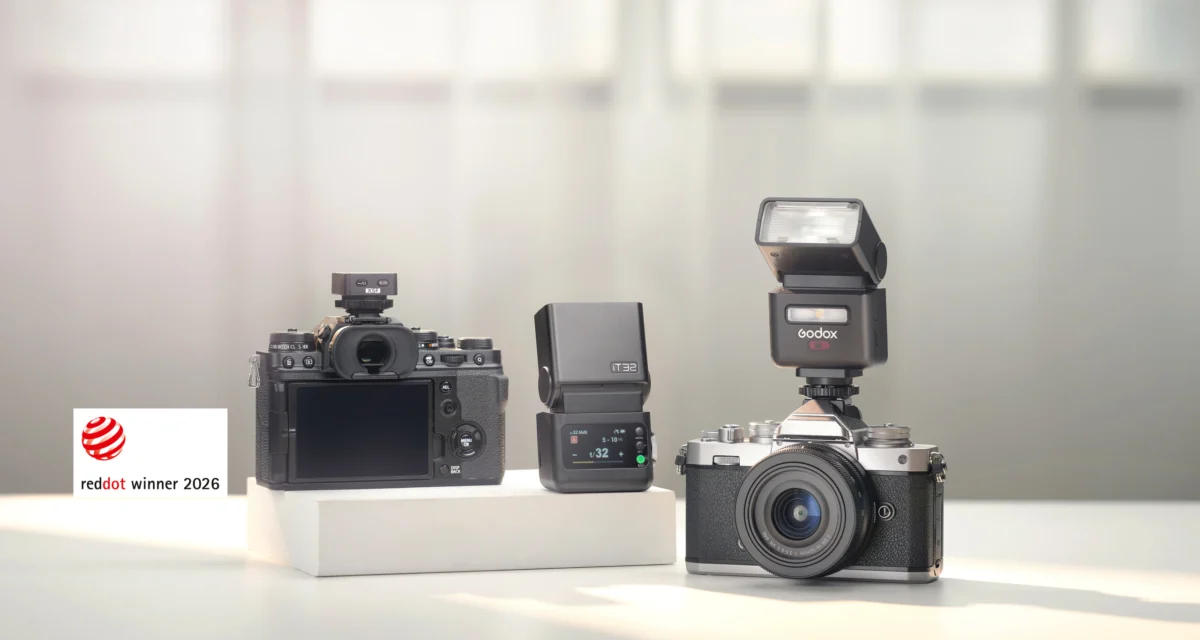
In the high-stakes world of professional photography and cinematography, the intersection of form and function is where true innovation resides. This year, the industry’s focus has turned toward Godox, a brand synonymous with accessible, high-performance lighting solutions, as they celebrate a significant milestone: four of their flagship products—the iT32, iT30Pro, X3Pro, and ML80Bi—have been honored with the prestigious Red Dot Design Award.
This accolade is more than a mere aesthetic endorsement. It serves as a benchmark for industrial design, evaluating products on their functionality, durability, and, most importantly, their ability to solve the complex problems faced by visual storytellers in the field. As we analyze this recognition, it becomes clear that Godox is shifting its trajectory from a value-driven manufacturer to a design-forward industry leader.
The Core Facts: A Masterclass in Industrial Design
The Red Dot Design Award is one of the most sought-after honors in the international design community. Winning across four distinct categories underscores a versatility in engineering that is rarely seen in the lighting sector. The awarded lineup includes:
- The iT32 & iT30Pro: Representing the next generation of studio and field lighting control, these units are designed to streamline complex lighting setups into intuitive, user-friendly workflows.
- The X3Pro: A refinement of the brand’s iconic wireless flash trigger series, focusing on a tactile, high-definition interface that prioritizes speed—a necessity for event and wedding photographers who cannot afford to miss a moment.
- The ML80Bi: A compact yet powerful bi-color COB (Chip-on-Board) light that challenges the notion that portability must come at the cost of output or color accuracy.
Each of these products was vetted by a jury of experts, scrutinizing everything from the ergonomic placement of buttons to the heat dissipation efficiency of the chassis. For Godox, this validation confirms that their "Light Without Limits" philosophy is resonating not just with consumers, but with the design critics who define the standards of the manufacturing world.
Chronology: The Evolution of Godox
To understand the weight of this achievement, one must look at the historical trajectory of Godox. Founded in 1993, the company spent its first two decades establishing a robust manufacturing base. However, the last five years have marked a radical shift in their operational strategy.
- 2018–2020: The Prosumer Breakthrough. During this period, Godox disrupted the market by offering professional-grade features—such as High-Speed Sync (HSS) and complex wireless triggering—at a fraction of the cost of legacy brands. This democratization of professional tools built a massive, loyal user base.
- 2021–2023: Refinement and Ecosystem Building. Moving beyond just "affordability," the company began investing heavily in R&D. They transitioned from plastic-heavy housings to more durable, heat-resistant materials and began integrating sophisticated software interfaces into their triggers and lights.
- 2024–2026: Design-Led Innovation. The current cycle, culminating in these four Red Dot wins, represents the maturity of the brand. It is no longer enough for a light to be "cheap and good." It must now be ergonomic, sustainable, and intuitively designed to fit into the rapidly evolving workflows of content creators who move between still photography and video production.
Supporting Data: Why Design Matters in Lighting
Why does an award like Red Dot matter to a photographer or videographer? The answer lies in the data of "user fatigue." Studies in professional workflow efficiency suggest that the physical interface of equipment can impact creative output by as much as 30%.
When a lighting interface is clunky, the photographer spends time looking at menus instead of their subject. When a light unit is heavy or poorly balanced, the time spent setting up a stand adds to the physical exhaustion of a 12-hour shoot. The Godox X3Pro, for example, features a touch-screen interface that minimizes "button hunting," directly addressing the need for rapid adjustments during fast-paced shoots.
Furthermore, the ML80Bi’s design reflects the industry’s shift toward "Run-and-Gun" filmmaking. As creators move away from heavy, power-hungry studio rigs toward lightweight, battery-powered setups, the physical footprint of the equipment becomes the primary constraint. By winning the Red Dot for this specific category, Godox is being recognized for solving the density problem—packing high-CRI (Color Rendering Index) output into a chassis that fits into a standard camera backpack.
Official Responses: The Philosophy of "Light Without Limits"
In a statement following the announcement, a spokesperson for Godox emphasized that these awards are a byproduct of listening to the community. "This recognition is more than an award for design," the representative noted. "It reflects our continuous pursuit of refinement—in every detail shaped for real-world creation, and every innovation driven by how creators actually work."

This sentiment aligns with the brand’s "Light Without Limits" campaign. It suggests a shift in focus from product-centric design to user-centric design. By observing how photographers use their X-series triggers in extreme weather or how videographers manipulate the ML-series lights on tight urban sets, the design team at Godox has successfully iterated on their designs to eliminate friction.
The awards are seen internally as a mandate to continue pushing the boundaries of what is possible in portable lighting, signaling that the company will likely continue to invest in high-end materials and sophisticated UX (User Experience) design in their future product roadmaps.
Implications: A New Era for the Lighting Industry
The implications of these awards are far-reaching. For the photography industry, it signals a consolidation of power. When a brand like Godox wins prestigious design awards, they are no longer viewed as a "budget alternative." They are now direct competitors to legacy giants who have dominated the professional market for decades.
1. Market Competition
Legacy manufacturers, who have long relied on brand heritage and premium pricing, must now justify their price tags against a competitor that is winning both on performance and design-led innovation. This competition is likely to drive down the cost of entry for high-end features across the entire industry.
2. Standardization of UI/UX
The success of the X3Pro’s interface will likely force the rest of the industry to rethink how they approach menu systems. We can expect to see a move away from complex, multi-layered LCD menus toward more streamlined, touch-capable, or app-integrated systems.
3. Sustainability and Modular Design
The Red Dot jury often prioritizes sustainability. By streamlining the design of the iT32 and iT30Pro, Godox has likely optimized parts production and reduced material waste. This focus on "less but better" design is a trend that the lighting industry must adopt to meet global environmental standards.
Conclusion: The Road Ahead
As Godox celebrates this quartet of victories, the broader message is one of professional maturation. The photography world is changing; it is faster, more mobile, and more demanding than ever before. Products like the iT32, iT30Pro, X3Pro, and ML80Bi prove that lighting no longer needs to be a burden to the creator.
By marrying high-output performance with thoughtful, award-winning design, Godox is not just lighting up scenes—they are illuminating a new path forward for the entire industry. For the professional creator, this means more freedom, less technical friction, and the ability to focus on what truly matters: the story being told through the lens. As we look toward the future, these four Red Dot winners will likely serve as the foundation for a new generation of lighting gear that values the human element as much as the technical output.