Executive Summary: A Turning Point in the Migration Calendar
As of May 8, 2026, Finland’s bird migration has reached a dramatic, long-awaited turning point. After a prolonged period of chilly northern winds that held back the natural rhythm of the season, a sudden influx of warm, summer-like air has swept across the country. This meteorological shift has triggered a massive arrival of migratory species, effectively "opening the floodgates" for birds that were previously delayed by the unseasonable cold.
BirdLife Finland reports that this surge, which began in earnest around the May Day (Vappu) holiday, has resulted in the arrival of approximately 30 new species within the first week of May alone. While insectivorous birds were notably absent during the latter half of April, the current warm spell has accelerated their arrival, bringing a much-needed burst of biodiversity to Finnish skies.
Chronology of the Arrival
The migration narrative of the past week is a story of rapid progression, moving from the southern coastal regions deep into the northern reaches of Lapland.
The May Day Breakthrough
The May Day period served as the catalyst for this avian wave. On May 1, observers recorded the season’s first sightings of the Spotted Flycatcher (Muscicapa striata) and the Reed Warbler (Acrocephalus scirpaceus). As the warm front consolidated, the migration intensified through the weekend. By Sunday, birdwatchers were reporting the arrival of the Sedge Warbler, the Red-backed Shrike, the Bluethroat, and the Ortolan Bunting.
The Swift Surge
Common Swifts provided a clear indicator of the rapid northern movement. First appearing in Helsinki and Lahti on Monday, the species pushed north with remarkable speed, appearing in Joensuu and Kontiolahti by Wednesday. Following this initial wave, the latter half of the week saw the arrival of the Grasshopper Warbler, the Common Rosefinch, and the Icterine Warbler, rounding out a week of high-intensity observation.
Northern Expansion
The warmth was not limited to the south. Lapland experienced a significant avian awakening, with over 20 species recorded for the first time this spring. Notable among these was the Pied Flycatcher, with roughly 40 individual sightings, and the Willow Warbler, the northernmost of which was spotted in Sodankylä.
Supporting Data: Mass Movements and Record Numbers
While individual songbirds represent the delicate side of migration, the sheer volume of waterfowl and waders moving through the country has been unprecedented.
Waterfowl Dynamics
The Gulf of Finland has been a highway for migrating Common Scoters. During the weekend, significant movements were noted, and by the night between Saturday and Sunday, these birds were heard migrating over the interior of the country in large numbers. A particularly striking count occurred on Wednesday at Söderskär in Porvoo, where researchers recorded 45,000 Common Scoters in a single day.
Perhaps more significant is the record-breaking arrival of Barnacle Geese. Never before in recorded history has Finland seen such an massive influx of this species at the start of May. In Teutjärvi, Kouvola, observers counted approximately 80,000 individuals. When combined with estimates of 20,000 Tundra and Tundra Bean Geese, the sheer scale of the biomass passing through the region underscores the importance of Finland’s wetlands as a critical refueling stop.
Wader Concentrations
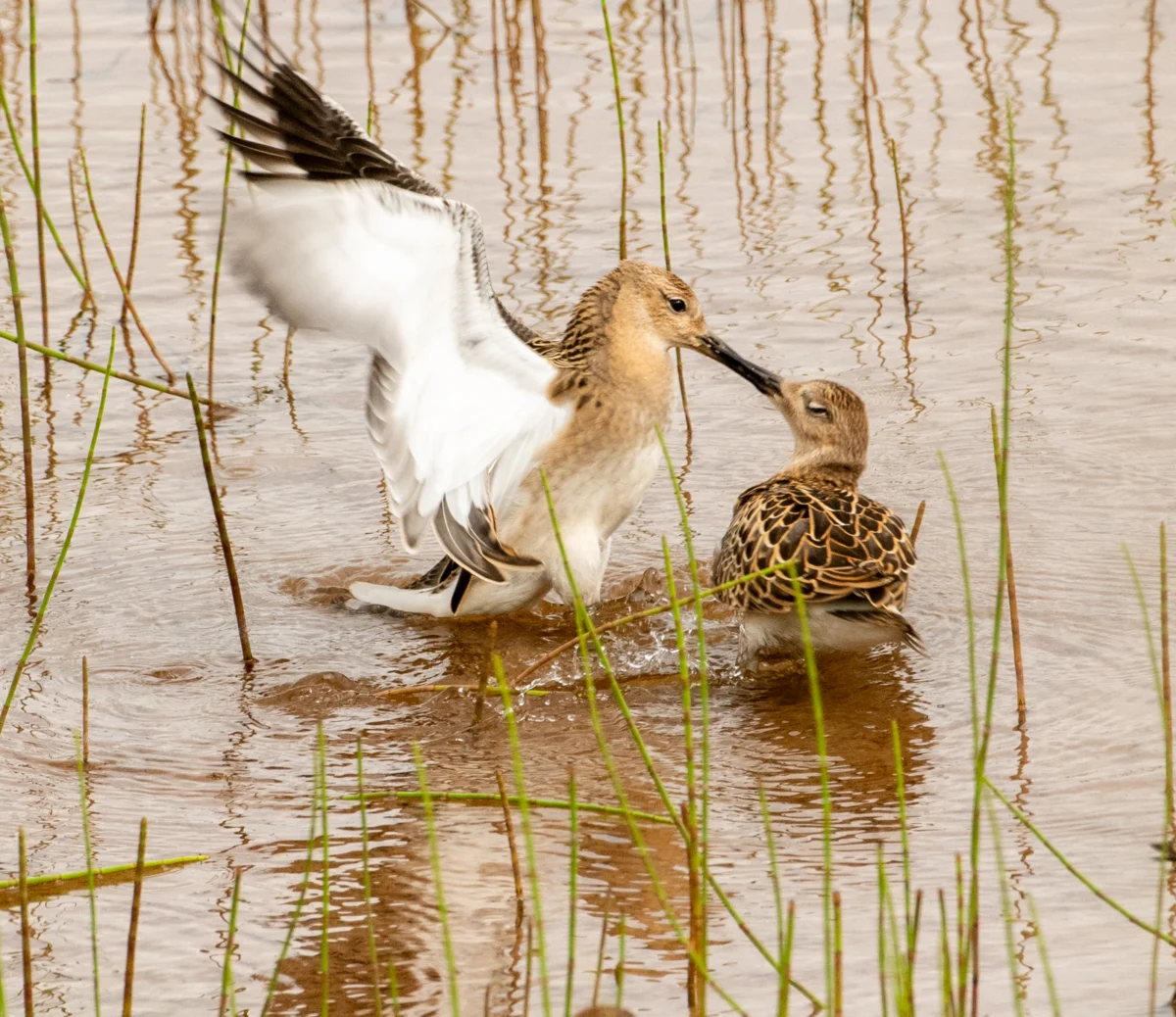
Open agricultural landscapes in Western Finland have become temporary hubs for massive gatherings of waders. Golden Plovers and Ruffs are congregating in flocks numbering in the thousands, taking advantage of the thawing soil and seasonal floodplains to feed before continuing their journey toward the Arctic breeding grounds.
Rare Sightings: A Week for the History Books
The current migration period has been characterized not just by volume, but by the rarity of the visitors. Ornithologists and enthusiasts are calling this one of the most exciting weeks in recent memory.
The "Super-Rarities"
Two species have dominated the conversation among birders:
- Iberian Chiffchaff: A singing male was discovered in Uusikaupunki. This is only the second recorded sighting of this species in Finnish history.
- Oriental Turtle Dove: An exceptionally rare visitor was spotted in Ilomantsi. This species is a major rarity in the Nordic region, with only three previous confirmed sightings in the last half-century.
Additional Notable Records
The diversity of the week’s rarities includes:
- Red-breasted Goose: Recorded in Luoto.
- European Bee-eaters: A group of five was observed in Pori.
- Common Ringed Plover: Sightings in Raahe and Vöyri.
- Black Kite: Reported at four distinct locations.
- Hoopoe and Collared Flycatcher: Six individuals of each were recorded across the country.
Official Responses and Ecological Implications
BirdLife Finland emphasizes that these sightings are not merely curiosities; they are vital indicators of ecological health and climate sensitivity. The delayed arrival of insectivorous birds due to the cold spring suggests that the synchronization between bird migration and peak insect availability is becoming increasingly fragile.
The massive numbers of geese, meanwhile, highlight the success of conservation efforts in the Baltic region but also pose ongoing challenges for agricultural land management, as such dense populations can have significant impacts on local crops.
Implications for Citizen Science
The data collected this week is largely the result of the tireless efforts of the volunteer birding community. By documenting these arrivals, amateur and professional observers provide the raw data necessary for long-term climate impact studies. BirdLife Finland utilizes this data to map shifting migration patterns, which are increasingly influenced by volatile weather patterns associated with a changing climate.
How to Participate: Engaging with the Migration
For those interested in witnessing this phenomenon firsthand, this weekend provides two premier opportunities to engage with the avian world:
- The Tower Battle (Tornien taisto): A competitive event where teams occupy birdwatching towers across the country, attempting to identify as many species as possible within a set timeframe.
- "Spot the Day in the Yard" (Bongaa päivä pihalla): A more relaxed, community-focused event encouraging people to document the species present in their own immediate surroundings.
These events serve a dual purpose: they foster a deeper public connection with local nature and provide a structured mechanism for gathering widespread, real-time data on bird distribution.
Future Outlook
As of May 8, the migration is in full swing. With the warm weather forecasted to hold, it is expected that the next week will bring further arrivals, particularly of species that favor the warmer temperatures of mid-May.
The birding community remains on high alert. The combination of favorable winds and the current thermal patterns suggests that further rarities may yet appear. BirdLife Finland will continue to monitor these trends, with the next comprehensive report scheduled for release on Friday, May 15. Until then, the skies over Finland remain a bustling corridor for one of nature’s most spectacular annual displays.