Yosemite National Park, a granite-crowned sanctuary of ancient sequoias and cascading waterfalls, has long stood as the quintessential symbol of the American wilderness. Yet, in the summer of 2026, this iconic landscape is grappling with an identity crisis. As the National Park Service (NPS) transitions away from the pandemic-era reservation system, the park has been besieged by record-breaking crowds, gridlocked traffic, and mounting friction between federal management and those who advocate for the preservation of the park’s fragile ecosystem.
With California’s political heavyweights joining the fray, the debate over how to manage the "crown jewel" of the National Park System has reached a boiling point.
A Legacy of Access and Control: The History of the Reservation System
The concept of a "timed-entry" system was not born out of a desire to restrict access, but out of necessity. In 2020, as the world grappled with the COVID-19 pandemic, the NPS implemented a reservation requirement to manage visitor volume. For a nominal fee of $2—supplemented by the standard entrance fee—visitors could secure a two-hour window for arrival. Once inside, the park was theirs to explore, with the added benefit of being able to leave and re-enter throughout the day.
This model was designed to flatten the curve of visitation, preventing the thousands of vehicles that would traditionally descend upon Yosemite Valley simultaneously each morning. By capping the number of people entering the park at any given moment, the system successfully mitigated the perennial nightmare of lines stretching for miles at the entrance gates. It was a strategy of managed flow that was subsequently adopted by other high-traffic destinations, including Glacier and Arches national parks.
However, in February 2026, the Department of the Interior (DOI) reversed course. Citing a comprehensive internal review of 2025 data, the NPS announced it was sunsetting the reservation requirement. The official position was that the park had achieved a "stable traffic flow" and that visitation levels were well within the operational capacity of the park’s infrastructure. Consequently, the gates were thrown open to a first-come, first-served model.
The 2026 Surge: Data vs. Reality
The decision to scrap the reservation system coincided with a massive, arguably unprecedented, surge in visitation. Preliminary data released by the NPS for 2026 paints a picture of a park straining under the weight of its own popularity. May saw a 12.5% increase in visitors compared to the same period in 2025, followed by a 4.6% jump in June. By the end of June alone, Yosemite had already processed 2 million visitors—a 10% increase, or 200,000 additional people, compared to the same timeframe the previous year.
Projections for the remainder of the summer suggest the park will consistently host over 600,000 visitors per month. While these numbers signal a robust return to tourism, they fail to capture the "on-the-ground" experience reported by visitors and staff alike.
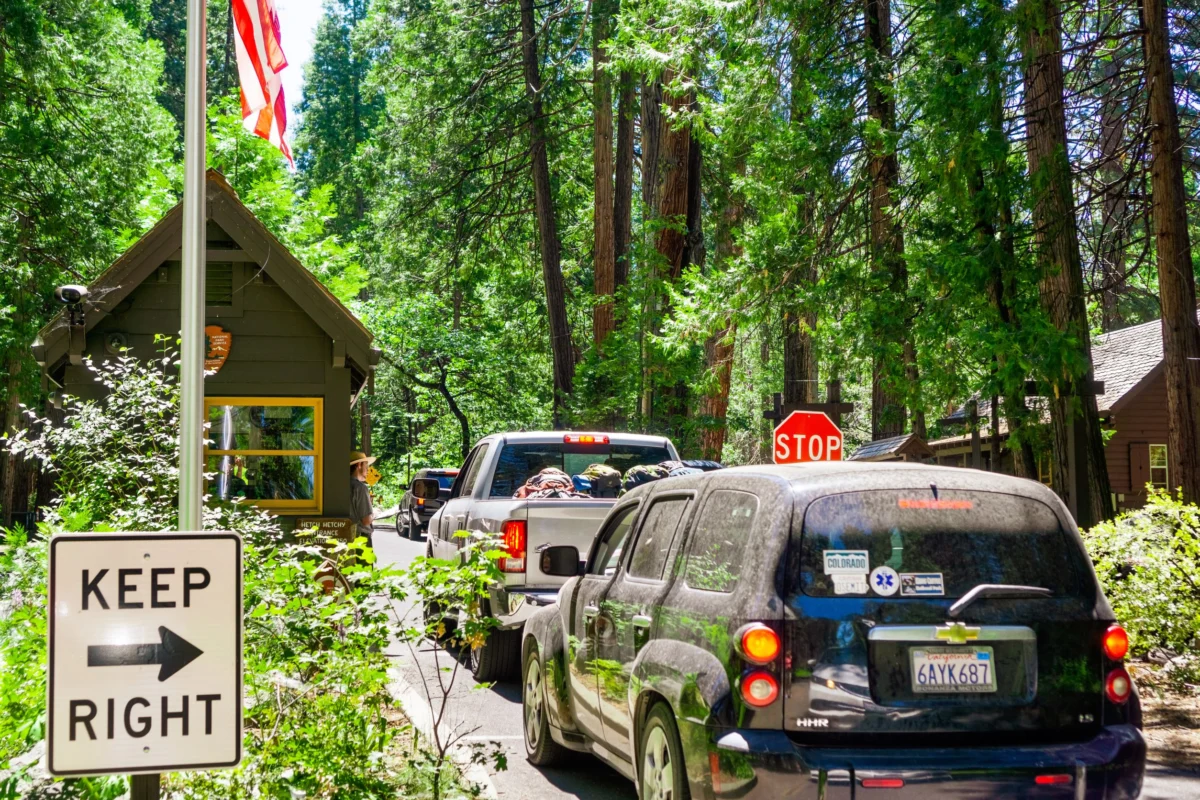
Social media has become a repository for grievances. Travelers report "L.A.-style" rush-hour traffic jams on winding mountain roads, full parking lots by mid-morning, and trails so crowded that the solitude typically associated with a national park is non-existent. Perhaps more concerning than the visitor experience is the environmental impact: reports of illegal parking in sensitive meadows and protected natural areas have risen, threatening the very flora and fauna that the NPS is mandated to protect.

The Legislative Counteroffensive
On July 1, the situation moved from the realm of public discourse into the halls of government. California Senators Adam Schiff and Alex Padilla issued a scathing open letter to Interior Secretary Doug Burgum and Acting NPS Director Jessica Bowron. The letter was not merely a request for information; it was an indictment of the current management strategy.
The senators argued that the decision to end the reservation system was made with a lack of transparency and a disregard for public input. They demanded clarity on how the current, unrestricted flow of traffic is impacting the core mission of the park: the preservation of natural resources and the safety of the public.
"The current situation is untenable," the letter stated, highlighting that traffic congestion is not merely an inconvenience—it is a safety hazard. The senators cited instances where traffic gridlock prevented emergency responders from navigating the park to address medical crises, a reality that turns an overcrowded park into a potential death trap.
Furthermore, the senators pointed to the broader context of reduced federal funding and staffing. "This situation is further complicated by the Administration’s reductions in staff, which has created critical gaps in park operations," they noted. "Key science and safety personnel have been rerouted to act as traffic controllers and parking attendants, hindering the park’s ability to manage wildfire risk and conserve natural resources."
The Human Cost: Staff and Advocacy Groups Weigh In
The outcry is not limited to elected officials. The National Parks Conservation Association (NPCA) has been among the most vocal critics of the DOI’s decision. Mark Rose, the Sierra Nevada program manager for the NPCA, characterized the current state of affairs as "pure chaos."
"Yosemite’s reservation system was a massive success, backed by years of expert analysis and public input," Rose said. "The current approach is harming natural resources and creating a hostile environment for the dedicated employees who keep the park running."
Perhaps the most compelling testimony comes from the union representing Yosemite’s frontline staff. In a series of internal polls, employees expressed near-unanimous agreement that the removal of the reservation system has severely compromised their working conditions.
"Staff have reported increased wait times during their commutes, challenges in fulfilling work duties due to stand-still traffic, and a heightened strain on all facilities and infrastructure," union leaders stated. The frustration is palpable: workers who are supposed to be managing the ecosystem, researching wildlife, and educating the public are instead finding themselves buried under the logistical demands of a park that is effectively operating beyond its intended capacity.

The Official Defense: A Divergence of Perspectives
In response to the mounting pressure, the Department of the Interior has maintained a defensive, if not optimistic, stance. In an official statement provided to media outlets, a spokesperson for the DOI dismissed the claims of "chaos," arguing that the park is functioning as intended.
"America’s national parks are open and accessible," the spokesperson stated. "Yosemite National Park continues to welcome visitors while improving access and traffic flow. During the July 4 holiday, one of the park’s busiest periods, traffic remained free-flowing, entrance waits at major entrances were less than 10 minutes, and Yosemite Valley shuttle wait times remained short."
This stark disconnect between the government’s data and the reports from the field highlights the core of the controversy. The DOI appears to be measuring success by throughput—how quickly cars move through a gate—whereas critics are measuring success by the quality of the visitor experience, the preservation of the landscape, and the well-being of the staff.
Implications for the Future of Public Lands
The conflict at Yosemite is a microcosm of a larger, systemic challenge facing the U.S. National Park System. As the desire to experience nature grows, the finite capacity of these protected areas becomes an increasingly urgent concern.
If the current trend of high-volume, unrestricted access continues, the long-term implications are clear. Overcrowding leads to the degradation of trails, the pollution of watersheds, and the disturbance of wildlife. Moreover, it forces a shift in the role of the park ranger from a steward of nature to a regulator of crowds.
The demand for the return of the timed-entry system represents a fundamental philosophical question: Are national parks meant to be places of unbridled, immediate access, or are they sanctuaries that require careful management to ensure they remain intact for future generations?
As summer rolls on and the number of visitors continues to climb, the pressure on the Department of the Interior will likely intensify. Whether the agency will concede to the demands of California’s senators and the park’s own staff, or whether it will continue to prioritize total accessibility, remains to be seen. One thing, however, is certain: the current status quo is unsustainable. For Yosemite to remain the "crown jewel" of the system, it requires a vision that balances the public’s right to explore with the imperative to protect.
The battle for Yosemite is not just about a $2 reservation; it is about the future of how we interact with our most precious landscapes. As the debate continues, the world watches to see if the gates of the park will remain wide open, or if the logic of limits will once again prevail.