In the high-stakes, sweat-drenched arena of modern functional fitness, few names have commanded as much sudden, earned attention as Katie Thomas. A Florida-based athlete, Paralympic hopeful, and, as of recently, a viral internet sensation, Thomas has spent her life dismantling the concept of physical limitations. While millions of social media users were first introduced to her through a comedic, off-the-cuff remark during a traffic stop—where she jokingly offered an officer "the hand of God"—the vast audience that followed her for the punchline stayed for the purpose.
Thomas is not merely an athlete; she is an architect of possibility. Born with a limb difference affecting her right arm, she has spent her life operating in a world designed for two-handed individuals. Yet, her narrative is not one of tragedy or struggle. It is a story of rigorous athletic pursuit, scientific inquiry, and a relentless commitment to proving that the only true limits are the ones we accept as absolute. Today, she is shifting her focus toward the global stage of the HYROX World Championships and the U.S. Paralympic sitting volleyball team, proving that her reach extends far beyond a viral video.
The Foundation: A Childhood Without "No"
To understand the tenacity Thomas brings to the gym, one must look at the environment that cultivated it. Raised in Florida, Thomas was never shielded from the realities of her limb difference, but she was shielded from the notion that it should dictate her trajectory. Her childhood was defined by activity: soccer fields, baseball diamonds, rodeo arenas, and equestrian centers.
"My dad very much believed in me and never told me no," Thomas reflects. "If I wanted to do gymnastics, I was in gymnastics. If I wanted to play baseball, I played baseball. He never let anyone tell me I couldn’t do something, and that changed the entire trajectory of my life."
This parental philosophy—that every obstacle is simply a puzzle to be solved—became the bedrock of her identity. By the time she pursued her degree in exercise science and earned her personal training certifications, Thomas had already internalized a fundamental truth: independence is not found, it is engineered. She didn’t grow up waiting for an invitation to play; she grew up finding a way to compete on her own terms.
Chronology of a Competitor: From Recreational Play to the Global Stage
Thomas’s athletic journey has been a steady climb of increasing intensity. While her background spans multiple disciplines, her transition into elite-level competition was catalyzed by the rise of functional fitness.
The CrossFit Years
Early in her adult life, Thomas gravitated toward CrossFit. She valued the community and the raw intensity of the training, but she found herself at a crossroads. The sport’s heavy emphasis on traditional Olympic lifting—a discipline highly dependent on bilateral symmetry—often felt like a square peg in a round hole. While she could adapt, she sought a format that rewarded the qualities she had honed over decades: work capacity, grit, and aerobic efficiency.
The HYROX Breakthrough
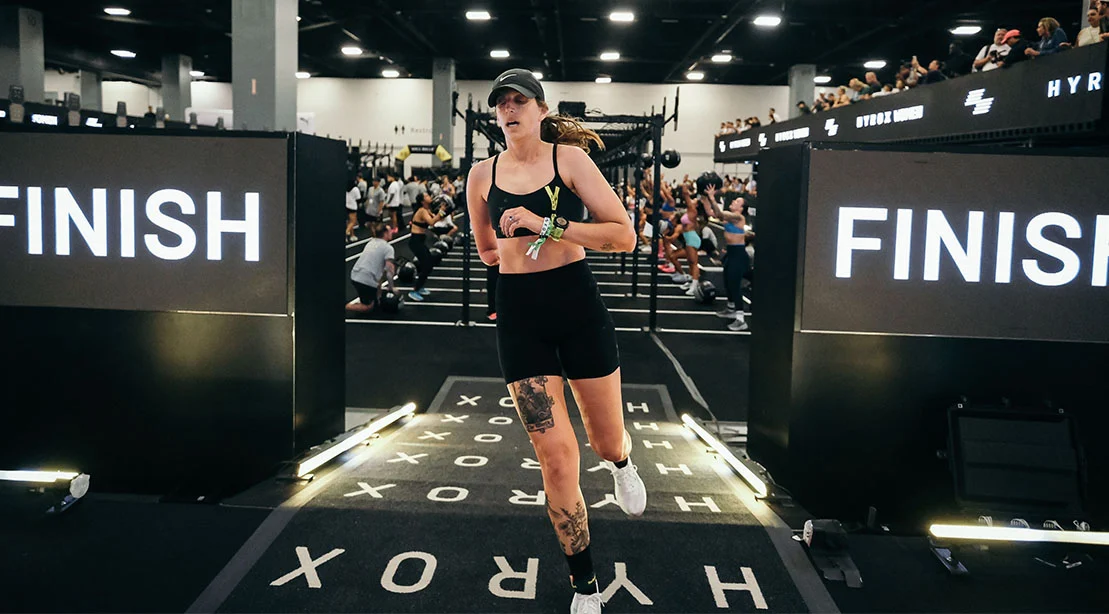
When HYROX entered the fitness zeitgeist, it was a turning point. Blending endurance running with functional stations like sled pushes, rowing, and lunges, the sport offered a level playing field for athletes with varying physical profiles. For Thomas, the realization was instantaneous: "I looked at it and thought, ‘Wait, I can do all of these things.’ Yes, I race in the adaptive division, but a lot of the adaptations are pretty minimal. It made me feel really competitive."
Her debut in Miami was not just a participation trophy; it was a dominant display of skill. Capturing first place in the adaptive upper-limb division, she did not rest on the laurel of the gold medal. Instead, she turned to the data. Upon realizing she ranked second in the United States and 16th globally, her mindset shifted from "I won" to "How much faster can I get?"
The Paralympic Horizon
Currently, Thomas has expanded her reach to the U.S. Paralympic sitting volleyball training camp. This shift has forced her to confront a new physical variable: extreme flexibility. "If you’ve never watched sitting volleyball, go sit on the floor and try to move the way they move," she says. "It looks easy on TV, but it’s absolutely wild." This transition highlights her versatility; she is not just a strength athlete, but a student of movement who is willing to start from scratch to reach the highest echelon of sport.
Supporting Data: The Science of Adaptation
Thomas approaches her training with the cold, clinical precision of an exercise scientist. She doesn’t view her limb difference as a "weakness" to be mitigated, but as a mechanical reality to be optimized.
The Methodology
When faced with a movement like a clean-and-jerk, which is fundamentally built for two-armed athletes, Thomas performs a cost-benefit analysis. Rather than risking injury or stagnation by forcing a sub-optimal pattern, she identifies the "intent" of the exercise. If the goal is explosive power, she swaps in unilateral movements or utilizes resistance bands to replicate the stimulus safely and effectively.
Her training log is a library of experiments. By utilizing dumbbells, bands, and custom grip attachments, she isolates muscle groups that others might engage through standard barbell work. She notes, "Because of how my arm rotates, I might activate completely different muscles than someone else doing the exact same exercise. So, I’m always trying to solve that puzzle."
The Aerobic Engine
The data suggests that for a HYROX athlete, the "engine"—the aerobic capacity required to maintain speed between stations—is the ultimate separator. Thomas has identified running as her primary area of growth. By focusing on her aerobic threshold, she projects that she can shave four to six minutes off her current race times. In the world of elite competition, where podium spots are separated by seconds, this is the margin between being a participant and being a champion.
Official Responses and Industry Impact
The impact of Katie Thomas’s visibility cannot be overstated. In an industry often dominated by hyper-curated, traditional aesthetics, her authentic approach has forced gyms and fitness brands to re-evaluate their inclusivity.
A Call for Visibility
When asked about what gym owners can do to improve accessibility, Thomas offers a simple, powerful mandate: "Have an adaptive athlete working out in your gym." She argues that equipment is secondary to representation. When a person with a limb difference walks into a facility and sees someone who looks like them already training, the psychological barrier to entry collapses.
The "Hand of God" and the New Awareness
Her viral traffic stop video served as the catalyst for a much larger movement. While the initial attention was humorous, the long-term result was a massive influx of followers from the limb-difference community. Thomas has received countless messages from parents of children with physical disabilities, many of whom have expressed a newfound sense of hope.
One particular story stands out: a mother of a young girl who underwent an amputation reached out, expressing her fear about her daughter’s future. After watching Thomas’s training videos, the mother realized that her daughter’s life would not be defined by what she lacked, but by what she could achieve. This, for Thomas, is the true metric of success.
Implications: Building the Future of Adaptive Sport
The implications of Thomas’s rise are twofold. First, she is proving that adaptive athletes can compete at the highest intensity levels of functional fitness. Second, she is normalizing the presence of adaptive bodies in mainstream athletic spaces.
Changing the Narrative
Thomas acknowledges the complexity of the cheers she receives on race day. As a younger athlete, she was unsure if the applause was for her performance or her disability. Today, she embraces the noise. She realizes that the cheers are not just for her; they are for the child in the crowd who is seeing a role model for the first time. She has transformed the "inspiration" narrative into an "aspiration" narrative.
The Path to Worlds
Looking toward the future, Thomas’s goals are clearly defined. She is currently training for the upcoming HYROX season with one singular target: the World Championships. Her confidence is not born of arrogance, but of the iterative process of learning, adjusting, and executing.
"I truly believe you’re going to see me there," she says.
Final Thoughts
Katie Thomas is effectively closing the gap between "adaptive athlete" and "elite athlete." By treating her training as a science and her platform as a responsibility, she is creating a future where the next generation of athletes will not have to "figure out" if they belong—they will simply know they do. Whether she is on the podium at a World Championship or in a local gym helping someone else solve their own training puzzle, her mission remains consistent: refusing to let anyone else define her limits.
For Thomas, the finish line is not a medal; it is the moment when the distinction between an adaptive athlete and an athlete disappears entirely, leaving only the work, the grit, and the pursuit of the next goal.