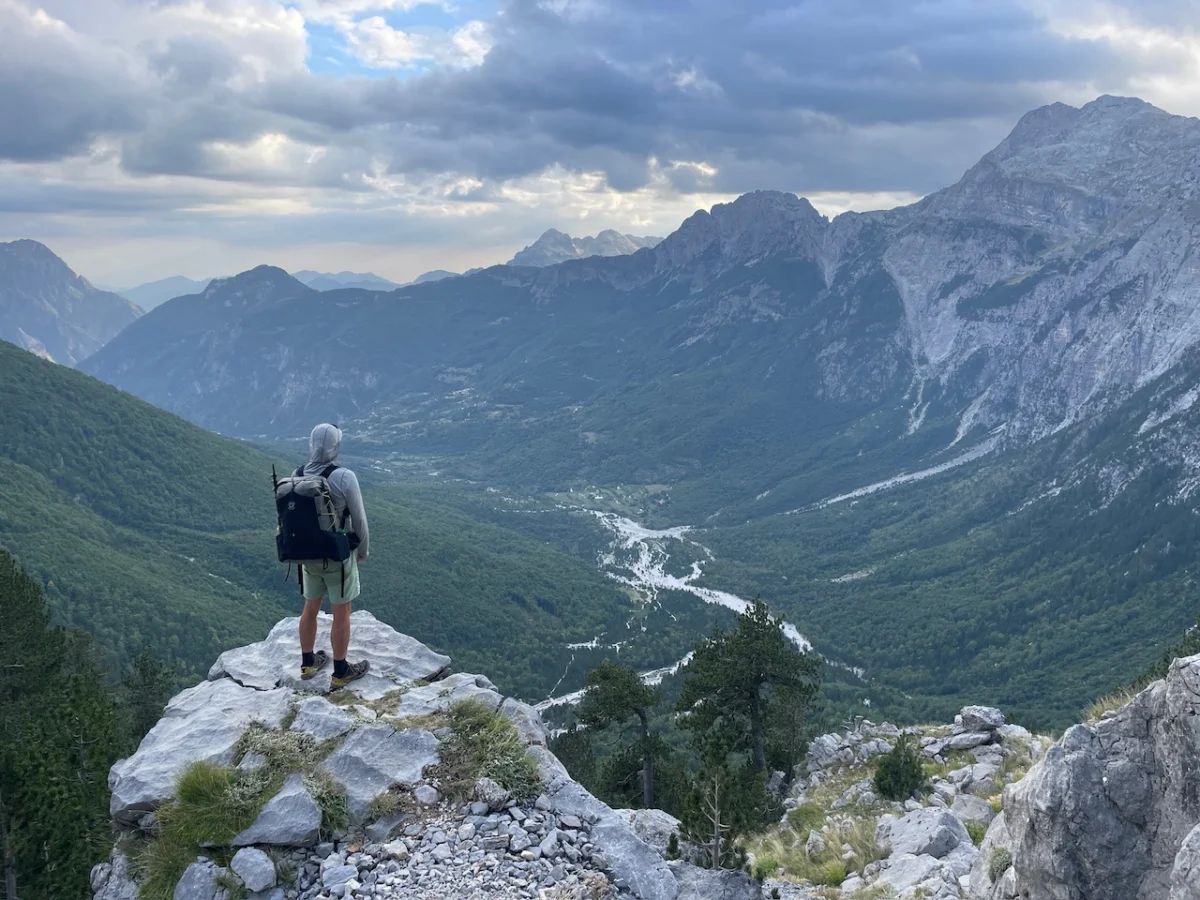
For the superstitious, the very name of the Accursed Mountains—or Bjeshkët e Nemuna—might evoke a sense of foreboding. Nestled within the rugged borderlands where Albania, Montenegro, and Kosovo converge, this dramatic limestone range was, until the turn of the millennium, largely inaccessible to the outside world. Often categorized as a “no-go zone” due to regional instability and political volatility, the range has undergone a remarkable metamorphosis over the last two decades. Today, it stands as one of Europe’s final frontiers for long-distance trekking, offering a raw, unfiltered encounter with wilderness and tradition.

The "Peaks of the Balkans" (PoB) trail, a 192-kilometer (119-mile) loop, has become the centerpiece of this transformation. Designed not merely as a hiking path but as a vehicle for peace and sustainable development, the trail links isolated mountain hamlets through ancient shepherd’s paths and forgotten forestry roads. For the modern backpacker, the PoB represents a rare opportunity to traverse three distinct cultures in a single ten-day journey, experiencing a landscape where the scars of the past are slowly being softened by the warmth of present-day hospitality.

Main Facts: The Anatomy of a Wilderness Route
The Peaks of the Balkans Trail is not a singular, rigid path, but a curated circuit that showcases the geological and cultural diversity of the Dinaric Alps.

- Distance: Approximately 192 km (119 miles) in total.
- Average Duration: 10 days of trekking, though experienced hikers with light gear can complete the circuit in six to seven days. Conversely, those seeking a more immersive experience with side trips and rest days often stretch the journey to 12 or 13 days.
- Difficulty: Moderate. While the technical terrain is generally accessible to fit hikers, the cumulative elevation gain and loss—a staggering 12,020 meters (39,436 feet)—requires significant stamina.
- Key Trailheads: The loop can be initiated from various points. The most popular and logistically convenient starting locations include Theth (Albania), Pejë (Kosovo), and Plav (Montenegro).
- Origins: The trail was formally established in 2012 as a collaborative initiative between the German development corporation GIZ and local action groups.
The primary mission behind the trail’s inception was to foster cross-border unity in a region once divided by war. By creating a sustainable, eco-friendly tourism economy, the project aimed to provide local inhabitants—many of whom live in remote, self-sufficient villages—with an incentive to remain on their land, preserving their unique flora, fauna, and cultural heritage.

Chronology of a Transformation
The history of the Accursed Mountains is inextricably linked to the geopolitical shifts of the 20th century. During the decades of communist rule in Albania under Enver Hoxha, the region was heavily militarized. The landscape remains dotted with the "somber remnants" of this era: concrete-domed pillboxes, abandoned guard towers, and lonely bunkers perched atop mountain passes. These structures serve as stark, silent reminders of a period defined by extreme isolationism and paranoia.

Following the conflicts of the 1990s, the region faced a period of stagnation. However, the early 2000s marked a pivot toward regional integration. The establishment of the PoB trail in 2012 was a watershed moment. It required the cooperation of three national governments to simplify border crossings for hikers, a feat that would have been unthinkable just a generation prior. Since its inception, the trail has evolved from a niche adventure for hardy explorers into a bucket-list destination for international trekkers, proving that the most effective way to heal old wounds is to open them to the world.

Supporting Data and Technical Insights
For those planning to traverse the range, preparation is key. The weather in the Dinaric Alps can be notoriously fickle, with snow often lingering on high passes well into June and early winter storms arriving as early as October.

Logistics and Navigation
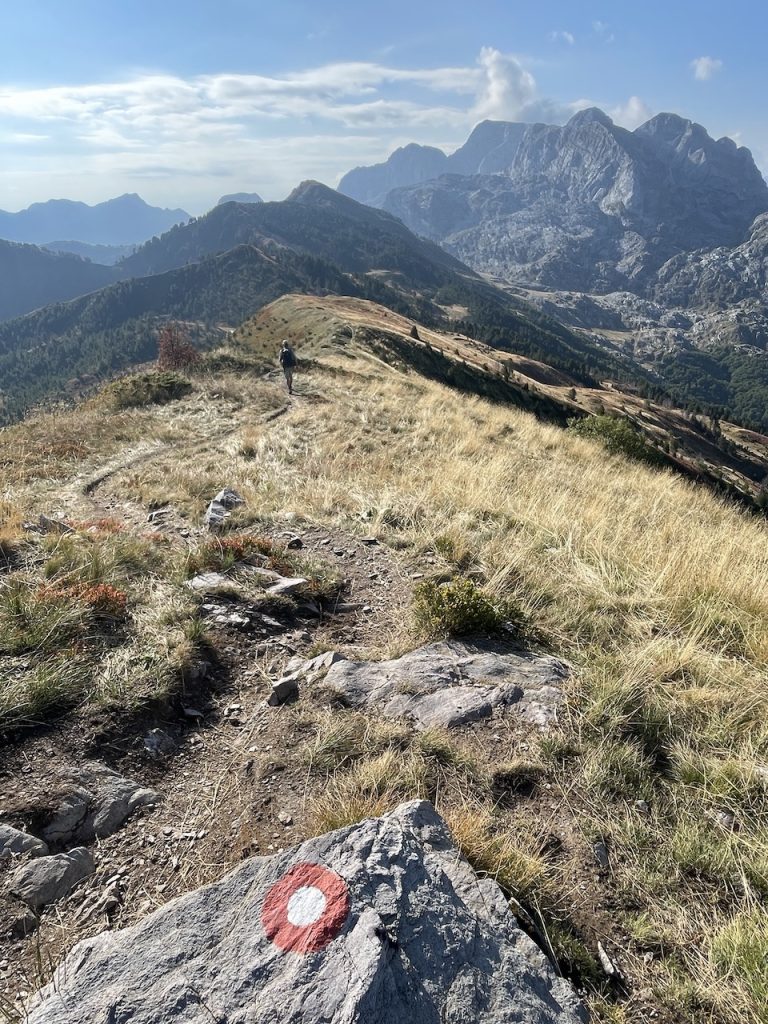
The route is generally well-marked, but the "official" path is subject to seasonal changes and local conditions. Hikers are advised to utilize modern GPS resources alongside traditional maps. The most iconic highlight for many is the ascent of the Tromedja (Three Countries) Peak (2,366m), which offers a 360-degree panorama of the intersection of Albania, Kosovo, and Montenegro.

Resupply and Water
Unlike the long-distance trails of the United States or Western Europe, the PoB is a "village-to-village" experience. Hikers do not need to carry a week’s worth of food. Instead, the trail connects a series of traditional guesthouses, such as the Bashkimi Guesthouse in Dobërdol, where hearty, locally sourced meals—including the famous Byrek—are the norm. Water sources are generally plentiful, though hikers should treat water in areas where livestock grazing is frequent.

The Kosovo Cut-Off
A notable trend among hikers is the "Kosovo Cut-Off," an alternative route that bypasses the lowland sections of the Kosovo leg, which occasionally follow paved roads. By veering off near the Tromedja summit or near the village of Milishevc, hikers can shave off roughly 20-30% of the trail distance while staying higher in the alpine environment.

The Cultural Implications: A Living Museum
The Peaks of the Balkans is more than just a physical challenge; it is an anthropological experience. Hikers are constantly immersed in the history of the region. Perhaps nowhere is this more evident than in the village of Theth, home to the 400-year-old "lock-in" tower, or Kulla.

The Kulla stands as a chilling monument to the tradition of gjakmarrja (blood feuds). In times past, a man targeted for retribution would retreat to this fortified stone tower, sometimes staying for months to avoid the cycle of "an eye for an eye." Today, the Kulla is a museum, and its existence serves as a testament to how far the region has moved toward reconciliation. The contrast between these grim historical structures and the overwhelming kindness of the local villagers—who open their homes to strangers and serve as stewards of the land—is perhaps the most profound takeaway for the modern visitor.

Official and Community Perspectives
The success of the Peaks of the Balkans has not come without its challenges. Local community leaders and tourism boards have emphasized that the goal is "slow tourism." They are wary of the over-commercialization that has plagued other European mountain ranges. The emphasis remains on family-run guesthouses, which ensure that the economic benefits of the trail directly support the mountain communities.

Environmental protection is another pillar of the trail’s governance. The region is home to rare species, including the Balkan lynx and various endemic flora. By centralizing foot traffic on designated paths, the project has successfully managed to keep the impact on the pristine alpine meadows to a minimum, ensuring that the "Accursed Mountains" remain a sanctuary for nature rather than a victim of their own popularity.
Conclusion: The Reward of Effort
Reflecting on the experience of hiking the range—such as the pre-dawn ascent to the summit of Tromedja—it becomes clear why this region has captured the imagination of the global trekking community. In the quiet, freezing darkness of an October morning, far from the reach of cell service and the complexities of modern life, the mountain provides a clarity that is increasingly hard to find.

As one sits atop a summit, watching the first light of day wash over the peaks of three nations, the "accursed" reputation of the past feels like a fading ghost story. The Peaks of the Balkans is a testament to the resilience of both the landscape and the people who call it home. For those willing to put in the effort, the reward is not just a spectacular view, but a deeper understanding of a region that has successfully turned its back on a dark history to embrace a future built on hospitality, cooperation, and the simple, enduring beauty of the mountains.