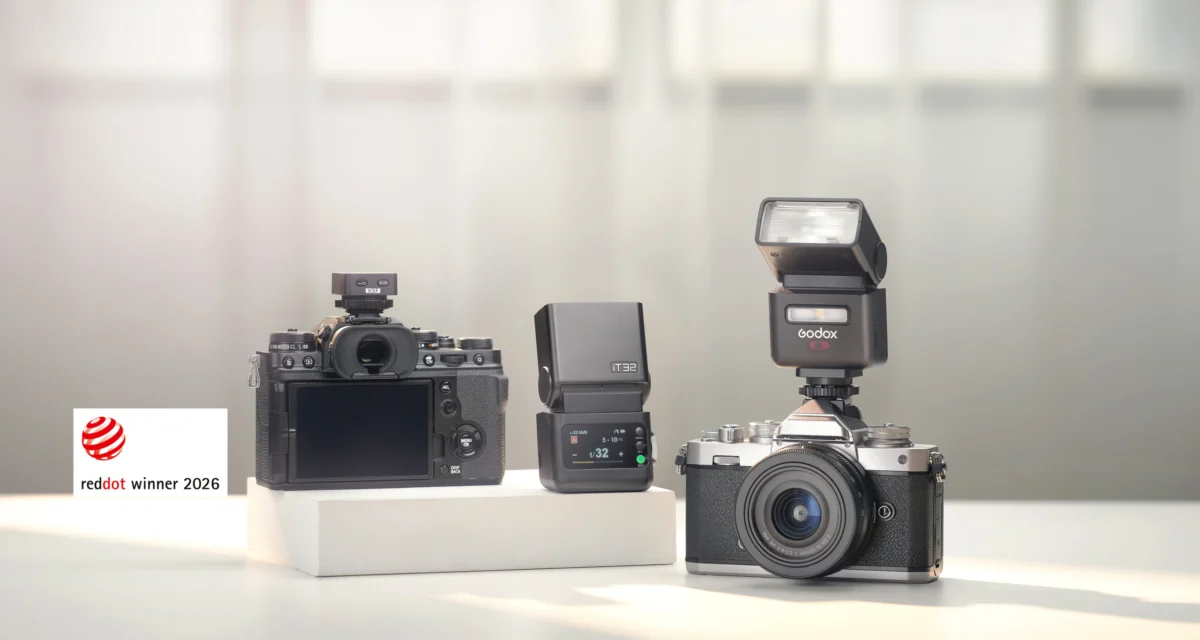
In the highly competitive world of professional photography and cinematography equipment, the Red Dot Design Award serves as a definitive benchmark for quality, innovation, and user-centric engineering. This year, the industry landscape shifts slightly as Godox, a global leader in lighting solutions, has announced that four of its latest products—the iT32, iT30Pro, X3Pro, and ML80Bi—have been honored with the prestigious Red Dot Design Award.
This recognition is not merely a decorative accolade; it signifies a pivotal moment for Godox as it pivots toward more ergonomic, high-performance, and portable lighting ecosystems. For working professionals who demand reliability in high-pressure environments, this announcement sheds light on the manufacturer’s commitment to refining the tools that define modern visual storytelling.
Main Facts: The Award-Winning Quartet
The Red Dot Design Award evaluates thousands of entries globally, judging them on criteria ranging from functionality and durability to aesthetics and emotional content. Godox’s successful submission of four distinct products highlights a broad-spectrum success, covering both lighting heads and control systems.
The Honorees
- iT32 & iT30Pro: These units represent the next generation of Godox’s studio lighting prowess, focusing on thermal efficiency and light quality.
- X3Pro: As a successor to the highly popular X3 trigger, the X3Pro aims to redefine the interaction between the photographer and their lighting setup through improved interface design.
- ML80Bi: A versatile, compact LED light that addresses the growing demand for "run-and-gun" content creation without sacrificing the color accuracy expected in professional studio work.
The core philosophy linking these products is the "Light Without Limits" mantra, a design language that prioritizes modularity and intuitive control, allowing creators to spend less time troubleshooting gear and more time capturing the perfect shot.
Chronology: A Trajectory of Design Evolution
The path to this Red Dot recognition did not happen overnight. To understand the significance of this achievement, one must look at Godox’s strategic evolution over the past decade.
The Foundation Years (2015–2019)
Initially known for providing affordable alternatives to premium flash systems, Godox spent its early years establishing a reputation for value. During this period, the design language was purely utilitarian. The focus was on "getting the job done" rather than industrial aesthetics.
The Shift to User-Centricity (2020–2023)
As the creator economy exploded, the need for gear that was not only powerful but also aesthetically pleasing and highly portable became paramount. Godox began integrating color touchscreens, advanced heat-management systems, and ruggedized casings. The release of the ML series and the initial X-series triggers marked the beginning of this transition.
The Red Dot Milestone (2024–2026)
With the development of the X3Pro and the latest iT-series, Godox shifted its R&D focus toward "haptic design"—the tactile feeling of buttons, the fluidity of interface menus, and the balance of the lights when mounted on various stands. The 2026 recognition by the Red Dot jury is the culmination of this three-year intensive focus on user-experience design.
Supporting Data: Why Design Matters in Lighting
In the photography industry, "good design" is often confused with "good specs." However, the Red Dot committee looks beyond pure power output (lumens/watt). Here is why the winning products stood out in the evaluation:
1. Thermal Management and Form Factor
The ML80Bi is a prime example of compact engineering. Traditional high-CRI lights often required massive heatsinks, making them unwieldy. The award-winning design utilizes advanced airflow geometry, allowing the light to remain cool in a chassis smaller than a standard telephoto lens.
2. Interface Intuition
The X3Pro trigger addresses a common pain point: the "menu dive." By refining the interface to be flatter and more responsive, Godox has minimized the cognitive load on the photographer, allowing for faster adjustments in the middle of a shoot.

3. Sustainability and Material Science
Red Dot judges are increasingly looking at the longevity of a product. The materials used in the iT-series are selected for high-impact resistance, ensuring that the lights can withstand the rigors of travel and constant assembly/disassembly, thereby increasing the product’s lifecycle and reducing electronic waste.
Official Responses: The Philosophy of Innovation
In a statement regarding the awards, Godox leadership emphasized that the recognition serves as a validation of their shift toward "creator-first" manufacturing.
"This recognition is more than an award for design," the company stated in its official press release. "It reflects our continuous pursuit of refinement—in every detail shaped for real-world creation, and every innovation driven by how creators actually work."
By observing how professional photographers and videographers use their gear—from weddings and fashion shoots to documentary field work—Godox has implemented a feedback loop. The engineers who designed the X3Pro, for example, spent significant time shadowing event photographers to understand how triggers are gripped, how they interact with cold fingers in winter, and how they react to accidental drops. This ethnographic approach to design is exactly what the Red Dot jury seeks to reward.
Implications: The Future of Photographic Gear
What does this award mean for the average photographer, from the hobbyist to the agency professional?
A Standardized Professionalism
When a brand like Godox—which is highly accessible to the masses—starts winning design awards usually reserved for high-end cinematic brands, it raises the floor for the entire industry. Competitors will likely be forced to improve their own industrial design standards to keep pace, ultimately benefiting the consumer with better-built, more reliable equipment across all price points.
The Convergence of Video and Stills
The inclusion of the ML80Bi and iT-series in this list highlights the blurring lines between lighting for photography and lighting for video. As hybrid shooters become the norm, the demand for equipment that performs flawlessly in both "flash" and "continuous" modes will only grow. Godox’s focus on versatile design indicates they are positioning themselves to lead this hybrid future.
Long-Term Ecosystem Commitment
Winning a Red Dot award is often a signal that a company is committed to its design language for the long haul. For photographers, this means that investing in these systems is a safer bet. When a manufacturer invests heavily in the industrial design of their triggers and lights, they are usually building a platform that will be supported with firmware updates and accessory compatibility for years to come.
Conclusion: Crafting the Future
The Red Dot Design Award is a testament to the fact that Godox has matured from a manufacturer into a design house. By focusing on the nuances of user experience—the way a dial turns, the weight of a battery pack, the logic of a software menu—they have moved beyond the spec sheet.
For the creative professional, this is an encouraging development. In a field where the gear is an extension of the artist’s eye, the importance of intuitive, well-designed tools cannot be overstated. As the iT32, iT30Pro, X3Pro, and ML80Bi begin to populate studios and camera bags worldwide, they serve as a reminder that the best light is not just one that is bright, but one that is perfectly integrated into the creative workflow.
As we look toward the future of visual media, the intersection of technology and art will continue to be mediated by the tools we choose. If these four award-winning products are any indication, the future of lighting is becoming smaller, smarter, and significantly more elegant. Godox has set the bar; it remains to be seen how the rest of the industry will respond to this new standard of design-led innovation.