The hydrocarbon sector is currently undergoing a radical transformation. From the harsh, isolated environments of offshore drilling rigs to the intricate, sprawling networks of midstream pipelines and downstream refineries, Artificial Intelligence (AI) is being deployed to optimize every facet of the value chain. Yet, as operators race to leverage machine learning and predictive analytics to do more with less, a critical realization is emerging: AI models are only as robust as the data streams that fuel them.
In the high-stakes world of oil and gas, where operational efficiency, safety, and environmental stewardship are non-negotiable, the industry is discovering that AI alone is insufficient. The missing link is reliable, high-speed, and ultra-low-latency connectivity. As the sector shifts from reactive maintenance to autonomous, "Agentic" operations, connectivity is no longer just a support function—it has become a foundational strategic asset.
The State of the Industry: AI’s Rapid Integration
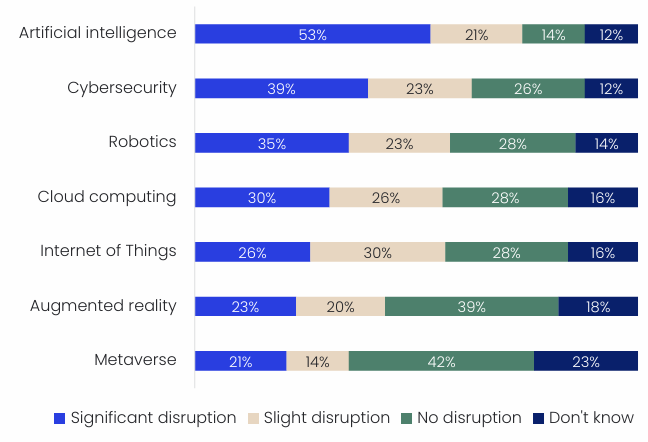
The transition from theoretical exploration to full-scale deployment of AI is no longer a futuristic vision; it is the current operational reality. According to GlobalData’s Q1 2026 industry sentiment surveys, more than 50% of industry professionals now classify AI, robotics, and cloud computing as "disruptive" technologies.
The momentum is fueled by a massive capital influx. GlobalData estimates that the total AI market, which stood at roughly $81 billion in 2022, is projected to skyrocket to approximately $910 billion by 2030. This exponential growth reflects a fundamental shift in corporate strategy: energy leaders are moving beyond simple data diagnostics and into the realm of "Agentic AI"—systems capable of making autonomous decisions and executing complex, real-time adjustments to physical equipment.
Chronology of the Digital Shift
- The Era of Diagnostics (2015–2020): Operators focused on digitizing records and using basic analytics to understand why equipment failed after the fact.
- The Rise of Connectivity (2020–2023): The industry began prioritizing Industrial IoT (IIoT) to gather sensor data, yet struggled with bandwidth limitations in remote environments.
- The AI/ML Acceleration (2023–2025): Organizations began embedding Machine Learning models into workflows to predict maintenance needs.
- The Current Era of Autonomy (2026–Present): Focus has shifted to "Agentic AI" and edge-computing, where real-time connectivity enables machines to act on insights without human intervention, necessitating high-performance network foundations like Private 5G.
The Connectivity Bottleneck: Barriers to Scaling
While the appetite for AI is high, scaling remains fraught with challenges. Many operators are attempting to overlay 21st-century intelligence onto 20th-century Operational Technology (OT) infrastructure. These aging systems were never designed for the massive data throughput required by modern digital twins, edge computing, and real-time AI modeling.
The Complexity of Legacy OT
Integrating AI into existing legacy systems presents a three-fold challenge:

- Data Silos: Information is often fragmented across departments and hardware, making it difficult for AI to pull a cohesive picture of asset health.
- Regulatory Compliance: Multinational operators must navigate a labyrinth of international and local safety regulations, which often require stringent data governance.
- Harsh Environments: Remote and offshore locations lack the high-speed fiber infrastructure found in urban industrial hubs, leaving operators reliant on unstable satellite or legacy radio links that cannot support real-time responsiveness.
Private 5G: The Backbone of Industrial Intelligence
To overcome these barriers, the industry is increasingly turning to Private 5G networks. Unlike public networks, Private 5G provides a dedicated, secure, and localized environment that ensures sensitive operational traffic remains protected within the site perimeter.
By deploying Private 5G, operators can support the density of sensor networks required for true "digital twinning." These networks provide the low-latency backbone necessary for high-fidelity data transmission, allowing AI to process information at the "edge"—directly on the equipment or within the immediate facility—rather than waiting for data to travel to a distant cloud server.
Supporting the Full Lifecycle
- Upstream: AI models optimize drilling by adjusting parameters like mud flow and rotation speed in real-time. Private 5G ensures these adjustments happen in milliseconds, preventing equipment damage and maximizing reservoir recovery.
- Midstream: For thousands of miles of pipeline, Private 5G facilitates constant, low-power monitoring. AI can detect the subtle pressure drops that indicate a leak or unauthorized interference, ensuring rapid response times that mitigate environmental disasters.
- Downstream: In refineries, AI models optimize chemical processes and heat exchanger efficiency. By reducing the frequency of unplanned shutdowns through condition-based maintenance, operators significantly lower their emissions profiles and energy waste, directly supporting ESG mandates.
Implications for the Future Workforce
The rise of Agentic AI and the accompanying shift toward hyper-connected operations will fundamentally change the nature of the energy workforce. The role of the field technician is evolving from manual, hands-on repair to "digital oversight."
Workers equipped with augmented reality (AR) tools and real-time tablets will operate in safer environments, guided by AI-driven insights delivered via Private 5G. This transition requires significant investment in training and change management, but the payoff is clear: higher retention of knowledge, improved safety outcomes, and a workforce that is empowered by data rather than burdened by it.
The Strategic Path Forward: Expert Perspectives
Industry experts emphasize that the successful deployment of AI is no longer a matter of choosing the right software; it is a matter of building the right infrastructure. "Connectivity is becoming a strategic operational capability," says industry analysis, "rather than simply a line item in the IT budget."
Organizations that treat their network as a foundational layer—investing in secure, deterministic connectivity that integrates seamlessly with existing safety systems—will secure a definitive competitive advantage. As Ericsson and other pioneers in the space illustrate, the goal is not to force existing operations to adapt to the technology, but to deploy solutions that integrate into the specific operational realities of the oil and gas sector.
Addressing Cybersecurity and Resilience
A major concern for operators is the risk of digitizing critical infrastructure. Private 5G addresses this through granular network segmentation. By isolating operational data from other traffic, companies can create a "fortress" around their critical assets, ensuring that even if one segment of the network is compromised, the core industrial processes remain shielded.
Conclusion: Turning Data into Action
The trajectory of the oil and gas industry is clear: the path to efficiency, sustainability, and safety leads through the integration of AI and high-performance connectivity. As operators transition from diagnostic tools to autonomous systems, the infrastructure that supports these capabilities will determine the winners and losers of the next decade.
The challenge for leadership is to view Private 5G not as a discretionary telecom upgrade, but as the prerequisite for the next industrial revolution. By building a secure, responsive, and data-dense foundation today, oil and gas companies can ensure their operations are resilient enough to withstand the complexities of tomorrow, ultimately driving more value from both their legacy assets and their newest technological investments.
As the industry moves toward 2030, those who successfully harmonize their AI ambitions with robust connectivity will find themselves at the forefront of a more efficient, safer, and highly profitable energy landscape. The time to bridge the gap between AI theory and operational reality is now.
References:
- GlobalData: Artificial Intelligence in Energy, August 2023.
- GlobalData: Top 20 Oil & Gas Themes 2026, April 2026.
- GlobalData: Tech Sentiment Polls Q1 2026 Strategic Intelligence, April 2026.