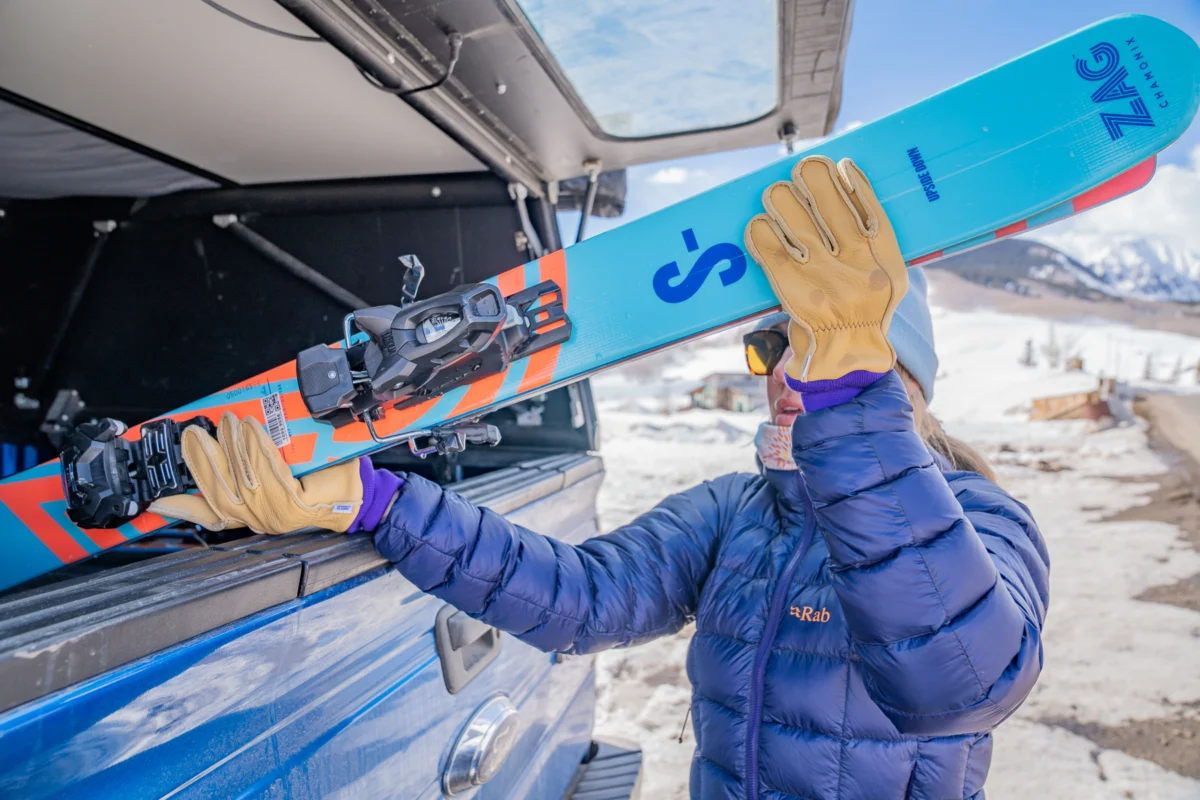
If you were tasked with packing for a month-long, multi-continental ski tour—spanning the jagged, wind-scoured peaks of the American West, the deep, legendary powder of Hokkaido, and the historic resorts of the European Alps—and you were restricted to a single piece of handwear, the choice would be surprisingly simple. You would choose the Hestra Fall Line Mittens.
At a price point of $190, this design is neither new nor revolutionary. In fact, these mittens have been a staple in the Hestra lineup for over a decade. In an industry obsessed with the "next big thing" and the constant, often unnecessary, reinvention of the wheel, the Fall Line remains a defiant testament to the power of functional, timeless engineering.
Main Facts: The Anatomy of a Modern Classic
The Hestra Fall Line collection, which includes a standard glove, a 3-finger "lobster claw" hybrid, and the classic mitten, is designed specifically for the needs of the modern freeride skier. The primary objective of this design is to strike an elusive balance: achieving high-level thermal efficiency without sacrificing the tactile dexterity required to manage ski boots, goggles, and technical packs.
Key Specifications:
- Outer Shell: Supple, treated cowhide leather.
- Lining: Brushed polyester fleece for moisture-wicking and comfort.
- Insulation: G-Loft synthetic insulation, providing a "moderate warmth" rating (7/8 in the Hestra scale).
- Cuff Style: Under-cuff, minimalist design for seamless integration with shell jackets.
- Features: Pre-curved finger construction, integrated wrist leashes, and a included tin of Hestra Leather Balm.
The Fall Line Mitten occupies a specialized niche. By utilizing a cowhide shell rather than synthetic nylon or polyester, it offers a level of abrasion resistance and wind-blocking capability that is difficult to replicate with textile materials.

A Chronology of Performance: From Box to Backcountry
The "break-in" period of a glove is often the most overlooked aspect of gear testing. Many technical gloves rely on stiff, waterproof membranes that never truly soften, leading to a permanent feeling of rigidity. The Fall Line Mitts, however, tell a different story.
The Initial Assessment
Out of the box, the leather feels mildly stiff—a characteristic of high-quality cowhide. However, this is not a defect; it is the starting point of a custom mold. During two days of intense resort skiing at Jackson Hole Mountain Resort, the leather underwent a rapid transformation. By the end of the second day, the material had effectively "mapped" to the contours of my hands. It transitioned from a stiff accessory to a second skin.
Mid-Season Utility
As the season progressed, I tested these mitts in a variety of conditions. From the bitter, single-digit temperatures of a January deep-freeze to the humid, mid-winter storm cycles of the Teton Pass, the internal brushed polyester fleece acted as a thermal regulator. Unlike down, which can clump when exposed to moisture, or cheaper synthetic fillers that pack out over time, the G-Loft insulation remained lofty and consistent throughout the testing period.
Supporting Data: Dexterity and Thermal Regulation
One of the most persistent criticisms of the mitten category is the "club hand" effect—the loss of fine motor skills. As a skeptic of mittens with internal finger dividers, I initially approached the Fall Line with a bias toward five-finger gloves. However, the internal architecture of the Fall Line fundamentally shifted my perspective.

The Dexterity Advantage
When compared to other heavy-duty winter mittens, the Fall Line’s internal dividers prevent the "swimming" sensation often felt in traditional mitts. During a field test involving standard mountain logistics—buckling rigid ski boots, adjusting goggle straps, and retrieving nutrition from a pack—the Fall Line performed with surprising grace. The pre-curved shape means that when your hand is in a relaxed, neutral position, the mitten is already in the "grip" posture required for holding ski poles.
Thermal Performance
While the manufacturer rates the mitten at a 7/8 on their warmth scale, my personal experience suggests a higher degree of efficacy due to the wind-blocking nature of the cowhide. During a 1,500-foot vertical climb on a 20-degree Fahrenheit day, I noted that the mitts did not cause the "sweat-and-freeze" cycle often associated with over-insulated handwear. The breathability of the leather shell allows for moisture vapor to escape, keeping the hands dry and, consequently, warm.
Official Perspectives and Maintenance
Hestra, a Swedish company with a heritage dating back to 1936, emphasizes a "maintain-to-last" philosophy. This is evidenced by the inclusion of their proprietary Leather Balm in every purchase.
The Role of Leather Balm
The balm—a blend of beeswax, lanolin, carnauba wax, and neatsfoot oil—is not merely an accessory; it is a critical component of the glove’s lifespan. In testing, applying the balm after a particularly wet storm cycle significantly improved the water-repellency of the cowhide.

Cautionary Note: A common user error, which I experienced firsthand, is over-application. Applying too much balm can saturate the leather, requiring a multi-day "curing" period for the material to fully absorb the fats. A light, consistent application—roughly a teaspoon—is sufficient to maintain the integrity of the shell without sacrificing breathability.
Implications for the Modern Skier
The debate between gauntlet-style gloves and under-cuff designs like the Fall Line is a perennial topic in the ski community.
The Under-Cuff Advantage
The primary implication of the under-cuff design is aesthetic and ergonomic sleekness. By sliding beneath the cuff of a technical shell, the Fall Line prevents the "bulk" that often interferes with a skier’s range of motion at the wrist.
The Trade-off
It is necessary to address the "ultra-deep" day scenario. If one is skiing in the Pacific Northwest, where "wet" snow is the standard, a GORE-TEX insert or a gauntlet-style glove might offer superior protection against snow ingress. The Fall Line is water-resistant, not waterproof. While the cowhide handles snowmelt exceptionally well, it is not designed for submersing in slush or prolonged exposure to rain. However, for 90% of the skiing population operating in the Mountain West or alpine environments, the trade-off is negligible compared to the comfort and durability gained.

The Sustainability Argument
In an era of fast fashion, the longevity of the Fall Line is a crucial consideration. A well-cared-for pair of Hestra cowhide mittens can last five to ten years of heavy use. By choosing a product that is designed to be repaired and maintained rather than replaced, the skier is making a tangible contribution to reducing gear waste.
Conclusion: The Queen of Well-Roundedness
The term "well-rounded" is often used as a polite way of saying "mediocre at everything." In the case of the Hestra Fall Line, it is the highest form of praise. It is a piece of gear that refuses to specialize in a way that limits its utility. It is not so bulky that you cannot handle your equipment, yet not so thin that you lose your digits in the wind.
While it may be tempting to pack a specialized "storm" mitt and a "touring" glove, the joy of travel lies in efficiency. If you, like many enthusiasts, value the ability to move through the mountains with less gear but higher quality, the Hestra Fall Line Mittens are the unequivocal choice. They are, quite simply, the standard by which all other ski handwear should be measured.