Standing at the top of "The Wall" at Kirkwood Mountain Resort this past spring, I found myself in a familiar state of gear-induced hesitation. As a bootfitter by trade and a skeptic by nature, I have long maintained a wary distance from the BOA-closure revolution in alpine skiing. My feet are notoriously narrow, and my personal preferences lean toward the uncompromising, low-volume shells that demand precise, manual buckle tension. Yet, looking down at the shiny, dual-dialed Dalbello Veloce Space 120, I was forced to confront the latest iteration of alpine performance.
The 2026 Dalbello Veloce Space 120 Dual BOA ($830) represents a radical departure for a brand that has historically dominated the market through either rigid, World Cup-caliber plug boots or their legendary "Cabrio" freestyle designs. By integrating the dual BOA system, Dalbello hasn’t just updated a model; they have fundamentally reimagined what a high-performance, all-mountain, recreational-focused boot can achieve.
Main Facts: The New Standard of Adjustment
The Veloce Space 120 is not merely a "Veloce with dials." It is a ground-up redesign of the shell and liner architecture. At its core, it remains a mid-volume, 120-flex powerhouse, but the transition from traditional buckles to the dual BOA system requires a total rethink of shell geometry.
Key Specifications:
- Flex: 120 (also available in 100, 110, and 130)
- Weight: 2,050g per boot (at a 26.5 size)
- Fit Profile: Best suited for average to slightly wider foot shapes.
- Closure System: Dual BOA H+i1 system, allowing for independent micro-adjustment of the forefoot and cuff.
- Customization: Featuring a grindable, depth-marked zeppa (boot board) and dual-sided cuff alignment.
Chronology: From Cabrio Roots to Modern Precision
Dalbello’s journey to this moment has been nuanced. For years, the brand thrived on the cult-like following of its Cabrio designs—the Krypton and Il Moro. These boots were beloved by the freestyle and freeride communities for their smooth, progressive flex and their "easy-on" architecture.

However, four years ago, Dalbello signaled a shift. They began moving toward traditional overlap shells that provided a more familiar, powerful feel for the average consumer—someone who wanted high performance without needing to hire a professional athlete’s coach just to put their boots on in the morning. The first generation of the Veloce was an immediate success, characterized by soft, vibration-dampening plastics and exceptionally plush liners.
The 2026 update is the logical, albeit aggressive, conclusion to that shift. By removing the traditional buckles, Dalbello has reclaimed space for engineering. They have moved away from the "marshmallow" feel of the original Veloce and into a realm of precision that feels closer to a race boot than a resort cruiser.
Supporting Data: Testing the "Mullet" Configuration
My experience on the mountain was defined by a skepticism that slowly turned into appreciation. As someone who has spent over 300 days in the notoriously unforgiving Tecnica Mach1 LV 130, I am no stranger to instep pressure.
The BOA Debate
The industry remains divided on the "lower shell BOA." Many critics, myself included, have argued that tightening the forefoot via a cable system can create "hot spots" on the instep, especially for skiers with low-volume, bony feet. My experience at Kirkwood confirmed that even in the Veloce, a fully tensioned lower dial can be aggressive.

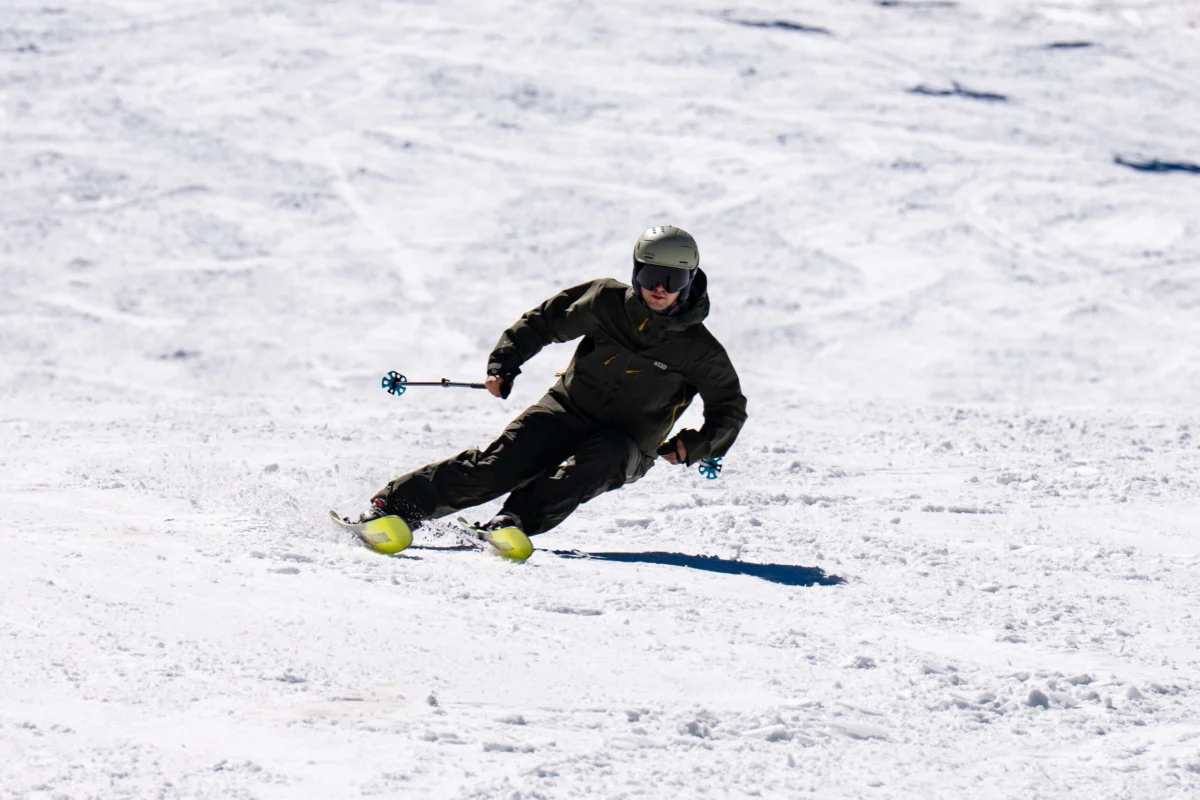
However, the "Mullet BOA" configuration—an upper cuff dial paired with a traditional or dual-buckle lower—is a game changer. By using the upper BOA to lock the heel into the deep, anatomical pocket of the shell, I was able to maintain total control during high-speed, carved turns on the corduroy while keeping the forefoot tension moderate. This is where the Veloce shines: it allows the skier to isolate pressure.
The Bootfitter’s Perspective
The true brilliance of this boot lies in its "tech-readiness." In an era where many manufacturers are molding shells that are nearly impossible to punch or grind, Dalbello has bucked the trend. They have included:
- Grindable Zeppas: A rarity in modern boots, the Veloce allows for the grinding of the boot board to adjust ramp angle and lateral stance.
- Visual Indicators: The shell is mapped with markers to help bootfitters identify exactly where to grind for navicular or sixth-toe relief.
- Dual-Sided Cuff Alignment: Essential for those with asymmetrical leg alignment, ensuring the boot can be canted to match the skier’s natural biomechanics.
Official Responses: The Brand’s Design Philosophy
While Dalbello has not released a formal "manifesto" on the BOA transition, the design choices speak volumes. By moving to the dual BOA, the engineers at Dalbello are attempting to bridge the gap between "out-of-the-box comfort" and "race-ready performance."
According to product development insights, the shift to a BOA-centric platform was dictated by the need for a more uniform, 360-degree wrap around the foot. Unlike traditional buckles, which create "hinge points" of pressure, the cable system distributes tension evenly across the instep and the calf, theoretically reducing the amount of force required to keep the foot secure.

Implications: Who is this Boot For?
The 2026 Dalbello Veloce Space 120 is not a boot for the casual, once-a-year skier. It is, unequivocally, a boot for the technologist.
The Ideal User
- The Power-User: If you spend your days chasing fresh lines or railing high-speed carves, the upper BOA provides a level of stiffness and security that is genuinely superior to many traditional buckle systems.
- The Customization Enthusiast: If you have spent years fighting with off-the-shelf boots and need a shell that a professional bootfitter can actually modify, this is one of the most "fitter-friendly" boots on the market.
- The Mid-to-High Volume Skier: While the shell is precise, it caters to those who need a bit more volume than a race-fit boot.
The Verdict
The Veloce Space 120 is a testament to the fact that innovation does not always mean sacrificing performance. By integrating the BOA system, Dalbello has managed to create a boot that is more responsive than its predecessor, easier to customize, and remarkably effective at locking the foot into a performance stance.
As I snaked through the slushy bumps at the base of Kirkwood, I found myself forgetting about the dials entirely—which is, perhaps, the highest compliment a piece of gear can receive. When the technology fades into the background and all you feel is the transfer of energy from your legs to the ski, the design has done its job.
For the skier who values precision, wants the latest in closure technology, and demands a boot that can be fine-tuned to their specific anatomy, the 2026 Dalbello Veloce Space 120 Dual BOA is a significant step forward. It is a bold, modern, and highly effective tool that proves that even a skeptic can be convinced when the performance is backed by genuine engineering.