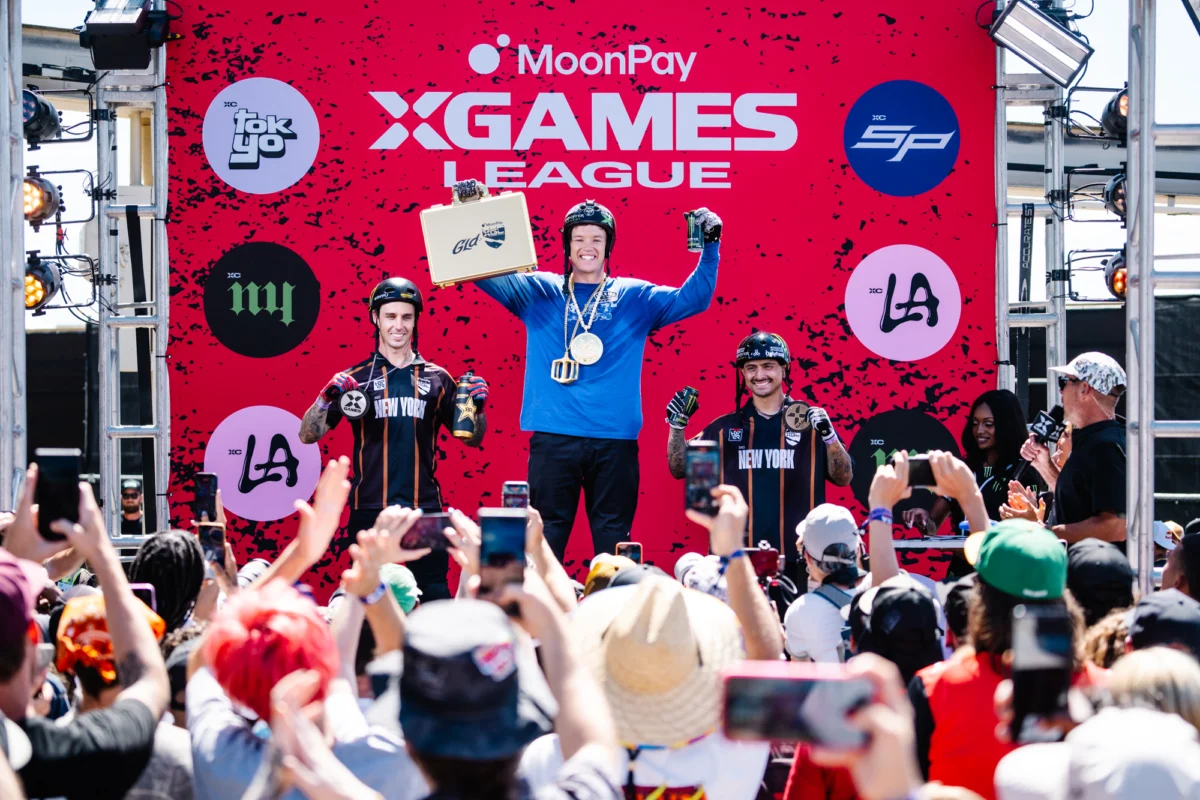
The second day of the MoonPay X Games Sacramento 2026 transformed the California capital into the epicenter of the action sports universe. Under a radiant sun and before a capacity crowd, the event marked a pivotal shift in the sport’s landscape with the formal introduction of the new X Games League and team-based format. As the dust settled on a high-octane Saturday, seven gold medals had been awarded, two Never-Before-Done (NBD) tricks were etched into the history books, and the debut of a new structural era for the Games proved that the spirit of individual competition is being elevated by the camaraderie—and rivalry—of team dynamics.
Chronology of a High-Stakes Saturday
The intensity of Saturday was unrelenting, with athletes navigating a complex schedule of vert, street, park, and dirt disciplines.
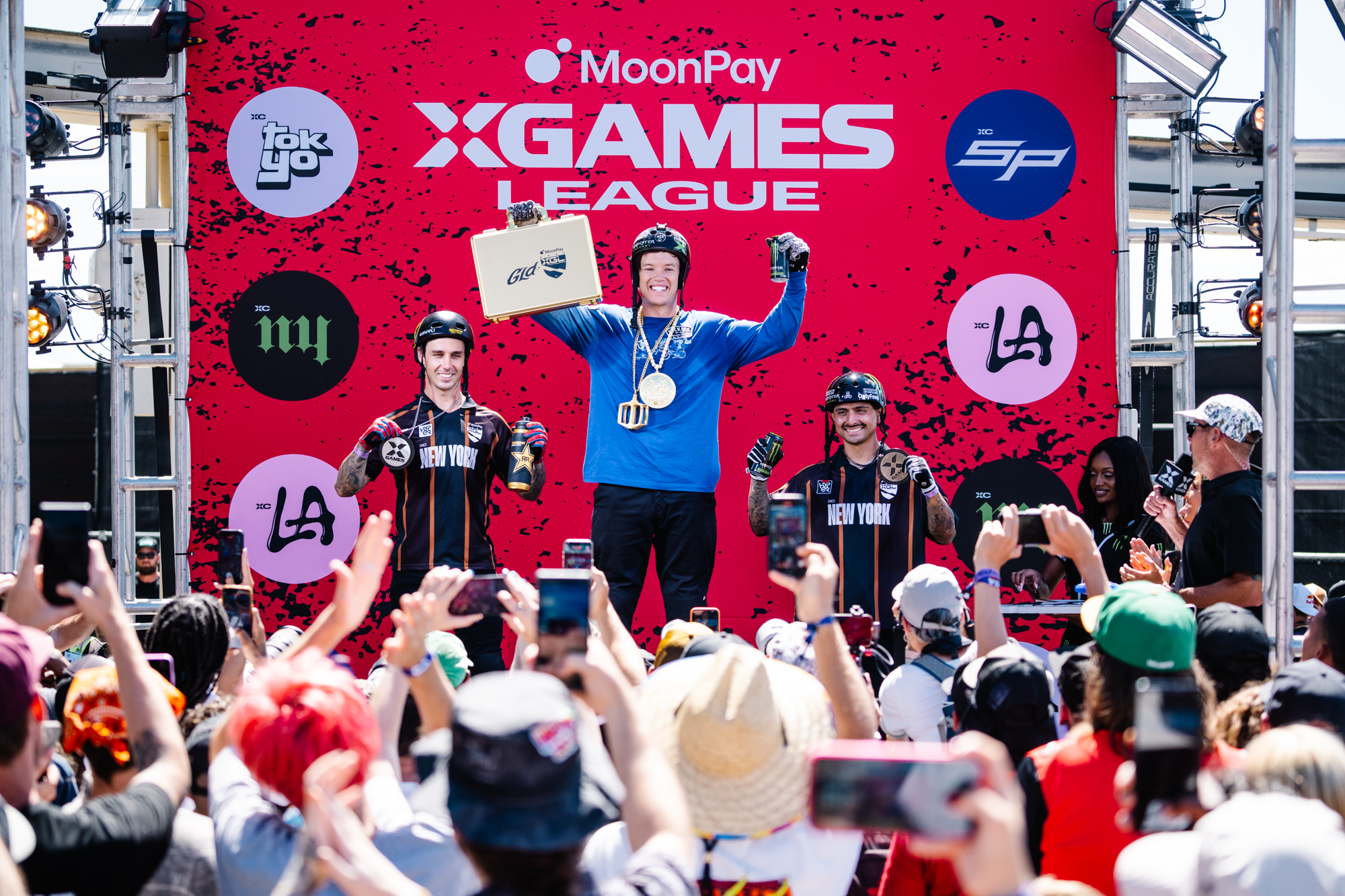
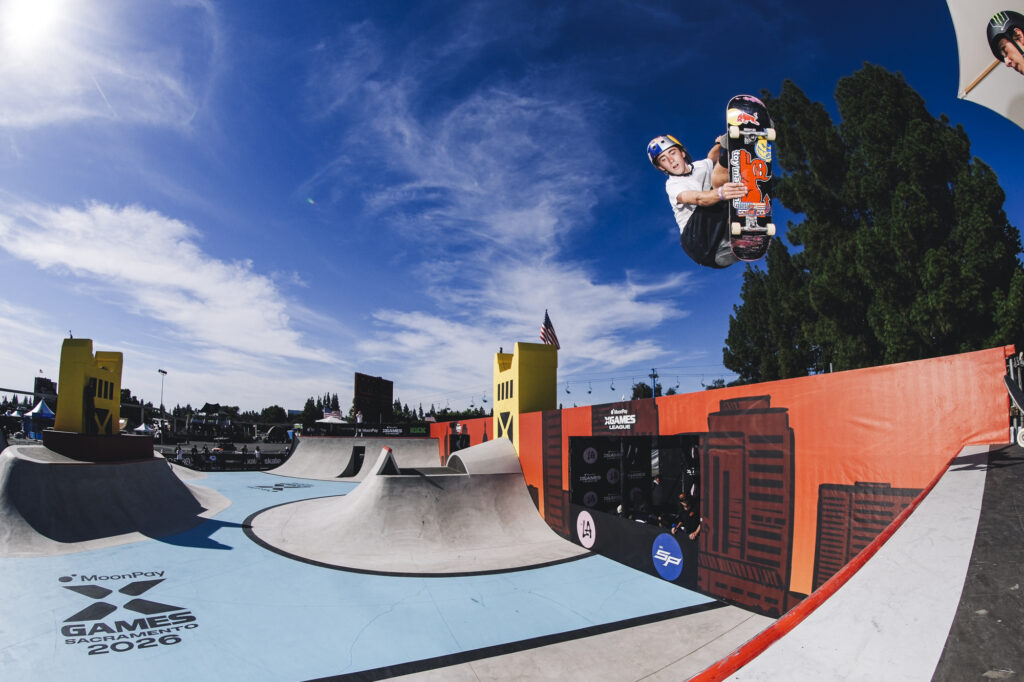
The day kicked off with the MoonPay Men’s Skateboard Vert Best Trick, where 17-year-old phenom Gui Khury (XC São Paulo) solidified his legendary status. Despite competing with a fractured hand, Khury pulled off a clinical kickflip body varial 900 on his opening attempt. This victory secured his sixth consecutive gold in the discipline, bringing his career total to 16 medals—the most by any teenager in X Games history.
As the morning progressed into the afternoon, the Monster Energy Men’s Skateboard Street final showcased the tactical shift brought about by the new team format. Ginwoo Onodera (XC New York) emerged as the golden boy of the day, his run a masterclass in technical precision, featuring a switch frontside 270 frontside bluntslide. His performance propelled XC New York to the top of the conversation, while skateboarding icon Nyjah Huston took silver, falling just shy of a historic record.
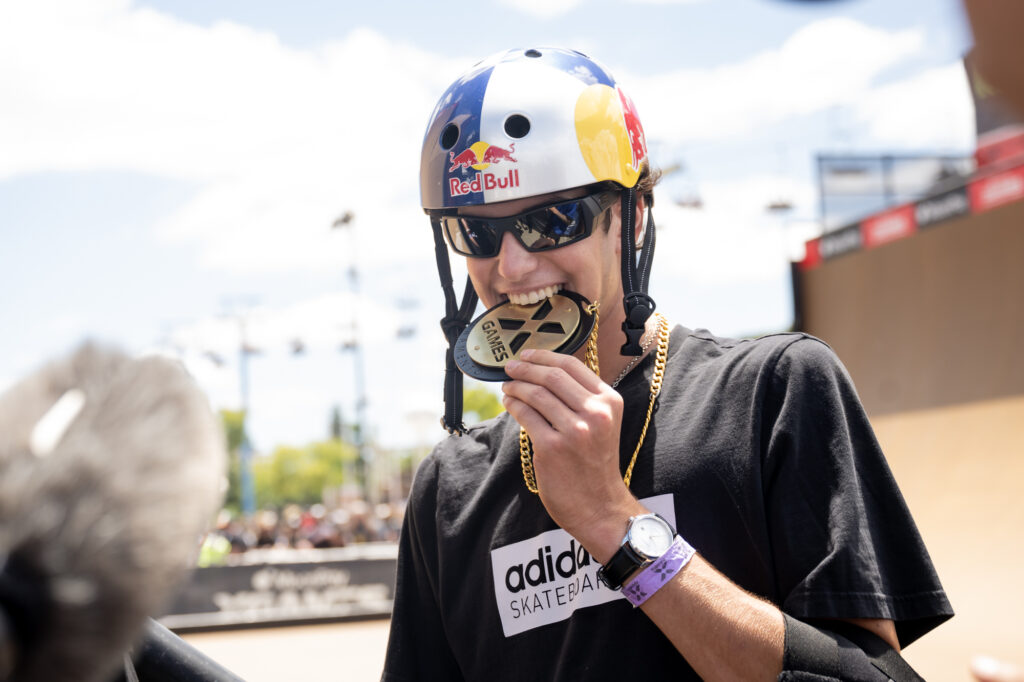
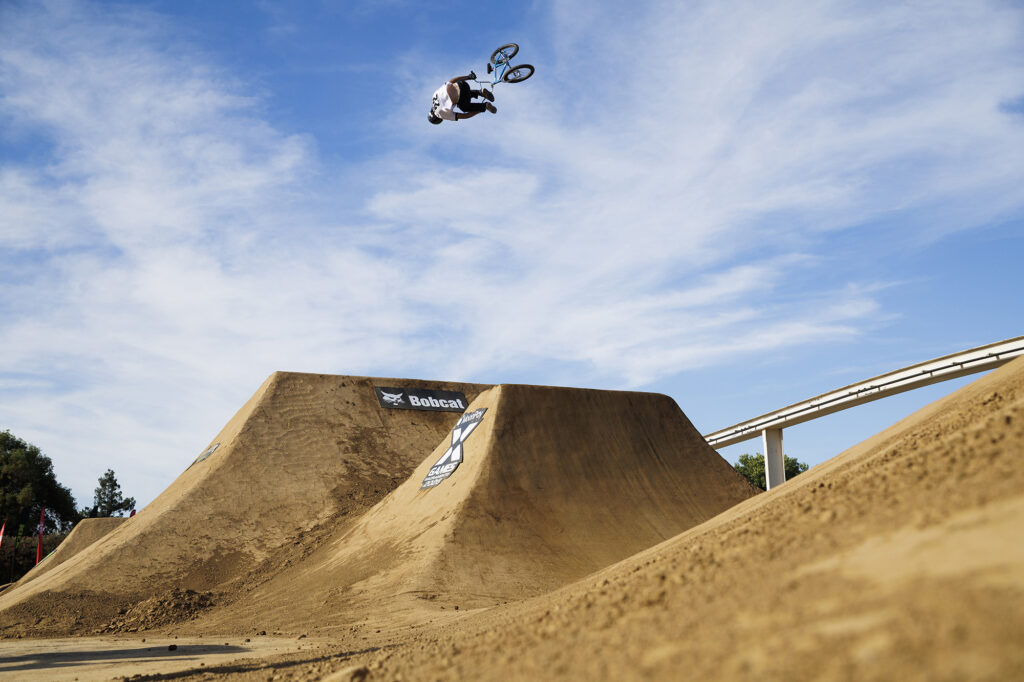
The Dave Mirra BMX Park Best Trick served as the afternoon’s emotional peak. Ryan Williams (XC São Paulo) lived up to his billing as the sport’s most electrifying figure, not only securing gold but immortalizing a tribute to his late friend, Oliver Tree. By landing an alley-oop 540 front flair—now christened the "Oliver Twist"—Williams led an Australian 1–2 finish, with Logan Martin (XC New York) taking silver just weeks after recovering from a severe bout of pneumonia.
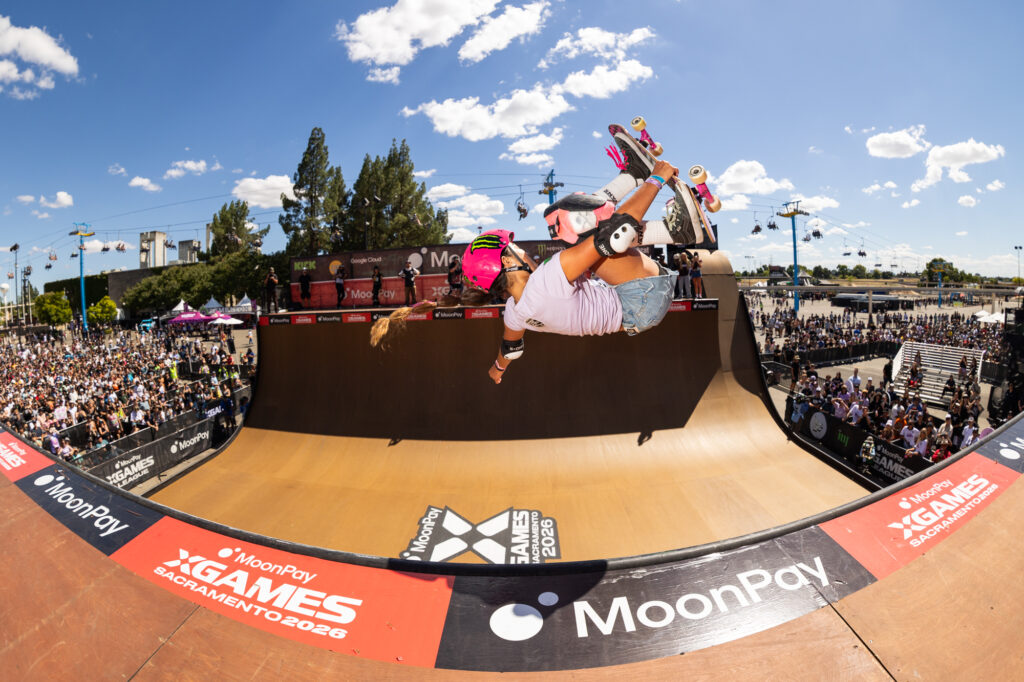
The momentum carried into the evening as Arisa Trew (XC Tokyo) dominated the Women’s Skateboard Vert Best Trick. Trew’s Switch McTwist proved to be the day’s most untouchable maneuver, earning her a 10th career gold and tying her with Lindsey Jacobellis for the most gold medals by a woman in X Games history.
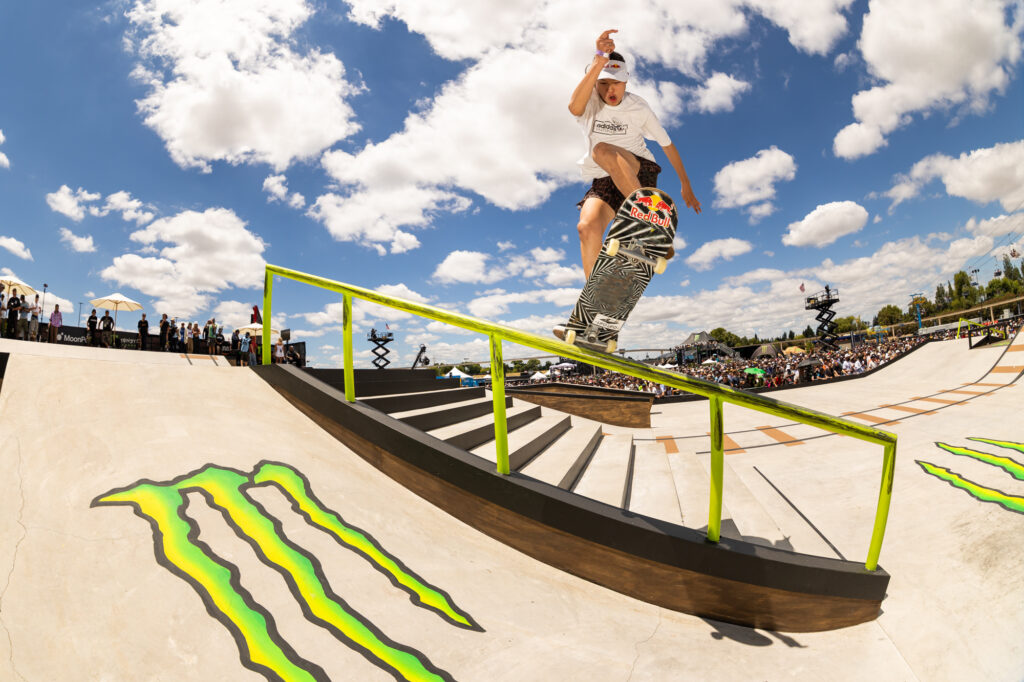
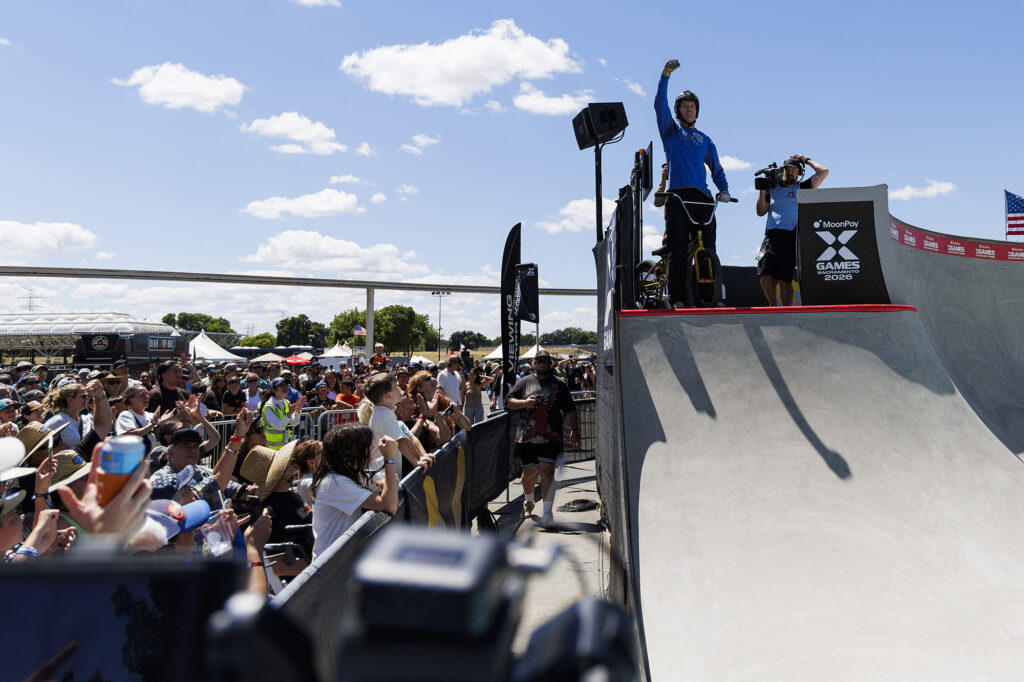
The day’s competitive bracket concluded with the Men’s Skateboard Park and Moto X Best Trick. Gavin Bottger defended his park title in a display of supreme consistency, while Patrick Evans made waves in the Moto X arena by securing gold on an electric motorcycle—a potential harbinger of a greener future for freestyle motocross. Finally, Sacramento native Brady Baker claimed the Stake Men’s BMX Dirt title, capping off the daylight hours with a poignant victory in front of his family and local supporters.
Supporting Data and Technical Milestones
The data from Saturday’s events highlights a generation of athletes pushing the boundaries of physics.
- Gui Khury (Vert Best Trick): With his 7th gold in this specific discipline, Khury maintains a 100% win rate in Vert Best Trick since 2021.
- Arisa Trew (Women’s Vert): By winning her second gold of the weekend, Trew matches the record for most X Games medals by a teenager (16), currently sharing that title with Gui Khury.
- Patrick Evans (Moto X): His score of 95.66 is among the highest ever recorded in the Best Trick discipline, made more impressive by the unique torque and weight profile of his electric machine.
- The "Australian Sweep": In the Dave Mirra BMX Park, the dominance of Ryan Williams and Logan Martin highlighted a significant regional concentration of talent, with both athletes pushing NBD tricks like the decade 540 flair.
These metrics suggest that the X Games is currently experiencing a "golden age" of technical progression, where the combination of younger athletes entering the professional circuit and the adoption of high-performance electric technology is forcing veterans to innovate at an unprecedented rate.
Official Responses and Athlete Perspectives
The athletes’ reactions reflected a mix of relief, strategic focus, and emotional weight. For many, the transition to the team-based "XC" format has introduced a new layer of psychological pressure.
"I’m feeling really happy," said Gui Khury regarding his win. "Especially with this broken wrist, I had to adjust my grab with my other hand. It hasn’t been an easy year, so to get this win here in Sacramento feels like a major turning point for my season."
Ryan Williams, after his emotional tribute to Oliver Tree, highlighted the deeper meaning behind the competition. "It’s always good to win gold, but naming a trick after a friend who passed away—that is the real legacy. I wanted to give back to him in the only way I knew how, through the sport that brought us together."
Brady Baker’s response to his BMX Dirt win underscored the importance of the hometown advantage. "I’ve been working my butt off, and to get this gold in front of my family and my community—it means more than any other medal I’ve collected. I’m expecting a baby girl soon, and this is a memory I can’t wait to share with her."
Implications for the Future of Action Sports
The successful execution of Day Two at Sacramento 2026 signals a fundamental shift in the commercial and competitive identity of the X Games. The "League" format, which emphasizes team standings, has successfully fostered a sense of tribalism that was previously absent in the individual-centric world of action sports.

1. The Commercial Shift
By partnering with global brands like MoonPay, the X Games is signaling a move toward a more integrated, digital-first fan experience. The accessibility of the events via the X Games YouTube channel, Kick, and the Roku Sports Channel suggests that the organization is successfully pivoting away from traditional broadcast exclusivity to reach a younger, digital-native demographic.
2. Technological Integration
The performance of Patrick Evans on an electric motorcycle is not just a footnote; it is a preview of a potential regulatory and technological pivot. As noise ordinances and environmental concerns pressure traditional venues, the ability of electric bikes to perform at the same level as combustion engines—if not better—ensures the long-term viability of Moto X in urban settings.
3. The "Team" Effect
The performance of teams like XC New York and XC Tokyo proves that the new format is working. Athletes are no longer just competing for themselves; they are competing for points that impact the broader standings of their teams. This has resulted in a more strategic approach to runs—riders are balancing the risk of high-level, NBD tricks with the necessity of landing safe, consistent scores to ensure team points.
Conclusion
As the sun sets on a historic Saturday in Sacramento, the MoonPay X Games 2026 has established a new benchmark for what professional action sports can achieve. The combination of, and perhaps the tension between, individual achievement and team strategy has breathed new life into the competition. With Sunday’s slate of street and park finals still to come, the stage is set for a climactic finish that will likely determine the inaugural leaders of the X Games League. For the fans, the athletes, and the industry at large, one thing is clear: the progression of the sport is not just continuing—it is accelerating.