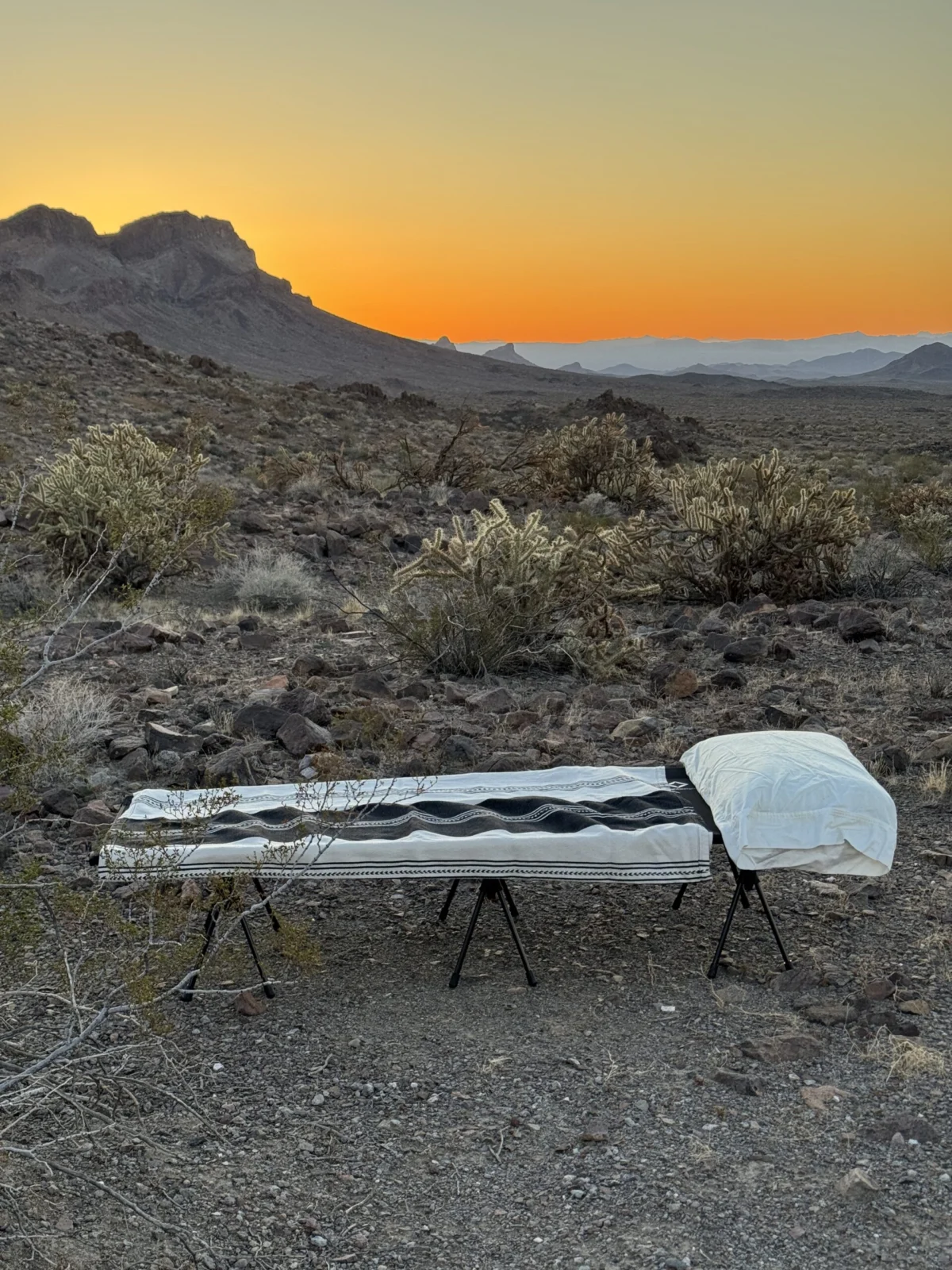
When Stephen Casimiro, founder of Adventure Journal, posted a photo to Instagram earlier this year featuring a minimalist, open-air sleeping setup in the Mojave’s Turtle Mountains Wilderness, the response was immediate and voluminous. Captioned with the provocative phrase "we need not be pagans," the image sparked a dialogue that resonated with everyone from hardcore backcountry explorers to weekend car campers. Among the commenters was Alaskan artist and woodworker Zach LaPerrière, who challenged Casimiro to pull back the curtain on his gear choices.
The resulting inquiry is not merely about equipment; it is a meditation on the philosophy of comfort in the wild. As we navigate a world of increasingly complex, high-tech camping gear, the question remains: How do we achieve a truly restorative night’s sleep while remaining connected to the landscape?
The Philosophy of the Open Air: Main Facts
At the core of Casimiro’s approach is a rejection of the "suffer-fest" mentality. While many associate rugged adventure with sleepless, shivering nights, Casimiro argues that intentional comfort is essential for longevity in the outdoors. His primary goal is to sleep under the stars—"cowboy camping"—whenever weather permits.
In the arid landscapes of the American Southwest, the variables are predictable: rain and insects are rare, while temperature and wind are the primary adversaries. By prioritizing modularity, Casimiro has developed a system that adapts to the environment rather than forcing the environment to adapt to a heavy, over-engineered tent setup. The central tension in his philosophy is the balance between packability, weight, and the inevitable need for orthopedic support as one ages.
A Chronological Evolution of Gear
The journey to the perfect sleep system is rarely a straight line. Casimiro’s evolution is marked by a series of trials and errors, reflecting a broader trend in the outdoor industry toward specialized, highly specific gear.
The Cot Conundrum
Early in his career, Casimiro sought comfort through elevation. He notes two standout options in the current market: the REI Wonderland Comfort Cot and the Helinox Cot One Convertible.
- The REI Wonderland: While it offers unparalleled comfort and doubles as a lounge chair, its sheer physical footprint—likened by Casimiro to "road-tripping with Chewbacca"—led to its retirement from his kit.
- The Helinox Cot One: This serves as his current gold standard. At five pounds and highly collapsible, it offers the necessary separation from cold, rocky ground without the logistical nightmare of bulkier alternatives.
The Padding Paradox
Once elevated, the next challenge is insulation. Casimiro has transitioned through various technologies:
- The Inflatable Era: The Exped MegaMat (R-value 8.1) provided luxury-level comfort but came with the perennial anxiety of a potential puncture.
- The Foam Renaissance: More recently, he has turned to the Hest Foamy (R-value 8.8). Because it is made of high-density foam, it is immune to leaks and durable enough to be tossed directly onto the abrasive slickrock of the desert, bypassing the need for a cot entirely during short-haul trips.
Insulation and Extremities
The "insulation layer" is treated as a fluid variable. A simple cotton blanket suffices for mild nights, while wool blankets or technical sleeping bags from brands like NEMO, Marmot, and Exped are rotated based on the thermal profile of the evening. His testing of the Hest Camp Pillow suggests a trend toward specialized camp gear that mimics home comforts, though he remains critical of the balance between ergonomic support and softness.
Supporting Data and Technical Comparisons
To understand why these choices matter, one must look at the technical specifications of modern camping equipment. The industry has shifted toward "R-values" (thermal resistance) as the primary metric for sleeping pads.
| Gear Item | Type | R-Value | Weight/Utility |
|---|---|---|---|
| Exped MegaMat | Inflatable | 8.1 | High comfort, risk of puncture |
| Hest Foamy | Foam | 8.8 | High durability, no inflation needed |
| Therm-A-Rest NeoAir | Inflatable | Varies | Best for backpacking weight-to-warmth |
| Exped Flex R3 | Closed-cell Foam | Moderate | Durable, heavier than inflatables |
The debate between closed-cell foam and inflatables is ongoing. While inflatables offer superior comfort for side sleepers, the "set-up time" and failure risk remain technical liabilities. Casimiro’s recent testing of the Exped Flex R3—which is significantly thicker than traditional foam pads—highlights the industry’s attempt to bridge the gap between the durability of foam and the comfort of air-filled chambers. However, at 18 ounces, the weight penalty remains a significant factor for those covering long distances on foot.
Perspectives from the Field: Official Responses and Expert Views
The conversation surrounding this gear choice has drawn input from various sectors of the outdoor community. Woodworkers and wilderness survivalists often favor the simplicity of natural materials—wool and canvas—which are inherently fire-resistant and breathable. Conversely, the high-performance crowd pushes for ultralight, synthetic, and down-filled products that maximize warmth-to-weight ratios.
When asked about the "bare-bones" approach—sleeping on the ground with only a blanket—Casimiro remains skeptical. Drawing from his 1990s experience in Mexico, he notes that while some can achieve deep sleep on the hard earth, it is almost exclusively the domain of back sleepers. For side sleepers, the lack of padding results in poor circulation and frequent waking. The conclusion is clear: while we "need not be pagans," we also need not be martyrs. The physical toll of a bad night’s sleep on a multi-day trip negates the "purity" of the experience.
Implications for the Future of Adventure
The implications of this gear dialogue are twofold. First, the industry is clearly moving toward "car-camping luxury," where weight is less of a concern than the quality of the sleep experience. This has led to the development of products that would have been unthinkable two decades ago.
Second, the psychological aspect of "100 nights of camping" per year changes one’s relationship with gear. When camping becomes a lifestyle rather than a vacation, the gear must be repairable, durable, and infinitely modular. The "perfect" setup is a fallacy; the goal is a system that allows the user to adapt to the biome, the weather, and the inevitable fatigue of the trail.
As Casimiro prepares for his next season of exploration, he invites further input from the community. The question isn’t just "What is the best gear?" but rather "What allows you to sleep the deepest when you are furthest from home?" Whether it is a bivy sack, a high-tech quilt, or a simple wool blanket, the search for the perfect night’s sleep is, in itself, one of the most rewarding aspects of the outdoor lifestyle.
Ultimately, the goal is to erase the barrier between the human and the wild. By optimizing our sleep, we ensure that we wake up not just rested, but ready to engage with the environment with the curiosity and stamina that the wilderness demands. If you have a system that has survived the rigors of the road, the invitation remains open: share your approach, for in the world of outdoor living, we are all students of the stars.