
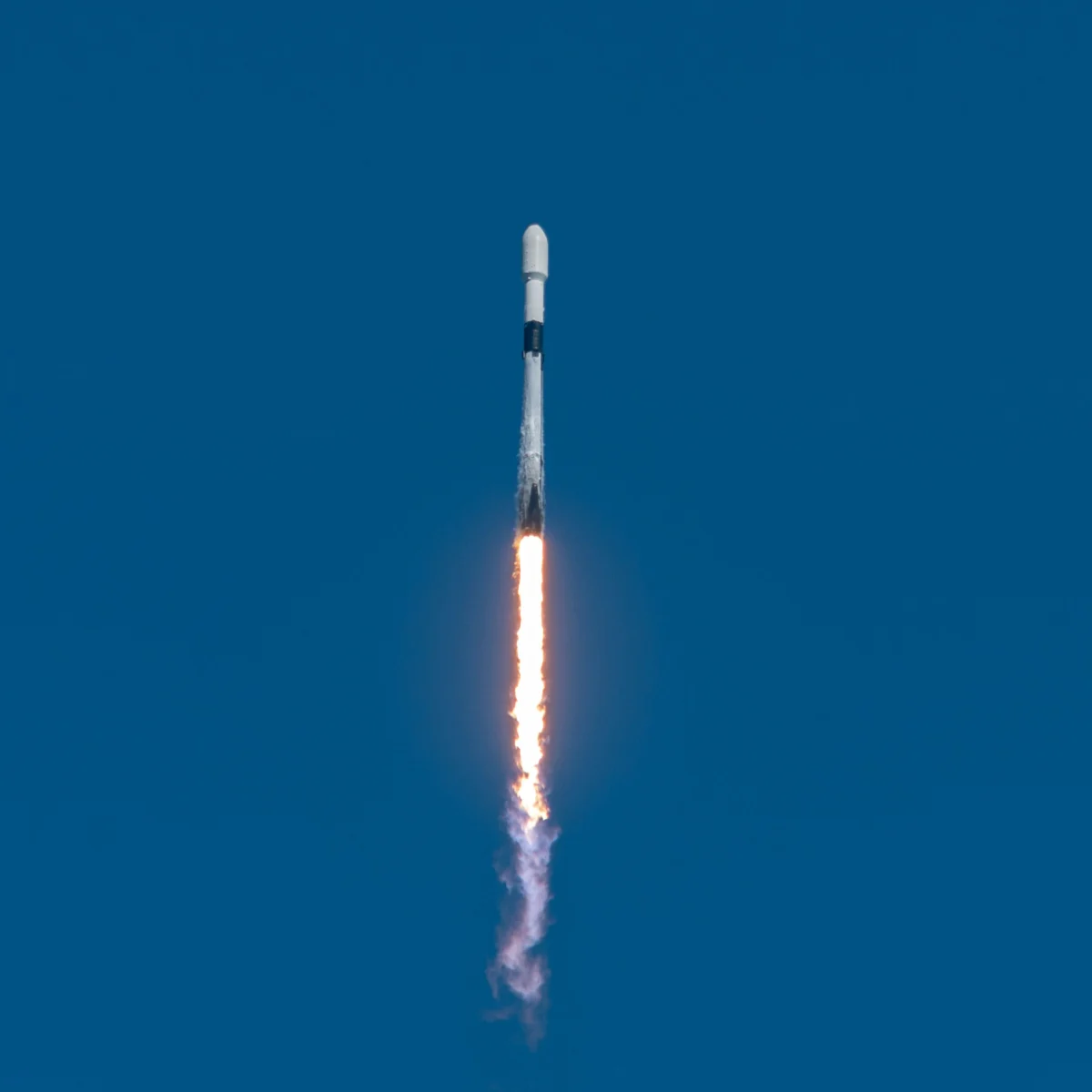
For eighteen months, a four-metric-ton ghost has been drifting through the silent vacuum of the Earth-Moon system. This derelict object—the spent upper stage of a SpaceX Falcon 9 rocket—is now on a terminal trajectory. On Wednesday, at approximately 6:34 am UTC, this massive piece of space hardware will terminate its journey by slamming into the lunar surface at a staggering velocity of 5,400 miles per hour.
While the impact is a localized event on the western edge of the moon’s near side, its implications are global, sparking a renewed and urgent debate regarding space traffic management, the safety of future lunar bases, and the long-term sustainability of human activity beyond Earth’s orbit.
The Anatomy of an Orbital Accident
The rocket stage in question was not intended to become a projectile. It was originally launched to facilitate a private space mission, serving as the delivery vehicle for a pair of lunar landers. While the mission’s primary objective was a success—with the landers reaching their intended targets—the upper stage was left stranded in a high-energy orbit. Deprived of the fuel necessary to execute a de-orbit maneuver or return to Earth, the rocket became "space junk," an unguided behemoth caught in the gravitational tug-of-war between our planet and its natural satellite.
The physics of the impending collision are extreme. Because the moon lacks a significant atmosphere, there is no drag to slow the projectile’s descent. Striking the surface at seven times the speed of sound, the rocket’s kinetic energy will be released in a singular, violent event. Scientists estimate the blast will be equivalent to the detonation of three metric tons of TNT, carving out a crater up to 27 meters in diameter and 5 meters deep.
Chronology: From Launch to Impact
The journey of this Falcon 9 upper stage serves as a stark case study in the lifecycle of modern space hardware:
- Launch Phase: The Falcon 9 rocket successfully launches, carrying critical lunar lander hardware.
- Deployment: Upon reaching the required trajectory, the landers are deployed. The upper stage, having completed its role, is left in a "drift" state.
- The Drift (18 Months): For over a year and a half, the rocket stage remains in an unstable, highly elliptical orbit, largely ignored by tracking systems until its trajectory began to intersect with the moon.
- Detection: Bill Gray, the creator of the Project Pluto initiative—a software platform dedicated to tracking asteroids, comets, and artificial satellites—first identified the impending collision. His calculations were later validated by a broader scientific community.
- The Final Approach: As of this week, the rocket is finalizing its approach toward the Einstein Crater, a lunar feature near the moon’s western limb.
- The Impact (Wednesday, 6:34 am UTC): The object is projected to strike the lunar surface. While the event will not be visible to the naked eye, observers in the Americas equipped with high-quality telescopes may be able to capture the resulting plume of lunar dust and debris.
Supporting Data and Scientific Observation
This is not the first time human-made objects have scarred the lunar surface. In March 2022, a Chinese Long March 3C rocket booster struck the moon, creating a 29-meter-wide crater. These events are providing researchers with unexpected, albeit unintentional, opportunities to study lunar geology and the physics of high-speed impacts.
A recently released preprint study, co-authored by Benjamin Fernando of the Los Alamos National Laboratory, emphasizes the value of these events. "The crash landing is an opportunity to test pipelines for measuring flash properties to locate impact events seismically," the study notes. By monitoring the seismic waves generated by the Falcon 9 impact, scientists hope to learn more about the lunar subsurface composition—data that is vital for future construction projects.
However, the scientific utility of the crash does not excuse the lack of oversight. The transition from "mission hardware" to "space debris" is a process that currently lacks international regulatory teeth, leading to a "Wild West" environment in cislunar space.
Official Responses and the "Artemis" Context
As nations race to return to the moon, the safety of these missions has become a primary concern for agencies like NASA. The Artemis program, which aims to establish a sustainable human presence on the lunar surface, requires a stable and predictable environment.
"These sorts of things are going to happen more and more often," says Benjamin Fernando. "As we have more astronauts on the lunar surface, more lunar infrastructure habitats, for example, we need to understand how much of a risk these impact events actually pose."
NASA officials have acknowledged the challenge. While the construction of the first permanent lunar facilities is still roughly a decade away, the planning stages are already underway. The current environment is being mapped not just for natural hazards, such as meteorite strikes, but for the increasing density of human-made obstacles.
Implications for the Future of Lunar Exploration
The impending crash forces a reckoning with the concept of "lunar stewardship." As the moon becomes a destination for private corporations, national space agencies, and international coalitions, the cluttering of the lunar environment presents three distinct tiers of risk:
1. Direct Physical Risk
Future lunar bases will be vulnerable to both large-scale debris (like the Falcon 9 stage) and the "secondary" effects of impacts—such as the high-velocity cloud of ejected lunar regolith (dust) that follows a strike. This debris can act like shrapnel, damaging external equipment, solar arrays, or habitats.
2. Operational Interference
"This is an ideal way of studying both the direct risks… but also the indirect risk, the risk of being hit by a cloud of ejected material and having that disrupt or interfere with spacecraft functions in lunar orbit," Fernando explains. The debris cloud created by Wednesday’s impact could potentially complicate satellite operations for days or weeks in the immediate vicinity.
3. Regulatory and Geopolitical Tensions
The absence of a robust, international "lunar traffic control" system creates diplomatic friction. When a rocket stage from one nation threatens the surface, it raises questions of liability and responsibility. Without clear guidelines on what happens to spent stages, the moon risks becoming a mirror of Earth’s orbital environment—a congested, hazardous zone where the risk of collision threatens the viability of space exploration itself.
Conclusion: A Turning Point for Space Policy
The SpaceX Falcon 9 impact is more than just a momentary light show for telescope enthusiasts; it is a signal that our reach has exceeded our current ability to clean up after ourselves. As we stand on the precipice of a new era of lunar colonization, the "junk" left behind by today’s missions will define the safety parameters for tomorrow’s pioneers.
The research community is currently using this event to build better models for predicting debris trajectories and impact damage. However, the true lesson of this Wednesday’s event is that the moon is no longer a pristine, distant frontier—it is a busy, fragile extension of our own planetary backyard. Whether this crash leads to stricter international mandates for de-orbiting hardware or merely serves as a cautionary tale remains to be seen. What is certain is that as we look toward the moon, we must start looking at the space around it with the same level of care we apply to the soil beneath our feet.