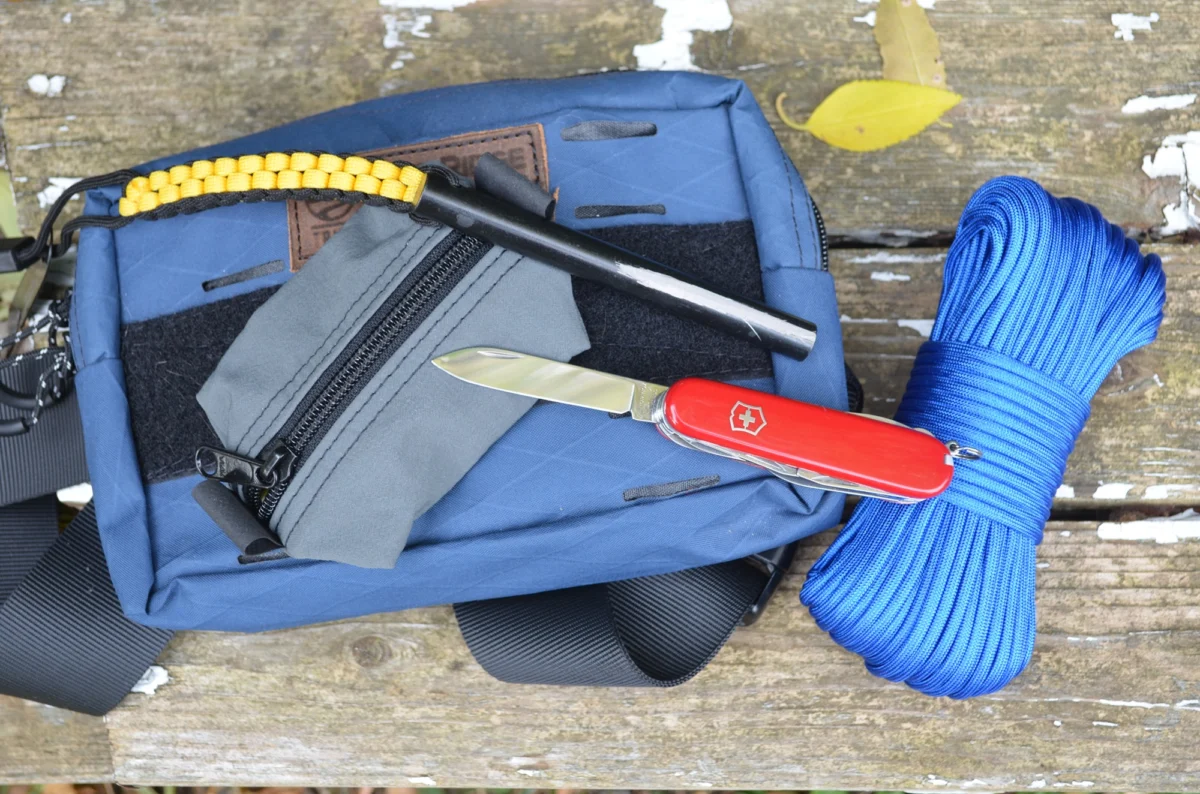
For many, the first encounter with a Victorinox Swiss Army knife is a rite of passage. It often begins at a flea market, a dusty hardware store, or as a gift from a grandfather. My own journey started at age 11 with a nameless, well-worn model that became an extension of my hand. It was the tool that whittled sticks into spears for makeshift forts, opened tins of campfire chili, and trimmed unruly rope. It was simple, reliable, and utterly indispensable.
Decades later, my collection of pocket knives has grown significantly, yet the allure of the classic Swiss Army design remains. After years of cycling through various iterations—from the minimalist Tinker to the wood-saw-equipped Hiker—I have finally settled on a definitive recommendation for the modern outdoor enthusiast: the Victorinox Swiss Army Huntsman.

Main Facts: The Anatomy of the Huntsman
The Victorinox Huntsman is widely regarded as the "Goldilocks" of the Swiss Army lineup. It occupies the middle ground between a slim gentleman’s carry and a bulky, heavy-duty multitool. Weighing in at a mere 3.4 ounces and measuring 3.6 inches in length, it is designed to disappear into a pocket or pack until the exact moment it is needed.
The knife is constructed from Victorinox’s signature Martensitic stainless steel, a proprietary blend known for its exceptional corrosion resistance—a vital trait for tools frequently exposed to the moisture of the backcountry. The handle scales are crafted from durable ABS/Cellidor, providing a lightweight yet impact-resistant housing for the 15 onboard implements.

The Tool Suite:
- Large blade
- Small blade
- Can opener (with 3mm screwdriver)
- Bottle opener (with 6mm screwdriver and wire stripper)
- Wood saw
- Scissors
- Reamer, punch, and sewing awl
- Multipurpose hook
- Corkscrew
- Keyring
- Tweezers
- Toothpick
A Chronology of Utility: From Childhood to the Trail
Looking back, my early experiences with pocket knives were characterized by "beat-the-hell-out-of-it" utility. I didn’t know the technical specifications of the steel, but I knew it held an edge well enough to survive a weekend in the woods. By the time I reached my teenage years, I was already a budding enthusiast, understanding that the difference between a good knife and a great one is often the thoughtful selection of tools.

Fast-forward to my recent testing period, which included a month of daily carry and a dedicated excursion to Point Beach State Forest in Two Rivers, Wisconsin. The transition to the Huntsman felt less like trying a new piece of gear and more like reconnecting with a familiar friend. Unlike specialized tactical folders that excel in one area and fail in others, the Huntsman’s strength lies in its versatility across a range of environments, from the suburban garage to the deep forest trail.
Supporting Data: Performance and Ergonomics
The performance of the Huntsman is best measured by its efficiency in real-world scenarios. During my time at Point Beach, the wood saw was the standout performer. While it is obviously not intended for felling timber, it excels at processing dry branches for small-scale fire prep or notching wood for trap-making and primitive shelters. It is remarkably aggressive for its size, leaving a clean kerf with minimal effort.

The scissors, a staple of the Victorinox design, remain the best in the industry for a tool of this class. They are small but robust, capable of shearing through high-strength paracord without bunching or binding. The spring-loaded action is smooth, and they possess an uncanny ability to retain their edge even after heavy use.
However, no tool is without its quirks. The placement of the reamer/punch on the underside of the handle is a point of contention for some. While functional, it is positioned in a way that requires a specific grip to utilize effectively. I would argue that an "end-of-handle" deployment, similar to the main blade, would offer better torque and control, particularly when using the reamer to scrape sparks from a ferrocerium rod. Additionally, the nail nicks on a few of the tools are somewhat recessed, which can be challenging to access if you are wearing gloves or have short fingernails.

Official Perspectives and Design Philosophy
Victorinox has maintained a consistent design language since the late 19th century, and the Huntsman is a perfect example of this "evolutionary, not revolutionary" philosophy. The inclusion of the multipurpose hook—a feature added in 1991—is often mocked by critics as a "vestigial" tool.
Officially, this hook was designed for carrying packages bound with string, a common practice in a bygone era. While few of us carry string-wrapped parcels today, the tool has found a second life. In a camping context, it functions as an emergency bail-lifter for hot pots, and it is surprisingly effective at helping to untangle stubborn knots that have been cinched tight by environmental tension. This underscores a core truth about the Victorinox brand: they prioritize utility that adapts to the user’s needs, rather than discarding features that aren’t immediately obvious.

Implications for the Modern User
Who, exactly, is the Huntsman for? If you are an ultralight hiker obsessed with shaving grams by removing the handle of your toothbrush, the Huntsman might be considered a luxury. However, for the vast majority of hikers, campers, and suburban "EDC" (Everyday Carry) enthusiasts, the Huntsman represents a baseline of preparedness.
The implications of carrying such a tool are significant. It provides a level of autonomy that is hard to quantify. Whether you are opening a stubborn food package, repairing a loose screw on a pair of sunglasses, or crafting a piece of trail gear from scavenged wood, the Huntsman bridges the gap between frustration and solution.

At a price point of approximately $52, the value proposition is difficult to beat. You are not just buying a knife; you are buying a 15-tool system backed by one of the most respected manufacturing reputations in the world.
Final Assessment
The Victorinox Huntsman succeeds because it doesn’t try to be a jack-of-all-trades that masters none. It is a curated collection of the most useful tools for the outdoor adventurer. It is familiar, it is reliable, and it is built to survive the decades. While I still harbor minor reservations about the placement of the reamer, the overall utility of the package is undeniable.

If you are looking for a singular tool that will serve you well from your first campsite to your fiftieth, the Huntsman is, without question, the standard-bearer. It is an investment in self-reliance that pays dividends every time you slide it out of your pocket.