VILNIUS, LITHUANIA – July 2026 – The eagerly anticipated U18 and U23 European Canoe Sprint Championships have drawn to a close, marking a significant milestone for the aspiring athletes of the Finnish national team. While no podium finishes were secured, the contingent returns home with a wealth of international experience, numerous personal bests, and a clear understanding of the evolving landscape of European junior flatwater canoeing. The final day of competition, held under challenging headwind conditions, saw Finland’s Aapo Rosenström compete in the Men’s U18 K1 500m B-final, capping off a championship defined by intense competition and promising individual performances.
The event, a crucial proving ground for Europe’s next generation of Olympic hopefuls, showcased remarkable talent from across the continent. For the Finnish team, the championships served as a vital benchmark, reaffirming their commitment to developing high-performance paddlers capable of competing on the international stage.
Event Overview: A Glimpse into Europe’s Elite Junior Paddling
The U18 and U23 European Canoe Sprint Championships represent a critical juncture in the careers of young athletes, providing an unparalleled opportunity to test their mettle against the best in their age categories. Held annually, these championships are not merely about winning medals but about fostering growth, resilience, and tactical acumen in a highly competitive environment. For many, it’s their first exposure to the intensity of major international competition, offering invaluable lessons that extend far beyond the race course. The championships typically span several days, featuring a comprehensive programme across various boat classes (K1, K2, K4 for kayaks; C1, C2, C4 for canoes) and distances (200m, 500m, 1000m). The progression from heats to semi-finals and ultimately to A or B finals demands consistent performance, strategic pacing, and the ability to adapt to changing conditions.
This year’s edition, hosted in Vilnius, Lithuania, attracted a formidable lineup of junior talent. The pristine waters of the regatta course provided an ideal setting, though the weather conditions, particularly on the final day, added an extra layer of complexity to the already demanding races. For a smaller nation like Finland, sending a delegation to such a prestigious event is a testament to the dedication of its athletes, coaches, and the national federation, the Finnish Canoe Federation (Suomen Melonta- ja Soutuliitto). It underscores a long-term vision to cultivate a robust pipeline of paddlers who can eventually contend at senior World Championships and Olympic Games. The experience gained at these junior championships is foundational, shaping not only athletic prowess but also mental fortitude and an understanding of global standards.
The Final Day’s Challenge: Aapo Rosenström Battles the Elements
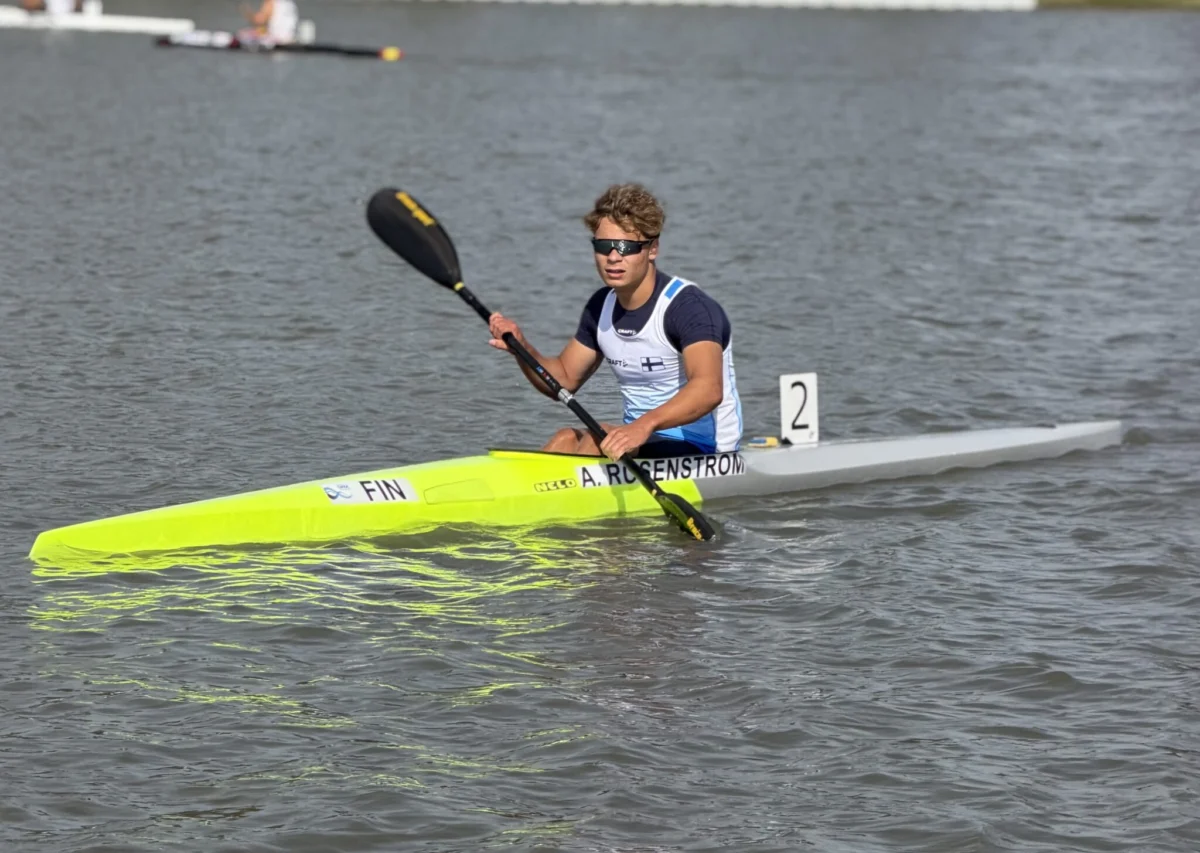
Sunday, the concluding day of the championships for the Finnish team, brought with it a significant shift in weather conditions. What had largely been manageable earlier in the week transformed into a challenging headwind, drastically altering the dynamics of the 500m races. This change was particularly impactful for Aapo Rosenström, the sole Finnish representative competing in a final on the day. Rosenström, a promising talent in the Men’s U18 K1 500m category, had navigated the preliminary rounds with strong performances, earning him a coveted spot in the B-final.
Heading into the race, expectations for the B-final were high. Based on the times from the preceding heats and semi-finals, it was anticipated to be an exceptionally tight and high-calibre race, with little separating the competitors. However, the unexpected headwind introduced an unpredictable element. Headwinds in canoe sprint are notoriously demanding, requiring immense power, precise technique to maintain boat speed and direction, and exceptional endurance to push through the resistance. They often lead to larger-than-expected gaps between competitors as fatigue sets in earlier and sustained power becomes paramount.
Rosenström, competing in his first year in the U18 category and making his debut at a European Championship, faced this formidable challenge head-on. He delivered a "fairly good run," showcasing his technical skill and determination. However, the relentless headwind on the final day proved to be a formidable adversary. "The strength for the tough headwind simply wasn’t enough on this last day of competition to be able to contend for the top positions in the final," noted the team management. Despite his valiant effort, Rosenström crossed the finish line in 8th place in the B-final. This positioned him 17th overall in the highly competitive field of the Men’s U18 K1 500m.
For an athlete making their debut at such a significant international event and competing in the younger end of their age category, a 17th-place overall finish is considered a commendable achievement. It’s a testament to his potential and provides invaluable "valuable championship experience for future years." The lessons learned from battling both elite competitors and adverse conditions will undoubtedly serve as a crucial foundation for his continued development. The B-final experience, while not an A-final, still places him amongst the top 17 paddlers in Europe for his age group, a distinction not to be underestimated.
The Finnish Contingent’s Journey: Personal Bests Amidst Fierce Competition
Beyond Aapo Rosenström’s performance, the Finnish team collectively demonstrated significant individual progress throughout the championships. The delegation comprised a mix of U18 and U23 athletes, each striving to reach their personal bests and gain crucial international exposure. The competition schedule was relentless, demanding peak performance across multiple races and distances.
U18 Women’s Crews and Singles
The U18 women’s category saw a strong showing from a K4 crew comprising Netta Nieminen, Cecilia Hirvelä, Sonja Juvonen, and Iida Lindeman. Competing in the highly synchronized N18 K4 500m event, the quartet finished 9th in their preliminary heat, placing them 15th overall. This event, requiring impeccable teamwork and timing, is a cornerstone of canoe sprint and their performance underscores the potential for future development in team boats.
In the individual K1 events for U18 women, Cecilia Hirvelä took on the N18 K1 500m, securing 7th place in her heat and an overall ranking of 19th. This is a respectable finish in a field known for its depth and intensity. Iida Lindeman, another member of the K4 crew, tested her endurance in the N18 K1 1000m, finishing 9th in her heat and 21st overall. The 1000m distance is a true test of stamina and mental resilience, and her participation at this level adds crucial experience to her athletic profile. Alicia Lindqvist also competed in the N18 K1 200m event, a explosive sprint race, finishing 8th in her preliminary heat and 26th overall. These individual efforts, while not progressing to the finals, are vital steps in the athletes’ development, allowing them to gauge their speed and technique against Europe’s best.
U18 Men’s Doubles and Shorter Distances
In addition to his K1 performance, Aapo Rosenström partnered with Alex Autere in the M18 K2 500m. The K2 event demands strong communication and synchronized paddling, adding another layer of challenge. The duo finished 8th in their heat, placing them 25th overall. This collaboration provided both athletes with valuable experience in a team boat, which is essential for developing versatile paddlers.
The collective efforts of the Finnish team highlight a promising trend: a dedication to improving individual performance. Every athlete who started in the championships managed to improve their personal bests for their respective distances, a point of significant satisfaction for the coaching staff. This focus on personal growth, even in the absence of medals, is a healthy indicator of a developing national program.
Expert Assessment: Jeremy Hakala on Progress and Potential
Jeremy Hakala, a key figure in Finnish canoe sprint development, offered a candid and insightful assessment of the team’s performance. His observations provide a crucial perspective on the current state of Finnish junior paddling and the challenges and opportunities that lie ahead.
"Overall, the Finnish team managed to perform at their best level in these European Championships," Hakala stated. This sentiment underscores a core objective of participation: to execute race plans effectively and maximize individual potential on the day. He continued, "Every competitor who started in the competitions managed to improve their personal bests for their respective distances, which is something to be very satisfied with." This metric, often overlooked in the glare of medal counts, is a fundamental indicator of progress. It signifies that athletes are not just participating but actively developing, refining their technique, and enhancing their physical conditioning. For young athletes, consistently improving personal bests provides tangible proof of their hard work and fuels their motivation for future training cycles. It reinforces the idea that success is a journey of continuous improvement, not just a destination.
Elevating the Standard: A Stronger European Field
Hakala’s next observation was particularly salient: "The general level of the competitions was clearly higher compared to last year or this year’s age-group World Championships." This statement carries significant weight. It suggests a broader trend within European junior canoe sprint—a rising tide of talent and performance. Several factors could contribute to this elevation in standards: increased investment in youth sports across various European nations, more sophisticated training methodologies, earlier identification and nurturing of talent, and potentially a greater depth of participation. For Finland, this means the bar is continually being raised, necessitating an even more rigorous approach to athlete development.
This increased competition level presents both a challenge and an opportunity. While it makes securing A-final berths and medals more difficult, it also provides a clearer, more demanding benchmark for Finnish athletes. Competing against stronger opponents inevitably pushes athletes to perform at a higher intensity, fostering faster learning and adaptation. Understanding this elevated standard is crucial for setting realistic yet ambitious goals for the future. It underscores the need for Finland to not only maintain its current development efforts but to accelerate them to keep pace with, and eventually surpass, its European counterparts.
Nordic Rivalries and Regional Standing
Despite the overall heightened competition, Hakala offered a positive comparative insight: "We still have a way to go and work to do to reach the final level, but the positive thing is that we are not light-years away, and in comparison to other Nordic countries in the U18 series, we are very close." This comparison to other Nordic nations is particularly relevant. Countries like Sweden, Denmark, and Norway often share similar geographical and climatic conditions, as well as sports development models. Being "very close" in the U18 category suggests that Finland is on a comparable trajectory to its regional neighbours, some of whom have historically stronger traditions in canoe sprint.
This proximity opens avenues for regional collaboration, such as joint training camps, exchange programs, or even friendly competitions, which could mutually benefit all Nordic nations in raising their collective standard. It also indicates that the foundational work being done in Finland’s junior programs is effective and competitive within its immediate sporting ecosystem. The "not light-years away" comment provides a realistic yet optimistic outlook. It acknowledges the existing gap to the absolute elite but simultaneously reinforces the belief that this gap is bridgeable with sustained effort, strategic planning, and continued investment. The goal of reaching the A-final level is within sight, albeit requiring dedicated work.
Comprehensive Results for Team Finland at the U18 & U23 European Championships:
Here is a summary of the Finnish team’s performances:
- Aapo Rosenström (M18 K1 500m): 8th in B-final (17th overall)
- Netta Nieminen, Cecilia Hirvelä, Sonja Juvonen, Iida Lindeman (N18 K4 500m): 9th in heat (15th overall)
- Cecilia Hirvelä (N18 K1 500m): 7th in heat (19th overall)
- Iida Lindeman (N18 K1 1000m): 9th in heat (21st overall)
- Aapo Rosenström & Alex Autere (M18 K2 500m): 8th in heat (25th overall)
- Alicia Lindqvist (N18 K1 200m): 8th in preliminary heat (26th overall)
Looking Ahead: Paving the Way for Future Success
The U18 and U23 European Championships represent more than just a competition; they are a vital component of the long-term athlete development pathway. For Finland, the takeaways from Vilnius are clear: the foundation is solid, individual progress is evident, but the international bar continues to rise.
Nurturing Talent and Bridging the Gap
The experience gained by Aapo Rosenström as a debutant, securing a respectable 17th place overall, is invaluable. It provides him with a tangible benchmark and the motivation to push harder in future seasons. Similarly, the personal bests achieved by every member of the team are crucial for fostering a culture of continuous improvement. The challenge now lies in translating these individual gains into collective advancement, specifically in bridging the gap to A-final contention. This will require a multi-faceted approach, including enhanced coaching expertise, access to state-of-the-art training facilities, and the integration of sports science into daily routines. Mental preparation, race strategy, and nutrition will also play increasingly important roles as athletes progress.
Developing talent is a long-term investment. Identifying promising young paddlers early, providing them with structured development programs, and offering consistent support through their teenage years are paramount. The U18 category, in particular, is a critical phase where athletes transition from junior to senior aspirations, making these championships a crucial stepping stone. The federation must continue to monitor and support these athletes, ensuring they have the resources and guidance to navigate the demands of high-performance sport while balancing their academic and personal lives.
Strategic Development and International Collaboration
The observation that the Finnish U18 team is "very close" to other Nordic countries presents a strategic opportunity. Regional cooperation could involve joint training camps, where athletes and coaches from Finland, Sweden, Norway, and Denmark can train together, share best practices, and engage in friendly competitive sessions. Such collaborations can elevate the standard across the entire region, potentially creating a stronger Nordic bloc in international canoe sprint. This could lead to shared knowledge in areas such as equipment optimization, training periodization, and injury prevention.
Furthermore, understanding the "clearly higher" general level of European competition necessitates a re-evaluation of national training benchmarks and competitive schedules. Finnish athletes need more exposure to international racing, perhaps through participation in smaller regattas or training camps with stronger nations, to acclimatize to the pace and intensity required at the European Championship level. The long-term vision must extend beyond junior categories, with a clear pathway for these promising athletes to transition into the U23 and ultimately senior ranks, aiming for representation at World Championships and Olympic Games. This requires sustainable funding, robust talent identification, and a commitment to continuous learning and adaptation within the national sports system.
Conclusion: A Foundation for Growth
The 2026 U18 and U23 European Canoe Sprint Championships in Vilnius conclude with a sense of cautious optimism for Finnish canoe sprint. While the coveted A-final berths remained just out of reach, the team’s commitment to personal excellence, exemplified by a clean sweep of personal bests, lays a strong foundation for future success. Aapo Rosenström’s debut performance and the collective efforts of the entire squad underscore a resilient spirit and a clear trajectory for development. The insights from Jeremy Hakala provide a realistic roadmap, acknowledging the competitive landscape while highlighting Finland’s proximity to its Nordic peers. With continued dedication, strategic investment, and a focus on nurturing its burgeoning talent, Finnish canoe sprint is well-positioned to bridge the gap to Europe’s elite in the years to come. The experience gained in Vilnius will undoubtedly fuel the ambitions of these young paddlers, propelling them towards higher achievements on the international stage.
For further information, please contact:
Jeremy Hakala
Phone: 044 246 4030
Email: [email protected]