BOULDER, Colo. (August 13, 2026) — The landscape of competitive action sports underwent a seismic shift today as the MoonPay X Games League (XGL) announced the foundational leadership for its winter division. Following a highly successful inaugural summer season that shattered viewership records, the XGL has officially appointed four visionary General Managers to steer its four founding Winter Clubs. With the addition of XC Whistler as the final piece of the organizational puzzle, the stage is now set for a new era of team-based, strategic winter sports competition beginning in January 2027.
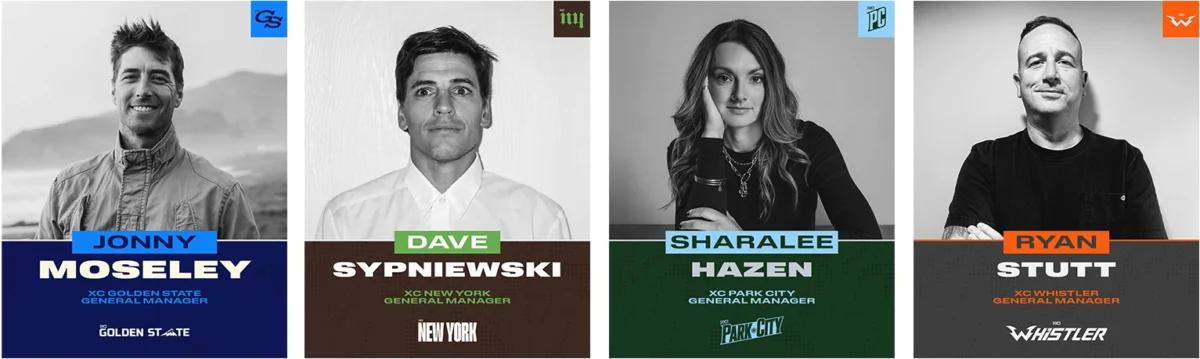
The appointments represent a "who’s who" of the action sports industry, blending Olympic prestige, commercial acumen, and deep-rooted cultural credibility. Olympic legend Jonny Moseley will helm XC Golden State; industry veteran Dave Sypniewski will lead XC New York, supported by winter sports icon Barrett Christy Cummins; marketing innovator Sharalee “Haze” Hazen moves to lead XC Park City; and Canadian media mogul Ryan Stutt will take charge of the newly confirmed XC Whistler.
The Dawn of a New Competitive Era: Structural Overview
The MoonPay X Games League is not merely a collection of events; it is a fundamental transformation of the action sports model. By shifting from the traditional, individual-focused X Games format to a year-round, team-based league, the XGL is providing a structure that mirrors the most successful professional sports franchises in the world.
The four Winter Clubs—XC Golden State, XC New York, XC Park City, and XC Whistler—will serve as the primary entities for the 2027 Winter Season. Each General Manager is tasked with the complex mandate of constructing a 10-athlete roster. This process is fundamentally different from previous eras of the X Games, where athletes competed solely for individual glory. Now, for the first time, these GMs must balance raw talent, team chemistry, and strategic versatility to capture the league’s inaugural Winter Championship.
Chronology: From Summer Success to Winter Expansion
The momentum for this announcement was built on the back of a landmark 2026 summer season. The inaugural XGL Summer Season served as a proof-of-concept for the league’s team-based structure, proving that fans were hungry for narrative-driven, club-oriented competition.
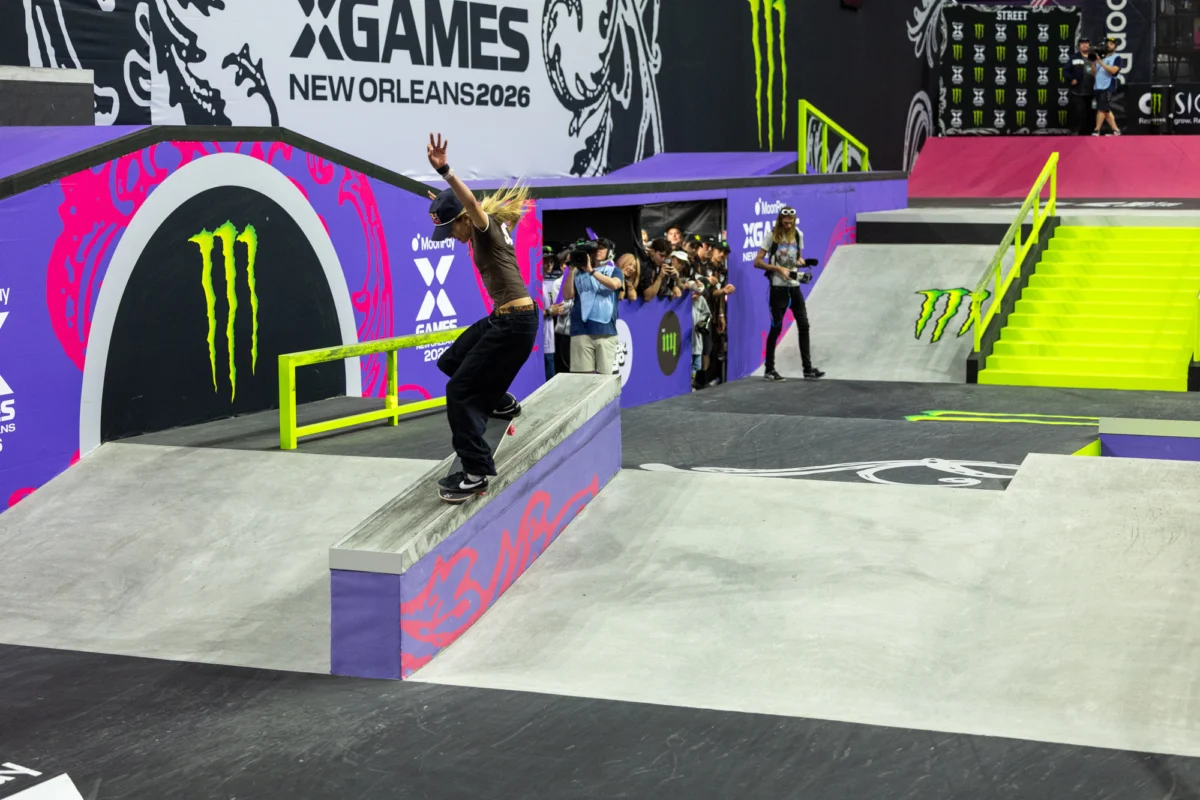
- Summer 2026: The inaugural XGL Summer Season concludes in New Orleans. XC New York secures the first-ever XGL championship title, narrowly defeating XC Tokyo by a razor-thin margin of 2,640 points to 2,630.
- August 13, 2026: X Games officially announces the four Winter GMs and confirms the inclusion of XC Whistler as the fourth founding Winter Club.
- September 16, 2026: The inaugural XGL Winter Draft will be held at Cosm Los Angeles. This event will serve as the first major milestone for the Winter season, where the GMs will finalize their rosters.
- January 2027: The official launch of the MoonPay X Games League Winter Season, kicking off in Aspen.
Supporting Data: Why the XGL Model is Working
The transition to a team-based league is backed by aggressive growth metrics. During the 2026 summer season, the XGL reached 18.3 million U.S. television viewers across ABC and ESPN. This figure represents a staggering 78.5 percent increase in viewership compared to the 2025 X Games broadcast cycle.
These numbers suggest that the introduction of "clubs" has provided a hook for casual viewers who may not be familiar with individual riders, but who can easily root for a regional franchise. Furthermore, the economic model of the XGL is designed to stabilize the industry, providing athletes with greater compensation opportunities through team contracts, which augment the traditional, volatility-prone prize-purse model. By creating a sustainable career path for athletes, the league is effectively professionalizing the sport to a degree previously unseen in the history of freeskiing and snowboarding.
Meet the Architects: Profiles of the General Managers
Jonny Moseley (XC Golden State)
A name synonymous with the modernization of skiing, Jonny Moseley’s appointment to lead XC Golden State is a homecoming of sorts. As an Olympic gold medalist and a pioneer of the freeskiing movement in the late 90s, Moseley understands the pressure of the big stage better than perhaps any other executive in the industry.
"Growing up in Northern California, I saw firsthand how the Bay Area and Lake Tahoe helped shape skiing and snowboarding," Moseley noted. "It’s where I learned to ski, where I competed, and where my passion for the sport began. To come back and lead XC Golden State is incredibly meaningful."
Dave Sypniewski & Barrett Christy Cummins (XC New York)
Tasked with the pressure of defending a championship title (following the success of their summer counterparts), Dave Sypniewski brings a wealth of experience from the business side of snowboarding. Having worked with legendary brands like Burton and Thrasher, Sypniewski’s strength lies in his ability to identify talent that fits a cohesive team identity. He will be supported by 11-time X Games medalist Barrett Christy Cummins, whose role as Special Advisor ensures that the club remains deeply connected to the competitive realities of the sport.
Sharalee “Haze” Hazen (XC Park City)
Hazen, a proven leader in athlete advocacy and experiential strategy, transitions to XC Park City after a successful stint as the GM of XC Los Angeles during the summer. Her focus is on building a "community-first" environment.
"Action sports have always been about pushing boundaries," Hazen stated. "Our goal is to create an environment where athletes feel supported, authentic stories emerge naturally, and XC Park City becomes a team people connect with on and off the snow."
Ryan Stutt (XC Whistler)
The inclusion of Ryan Stutt as the GM of XC Whistler is a nod to the deep cultural roots of the sport in the Pacific Northwest. As the founder of Forecast Ski and King Snow, Stutt has spent decades documenting the evolution of Canadian winter sports. His leadership is expected to prioritize the "Whistler ethos"—a commitment to progression and an uncompromising standard of excellence.
Official Responses and Strategic Implications
Jeremy Bloom, CEO of X Games, emphasized that the shift to the GM model is the most important development in the league’s history. "For the first time in X Games history, someone has to build a championship roster, not just produce a championship run," Bloom said. "That makes the GM role incredibly important. Jonny, Dave, Haze, and Ryan each bring deep credibility with athletes, real roots in these sports and a different point of view on how to build a winning club."
The implications of these appointments are far-reaching. By tethering the world’s top athletes to specific clubs, the XGL is effectively creating regional rivalries that will play out over a full season. This structure allows for season-long narratives—injuries, mid-season trades, coaching adjustments, and team chemistry arcs—that were previously impossible in the single-event format of the traditional X Games.
Furthermore, the involvement of MSP Sports Capital, the private equity firm behind the X Games, signals that this is a long-term investment in the professionalization of action sports. By utilizing the same management strategies seen in the NFL, NBA, and Formula 1, MSP is attempting to transform the X Games from a series of annual spectacles into a year-round, high-stakes sports entertainment property.
The Road to the Draft: September 16
The next major hurdle for the GMs is the XGL Winter Draft, scheduled for September 16 at the Cosm venue in Los Angeles. This event will be the first of its kind, offering a rare look behind the curtain of professional team construction.
Fans eager to witness history can attend the event in person at the immersive Cosm venue. Tickets are currently on sale at xgames.com/draft26, and industry insiders anticipate that the draft will be as heavily analyzed as any major league professional draft, given the high stakes of the inaugural season.
Conclusion
The appointment of these four GMs confirms that the XGL is moving beyond its experimental phase and into a period of aggressive growth and institutional stability. As the winter season approaches, the focus will move from the boardroom to the slopes. With a blend of legendary athletes, seasoned executives, and a clear, team-oriented mandate, the MoonPay X Games League is positioning itself to define the future of winter sports for the next generation of fans and athletes alike. The winter season is coming—and for the first time in the history of the sport, the journey will be just as important as the final run.