For homeowners, renters, and outdoor enthusiasts alike, the dream of energy independence is often tethered to the reality of complex, expensive, and permanent rooftop solar installations. However, a silent revolution in portable energy technology is changing the narrative. Portable solar panels have evolved from niche, low-power accessories into robust, high-efficiency tools capable of powering everything from essential home appliances during a blackout to the creature comforts of a remote cabin or a long-haul RV excursion.
After several years of rigorous testing, I have identified the top-tier portable solar solutions currently dominating the market. By pairing these panels with reliable portable power stations, users can effectively capture, store, and utilize the sun’s energy in almost any environment.
Main Facts: The Portable Solar Landscape
The current market for portable solar panels is vast, yet finding the right fit requires balancing wattage, portability, durability, and connector compatibility.
At the core of any solar setup is the "maximum wattage" rating. While manufacturers market panels based on their theoretical peak output, real-world conditions—such as cloud cover, incident angle of sunlight, and ambient temperature—mean that users rarely see the maximum sticker rating. In my testing, even in optimal conditions, most panels perform at roughly 70 to 80 percent of their rated capacity.
Crucially, consumers must consider the "ecosystem" approach. While you can mix and match brands, staying within a single manufacturer’s ecosystem—pairing a Jackery panel with a Jackery generator, for example—often simplifies connectivity. Many premium brands utilize proprietary ports, though the industry standard for most independent panels remains the MC4 connector, which can easily be adapted to the popular XT60 ports found on many modern power stations.
Chronology of Innovation and Testing
Over the last few years, the progression of portable solar technology has been rapid. Early generations were heavy, cumbersome, and inefficient. Today, we are seeing the widespread adoption of bifacial technology—which captures light from both the front and rear of the panel—and improved conversion efficiencies reaching upwards of 26 percent.

My testing process has been systematic. I utilize a consistent control group, typically the Anker Solix C1000, to measure input across various brands. I evaluate performance under three distinct conditions: high-noon direct sunlight, partial shade, and overcast weather. By logging wattage output over four- and eight-hour windows, I have been able to map the reliability and degradation of these panels over extended, real-world usage.
Top Recommendations: The Gold Standard
1. The Jackery SolarSaga Series
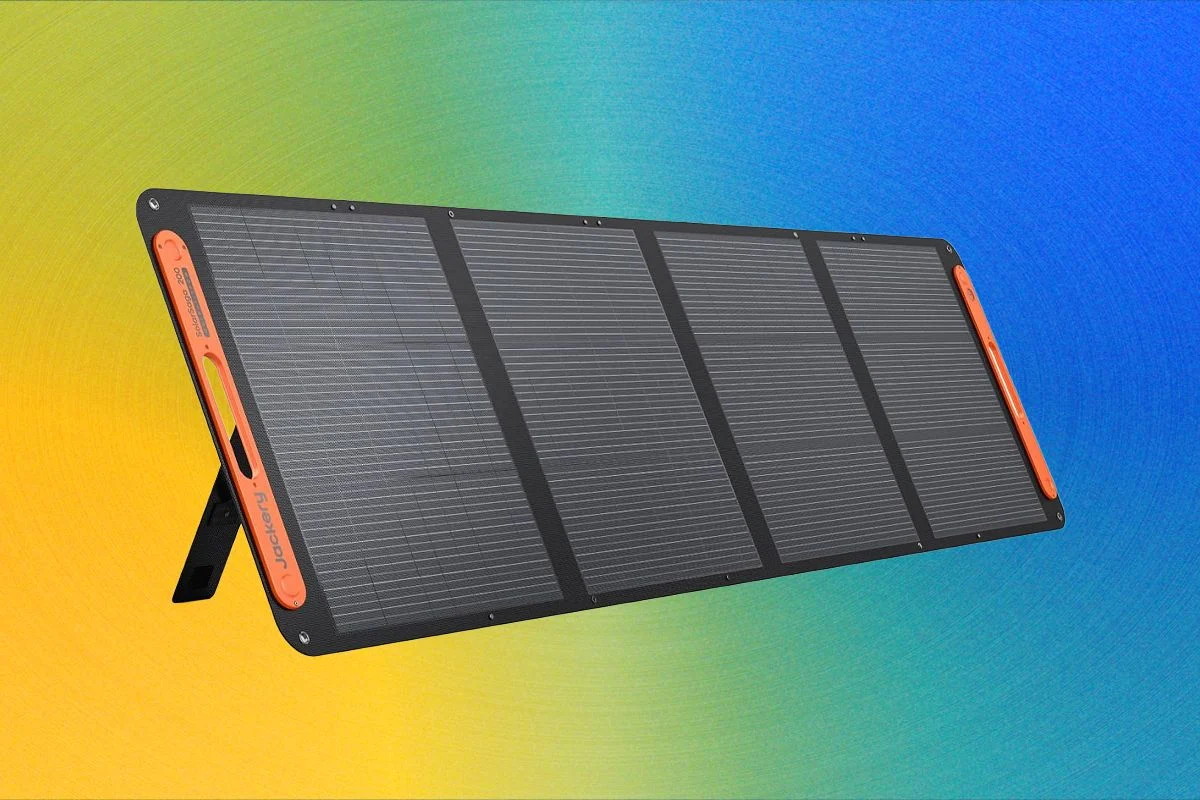
Jackery remains the industry leader for a reason: ease of use. Their SolarSaga 100 and 200 models represent the best balance of build quality and performance.
- Performance: The SolarSaga 200 regularly delivered between 140 and 170 watts, even when environmental factors were less than ideal.
- Design: These panels are built for the user who values speed. With magnetic folding pads and Velcro-attached legs, they can be deployed or packed away in seconds—a stark contrast to competitors relying on fiddly metal fasteners.
- Durability: The latest iteration of the SolarSaga 200 features an IP68 rating, meaning they are fully protected against dust and can withstand significant rain. Their bifacial architecture has pushed conversion efficiency to an impressive 26.7 percent.
2. The Bluetti PV Series (350W and 500W)
For those requiring substantial power density, Bluetti’s high-wattage panels are the clear choice, provided you are willing to manage their size.
- High Output: The 500-watt panel is a powerhouse, capable of hitting nearly 500 watts in perfect conditions.
- Portability vs. Complexity: While they fold into a compact profile, the 500-watt model is a multi-sectioned beast that requires a bit of "wrestling" to set up. They are best suited for stationary base camps rather than rapid, frequent deployment.
- Best Use Case: These are ideal for off-grid living, such as in an RV or a cabin, where the panels are set up once and left to provide a steady, high-wattage stream of energy to a large-capacity power station.
3. The BougeRV Arch Flexible Panel
Not all portable panels are designed to fold. The BougeRV Arch represents the best option for permanent-mount, semi-portable applications.
- Versatility: Capable of bending up to 270 degrees, this panel is designed for the curved roofs of vans or hardtop tents.
- Efficiency: Despite weighing less than 9 pounds, it offers a 25 percent conversion efficiency. It lacks the convenience of a handle or folding mechanism, but for users needing a permanent "on-the-go" energy source, it is unmatched.
Supporting Data and Technical Considerations
When selecting your equipment, you must pay attention to the Open Circuit Voltage (OCV). This is the voltage the panel produces when it is not connected to a load. If your solar panel’s OCV exceeds the maximum input voltage of your solar generator, you risk damaging the internal electronics.
Furthermore, always look for "Maximum Power Point Tracking" (MPPT) in your power station. MPPT technology acts as a smart bridge between the panel and the battery, constantly adjusting the electrical load to ensure you are extracting the absolute maximum amount of energy available, even when the sun is behind a cloud or the panel is partially shaded.

| Feature | Importance | What to look for |
|---|---|---|
| IP Rating | High | IP67 or IP68 for true outdoor resilience. |
| Connector | Medium | MC4 is the industry standard; ensure you have the right adapter. |
| Efficiency | High | Look for 23% or higher for modern, thin-film or monocrystalline cells. |
| Portability | Variable | Consider the weight; anything over 30 lbs will be difficult to move solo. |
Official Industry Perspectives
Manufacturers are increasingly shifting their focus toward "bifacial" panels. By utilizing the reflective properties of the ground or surrounding surfaces, these panels can boost total energy yield by 10 to 20 percent compared to traditional monofacial panels.
There is also a growing trend toward "over-paneling." Experts note that it is perfectly safe to connect panels that exceed the maximum input wattage of a generator, provided the voltage (OCV) remains within safe limits. Because panels rarely hit their rated peak, adding 20–30 percent more "rated" wattage than your generator can handle is an effective way to ensure you hit your target input, even on sub-optimal days.
Implications for the Future
The implications of these advancements are profound. As extreme weather events become more frequent and grid instability more common, the democratization of portable power is no longer a luxury—it is a vital component of emergency preparedness.
The current trajectory suggests that within the next five years, we will likely see "thin-film" technology become even more durable and affordable, effectively allowing users to turn any surface—a tent, a car roof, or even a backpack—into an active power generator. As these products become more standardized, the "proprietary connector" issue that currently plagues the industry will likely give way to universal charging standards, making the transition to solar energy as simple as plugging in a USB-C cable.
Frequently Asked Questions (FAQ)
Q: Can I use solar panels if I live in an apartment?
A: Absolutely. While you may not have a roof, you can set up portable panels on a balcony or in a window that receives direct sunlight. Pairing them with a power station allows you to collect energy throughout the day to charge your devices or power lights in the evening.
Q: What happens if it gets cloudy?
A: Your power output will drop significantly. However, modern MPPT controllers are designed to mitigate this by efficiently managing the fluctuating input. You will still collect energy, just at a lower rate than in direct sunlight.

Q: Is it dangerous to mix brands?
A: It is generally safe if you understand the electrical requirements. The most important thing is not to exceed the maximum voltage (OCV) of your power station. If the voltage is within the range of the power station, you are unlikely to cause any harm, regardless of the brand mix.
Q: How do I clean my solar panels?
A: Use a soft cloth and water. Avoid abrasive sponges or harsh chemical cleaners, as these can scratch the anti-reflective coating on the panel, reducing its efficiency over time.
By investing in high-quality portable solar panels and understanding the fundamental mechanics of how they interact with your power station, you are not just buying a product—you are securing a reliable, renewable, and truly portable source of energy that empowers you to stay connected, no matter where you are.