The final weeks of a bodybuilding contest preparation are often described by elite athletes as a "war of attrition." It is a delicate, high-stakes tightrope walk where the goal is to reach a level of body fat low enough to showcase muscular separation and striations, while simultaneously preventing the body from cannibalizing the very muscle tissue that the competitor has spent years building.
For many amateur bodybuilders, the temptation is to "throw the kitchen sink" at the problem: slashing calories, doubling down on fasted cardio, and flooding the system with thermogenic stimulants. However, according to IFBB Pro and multi-time Olympia finalist John Jewett, this approach is not only counterproductive—it is a recipe for disaster. In a recent instructional breakdown, Jewett, a highly respected coach known for his analytical approach to hypertrophy and fat loss, argues that sustainable conditioning is achieved through precision rather than desperation.
The Anatomy of a Crash: Why "Pulling Every Lever" Fails
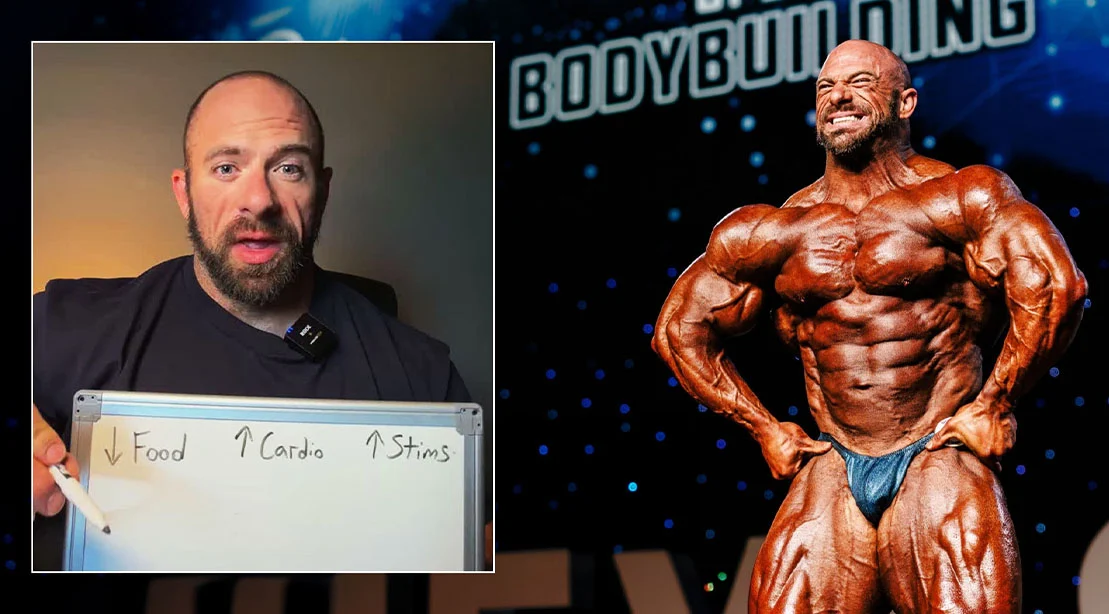
In the world of competitive bodybuilding, the term "levers" refers to the three primary variables used to manipulate body composition: caloric intake (diet), energy expenditure (cardio), and metabolic/appetite regulation (stimulants).
The common mistake among novice competitors is the simultaneous adjustment of all three. If progress stalls, the athlete cuts food, adds an hour of cardio, and increases their pre-workout dosage all in the same week. Jewett warns that this "shotgun approach" creates a physiological crisis. When you pull every lever at once, the body reacts with a sharp increase in cortisol, a downregulation of thyroid function, and an aggressive catabolic state.
"It’s about choosing the strategy that creates the least fatigue while preserving recovery," Jewett explains. By forcing the body into a state of extreme stress, a competitor often ends up looking "flat" on stage—a condition where muscles lose their fullness and glycogen stores are depleted, resulting in a washed-out appearance that fails to impress judges.
Chronology of the Prep: When to Adjust
To understand Jewett’s methodology, one must look at the timeline of a standard 16-to-20-week contest prep.
Phase 1: The Foundation (Weeks 16–12)
During the initial phase, the goal is to establish a modest deficit. Jewett suggests that athletes should avoid major manipulations early on. This is the period for data collection. By observing how the body responds to small changes, a coach can determine the athlete’s metabolic baseline.
Phase 2: The Calibration (Weeks 11–6)
As the body fat percentage drops, the "easy" weight loss ceases. This is when the athlete must begin to prioritize one variable over the others. Jewett emphasizes that this is not the time for radical changes; it is the time for intelligent, data-driven adjustments.
Phase 3: The Peak (Weeks 5–Show Day)
This is the most dangerous period. The goal is no longer just fat loss, but the retention of muscle fullness. If the athlete has exhausted their metabolic capacity by pulling all the levers too early, they have nowhere left to go during these final weeks. Jewett’s system ensures that the athlete still has "cards to play" right up until the final week of the show.
Supporting Data: The Jewett Matrix for Fat-Loss Adjustments
Jewett’s approach functions like a decision tree. Before changing any variable, an athlete must perform a self-assessment based on their current subjective and objective state.
The Decision Criteria
Jewett identifies three primary categories, each with a specific "stop" sign:
- Food (The Caloric Variable): If the athlete is experiencing extreme hunger, lethargy, or brain fog, the caloric lever should be locked. "If you are hungry and struggling here, don’t reduce food," Jewett advises. Dropping calories further when hunger is already high leads to binge eating and hormonal burnout.
- Cardio (The Expenditure Variable): If the athlete’s training intensity is suffering—specifically in leg training—adding cardio is detrimental. "If you already have heavy legs, and you’re not hungry, then don’t reduce cardio," he notes. If leg fatigue is high, the legs will lose their shape and vascularity.
- Stimulants (The Metabolic Variable): If the athlete’s sleep quality is poor, the use of stimulants must be re-evaluated. "If you’re already using some stimulants and have low sleep, then don’t increase stimulants," warns Jewett. Sleep is the primary driver of recovery; sacrificing sleep for a thermogenic boost is a net loss for physique development.
The "Least Evil" Strategy
The core of Jewett’s philosophy is choosing the "least evil" option. If an athlete is struggling with sleep and has high fatigue, they should not touch stimulants or increase cardio. In this scenario, they might maintain calories or even implement a "refeed" to improve recovery. Conversely, if an athlete is feeling energetic and their sleep is optimal, they can afford to push the cardiovascular lever slightly harder to induce fat loss without sacrificing muscle.
Official Perspectives: The Coach’s Insight
As an elite coach, Jewett’s advice is rooted in the physiological reality of the human endocrine system. When an athlete reaches single-digit body fat, the body perceives the fat loss as a survival threat. It will fight to hold onto adipose tissue and will prioritize breaking down muscle for fuel.
Jewett’s methodology is designed to "trick" the body into staying in a deficit while maintaining the illusion of abundance through adequate recovery. He stresses that the "winning formula" is not about how much you can suffer; it is about how much you can recover. If you can maintain the intensity of your heavy compound lifts—squats, deadlifts, and presses—throughout the entire prep, you are much more likely to maintain the muscle mass required to be competitive at the Olympia level.
Implications: The Future of Competitive Bodybuilding
The implications of Jewett’s advice extend beyond the stage. It highlights a shift in the bodybuilding culture from the "no pain, no gain" mentality of the 1990s toward a more scientific, longevity-focused approach.
Avoiding the "Flatness" Trap
Many competitors arrive at a show looking "flat" or "depleted." This is often caused by a combination of excessive water manipulation, over-training, and chronic caloric restriction. By using Jewett’s system, an athlete ensures that they are not unnecessarily depleting glycogen stores. By keeping the levers stable, the muscles remain full, the skin remains thin, and the vascularity pops—the "Holy Grail" of bodybuilding conditioning.
The Importance of Psychological Sustainability
Perhaps most importantly, Jewett’s approach addresses the mental toll of a bodybuilding prep. When an athlete is constantly pulling every lever, they exist in a state of high anxiety. By methodically choosing which lever to pull, the athlete maintains a sense of control and reduces the psychological overwhelm that leads to many competitors quitting before they even reach the stage.
Conclusion: Patience as a Strategy
The final word from John Jewett is one of patience. Getting "stage lean" is not a sprint; it is an endurance event that rewards those who listen to their bodies rather than those who try to force their bodies into submission.
"Getting that last bit of fat off to get stage lean is not about pulling all the levers at once," Jewett concludes. Whether you are a first-time competitor or a seasoned pro, the path to the perfect physique lies in the nuance of your adjustments. By monitoring your hunger, your sleep, and your training capacity, you can make surgical, effective changes that lead to a championship-winning look.
For those looking to deepen their understanding of these protocols, Jewett continues to share his expertise via his social media channels, offering a masterclass in the intersection of modern science and classic bodybuilding aesthetics. By moving away from the chaos of radical, simultaneous adjustments, today’s competitors can present their best selves to the judges, one calculated move at a time.