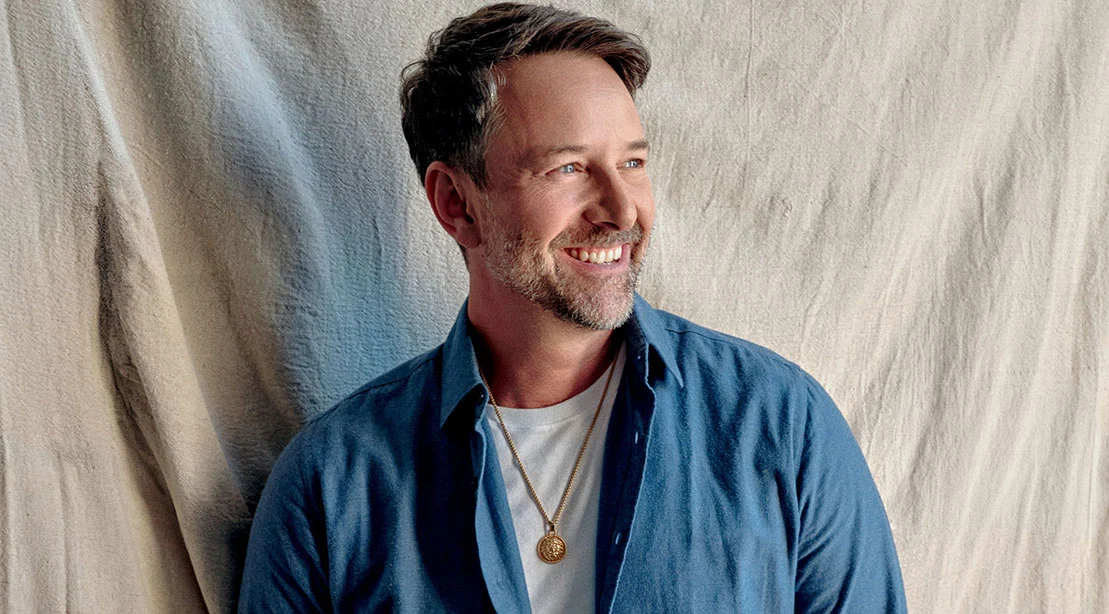
In the high-stakes world of professional bodybuilding, where muscle density and vascularity are currency, the common prescription for fat loss has historically been brutal: hours of high-intensity interval training (HIIT), punishing sprints, and grueling sessions under the barbell. However, IFBB Pro bodybuilder and transformation coach Sheriff Taiwo—affectionately known to his growing legion of followers as "FitDad"—is challenging the status quo.
Taiwo, who secured his IFBB Pro status in 2025 and competes in the highly competitive Men’s Physique division, argues that the secret to a shredded physique isn’t found in the intensity of your breath, but in the simplicity of your stride. For the modern individual balancing the demands of a career, family, and personal health, Taiwo posits that walking is not merely a "light" activity—it is the most potent, sustainable tool for fat loss available today.
Main Facts: The "Walking for the Win" Philosophy
The core of Taiwo’s philosophy is rooted in accessibility and recovery. As a busy father and an elite athlete, Taiwo understands the physiological toll of extreme exercise. "What I’m about to share with you is one of the biggest fat-loss hacks," Taiwo explains. "Fortunately, this concept is not a fad or a gimmick. It is a fundamental, daily movement pattern that works for the average person and the elite athlete alike."
The central thesis is simple: walking allows for significant caloric expenditure without the debilitating fatigue associated with intense cardio. Unlike sprinting or heavy circuit training, walking does not trigger a cortisol-heavy stress response that can lead to muscle breakdown or extreme hunger. For a bodybuilder, this is crucial; the ability to burn fat while preserving hard-earned muscle mass is the "holy grail" of physique development.
The Chronology of a Shift: From Intensity to Consistency
For decades, the fitness industry was dominated by the "no pain, no gain" mantra. In the 1990s and early 2000s, the rise of extreme conditioning programs popularized the idea that if you weren’t drenched in sweat and gasping for air, you weren’t "working out."
Taiwo’s evolution as an athlete mirrors a broader shift in the sports science community. As a transformation coach, Taiwo spent years observing clients who would start intense programs with fervor, only to burn out within six weeks. The chronology of failure was almost always the same: a sudden increase in exercise intensity led to increased appetite, systemic fatigue, and eventually, a total abandonment of the routine.
By pivoting to a "walking-first" approach, Taiwo has observed a radical change in his clients’ long-term adherence. He notes that the shift isn’t just about the calories burned during the walk, but the prevention of the "compensation effect"—where a person overeats following a high-intensity session because their body is demanding rapid recovery. By removing the intensity, the recovery demand drops, and the cycle of "workout-eat-crash" is broken.
Supporting Data: The Science of the Stride
To understand why walking is so effective, one must look at the caloric math. For an average adult weighing approximately 190 pounds, a brisk walk at 3 mph burns roughly 150 calories every 30 minutes. While this might seem modest compared to an hour of CrossFit, the cumulative effect is staggering.
- Daily Math: 30 minutes of walking = 150 calories.
- Weekly Math: 150 calories x 7 days = 1,050 calories.
- Annual Math: 1,050 calories x 52 weeks = 54,600 calories.
In thermodynamic terms, one pound of fat is roughly equivalent to 3,500 calories. By simply adding a 30-minute walk to your daily routine, you are effectively burning off nearly 16 pounds of body fat per year without changing a single item in your diet.
Furthermore, the "recovery economy" is where walking truly shines. Taiwo notes, "I can walk 45 minutes and still hit legs the next day. Try that after 30 minutes of sprints." By avoiding the central nervous system fatigue associated with high-impact cardio, athletes can maintain higher intensity in their weight training, which is the actual driver of muscle growth and metabolic rate.
Official Perspectives and Expert Insight
Beyond the world of professional bodybuilding, exercise physiologists have long lauded walking as the "gold standard" for metabolic health. The American Heart Association and various health organizations have consistently cited walking as a primary preventative measure against cardiovascular disease.
What makes Taiwo’s approach distinct is his application of this data to the "busy professional" demographic. He emphasizes that exercise does not need to be a singular, hour-long event at the gym. "It stacks," Taiwo explains. "Ten minutes after breakfast, fifteen at lunch, twenty pushing my son around the neighborhood after dinner. That’s 45 minutes, and I never ‘worked out’ in the traditional sense."
This "habit-stacking" technique is supported by behavioral psychology. By integrating movement into the existing flow of a day, the friction to start exercising is reduced to nearly zero. When exercise is perceived as a lifestyle rather than a chore, the likelihood of long-term adherence increases exponentially.
Implications for Future Fitness Trends
The implications of Taiwo’s "FitDad" philosophy are profound. As we look toward the future of fitness, the focus is shifting away from the extremes of the "hustle culture" toward sustainable, longevity-focused movement.
1. The Death of the "All-or-Nothing" Mentality
Taiwo’s success suggests that the future of fat loss is not about finding the hardest workout, but the most sustainable one. Consistency, as Taiwo often repeats, "beats intensity every single time." If you can perform a 30-minute walk every day for five years, you will achieve far superior results than if you perform a grueling HIIT workout for three weeks before quitting due to burnout.
2. Metabolic Flexibility
Walking is a low-intensity steady-state (LISS) exercise. Unlike high-intensity workouts that primarily utilize glucose for fuel, LISS relies more heavily on fat oxidation. By consistently staying in this zone, individuals can improve their metabolic flexibility, teaching their bodies to utilize fat as a fuel source more efficiently.
3. Mental Health and Cognitive Clarity
While the focus of the article is fat loss, the mental health implications of walking are significant. Taiwo’s routine—often performed outdoors or during "moments of peace"—serves as a form of active meditation. The reduction in cortisol (the stress hormone) that accompanies low-intensity walking further aids in fat loss, particularly in the abdominal region where stress-induced cortisol tends to store fat.
Implementing the Strategy: A Practical Guide
For those looking to adopt the Sheriff Taiwo approach, the plan is straightforward:
- The 150-Minute Target: Aim for 150 minutes of walking per week. This can be broken down into five 30-minute sessions or smaller, more frequent "micro-walks."
- Audit Your Day: Identify the gaps in your schedule. Could you walk while taking a phone call? Could you walk your child to school? Could you park at the back of the parking lot?
- Prioritize Consistency: Do not worry about speed. Focus on getting the steps in. The goal is to build a habit that becomes as automatic as brushing your teeth.
- The Treadmill vs. The World: If weather is a factor, the treadmill is an excellent tool. Use it to listen to a podcast, catch up on emails, or watch a show. The objective is to make the time pass effortlessly.
Conclusion: The Sustainable Path Forward
Sheriff Taiwo’s journey from an aspiring athlete to an IFBB Pro and influential transformation coach serves as a beacon for those overwhelmed by the noise of the fitness industry. In an age where fitness influencers push dangerous supplements and impossible workout protocols, Taiwo’s message is refreshingly grounded: The best tool for fat loss is the one you will actually use.
By choosing to walk, you aren’t just burning calories; you are investing in a sustainable future. You are choosing recovery over burnout, consistency over intensity, and longevity over temporary transformation. As Taiwo aptly puts it, "It’s the one thing you’ll actually still be doing in six months. And that’s the whole game."
In the race for a healthier, leaner life, it seems the person who walks the furthest is the one who wins. Whether you are an aspiring bodybuilder looking to refine your physique or a busy parent trying to find a moment of peace, the path to your goals might be as simple as putting one foot in front of the other.