By Samuli Haapasalo | Vuosi luonnossa (A Year in Nature)
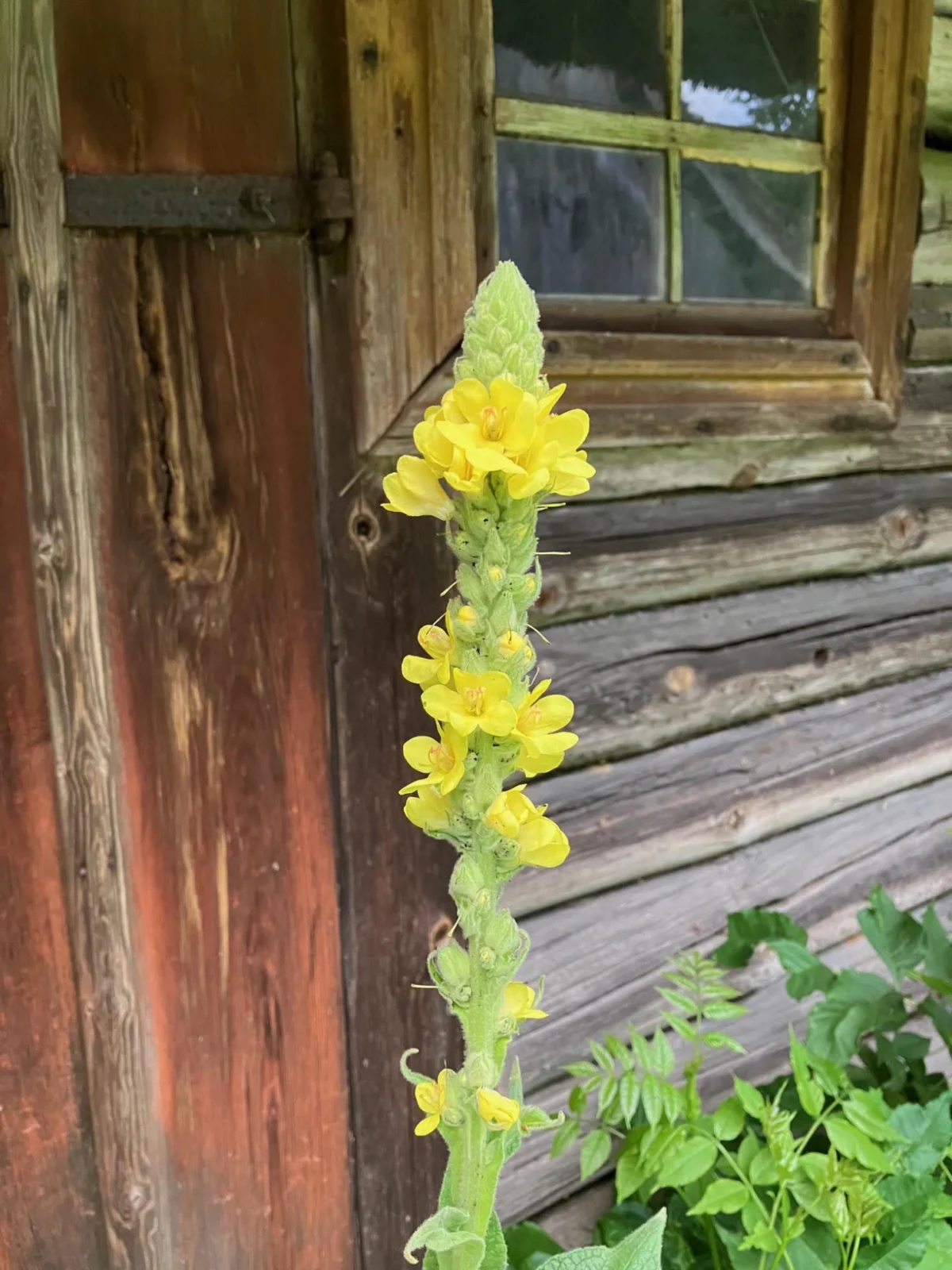
In the quiet corners of the Estonian Läänemaa region, standing resiliently beside the weathered walls of an ancient threshing house, grows a botanical witness to history: the Great Mullein (Verbascum thapsus). Its presence is more than a simple matter of biology; it is a living bridge to the past, a silent observer that may have stood in this very vicinity for a millennium. Through the lens of ethnobotany and historical ecology, the Great Mullein reveals itself not merely as a weed or a wildflower, but as an “ancient immigrant”—a plant whose footprint in Northern Europe is inextricably linked to the migration of people, the evolution of medicine, and the sacred rituals of our ancestors.
Main Facts: The Botany of Resilience
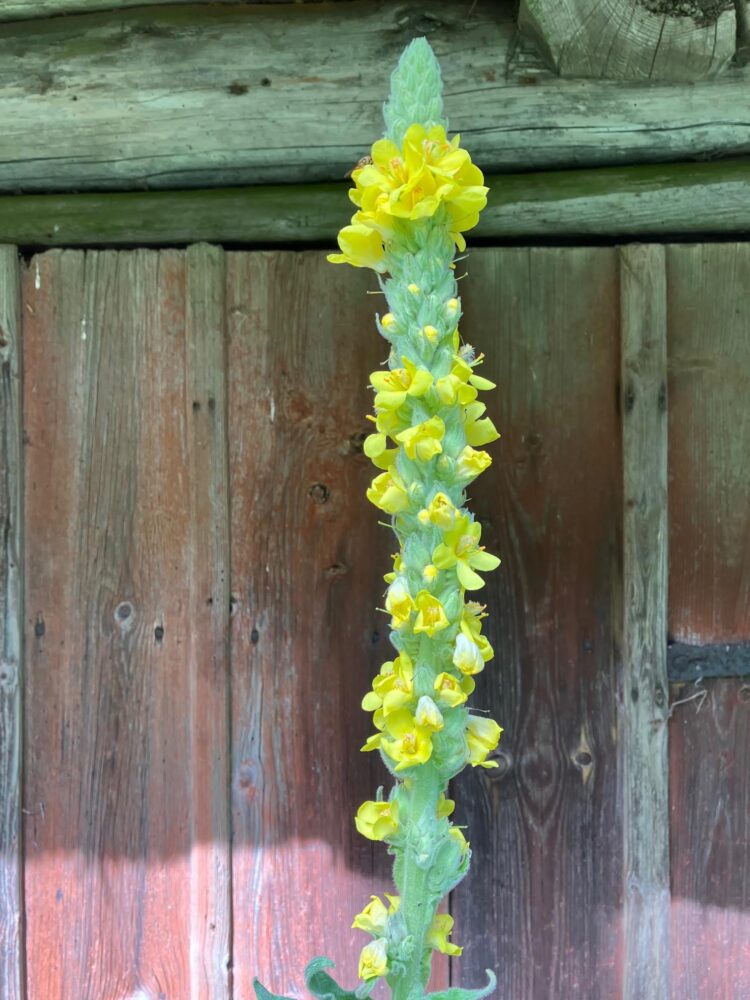
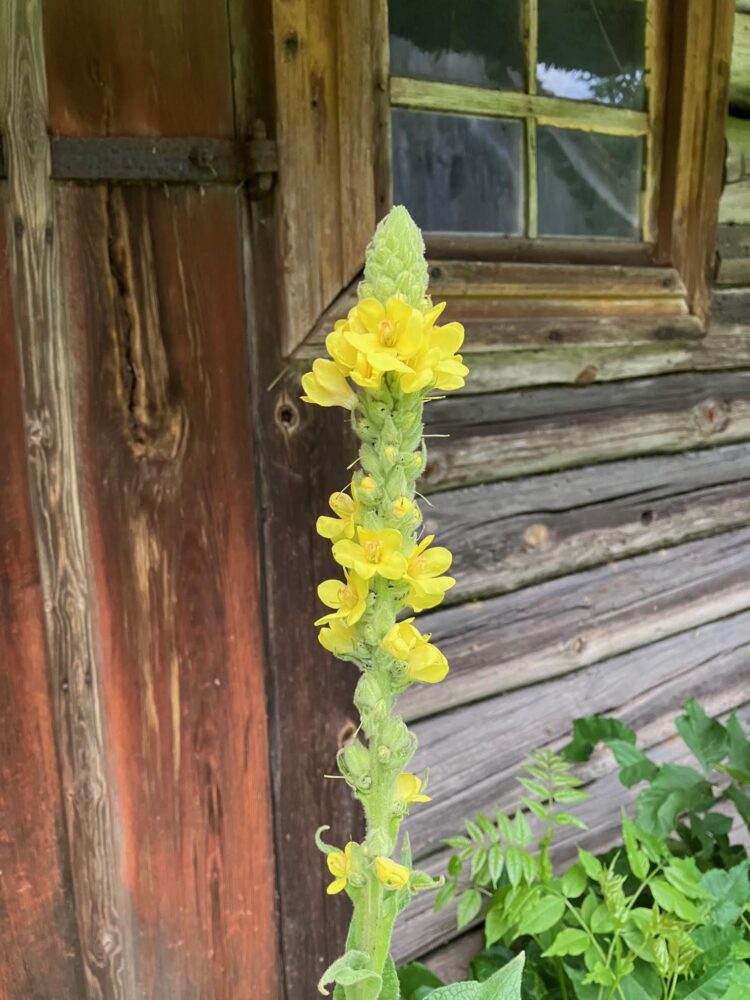
The Great Mullein is a biennial herb, a plant that spends its first year developing a dense rosette of large, felt-like, silver-green leaves. In its second year, it undergoes a dramatic transformation, sending up a singular, towering flowering stalk that can reach heights of up to two meters.
While an individual yellow flower may bloom for only a day or two, the sheer length of the inflorescence ensures a prolonged display, lasting throughout the mid-summer months. This architectural marvel is not just visually striking; it is a prolific producer of seeds, ensuring the species’ survival across shifting landscapes. Its ability to thrive in poor, rocky, or disturbed soil—such as the edges of ancient dwellings or stone walls—has made it a constant companion to human civilization for thousands of years.
Chronology: A Thousand-Year Journey
The connection between humans and the Great Mullein is deeply rooted in history. In the Läänemaa region of Estonia, local folklore and historical context suggest that the plant’s ancestors may have arrived on the Estonian western coast via Viking ships.
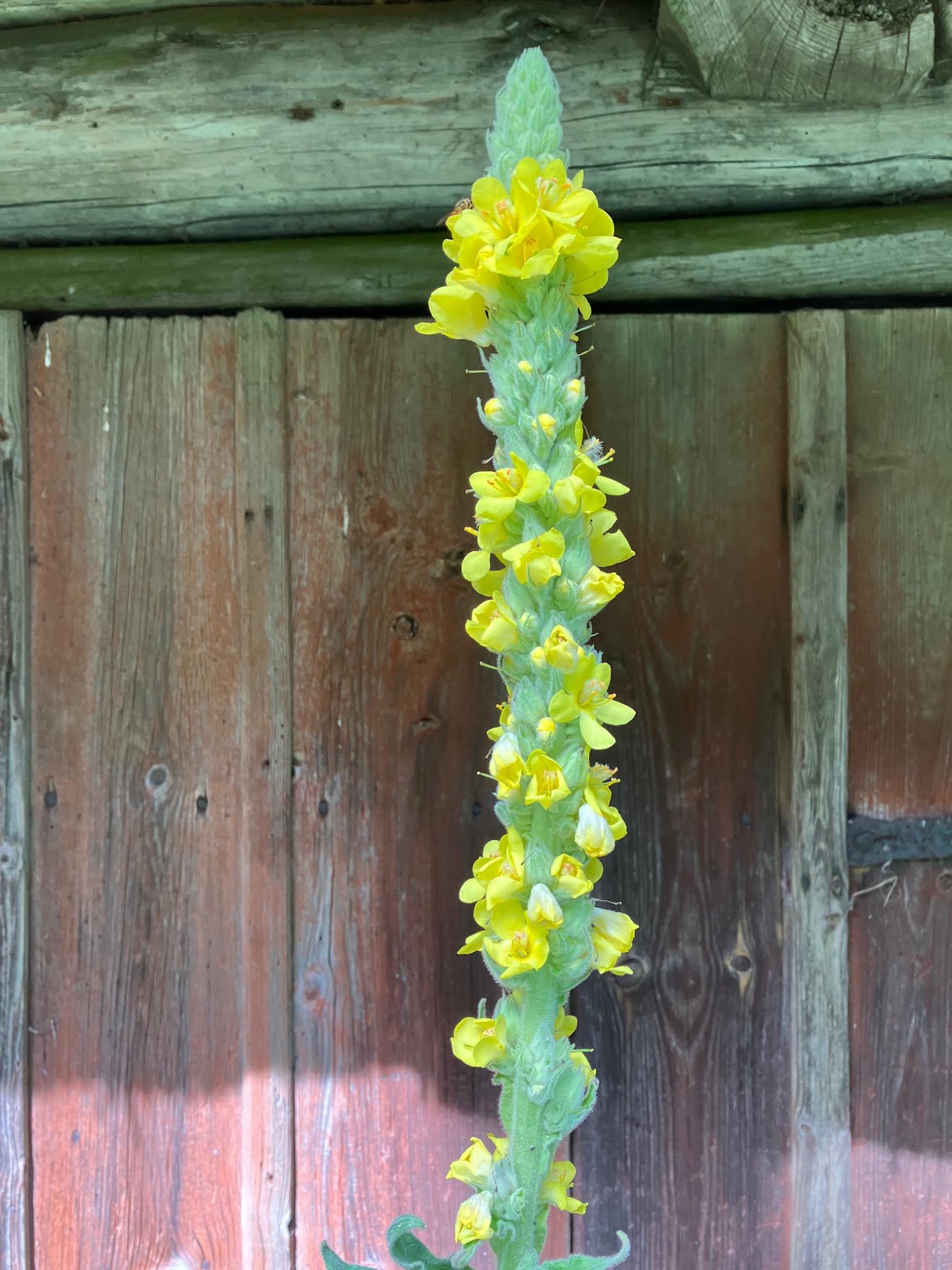
A millennium ago, the site of the ancient threshing house where the plant now grows would have been situated directly on the shoreline. Due to post-glacial land uplift, that same coastline is now four kilometers away. Yet, the Mullein persists. This longevity at a single site—or its immediate vicinity—raises profound questions about plant migration.
- The Iron Age/Viking Era: Historical records and archaeological findings in both Estonia and Finland suggest that the Mullein’s distribution follows the footprint of Iron Age settlements. It is frequently found near ancient castle ruins and early homesteads, suggesting that it was intentionally introduced by early settlers who valued its medicinal and practical properties.
- The Medieval Period: During the Middle Ages, the plant became firmly established as a staple in monastic and folk medicine gardens. Its utility in treating ailments, combined with its striking appearance, ensured it remained a fixture in the human landscape.
- Modern Day: Today, the Great Mullein has naturalized throughout the region. While it has escaped into the wild, it remains a "garden escapee," often found in the vicinity of older, traditional gardens where its seeds have been dispersed by wind, water, and human activity.
Supporting Data: From Medicine to Folklore
The ubiquity of the Great Mullein is largely attributed to its immense value in pre-industrial society. It was not merely a plant; it was an apothecary, a lighting solution, and even a tool for survival.
The Medicinal Pharmacopeia
The Mullein has been a cornerstone of traditional medicine for centuries. Its leaves and flowers were highly prized for:
- Respiratory Health: The plant was primarily used to treat lung conditions, with infusions and syrups created to soothe coughs and clear bronchial passages.
- Dermatological Care: It was a trusted remedy for dry, inflamed skin, often applied as a poultice or infused into oils.
- Cosmetics: Beyond health, the plant held a place in beauty routines. It was historically used to lighten or nourish hair, contributing to a golden hue that, according to legend, was favored by the heroes of the Kalevala.
The Utility of Fire
The genus name Verbascum and the plant’s common name in many languages hint at its relationship with fire. Ancient Romans reportedly dipped the dried, sturdy stalks of the Mullein into tallow, pitch, or tar to create torches. It was also a common source for candle wicks. This association with fire likely cemented its name—"Ukontulikukka" in Finnish translates to "Ukko’s fire flower," referencing Ukko, the supreme deity of the Finnish pantheon associated with thunder and sky.
Extreme Uses: The "Fish Poison"
Perhaps most surprising is the historical use of Mullein seeds in fishing. The seeds contain chemical compounds (saponins and rotenone) that, when crushed and introduced into water, act as a mild sedative for fish. This practice, while environmentally controversial by modern standards, highlights the desperate ingenuity of ancient survival strategies.
Official Responses and Ecological Status
Botanists and environmental historians generally categorize the Great Mullein as an "ancient immigrant" (or muinainen tulokas in Finnish). It is critical to distinguish this from an "invasive species." An invasive species is typically a modern introduction that disrupts local ecosystems. In contrast, the Great Mullein has been part of the local flora for so long that it occupies a stable, non-disruptive niche.
Because it thrives in human-disturbed habitats, its presence is often an indicator of human history. Researchers studying archaeological sites look for the Mullein as a "marker" of where a building or settlement once stood. It is a botanical archaeologist, revealing the locations of forgotten foundations that have long since been reclaimed by the forest.
Implications: The Imagination of the Landscape
Why does the Great Mullein continue to captivate us? It is a plant that demands our attention not just for its physical presence, but for the stories it carries. When one stands before a two-meter-tall Mullein, it is impossible not to let the imagination wander.
We are looking at a plant that might have been carried in the cargo of a Viking longship. We are seeing a plant that provided light for a Roman traveler and medicine for a medieval farmer. We are witnessing a living artifact of the Iron Age.
The Conservation of Cultural Heritage
The conservation of the Great Mullein is not just a matter of biological preservation; it is the preservation of cultural history. As we modernize our landscapes and clear out old structures, we risk losing these "ancient indicators." Protecting the habitats where these plants flourish—such as old stone walls, traditional hay meadows, and historical homesteads—is essential for maintaining our connection to the landscape’s past.
A Lesson in Resilience
In an era of rapid environmental change, the Great Mullein offers a lesson in resilience. It has survived the shifting of coastlines, the abandonment of villages, and the passage of centuries. It continues to grow, to flower, and to sow its seeds, indifferent to the transient nature of human empires.
As we look toward the future, the Great Mullein remains a reminder that nature and human history are not separate entities. They are intertwined, evolving together over thousands of years. The next time you find yourself in the countryside, look for the tall, yellow-flowered sentinel standing near a crumbling stone wall. You are not just looking at a weed; you are looking at a witness to the human journey.
Conclusion
The Great Mullein is a testament to the enduring relationship between flora and folklore. Whether it is indeed a remnant of Viking trade or simply a hardy native that adapted to the opportunities provided by human settlement, it remains a vital part of our natural and cultural identity. By understanding the history of the plants around us, we gain a deeper appreciation for the land we inhabit and the long, complex history that has shaped it.
The next time you walk past a Great Mullein, take a moment to pause. Imagine the fires it has fueled, the healers who have harvested its leaves, and the ancient people who once called it a neighbor. In the dance of nature, the Great Mullein is a partner that has been leading the way for a very long time.