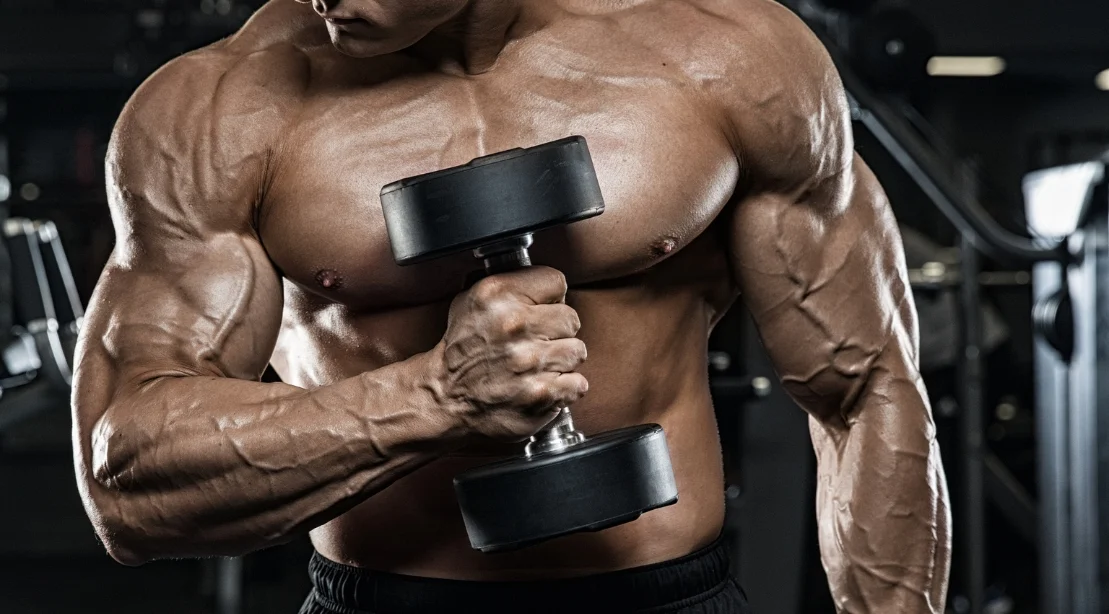
In every gym across the globe, from high-end metropolitan fitness clubs to gritty, garage-style powerlifting dens, there exists a universal demographic: the lifter whose primary obsession is the bicep. A full, peaked pair of biceps has served as the gold standard of aesthetic strength since the golden era of bodybuilding. It is a biological badge of honor. Yet, there is a recurring irony in this pursuit: the bicep is not the largest muscle in the upper arm. That distinction belongs to the triceps, which constitute roughly two-thirds of the arm’s total mass. However, in the court of public opinion, the triceps rarely get the call to flex. Big biceps command immediate, instinctive attention.
While the aspiration for larger arms is simple, the execution is deceptively complex. The biceps are stubborn; they respond to only one mandate: a compelling reason to grow. To incite hypertrophy, one must provide a stimulus significant enough to force a physiological adaptation. Without this, the body is perfectly content to maintain your arms exactly as they are.
The Growth Equation: Decoding Biological Adaptation
If you have been following this series on foundational hypertrophy, you are likely familiar with the "Growth Equation." It is a fundamental principle: Mechanical Tension + Metabolic Stress + Progressive Overload = Hypertrophy.
Every workout you perform must satisfy this equation. Your primary objective in the gym is not to "feel the burn" for its own sake, but to expose the muscle to controlled stress, for a precise amount of time, with sufficient intensity to convince your central nervous system that your current muscular capacity is inadequate for your daily demands. Once that threshold is crossed, your work in the gym is technically finished. The actual muscle growth occurs later, during the phases of nutrition, rest, and hormonal recovery.
The Myth of Volume
Many beginners fall into the trap of "more is better." They believe that muscle growth is a linear function of exercise variety, total sets, and time spent under the fluorescent gym lights. In reality, the inverse is often true. The biceps are a relatively small muscle group. They do not require an exhaustive list of twenty different curl variations or two-hour "arm marathons." They require laser-focused intensity, strict biomechanical execution, and enough load to force them beyond their current capability. Quality will always triumph over quantity.
Anatomy as a Strategic Advantage: The Role of the Brachialis
Before diving into specific exercises, it is imperative to understand the architecture of the upper arm. The front of your arm consists primarily of two muscles: the biceps brachii and the brachialis. While the bicep is the vanity muscle—the one that populates the peak—the brachialis is the unsung hero. It sits deep underneath the biceps, acting as a structural support system.
The "Hidden" Secret to Massive Arms
Neglecting the brachialis is perhaps the most common oversight in arm training. Developing the brachialis is the "bodybuilding hack" for creating the illusion of size. As the brachialis grows, it acts as a shelf, physically pushing the biceps brachii upward. This creates increased volume, greater fullness, and a more pronounced, "capped" peak. Many lifters spend years performing exclusively supinated (palms up) curls, never realizing that they are missing the very muscle that could add that desired extra inch to their arm measurement.
The Mechanics of Grip and Recruitment
A complete, professional-grade arm routine must address both the biceps brachii and the brachialis. The primary tool for this is the manipulation of grip.
- Supinated Grip (Palms Up): Traditional barbell or dumbbell curls in a supinated position place the mechanical advantage squarely on the biceps brachii. This is essential for overall thickness.
- Neutral Grip (Palms Facing): Hammer curls, where the palms face each other, shift a significant portion of the workload onto the brachialis and the brachioradialis (a forearm muscle).
By integrating both grip variations into a single session, you ensure that you are training the arm as a complete unit rather than focusing on a single fiber orientation.
Furthermore, it is critical to account for "hidden" training volume. The biceps do not function in a vacuum. Every heavy rowing movement, chin-up, pull-up, and lat pulldown recruits the biceps as a secondary mover. By the time your dedicated arm workout arrives, your biceps may have already been subjected to significant fatigue throughout the week. This is why "more" is rarely better. If you are training with the necessary intensity, eight to twelve high-quality sets per week are more than enough to stimulate maximum growth.
Why Tension Trumps Selection
In the era of social media fitness, exercise selection has become a matter of dogmatic debate. Whether you prefer barbell curls, preacher curls, cable curls, or incline curls, the reality remains the same: they are all merely tools to achieve the same end. There is no "magical" exercise that will bypass the requirement for hard work.
The most effective exercise for your specific body is the one that allows you to:
- Isolate the target muscle without relying on momentum.
- Maintain strict form through the full range of motion.
- Generate maximum intensity safely.
Remember: you are not trying to move a weight from point A to point B. You are attempting to force the biceps to perform a specific amount of quality work under consistent tension. The dumbbell does not possess intelligence; it does not know if it weighs 20 pounds or 50. Your muscles do not know whether you are using a straight bar, an EZ-curl bar, or a cable machine. They only recognize the physiological sensation of tension and the subsequent signal to repair and grow.
Implications for the Modern Lifter
For the modern gym-goer, the path forward is clear. Stop chasing the "fads" of complex drop-sets or overly complicated supersets until you have mastered the basics of tension and progressive overload.
The implications of this philosophy are profound:
- Consistency over Intensity: Training at 90% intensity for three years is infinitely more effective than training at 110% for three weeks before burning out.
- Biomechanical Integrity: If your form breaks down, you have stopped training the biceps and started training your ego.
- Recovery Integration: If you are not sleeping and eating to support your training, you are effectively wasting your time in the gym.
Looking Ahead: Putting Theory into Practice
In the upcoming second part of this series, we will transition from theory to application. We will outline a complete, high-efficiency arm routine designed to optimize the bicep-brachialis relationship. We will also revisit one of the most brutal "old-school" finishers ever devised in the world of bodybuilding: the legendary "21s."
The 21s are not complicated, they are not fancy, and they are certainly not comfortable. They involve seven partial reps at the bottom of the movement, seven partial reps at the top, and seven full-range reps to complete the set. They are a test of mental fortitude and metabolic endurance. But for those who are willing to embrace the discomfort, they provide the final necessary stimulus for true arm development.
If you are tired of stagnant progress, prepare to rethink your approach. The anatomy does not lie, and the math of the Growth Equation is absolute. It is time to stop lifting and start building.