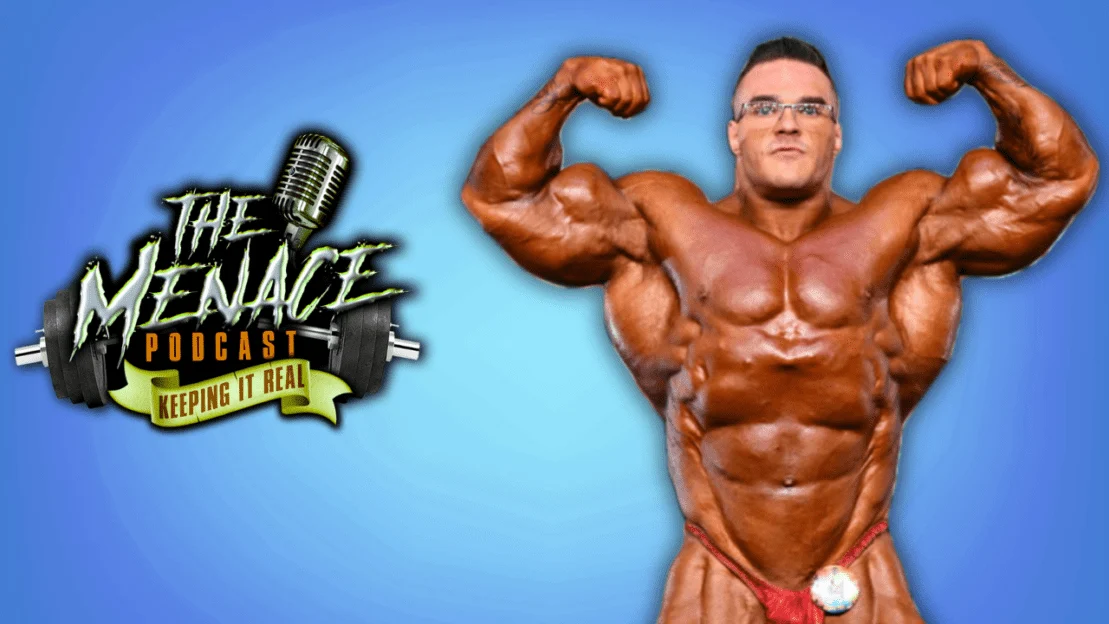
The landscape of professional bodybuilding shifted dramatically following the conclusion of the 2026 Tampa Pro. With a dominant victory that left little room for debate, Nick "The Mutant" Walker has officially punched his ticket to the Mr. Olympia stage in Las Vegas. His performance was not merely a win; it was a statement of intent. On the latest episode of The Menace Podcast, bodybuilding legends Dennis James, Milos Sarcev, and Jose Raymond dissected the victory, exploring whether this iteration of Walker possesses the tools necessary to topple the reigning hierarchy and hoist the coveted Sandow trophy.
The Tampa Pro: A Masterclass in Dominance
The 2026 Tampa Pro served as a critical litmus test for Walker, who entered the competition with the singular goal of securing his Olympia qualification. He did so with clinical precision, finishing ten points clear of runner-up James Hollingshead. In a sport often defined by marginal differences and subjective judging, a ten-point spread is a massive margin, indicating that Walker was effectively operating in a weight class—and a league—of his own.
Upon being declared the winner, Walker was uncharacteristically bold in his post-show assessment, declaring his intention to "embarrass" the elite lineup awaiting him in Sin City. This level of confidence is not unfounded; the version of Nick Walker that graced the Tampa stage displayed a level of maturity and conditioning that many analysts believe represents the best form of his professional career to date.
Chronology of a Comeback: Evolution of "The Mutant"
To understand the weight of this victory, one must look at the trajectory of Walker’s career. Historically, Walker has been criticized for certain structural limitations—specifically, midsection control and a tendency toward "blockiness." These critiques have often acted as a ceiling for his Olympia aspirations, preventing him from cracking the top tier of judges’ scorecards despite his undeniable muscle mass.
However, the 2026 Tampa Pro marked a definitive turning point. As Milos Sarcev, known as "The Mind" for his analytical approach to training and aesthetics, pointed out on The Menace Podcast, the most striking aspect of Walker’s performance was the sense of "effortless control."
"He appeared entirely comfortable on stage," Sarcev noted. "The control of his midsection was significantly improved, which is the single most important factor for him moving forward. He has clearly been working on his vacuum and his core stability, and it has paid off in a big way."
Following the show, the industry buzz centered on the "new" Walker—a version that has traded some of his sheer, raw bulk for refined, high-density muscle tissue. This evolution did not happen overnight; it is the result of months of meticulous off-season adjustments, focusing on muscle maturity and the "hardness" that only comes with years of consistent, heavy-duty training.
Supporting Data: Dissecting the Physique
The panel on The Menace Podcast engaged in a granular breakdown of Walker’s physique, identifying the specific areas where he has made gains and where, theoretically, he might still find room for improvement.
The Legs and Lower Body
Jose Raymond, a former professional bodybuilder turned elite coach, was particularly impressed by the lower half of Walker’s physique. "His legs were better, too," Raymond observed. "A lot more detail in the legs. We’re seeing separation that we haven’t seen in his previous outings. The quads are carving out with much more depth."
The Front Double Bicep and Arm Detail
Sarcev pointed to the front double bicep pose as a masterclass in arm detail. "Look at the arm detail," Sarcev urged listeners. "The fiber density there is extraordinary. It’s not just mass; it’s the quality of the muscle that is going to make him dangerous at the Olympia."
Areas for Improvement
Despite the praise, the panel was balanced in their assessment. They noted that his front lat spread—a pose that typically relies on the transition from the waist to the lats—still presented some challenges. While the panel agreed that it was the best version of that pose among the top three in Tampa, it remains an area where Walker could refine his aesthetic to better compete against the "classic" structures of athletes like Derek Lunsford or Andrew Jacked. Furthermore, Sarcev noted that the side chest pose could be further optimized to maximize his structural advantages.
The Olympia Equation: Walker vs. The Titans
The central question remains: Is Nick Walker a genuine threat to the Mr. Olympia title? The division is currently saturated with talent. He must contend with the reigning champion, Derek Lunsford, who brings a level of structural harmony that is difficult to beat. He must also navigate the sheer size and dominance of Samson Dauda, the legendary consistency of Hadi Choopan, and the aesthetic brilliance of rising star Andrew Jacked.
When Dennis James asked the panel, "How dangerous is Nick now, for the Olympia?" the consensus was immediate.
"Always dangerous," Raymond replied without hesitation.
The comparison between Walker and Lunsford is the most pertinent. While Lunsford is widely considered to have a superior skeletal structure—the "X-frame" that judges traditionally favor—Walker is bringing a level of density and "graininess" that can, in the right light and at the right angle, make structural superiority seem secondary.
"Lunsford has the structure, no doubt," Raymond clarified during the debate. "But when you look at the finer details, the sheer density of the muscle, the way Nick holds that mass… it’s crazy. He creates a visual impact that is very hard for judges to ignore, even if you prefer a different aesthetic."
Implications for the Future of Bodybuilding
Walker’s victory in Tampa serves as a warning shot to the rest of the professional circuit. By refining his midsection and bringing superior leg detail, he has effectively removed the two biggest question marks that previously prevented him from being a frontrunner for the Sandow trophy.
The implications for the Olympia are significant. If Walker arrives in Las Vegas with this level of conditioning, the judging panel will be forced to make a difficult choice between the "aesthetic perfection" often associated with Lunsford and the "mutant-like" density that Walker brings to the stage. This creates a fascinating narrative for the upcoming Olympia, as it pits two fundamentally different philosophies of bodybuilding against one another.
Moreover, Walker’s success is a testament to the power of self-correction. In a sport that is often stubborn, his ability to listen to the judges’ feedback and return to the stage with a demonstrably improved package demonstrates the kind of discipline required of a champion.
Conclusion: The Road to Sin City
As the countdown to the 2026 Mr. Olympia begins, all eyes are on the preparation of the top contenders. Nick Walker has done everything in his power to ensure he enters that arena as a primary threat. He has qualified, he has proven his improvements under the bright lights, and he has made his intentions known.
Whether he can bridge the gap between "a top-tier contender" and "the Mr. Olympia champion" will depend on the final weeks of his prep. As the Menace Podcast panel suggested, the margins at the very top are razor-thin. It will come down to who arrives at their absolute, 100% peak on the Friday night of the Olympia. If the Tampa Pro is any indication, Nick Walker is not just looking to participate—he is looking to disrupt the status quo.
For those looking for a deep dive into the technicalities of this performance, the full breakdown on the Muscle & Fitness YouTube channel provides an essential visual analysis. As the bodybuilding world turns its attention toward Las Vegas, one thing is certain: the path to the Sandow trophy just got significantly more complicated for the current champions. The Mutant is back, and he is coming for the crown.