Introduction: Unlocking a Fundamental Sea Kayaking Maneuver
In the intricate world of sea kayaking, proficiency extends beyond simply propelling a vessel forward. The ability to maneuver with precision, particularly in confined spaces or for specific tactical advantages, is paramount. Among these crucial skills, the sculling draw, often referred to as paddling a kayak sideways, stands out as a foundational technique that empowers kayakers with unparalleled control and finesse. This comprehensive guide delves into the mechanics, applications, and nuances of the sculling draw, offering insights for both novice paddlers seeking to expand their repertoire and experienced kayakers aiming to refine their expertise.
The sculling draw is more than just an impressive trick; it is a fundamental tool in the sea kayaker’s arsenal. It allows for precise lateral movement, essential for docking, navigating tight channels, repositioning alongside other kayakers, or even executing complex maneuvers during expeditions. Unlike forward paddling, which focuses on propulsion, the sculling draw emphasizes controlled lateral displacement, transforming the kayak into an agile extension of the paddler’s will. This article aims to demystify this powerful technique, breaking down its execution into digestible steps, exploring its diverse applications, and highlighting the importance of practice and refinement.
The Mechanics of the Sideways Slide: A Step-by-Step Breakdown
Achieving the sideways glide of a sculling draw requires a deliberate integration of body rotation, paddle placement, and a nuanced understanding of leverage. The process can be broken down into several key stages:
1. Body Positioning and Core Engagement:
The foundation of any effective kayak stroke lies in the paddler’s core. For the sculling draw, this is amplified. Begin by ensuring a stable, balanced posture in the kayak. Your hips should be engaged, and your torso rotated slightly towards the side you intend to move. Imagine your core as the engine, initiating and controlling the entire movement. A strong core connection allows for efficient power transfer from your body to the paddle.
2. Paddle Placement and Angle:
The paddle acts as the lever, and its strategic placement is critical. The sculling draw typically involves placing the paddle blade in the water alongside the kayak, roughly parallel to the hull. The angle of the paddle blade is crucial; it should be slightly angled, not perpendicular, to create the necessary resistance and directional force. A common error is to hold the paddle too far out or too close to the kayak. Experimentation is key to finding the optimal sweet spot where the blade engages effectively with the water without causing excessive drag or instability.
3. The "Sculling" Motion: A Subtle Sweep:
The term "sculling" refers to the repetitive, sweeping motion of the paddle blade through the water. This is not a forceful pull or push, but rather a controlled, fluid movement. As you initiate the sweep, the paddle blade should move in a subtle arc, maintaining consistent pressure against the water. The body’s rotation plays a vital role here. As you rotate your torso away from the paddle, you are effectively drawing the kayak towards the paddle blade. Conversely, rotating towards the paddle blade allows you to push the kayak away.
4. Maintaining Verticality and Control:
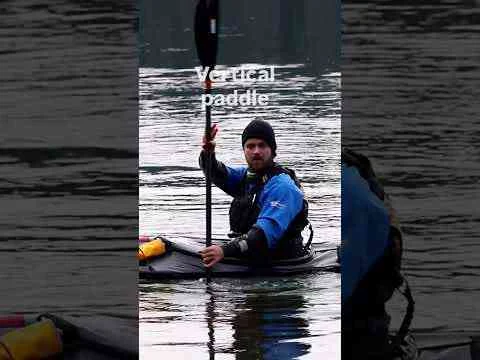
A common misconception is that the paddle should be angled horizontally. For the sculling draw, the paddle shaft should remain as close to vertical as possible, with the blade submerged to a sufficient depth to engage the water effectively. This vertical orientation maximizes the leverage and allows for precise control over the kayak’s lateral movement. A truly vertical paddle shaft, combined with a slight forward or backward sweep of the blade, generates the lateral force needed to slide the kayak.
5. Timing and Rhythm:
The sculling draw is executed with a continuous, rhythmic motion. It is not a series of jerky movements but a flowing sequence. As one sculling stroke concludes, the next begins, creating a consistent sideways glide. The rhythm is often dictated by the paddler’s breath and torso rotation, creating a dance between body and paddle. Mastering this rhythm is essential for sustained and controlled lateral movement.
6. Subtle Adjustments and Feedback:
The beauty of the sculling draw lies in its sensitivity. Small adjustments to paddle angle, depth, and rotation can significantly alter the kayak’s movement. Pay close attention to the feedback from the kayak and the water. If the kayak is not moving sideways, reassess your paddle angle or body rotation. If you are losing control, the paddle might be too far out or at an incorrect angle. This feedback loop is crucial for refining the technique.
Variations and Refinements:
As paddlers become more comfortable, they can explore variations of the sculling draw. For instance, a more aggressive sweep can generate faster lateral movement, while a gentler, more controlled sweep allows for minute adjustments. The angle of the paddle blade can also be subtly altered to fine-tune the direction and speed of the sideways movement. Some paddlers even utilize a slight forward or backward tilt of the paddle shaft to achieve specific results, though this is typically reserved for advanced practitioners.
Applications in Sea Kayaking: Beyond the Basics
The sculling draw is not merely an academic exercise; it is a practical skill with numerous real-world applications in sea kayaking. Its versatility makes it indispensable for a wide range of scenarios:
-
Docking and Landing: This is perhaps the most intuitive application. When approaching a dock, raft, or shoreline, the sculling draw allows you to precisely position your kayak alongside. Instead of the abrupt maneuvers often required with forward paddling, you can gently slide your kayak into the perfect spot, avoiding collisions with other boats or obstacles. This is particularly useful in busy harbors or when docking in tight spaces.
-
Navigating Tight Spots: Whether it’s squeezing through a narrow channel between rocks, maneuvering around a moored vessel, or passing through a gap in a kelp bed, the sculling draw provides the lateral control needed to navigate these challenging environments with confidence. It allows you to inch your way through obstacles without the need for drastic forward or backward movements.
-
Repositioning and Maneuvering: In group paddling situations, the sculling draw is invaluable for repositioning your kayak relative to others. You can easily slide alongside a fellow paddler to communicate, share information, or simply maintain a desired formation. It also allows for quick adjustments to avoid drifting into hazards or other boats.
-
Tidal Currents and Wind: Understanding how to use currents and wind to your advantage is a hallmark of experienced sea kayakers. The sculling draw can be employed to counteract sideways drift from wind or current, allowing you to maintain a desired position or to make precise course corrections. It can also be used to ferry across a current, moving diagonally upstream or downstream.
-
Rescue Scenarios: In the event of a capsize or for assisting a fellow paddler, the sculling draw can be a critical tool. It allows a rescuer to bring their kayak alongside a swimmer or a swamped kayak with minimal disturbance. It can also be used to stabilize a kayak during a self-rescue or assisted rescue.
-
"Showing Off" (with Purpose): While often seen as a display of skill, the ability to move sideways with apparent effortlessness can also serve practical purposes. For example, demonstrating this maneuver at a put-in can instill confidence in fellow paddlers or provide a visual demonstration of advanced skills for instructional purposes. However, the emphasis should always remain on the practical application rather than mere exhibition.
Supporting Data and Expert Insights:
The efficacy of the sculling draw is widely recognized within the sea kayaking community. Many reputable sea kayaking organizations and instructors emphasize its importance in their curriculum. For instance, organizations like the American Canoe Association (ACA) and Paddle Canada incorporate sculling techniques into their skill progression pathways.
Expert sea kayakers often highlight the sculling draw as a testament to a paddler’s connection with their kayak and the water. They emphasize that true mastery comes not from brute force, but from understanding the subtle interplay of physics and body mechanics. Many seasoned paddlers advocate for consistent practice of this skill in calm waters before attempting it in more challenging conditions.
Official Responses and Endorsements:
The endorsement of the sculling draw comes from its consistent inclusion in official skill assessment criteria and training manuals by recognized kayaking bodies. These organizations often cite the sculling draw as a fundamental skill for safe and proficient sea kayaking. Certification programs frequently test for the ability to execute this maneuver effectively, underscoring its importance. For example, advanced sea kayaking certifications often require paddlers to demonstrate proficiency in various sculling techniques, including the draw, push, and brace.
Implications for Safety and Skill Development:
The ability to perform a sculling draw has profound implications for a sea kayaker’s safety and overall skill development.
-
Enhanced Safety: In unpredictable maritime environments, the ability to maneuver with precision can be the difference between a controlled situation and a hazardous one. The sculling draw provides kayakers with an extra layer of control, allowing them to react effectively to changing conditions, avoid collisions, and manage their kayak in challenging scenarios. This is particularly critical in areas with strong currents, winds, or dense boat traffic.
-
Increased Confidence: Mastering a complex maneuver like the sculling draw significantly boosts a kayaker’s confidence. This newfound confidence can encourage them to tackle more challenging expeditions and explore new waterways, further enhancing their skills and appreciation for the sport. The feeling of being in complete control of their vessel in various situations is a powerful motivator.
-
Improved Efficiency: While seemingly more complex than forward paddling, the sculling draw, when executed correctly, is an efficient way to achieve lateral movement. It allows for precise positioning without expending excessive energy, which is crucial for longer expeditions and demanding conditions. It avoids the need for awkward or energy-draining maneuvers that might be required if only forward paddling were available.
-
Holistic Skill Development: The sculling draw promotes a holistic approach to kayaking skill development. It encourages paddlers to think about their body’s connection to the kayak, the dynamics of water, and the principles of leverage. This integrated understanding contributes to a more well-rounded and intuitive paddling style. It fosters a deeper connection with the water and the kayak, moving beyond simply a means of transportation to a finely tuned extension of the paddler.
Conclusion: The Art of Effortless Movement
The sculling draw, or paddling a kayak sideways, is a sophisticated yet accessible technique that unlocks a new dimension of control and finesse in sea kayaking. By mastering its mechanics, understanding its diverse applications, and committing to consistent practice, kayakers can elevate their skills, enhance their safety, and deepen their connection with the marine environment. It is a skill that transforms a novice paddler into a more confident and capable explorer of the sea, allowing for graceful navigation and a profound appreciation for the art of effortless movement on the water. The sculling draw is not just a technique; it is a gateway to a more nuanced and rewarding kayaking experience.