Introduction: The Anomaly in the Ultralight World
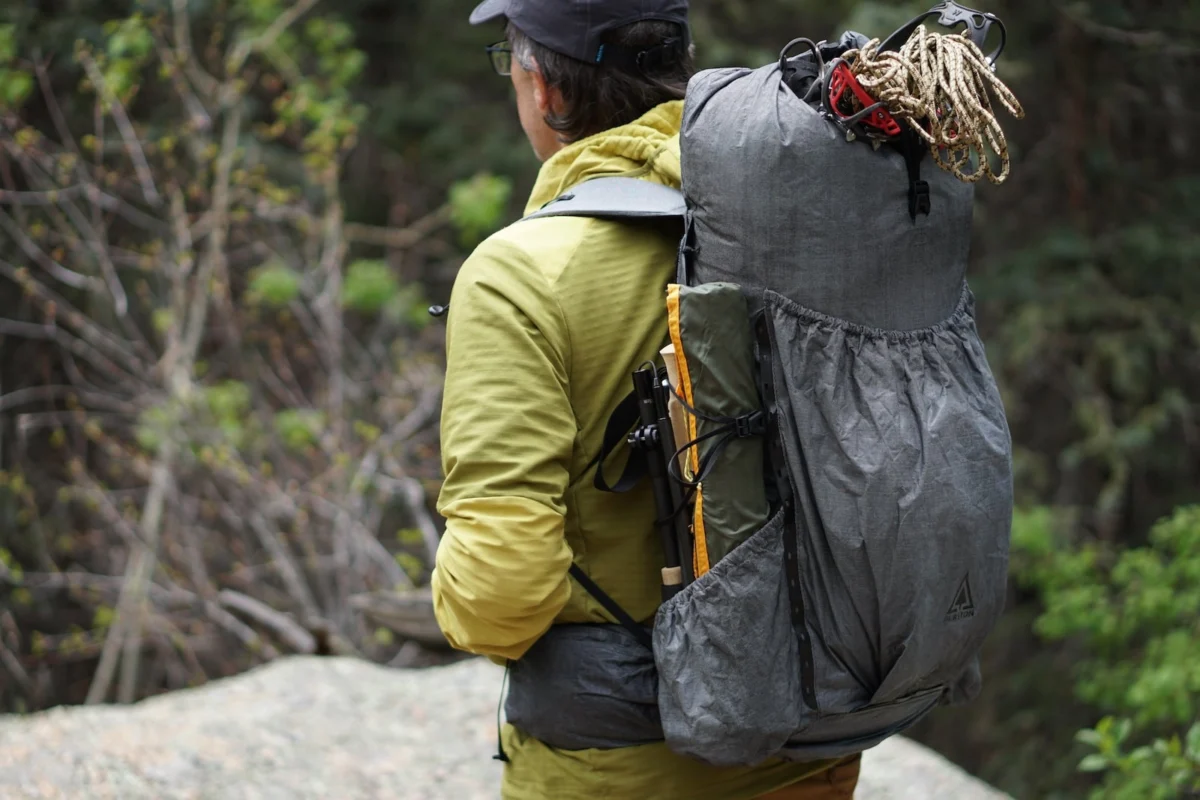
In the rarefied air of the ultralight (UL) backpacking market, the Durston Wapta 30 occupies a curious, almost contradictory space. Weighing in at approximately 14 ounces, it sits firmly in the "one-pound" category—a domain usually reserved for stripped-back, minimalist sacks designed to move fast and carry little. Yet, the Wapta 30 arrives with a suite of features that defy its weight class: Aluula Graflyte fabric, a robust padded hip belt, a structured back panel, and an intricate multi-pocket layout.
Durston Gear has marketed the Wapta 30 with a heavy emphasis on "comfort" and "refinement," positioning it not just as a vessel for gear, but as an ergonomic solution for the modern thru-hiker. However, for the seasoned alpinist or long-distance trekker, a critical question remains: does this pack represent a genuine breakthrough in load-transfer mechanics, or is its "comfort" merely a product of clever harness design that masks the inherent limitations of a frameless architecture?
Main Facts: Deconstructing the Wapta 30
The Wapta 30 is designed to bridge the gap between traditional frameless packs and modern, vest-style fastpacks. Its core specs are as follows:
- Weight: ~14 oz
- Volume: 30L (Main body)
- Capacity: Rated for 25 lbs / 11 kg
- Material: Aluula Graflyte (noted for high strength-to-weight ratios)
- Suspension: Frameless; relies on dual vertical foam/airmesh pads and pack bag geometry.
Unlike traditional frameless packs that rely solely on the tension of the gear inside to provide structure, the Wapta attempts to create a "load-carrying system." It utilizes S-shaped padded shoulder straps with integrated pockets and a removable padded hip belt. The central design challenge addressed here is whether this combination creates actual vertical load transfer—the ability to shift the weight of the pack from the shoulders to the iliac crest—or if it merely provides increased stability and comfort for a load that remains largely shoulder-borne.
Chronology: The Evolution of "Comfort" in UL Packs
To understand the Wapta 30, one must look at the historical trajectory of the frameless pack.
- The Early 2000s: The era of the "suck and stuff" bag. Manufacturers like MLD and Gossamer Gear set the baseline: thin, frameless, and minimal. The focus was on removing weight, not perfecting suspension.
- The Mid-2010s: The rise of the "Fastpack." Brands like Pa’lante and Nashville Pack shifted the focus toward torso-coupling. The goal was to eliminate "bounce" by having the pack move with the body, using vest-style harnesses to anchor the load.
- The 2020s: The "Hybridization" phase. With the introduction of advanced laminates like Aluula and Dyneema Composite Fabrics, designers began to experiment. The Wapta 30 is the logical conclusion of this timeline—attempting to marry the structural integrity of high-end laminates with the comfort of traditional, high-volume backpacking suspension.
Supporting Data: Comparative Analysis
The following table illustrates where the Wapta 30 sits in relation to its peers, specifically regarding suspension mechanics.
| Pack | Structure Type | Load-Transfer Mechanism | Primary Philosophy |
|---|---|---|---|
| Durston Wapta 30 | Frameless | Harness-based comfort | Refinement/Versatility |
| Gossamer Gear Mirage 40 | Framed | Carbon fiber X-frame | True load transfer |
| Arc’teryx Alpha SL 30 | Semi-structural | Bonded framesheet | Alpine precision |
| Nashville Cutaway | Frameless | Torso-coupled stability | Movement-centric |
When testing the Wapta 30 with a standard mountain kit—weighing between 22 and 29 pounds—a distinct pattern emerged. While the pack felt exceptionally stable during technical scrambling, the hip belt served primarily as a stabilizer rather than a load-bearing chassis. In a true framed pack (like the Mirage 40), the hip belt is mechanically coupled to a frame, allowing for a 60/40 or even 70/30 weight distribution between hips and shoulders. In the Wapta, the weight distribution remains heavily biased toward the shoulders, even when the hip belt is tightened to its maximum.
Official Responses and Marketing Nuance
Durston Gear’s marketing material consistently uses terms like "refined" and "optimized." When we look at the manufacturer’s copy, they focus heavily on the interface—the pockets, the strap geometry, and the ventilation.

It is important to note that Durston has not explicitly claimed the Wapta acts as a traditional internal-frame pack. Rather, they highlight the "frameless design" as a feature. However, consumer confusion persists. Many users conflate "padded hip belts" with "load-transferring hip belts." Durston’s design successfully mitigates the pressure points often found in lighter frameless packs, but it does not change the laws of physics: without a rigid vertical stay, the shoulder straps will always bear the brunt of a 25-pound load.
Implications: The Limits of Frameless Physics
The implications of this review for the consumer are twofold.
1. The Stability vs. Transfer Distinction
If you are buying the Wapta 30 expecting the "miracle" of a framed pack in a 14-ounce package, you will be disappointed. The pack excels at stability; it does not sway during rapid movement, and the Aluula fabric creates a remarkably stiff, well-shaped container that prevents the "barrel effect" common in cheaper silnylon packs. However, it does not alleviate shoulder fatigue through mechanical weight transfer.
2. The Role of Aluula
The use of Aluula Graflyte is a significant material choice. It is stiffer and more dimensionally stable than traditional 100D or 200D nylon. This allows the pack to maintain its shape even when under-packed, which is a massive upgrade over the "sagging" common in competitors like the Murmur 36. This material stiffness effectively mimics the feeling of a frame, even if it lacks the mechanics of one.
Conclusion: Who is the Wapta 30 For?
The Durston Wapta 30 is arguably the most "refined" frameless pack on the market today. It offers an unparalleled level of comfort for users who carry loads in the 15–20 pound range and prioritize high-activity movement, scrambling, and accessibility.
However, for the thru-hiker carrying heavy water loads or bear canisters that push the 25–30 pound mark, the lack of a true load-transferring frame remains a limitation. The Wapta 30 is a triumph of design, demonstrating that you can significantly improve the user experience through clever geometry and premium materials. But it is not a replacement for a framed pack. It is, instead, the pinnacle of what a frameless, fast-moving pack can achieve—a high-performance tool for those who understand exactly what they are sacrificing in the name of weight savings.
Final Technical Assessment
- Comfort: 9/10 (For a frameless pack)
- Stability: 9/10
- Load Transfer: 4/10
- Materials/Build: 10/10
The Wapta 30 succeeds not by breaking the laws of suspension, but by making the experience of carrying a frameless pack more enjoyable than ever before. It is a refinement of a category, not a revolution of it. For those who already prefer the simplicity and freedom of frameless carry, the Wapta 30 is likely the best iteration of that philosophy to date.