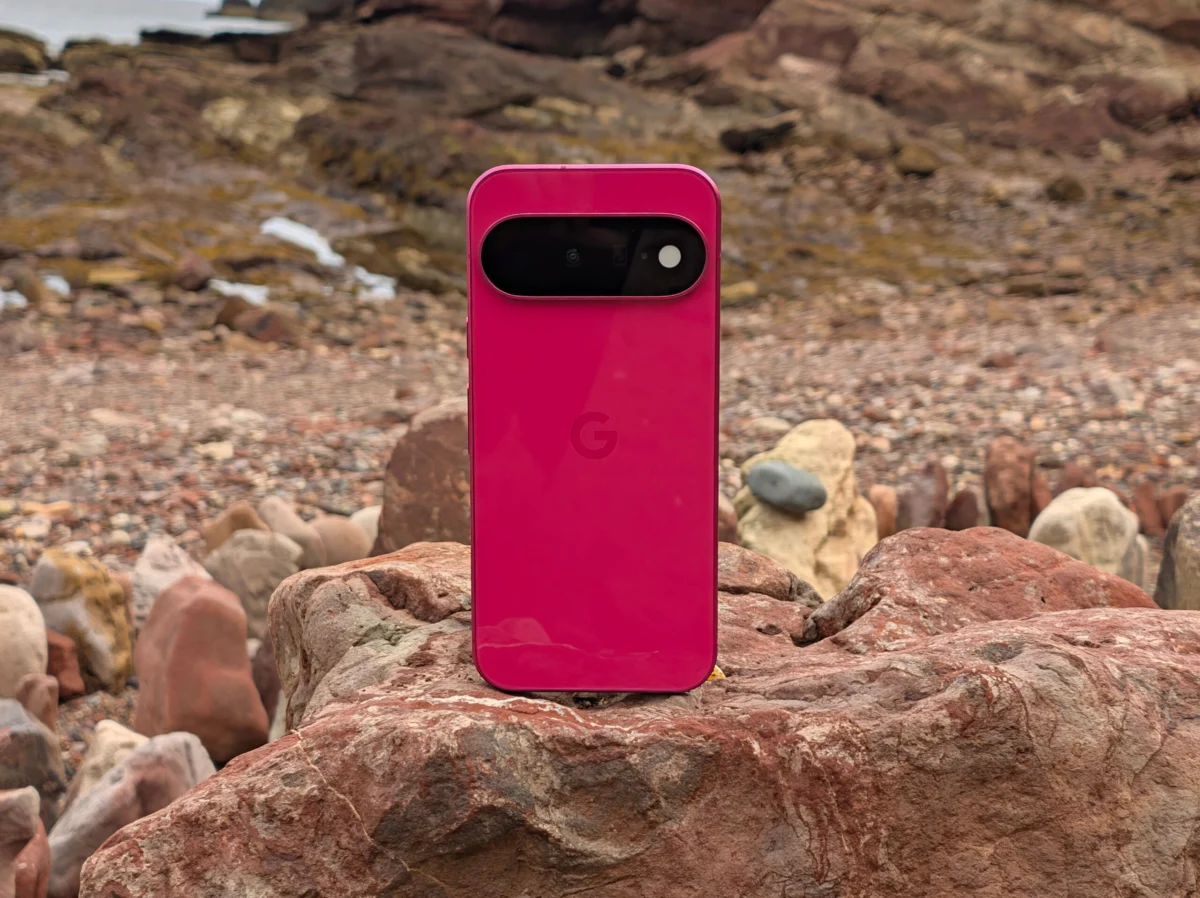
In the rapidly evolving landscape of flagship smartphones, the definition of a "compact" device has shifted dramatically. As screens grow ever larger and internal components increasingly complex, Google’s Pixel 11 attempts to bridge the gap between pocketability and power. Sitting in the shadow of its more illustrious "Pro" sibling, the Pixel 11 offers a distinct proposition: a refined, manageable daily driver that retains the core Google experience while making strategic compromises to maintain its price point.
The Aesthetic Shift: Color Palettes and Physical Presence
Google has once again leaned into a bifurcated design philosophy. While the Pro-series devices remain shrouded in muted, professional tones, the Pixel 11 embraces the playful, vibrant aesthetic that has become a hallmark of the non-Pro lineup. The standout addition this year is "Hibiscus," a striking hot pink that demands attention. It sits alongside a subtle, sophisticated "Pistachio" (a warm, muted green) and the perennial stalwarts, "Frost" (white) and "Obsidian" (black).
The absence of last year’s fan-favorite, Indigo, feels like a misstep in an otherwise cohesive lineup. However, the build quality remains top-tier. Measuring with a 6.3-inch footprint, the device feels remarkably ergonomic. For users transitioning from the massive Pixel 10 Pro XL, the difference is transformative; the Pixel 11 is a joy to handle one-handed. While the chassis carries a certain thickness, it is well-distributed, giving the phone a substantial, premium feel.
Crucially, the Pixel 11 shares a design language so similar to the Pro that cases are largely interchangeable. This is a pragmatic win for consumers, though one that comes with a warning: the finish is susceptible to scuffs. A protective case is not merely an accessory here; it is a necessity for maintaining the device’s aesthetic integrity after even minor accidents, such as a drop on abrasive surfaces like sand or concrete.
Display Technology: The 60/120 Hz Conundrum
The visual experience on the Pixel 11 is anchored by a 6.3-inch OLED display boasting a 1080 x 2424 resolution. It is, by all traditional metrics, an excellent panel. Colors are punchy, text is sharp, and at 3,000 nits of peak brightness, the screen is easily legible under the harshest direct sunlight.
However, the display hardware reveals where Google has chosen to draw the line between "standard" and "pro." The lack of an LTPO (Low-Temperature Polycrystalline Oxide) backplane means the device lacks a truly variable refresh rate that could dip to 1 Hz to save battery. Users are stuck choosing between a battery-sipping 60 Hz or the fluid, modern 120 Hz. Furthermore, Google ships the phone with 60 Hz enabled by default. Savvy users will need to navigate deep into the Display settings to unlock the 120 Hz experience, a hurdle that remains unnecessarily high for the average consumer in 2024. When compared side-by-side with the Pro, the standard Pixel 11 shows slightly thicker bezels and a marginally less intense color depth, though these are nuances that only the most eagle-eyed observers will notice in daily use.
The Infrastructure of Connectivity and Security
Security remains a core pillar of the Pixel identity, though the implementation continues to yield mixed results. The fingerprint sensor is snappy and reliable, performing as well as any optical scanner on the market. Google’s Face Unlock, while convenient, still lacks the infrared depth-sensing hardware required to function in total darkness. For users migrating from the iPhone ecosystem, where FaceID is a seamless, dark-environment staple, this limitation remains a persistent friction point.
In the United States, the Pixel 11 marks the total departure from the physical SIM card. It is an eSIM-only device. While the industry is clearly trending toward this virtualized future, the transition can still feel cumbersome for international travelers who frequently swap local SIM cards. That said, the process of provisioning eSIMs has improved drastically over the last two years. Carriers have streamlined their apps, and the friction associated with switching phones—once a nightmare for eSIM users—has become largely a nonissue.
Performance and the Tensor G6 Architecture
At the heart of the Pixel 11 lies the Tensor G6, Google’s latest foray into silicon. On paper, the G6 promises a 20 percent gain in power efficiency, 25 percent faster web browsing, and 15 percent quicker app loading times. In practice, the phone feels exceptionally responsive.
Day-to-day tasks are handled with ease. Whether jumping between messaging apps, streaming media, or managing complex spreadsheets, the 12 GB of RAM ensures that the system rarely stutters. I noted a marked improvement in system latency compared to older models—most notably in the Nest doorbell integration, which now feeds video to the lock screen with a noticeable reduction in lag.
However, the "pro" divide becomes glaring when pushing the chip’s thermal envelope. Running a resource-heavy title like Wuthering Waves reveals the G6’s limitations. While the game is playable, the thermal overhead causes the device to throttle, leading to dropped frames and stuttering during intense combat. After an hour of play, the handset became noticeably warm to the touch, and the battery drain was significant, dropping from 40 to 26 percent. While the Pixel 11 is more than capable of handling titles like Mini Metro or Alto’s Odyssey, it is not a device intended for the dedicated mobile gaming enthusiast.
Implications for the Smartphone Market
The Pixel 11 represents a mature phase in Google’s hardware strategy. By refusing to chase the "more is better" philosophy regarding screen size and raw, sustained gaming performance, Google has curated a device that excels at being a smartphone rather than a mobile console.
The implications for the broader market are clear: the "smaller" flagship is becoming a premium niche. As manufacturers prioritize the "Ultra" or "Pro Max" models, the Pixel 11 serves as a reminder that a significant portion of the user base values ergonomics and software integration over raw benchmark numbers.
However, Google must address the lingering software-hardware gaps. The failure to include variable refresh rate technology—a standard feature in devices costing significantly less—is a missed opportunity for battery optimization. Similarly, the reliance on basic Face Unlock limits the device’s utility as a true, top-tier professional tool.
Final Assessment: Who is this for?
The Pixel 11 is the ideal handset for the user who is tired of the "phablet" trend. It offers a refined, beautiful design, a camera system that remains best-in-class, and a software experience that is clean, intuitive, and perpetually updated.
It is not, however, a device for the power user or the competitive gamer. If your priority is long-term, heavy-duty gaming or the absolute cutting edge of display technology, the Pro models remain the logical choice. But for the vast majority of people—those who value a phone that fits in a pocket, looks stunning in Hibiscus, and performs reliably for the daily grind—the Pixel 11 hits a sweet spot that few other manufacturers are willing to explore.
As we look toward the future of the Tensor architecture, the G6 is a promising step forward in efficiency. If Google can maintain this trajectory while narrowing the feature gap between the base and Pro models, the Pixel 11 will be remembered as the device that proved smaller doesn’t have to mean lesser.