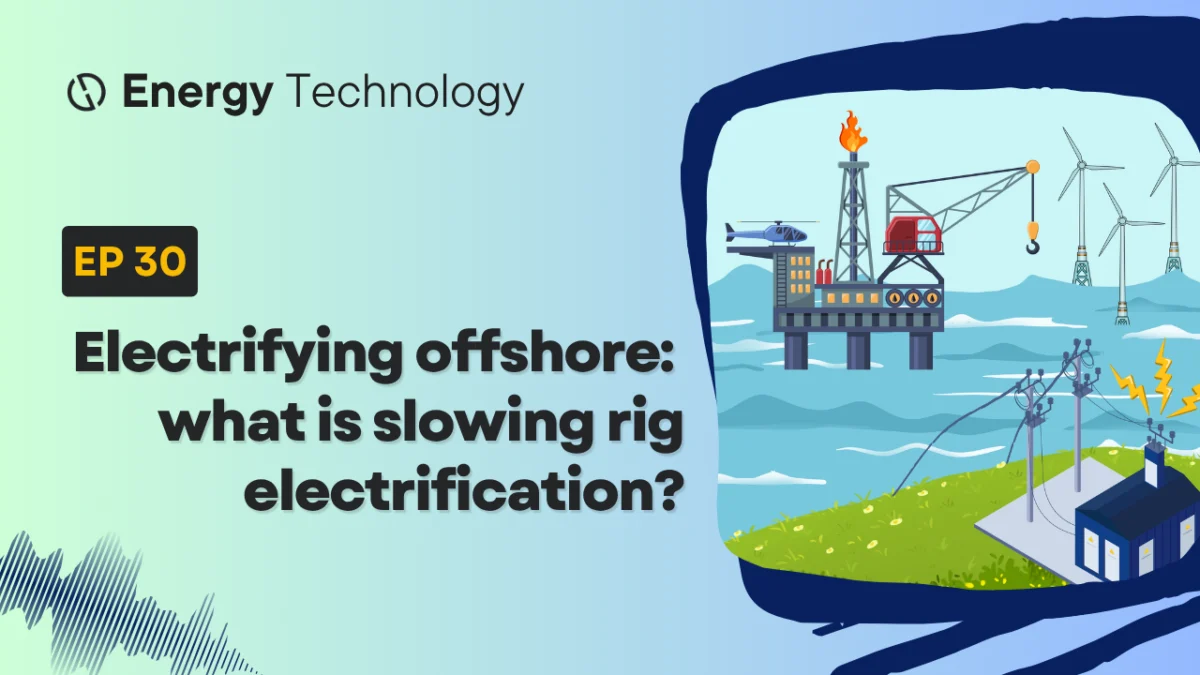
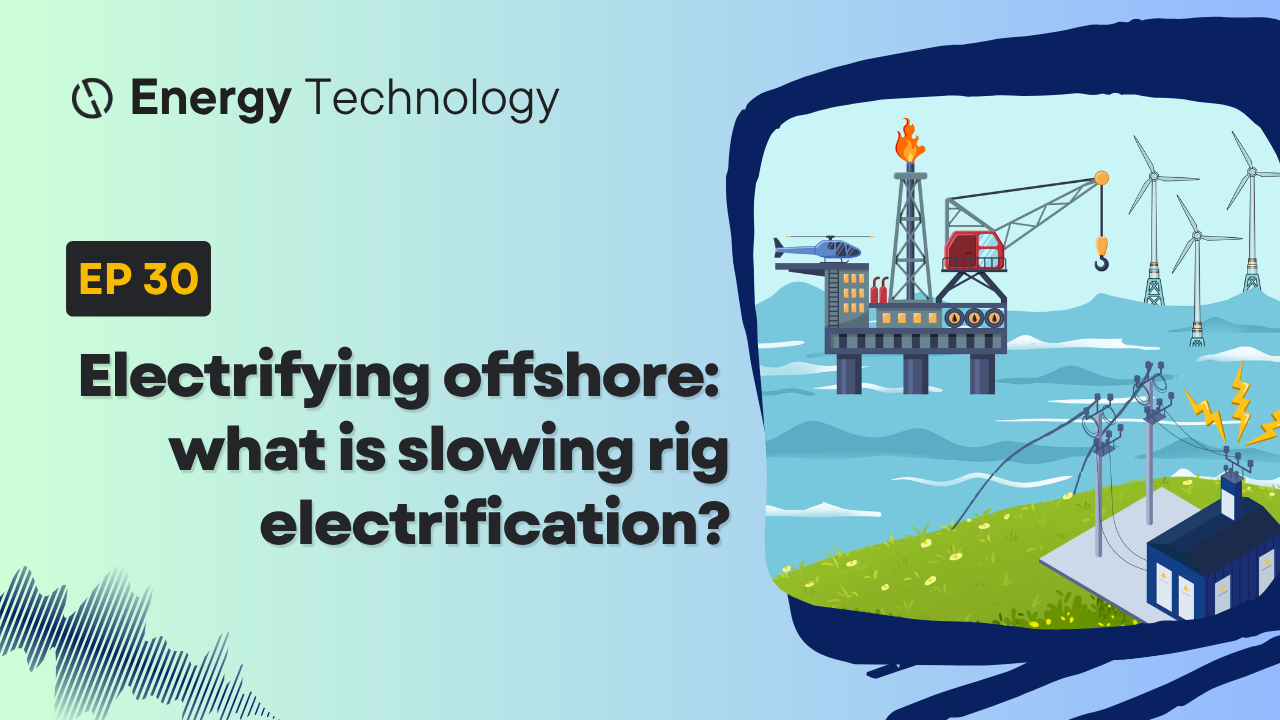
The global oil and gas industry stands at a crossroads. As the energy transition accelerates, the spotlight has turned to the carbon footprint of upstream operations. Electrifying offshore rigs—replacing on-site diesel or gas-fired power generation with cleaner onshore grid connectivity—is widely touted as a “silver bullet” for reducing Scope 1 emissions. Yet, despite the proven technical viability and clear operational cost benefits, the global uptake of this technology remains sluggish, leaving the vast majority of the world’s platforms tethered to fossil-fuel-powered turbines.
While Norway has successfully pioneered this shift, the rest of the world remains largely uncoupled from the benefits. The reasons are multifaceted, involving a complex web of astronomical infrastructure costs, supply chain bottlenecks, regulatory inertia, and the inherent intermittency of renewable energy sources.
Main Facts: The Promise and The Peril of Electrification
At its core, the electrification of an offshore platform is a simple value proposition: replace local, carbon-intensive power generation with electricity transmitted from the mainland via subsea cables. The operational benefits are significant. A standard, large-scale drilling rig can consume upwards of half a million gallons of diesel annually. By plugging into a stable grid, operators can eliminate the logistical nightmare and high costs of transporting fuel to remote offshore locations.
However, the economic feasibility is governed by the “electrification paradox.” While operational costs (OPEX) decrease, capital expenditure (CAPEX) skyrockets. The cost of manufacturing, laying, and maintaining high-voltage subsea cables is prohibitive. Furthermore, the global surge in demand for subsea cabling—driven by the rapid expansion of offshore wind farms and the insatiable data-center appetite for fiber-optic connectivity—has created a competitive market that drives prices to record highs.
A Chronology of Offshore Electrification
The history of offshore electrification is one of isolated success rather than universal progress:
- 1996: Equinor achieves a milestone with the electrification of the Troll A platform in the Norwegian North Sea. This project served as the world’s first proof-of-concept, demonstrating that grid connectivity could drastically reduce emissions while maintaining operational uptime.
- 2020–2023: A period of heightened global ambition as companies set “Net Zero 2050” targets. However, supply chain constraints begin to emerge as global demand for copper and subsea transmission lines outstrips production capacity.
- 2024: Equinor successfully electrifies the Troll B and C platforms, solidifying Norway’s status as the global leader in the field. These projects provide a tangible baseline for CO2 reduction, estimated at 250,000 tonnes per annum.
- 2025/2026 (Projected): The commissioning of projects like the Green Volt floating wind farm in Scotland marks a shift toward hybridizing offshore power, using wind to augment rather than replace traditional grid connections for oil and gas assets.
Supporting Data: The Efficiency Gap
The economic and environmental success of electrification is highly dependent on the local energy mix.
- The Norwegian Benchmark: Norway’s success is built on an electricity grid that is approximately 88% hydropower. This provides a constant, low-carbon, and reliable baseload that most other jurisdictions cannot replicate.
- The US Contrast: In the United States, where the power grid is heavily reliant on natural gas, the decarbonization incentive is diluted. Experts, including Thomas Manuel Ortiz, note that because 40% of US electricity is still generated by burning gas, the environmental gains of moving power generation from the rig to the grid are marginal at best.
- Emission Reductions: Projects such as the Edvard Grieg and Ivar Aasen platforms have demonstrated a carbon reduction capacity of roughly 200,000 tonnes of CO2 per year, proving that where the grid is clean, the impact is undeniable.
Official Responses: Insights from Industry Experts
The industry’s failure to scale electrification is not for a lack of desire, but a lack of systemic support.
Maurizio Bragagni, CEO of cable manufacturer Tratos, highlights the “ten-year project” trap. “To have a license to lay a cable takes three years; to procure the cable takes another three; to actually lay it, three more. The supply chain is too long and the regulatory path is too arduous,” Bragagni explains. He argues that without specialized government incentives for infrastructure development, the private sector will continue to view these projects as too high-risk.
Said Addi, a veteran of the energy trading sector, emphasizes that electrification is a "case-by-case" business decision. "The economics depend entirely on the asset’s location, the availability of a nearby grid, and the remaining life of the field," Addi says. "If you are five years away from decommissioning, the CAPEX of an export cable will never be recovered."
Mo Razzaq, an analyst at GlobalData, points out that Norway’s success is an outlier because of its unique clustering of platforms. By sharing the cost of infrastructure across multiple assets, Norwegian operators turn an expensive project into a shared utility model, a strategy that has not yet gained traction in the more fragmented markets of the North Sea or the Gulf of Mexico.
Implications: The Hybrid Future
If universal electrification is currently off the table, what is the path forward? The industry is increasingly looking toward Hybrid Power Systems.
Floating wind, as exemplified by the Hywind Tampen project, offers a compelling, albeit intermittent, solution. By pairing floating wind turbines directly with oil and gas platforms, operators can reduce their reliance on diesel without the need for massive subsea transmission cables.
However, as Razzaq notes, "An oil platform cannot stop operating because the wind stops." Consequently, the future is likely not "grid-only" or "wind-only," but a sophisticated microgrid integration where wind provides the baseload when available, and the grid or gas turbines provide the necessary reliability.
Repurposing for the Future
Perhaps the most intriguing development is the long-term vision of repurposing offshore oil and gas platforms. Thomas Manuel Ortiz suggests that the key to unlocking the economic case for electrification is to view platforms as long-term "grid assets." If an operator invests in transmission infrastructure today, that same infrastructure could eventually serve as a substation or connection point for offshore wind or solar farms long after the oil and gas reserves have been depleted.
This strategy tackles two hurdles simultaneously: it justifies the high CAPEX of modern infrastructure and delays the multi-billion-dollar costs associated with decommissioning old platforms.
Conclusion: A Slow, Selective Evolution
The trajectory of offshore electrification is destined to be a mixed one. Countries with strong, renewable-heavy grids and high carbon taxes, such as Norway, will continue to forge ahead with direct grid connections. Meanwhile, in regions like the UK or the US, the approach will likely be more pragmatic and fragmented, focusing on hybrid floating wind-to-rig projects and smaller, asset-specific upgrades.
The technology is ready, but the infrastructure is not. Until governments harmonize the regulatory timelines, incentivize the manufacturing of subsea cables, and create frameworks that allow for the repurposing of energy assets, offshore electrification will remain a localized triumph rather than a global standard. For the industry, the lesson is clear: decarbonization is not just a technical challenge—it is a race against infrastructure, capital, and time.