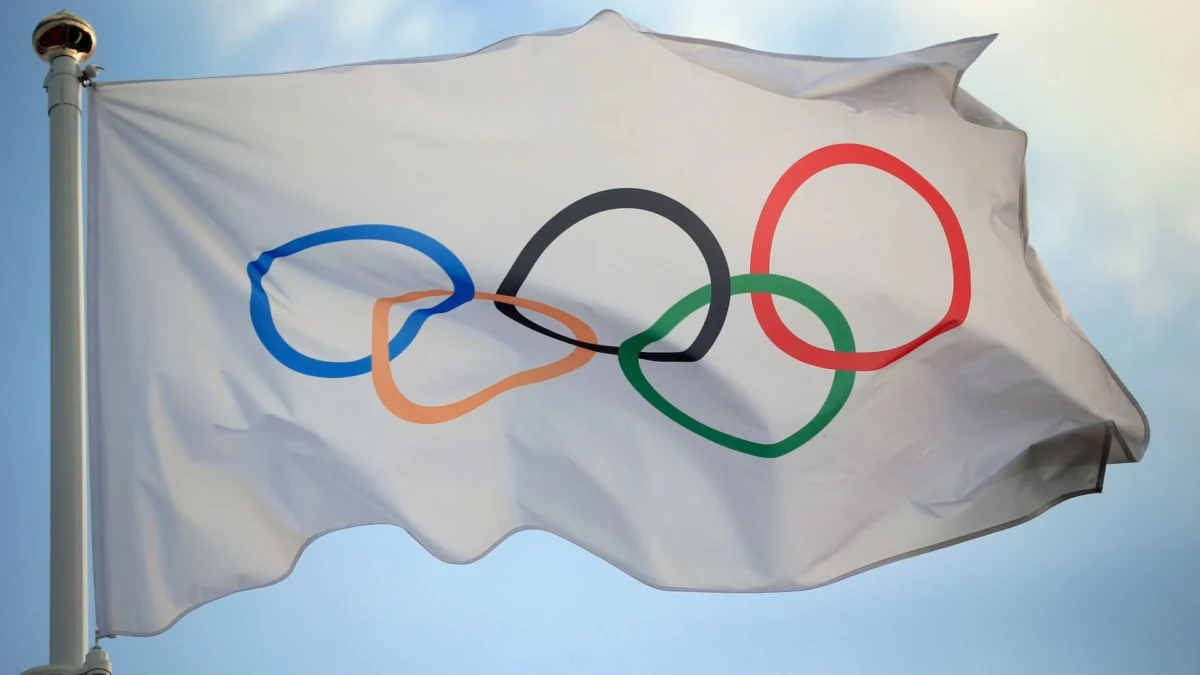
The International Olympic Committee (IOC) has sent shockwaves through the global sporting community with its announcement on July 7, 2026, to provisionally lift the suspension of the Russian Olympic Committee (ROC). The move, which effectively ends a period of isolation that began in October 2023, represents a significant pivot in the IOC’s strategy regarding Russia’s participation in international sports. While the decision does not guarantee an immediate return of Russian athletes to all global arenas, it marks a formal shift toward a policy of “neutrality” that has reignited debates over the intersection of geopolitical conflict and the Olympic movement.
Main Facts: A Shift in Policy
The IOC’s Executive Board confirmed that the suspension of the ROC, imposed due to the annexation of sports organizations in occupied Ukrainian territories, has been set aside. Furthermore, the IOC has rescinded its previous recommendations to international sports federations to restrict the participation of Russian and Belarusian athletes.
Crucially, the IOC clarified that this does not constitute a "blank check" for Russian participation. International federations retain the autonomy to determine their own qualification criteria and eligibility rules. The IOC, however, signaled that it would make a separate, future determination regarding the display of national symbols—such as the Russian flag and national anthem—at the 2028 Los Angeles Summer Olympics.
The decision is rooted in a fundamental reinterpretation of the Olympic Charter. By asserting that the Olympic movement must remain politically neutral, the IOC is positioning itself to distance the organization from the ongoing conflict in Ukraine, prioritizing the perceived rights of individual athletes over the political implications of their national representation.
Chronology: The Path to Reinstatement
The timeline of this controversial decision traces back to the early days of the conflict in Ukraine, evolving through several stages of institutional response:
- February 2022: Following the full-scale invasion of Ukraine, the IOC initially recommended that international federations exclude Russian and Belarusian athletes from all competitions.
- October 2023: The IOC suspended the Russian Olympic Committee after it unilaterally incorporated sports organizations from annexed Ukrainian territories, a move the IOC deemed a violation of the Olympic Charter.
- June 25, 2026: The IOC General Assembly adopted a landmark amendment to the Olympic Charter. This amendment emphasized the necessity of political neutrality for sports organizations and stipulated that athletes should not be excluded from international competition based solely on their nationality or the political situation in their home country.
- July 7, 2026: The IOC Executive Board formally acted on this new mandate, lifting the ROC suspension and withdrawing the restrictive recommendations previously issued to international sports federations.
The Role of the Olympic Charter Amendment
The legal and philosophical bedrock for this decision lies in the June 2026 amendment to the Olympic Charter. The amendment mandates that the Olympic movement must maintain strict political neutrality "in all circumstances."
By embedding this principle into its foundational documents, the IOC has sought to insulate the organization from the pressure of global geopolitical disputes. The IOC’s argument is twofold: first, that it must protect the universal rights of athletes to compete, and second, that it must prevent the politicization of the Games. According to the IOC, the Russian Olympic Committee no longer includes organizations from occupied Ukrainian territories, thereby technically resolving the specific administrative breach that led to the October 2023 suspension.
This rationale, however, has been met with skepticism by international legal observers and sports administrators who argue that the "neutrality" of the Olympic movement is an abstraction that ignores the realities of state-sponsored sports systems.
Official Responses: Suomen Olympiakomitea Leads Criticism
The response from the Finnish Olympic Committee (Suomen Olympiakomitea) was swift and unequivocally critical. Riku Tapio, the CEO of the Finnish Olympic Committee, stated that while the decision was not entirely unexpected given the prior shifts in the IOC’s discourse, it remains a source of profound disappointment.
"The IOC had already lowered barriers regarding Belarus, and the amendment to the Olympic Charter in June clearly paved the way for this decision," Tapio noted. "While we were prepared for this, we maintain that it is a regrettable development."
Tapio emphasized that for Finland, the focus remains on the integrity of sports. "The Russian war of aggression against Ukraine continues, and the impact of this war on sport cannot simply be ignored. The international Olympic movement and individual federations must ensure that, in implementing these decisions, the independence of sport and the core values of Olympism are not sacrificed."
The Finnish stance is clear: sport should not be used as a vehicle for political propaganda or nationalistic posturing. Tapio reaffirmed that the Finnish committee’s support for Ukrainian athletes remains “unwavering.”
Antidoping and Integrity Protocols
A central pillar of the IOC’s defense of this decision is the insistence that strict antidoping measures will remain in place. The IOC has stipulated that any Russian athletes attempting to return to the international stage must undergo rigorous testing under the oversight of the International Testing Agency (ITA).
These requirements include:
- Independent Oversight: Athletes must be part of an active, verified testing pool monitored by the ITA.
- Pre-Competition Clearance: Athletes must pass multiple, targeted doping tests prior to being cleared for any international event.
- Federation Accountability: International federations are tasked with the direct enforcement of these testing protocols within their respective disciplines.
Despite these assurances, critics point to the historical complexity of Russia’s relationship with global antidoping bodies. The legacy of the state-sponsored doping scandals of the last decade continues to cast a long shadow, leading many observers to question whether current oversight mechanisms are robust enough to ensure a level playing field.
Implications for the Future of Sport
The implications of the IOC’s decision are wide-reaching and pose several long-term challenges for the sports world:
1. Fragmentation of Competition
Since the IOC has deferred final authority to international federations, we are likely to see a fragmented landscape. Some sports, such as swimming or gymnastics, may adopt highly restrictive entry criteria, while others might move toward full integration. This lack of uniformity could undermine the cohesion of the global sporting calendar.
2. The Los Angeles 2028 Question
The most significant hurdle lies ahead: the 2028 Los Angeles Olympic Games. The question of whether Russian athletes will march under their national flag, or if they will be permitted to compete under a neutral banner, remains unresolved. Given the political climate in the United States, the potential for diplomatic tension is immense.
3. The "Neutrality" Paradox
The IOC’s push for "political neutrality" is fundamentally at odds with the reality of international sports, where national pride and state funding are deeply intertwined. By attempting to decouple the athlete from the state, the IOC is inviting a host of ethical questions regarding whether it is truly possible to remain neutral while a conflict of such magnitude is ongoing in Europe.
4. Supporting the Ukrainian Olympic Community
The IOC has stated that its commitment to supporting the Ukrainian sports community remains unchanged. However, for many Ukrainian athletes, the return of their Russian counterparts—even under neutral status—is viewed as an affront to the sacrifices made by the sporting community in their war-torn nation.
Conclusion
The decision by the IOC to lift the suspension of the Russian Olympic Committee marks a new chapter in the complex relationship between sports and global politics. By prioritizing the "universality" of sport over the geopolitical realities of the day, the IOC has attempted to return to a pre-2022 framework.
However, as expressed by the Finnish Olympic Committee and other dissenting voices, the decision leaves open fundamental questions about the role of international sport in times of war. As the countdown to the Los Angeles 2028 Games begins, the international sports community will remain deeply divided, with the IOC tasked with the difficult job of defending its principles of neutrality against a backdrop of ongoing, intense geopolitical instability. The coming months will be a litmus test for international federations, who must now decide for themselves how to balance the rights of individual athletes against the broader, often uncomfortable, requirements of global justice.