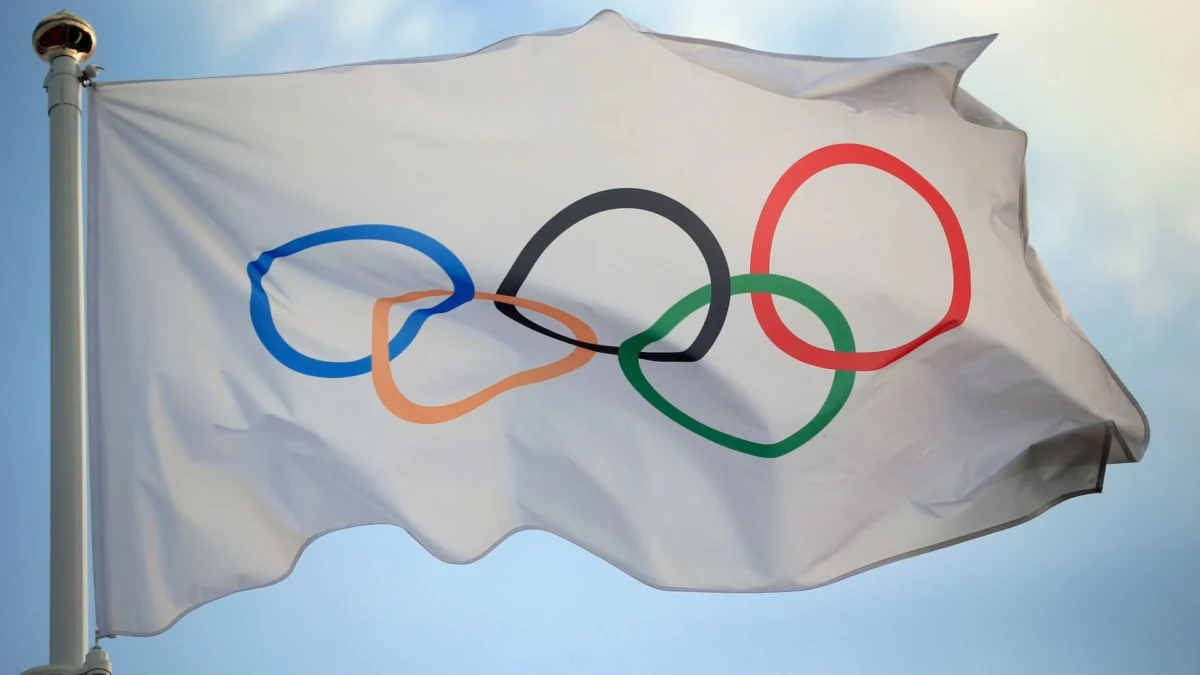
In a move that has sent shockwaves through the international sporting community, the International Olympic Committee (IOC) Executive Board announced on July 7 that it has provisionally lifted the suspension of the Russian Olympic Committee (ROC). The suspension, which had been in effect since October 2023, was originally imposed following the ROC’s unilateral decision to incorporate regional sports organizations from occupied Ukrainian territories into its fold—a move the IOC deemed a breach of the Olympic Charter’s territorial integrity provisions.
Alongside the lifting of the suspension, the IOC declared that its previous recommendations, which urged international sports federations to restrict the participation of Russian and Belarusian athletes in international events, are no longer applicable. This policy shift represents a significant, albeit controversial, pivot in how the Olympic movement intends to navigate the complex intersection of global geopolitics and athletic participation.
The Core Decision: Context and Rationale
The IOC’s decision is rooted in a fundamental shift in the organization’s governance philosophy, formalized during the IOC General Assembly on June 25. During this session, the Olympic Charter was amended to explicitly codify the principle of political neutrality. The revised charter mandates that sports organizations remain "politically neutral" in all circumstances, arguing that athletes should have the right to compete regardless of the political climate of their home nations.
According to an official IOC statement, the governing body contends that the ROC has since corrected the specific breach that led to its suspension. The IOC noted that the Russian Olympic Committee no longer claims jurisdiction over sports organizations in regions under the administrative control of the National Olympic Committee of Ukraine, nor does it conduct operations in those territories. Furthermore, the IOC argued that with the qualification pathways for the Los Angeles 2028 Summer Olympics and the Dolomiti Valtellina 2028 Winter Youth Olympics already underway, it was necessary to ensure equitable access to competition for all athletes to protect the integrity of the qualification process.
However, the IOC was careful to specify that this decision does not constitute an automatic "green light" for Russian athletes to return to the global stage. The responsibility for establishing specific participation criteria remains firmly with individual international sports federations (IFs). These bodies must now navigate the difficult task of balancing the IOC’s new, more permissive guidelines with the practicalities of hosting events that remain subject to the intense scrutiny of the global sporting public.
A Chronology of the Crisis
The relationship between the IOC and Russian sports governance has been in a state of flux for over a decade, but the current impasse reached a critical juncture following the full-scale invasion of Ukraine in February 2022.
- February 2022: Following the invasion of Ukraine, the IOC issued an urgent recommendation for international sports federations to exclude Russian and Belarusian athletes from international competitions, citing the need to ensure the safety of athletes and the integrity of global sports.
- October 2023: The IOC officially suspended the ROC after the Russian body announced it was incorporating regional sports councils from the Ukrainian regions of Donetsk, Kherson, Luhansk, and Zaporizhzhia—territories that remain under military occupation.
- June 2024: The IOC General Assembly convened to discuss the future of "political neutrality" within the movement. A pivotal amendment to the Olympic Charter was passed, emphasizing that sporting events must not be used as platforms for political discourse or state-sanctioned propaganda.
- July 2024: The Executive Board formally lifted the suspension of the ROC, citing administrative compliance regarding the disputed regional sports organizations.
Stringent Antidoping Protocols Remain in Place
Despite the political reconciliation, the IOC has underscored that no athlete is exempt from the rigorous standards of the World Anti-Doping Agency (WADA). The organization clarified that any Russian athletes seeking to return to international competition will be subjected to the same, if not more stringent, testing protocols as their global counterparts.
These athletes must fall under the oversight of the International Testing Agency (ITA). The program requires a series of documented tests to be completed before an athlete is even considered eligible for entry into international qualifying events. International federations have been tasked with the logistical burden of implementing these testing regimes, ensuring that the return of Russian competitors does not compromise the "clean sport" standards that the Olympic movement strives to uphold.
Official Responses: Finland’s Critical Stance
The response from the Finnish Olympic Committee (FOC) has been one of deep concern. Riku Tapio, the Chief Executive Officer of the FOC, did not mince words when addressing the press regarding the IOC’s decision.
"The decision did not come as a surprise to us, as the IOC had already signaled a softening stance regarding Belarus and the recent charter amendments clearly paved the way for this outcome," Tapio remarked. "However, we maintain that this is a regrettable development. The war in Ukraine is not a historical footnote; it is an ongoing tragedy, and its impact on the sporting world cannot simply be ignored."
Tapio emphasized that while the FOC respects the autonomy of the IOC, the Finnish perspective remains anchored in the belief that sport cannot be entirely decoupled from the realities of the war. "The International Olympic Committee and the various international federations must ensure that, in the implementation of these decisions, the independence of sport and the core values of Olympism are not sacrificed on the altar of neutrality," he added.
The Finnish Olympic Committee has pledged to continue its unwavering support for Ukrainian athletes. Tapio reiterated that for the Finnish delegation, the focus remains on promoting peace, mutual respect, and fair play—principles he argues are currently under threat by the premature normalization of Russian participation.
Geopolitical Implications and Future Challenges
The decision to reintegrate Russian sports governance into the Olympic fold carries profound implications for the 2028 Los Angeles Games and beyond. The question of national identity—specifically whether Russian athletes will compete under their own flag or as "neutral" athletes—remains a matter for a future, separate decision by the IOC.
This development highlights a growing rift within the global sporting community. On one side, the IOC advocates for the "universality" of sport, arguing that excluding athletes based on their nationality punishes individuals for the actions of their governments. On the other side, many National Olympic Committees, particularly those in Northern and Eastern Europe, argue that in an era of "hybrid" state power, sports are inextricably linked to national identity and that allowing Russian participation effectively provides the Russian state with a propaganda tool.
Furthermore, the logistical challenges for international federations are immense. If an IF decides to maintain a ban on Russian athletes, it risks legal challenges from athletes citing the new, more inclusive language of the Olympic Charter. If it allows them to participate, it risks public outcry, potential boycotts, and a host of security challenges for event organizers.
Conclusion: The Fragile Balance of Olympism
As the Olympic movement looks toward the future, the decision to lift the ROC’s suspension will likely be remembered as a defining moment in the tenure of current IOC leadership. The organization has chosen to prioritize the structural integrity of the Olympic Charter over the immediate political pressures of the war in Ukraine.
However, the "political neutrality" sought by the IOC is proving to be a difficult concept to implement in practice. As Riku Tapio noted, the challenge for the next four years will be ensuring that the Olympic movement does not become a vehicle for the very political agendas it claims to reject. Whether the IOC can maintain its independence while facing such intense global scrutiny remains to be seen. For now, the sporting world is left to grapple with a new reality: one where the lines between the field of play and the battlefield are more blurred than ever.
Disclaimer: The Finnish Olympic Committee is an independent organization and is not a direct member of the IOC, nor does it have a vote in the decision-making processes of the international body. For further information or official statements, stakeholders are encouraged to consult the IOC’s public archive and the FOC’s official communications.