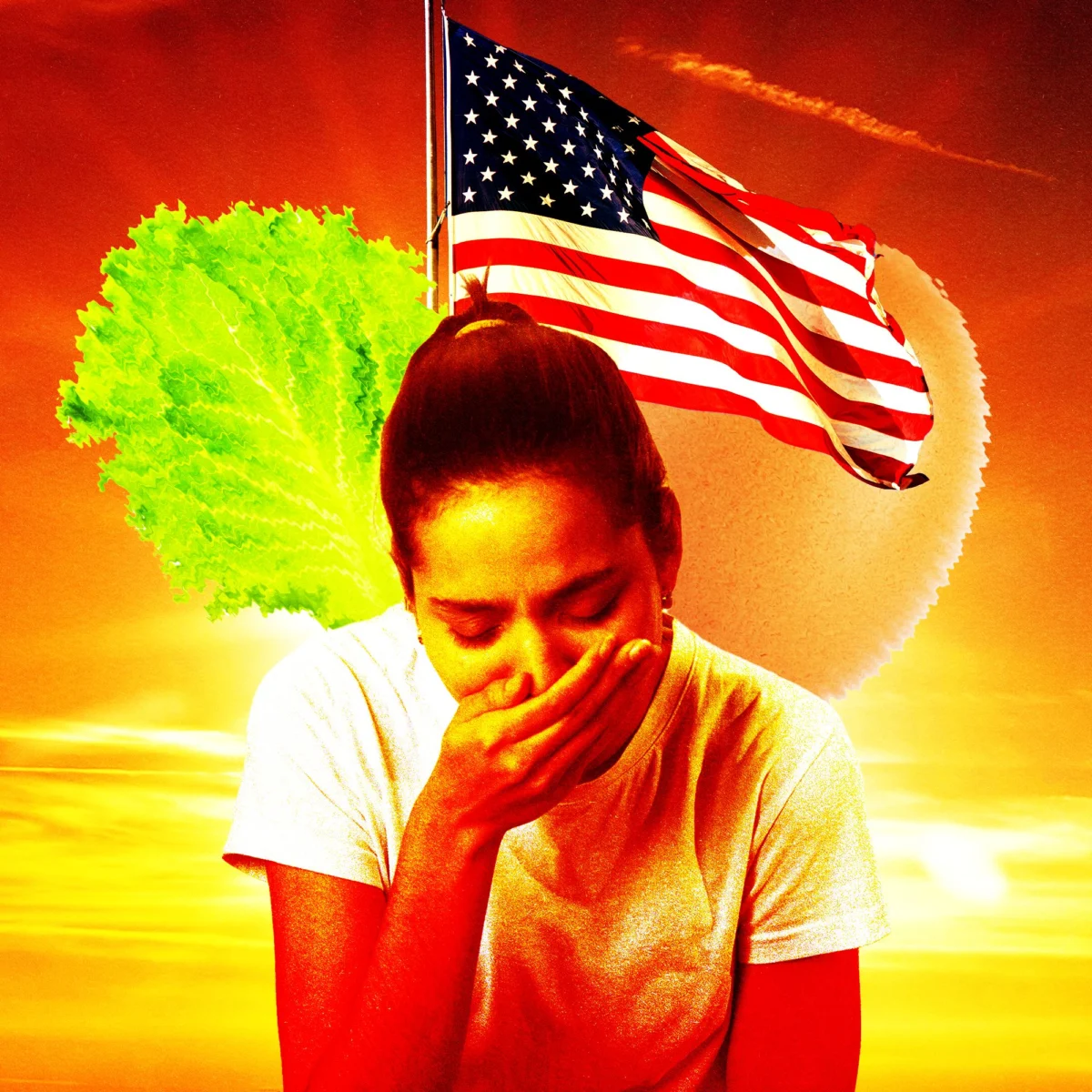
For many Americans, the simple act of preparing a summer salad or grabbing a sandwich has transformed into a high-stakes gamble. As the 2026 summer season stretches into the autumn months, the nation is grappling with a staggering surge in foodborne illnesses that experts argue is far from a mere statistical fluctuation. From tainted iceberg lettuce and jalapeños to contaminated eggs and pet food, the sheer variety and frequency of pathogens currently circulating through the supply chain suggest a system struggling to maintain its integrity under immense pressure.
Main Facts: A Multi-Front Crisis
The current landscape of food safety in the United States is characterized by a "perfect storm" of overlapping outbreaks. The most prominent of these is an unprecedented, widespread surge in cyclospora—a parasite historically considered rare in the American food supply. The current outbreak, linked primarily to iceberg lettuce sourced from Taylor Farms, has become the largest of its kind investigated by the Food and Drug Administration (FDA) since the 1990s.
The statistics are sobering. The FDA has identified more than 12,800 illnesses tied to foodborne outbreaks in 2026 alone, a figure that dwarfs the 895 cases recorded in the previous year. While cyclospora dominates the headlines, it is far from the only threat. Salmonella has been detected in jalapeños, eggs, and commercial dog food, with the jalapeño-related illnesses alone accounting for at least 431 confirmed cases and 57 hospitalizations across more than two dozen states. Simultaneously, a dual-pathogen outbreak—involving both E. coli and salmonella—has been traced to alfalfa sprouts, affecting 55 individuals across 15 states.
This is not a case of heightened public anxiety; it is a measurable, systemic failure. Experts in food safety point to a dangerous intersection of chronic underfunding, a lack of cohesive federal leadership, and significant legislative rollbacks that have stripped the country’s public health infrastructure of its ability to proactively prevent or rapidly respond to contamination events.
Chronology of the 2026 Outbreaks
The timeline of these outbreaks reveals a pattern of delayed detection and resource-strapped containment efforts.
- Early Summer 2026: The initial indicators of the cyclospora outbreak began to emerge, with case counts rising rapidly. Because cyclospora is not included in standard diagnostic panels for gastrointestinal distress, the true scale of the initial wave remained hidden, allowing the parasite to spread undetected through commercial distribution networks.
- Late July 2026: As hospitalizations mounted, the FDA confirmed that the cyclospora outbreak was linked to Taylor Farms’ iceberg lettuce. Simultaneously, reports from Michigan highlighted the dire state of local health departments, which, following federal budget cuts, lacked the personnel to track and contain the surge.
- August 2026: The crisis intensified as salmonella outbreaks were identified in jalapeños and eggs. In early August, the U.S. Senate finally confirmed a director for the Centers for Disease Control and Prevention (CDC), ending a year-long leadership void that had hampered the agency’s response capabilities.
- Mid-to-Late August 2026: A coalition of food safety advocacy groups formally petitioned Congress to reconsider the delay of the 2022 Traceability Rule, arguing that the current inability to track food through the supply chain is a direct contributor to the ongoing mortality and morbidity counts.
Supporting Data: By the Numbers
The disparity between 2025 and 2026 is stark. While the FDA’s own data shows 12,800 illnesses for 2026, experts warn that these figures are likely significant undercounts.
The cyclospora crisis serves as a case study in data opacity. The CDC has confirmed 17,180 laboratory-tested cases of cyclosporiasis. However, only 67 percent of those have been definitively linked to the Taylor Farms outbreak. The remaining thousands of cases fall into a gray area of "one-off" infections that the FDA lacks the resources to fully investigate. Furthermore, the CDC is tracking at least 11,844 additional potential cases that remain unconfirmed, suggesting that the actual human toll is significantly higher than the official count.
The infrastructure collapse is equally measurable. According to former CDC staff, the specialized laboratory focused on cyclospora was gutted during the recent round of government downsizing, with staffing levels dropping from 11 specialists to just three. On the state level, the impact is even more granular: the $12 billion in federal grant cuts led directly to the loss of 23 infectious disease specialists and 123 county-level health workers in Michigan alone, effectively blinding local officials to the scale of the crisis in their own communities.
Official Responses and Bureaucratic Hurdles
The response from federal agencies has been defensive. In a statement to the press, the FDA maintained that its "risk-based oversight system" is functioning as intended. The agency cited its 2027 budget proposal, which requests expanded authority to collect fees from foreign food facilities and better mechanisms for sharing data with state and local partners.
However, the agency’s defense has been met with skepticism. Critics point to a glaring lack of accountability regarding foreign inspections. A January 2025 report from the Government Accountability Office (GAO) underscored a persistent imbalance, noting that the FDA conducts significantly fewer foreign inspections than domestic ones. Furthermore, the specific Taylor Farms facility in Mexico linked to the current outbreak had not been subject to an FDA inspection since 2019, leaving a massive gap in oversight for a primary supplier of leafy greens to the US market.
The "Traceability Rule," intended to be a landmark policy for food safety, has become a symbol of bureaucratic stagnation. Originally slated for implementation to force companies to maintain detailed records, the rule was delayed by Congress until July 2028. Critics, including the Western Growers Association, point out that even if the rule were in effect, it contains a major loophole: it does not apply to importers, brokers, or trading companies that handle food logistics but do not take physical possession of the product. This creates a "no-man’s-land" where food can enter the country without any accountability for the traceability of its origins.
Implications: A Future of Risk
The implications of this summer’s events extend far beyond the current wave of illness. Barbara Kowalcyk, director of George Washington University’s Institute for Food Safety and Nutrition, warns that the system is currently "stressed to the point of failure."
The convergence of multiple, unrelated pathogens—E. coli, salmonella, and cyclospora—simultaneously is highly unusual. The presence of two different pathogens in a single product, such as the alfalfa sprouts in Minnesota, suggests that contamination risks are rising at multiple points in the production cycle, from hydroponic facilities to distribution centers.
Furthermore, environmental factors are likely to exacerbate these risks. As the country faces what experts predict to be the strongest El Niño event in 150 years, rising temperatures and humidity will create even more favorable conditions for bacterial and parasitic growth. Because many foodborne pathogens peak in late summer and early autumn, the end of the season is not necessarily the end of the crisis.
For the average consumer, the path forward is fraught with uncertainty. Until significant federal investment restores the public health workforce, and until Congress closes the traceability loopholes that allow foreign-sourced produce to bypass basic safety checks, the "summer of sickness" may well become the new, uncomfortable normal. As Kowalcyk notes, "We are just in the beginning." The fragility of the food supply chain has been laid bare, and without a substantial overhaul of both policy and funding, the risk inherent in a simple meal is likely to remain a permanent fixture of American life.