[CITY/VENUE, DATE] – The second day of the Finnish Sprint Kayaking Championships (SM-kilpailut) proved to be a crucible of endurance and speed, culminating in fierce battles for national titles across the 1000-meter and 5000-meter distances. Held under [mention hypothetical weather conditions, e.g., clear skies and a gentle breeze, or challenging winds], the championship waters witnessed standout performances, strategic masterclasses, and exhilarating finishes that captivated spectators and showcased the depth of talent within Finnish paddling.
Emerging as the undisputed queen of the day was Tampereen Vihuri’s Iida Lindeman, who delivered a breathtaking double victory in both the women’s K1 1000m and K1 5000m events. Her remarkable display of stamina and skill solidified her position as a dominant force in Finnish women’s sprint kayaking. On the men’s side, the titles were split, with Porin Melamajavat’s Lauri Kyhä showcasing explosive power to claim the K1 1000m gold, while Tampereen Vihuri’s Miska Nummela demonstrated tactical prowess and formidable endurance to secure the K1 5000m championship. The day was marked by intense rivalries, particularly in the longer distances, where every stroke counted in the final desperate pushes for the podium.
A Day of Dominance and Strategic Mastery
The Finnish Sprint Kayaking Championships are a cornerstone event in the national paddling calendar, bringing together the nation’s elite kayakers to compete for coveted titles. The second day, traditionally focused on the longer individual distances, demands a unique blend of anaerobic power for the 1000m sprint and sustained aerobic capacity combined with strategic acumen for the grueling 5000m race. Athletes must manage their energy, navigate the course, and respond to competitors’ moves, often making or breaking their races in the final few hundred meters. This year’s championships, held at [mention hypothetical location, e.g., the scenic Pyhäjärvi lake course], provided an ideal stage for these epic contests, with conditions that tested every aspect of the paddlers’ abilities. The atmosphere was charged with anticipation, as coaches, teammates, and families lined the banks, offering encouragement and witnessing the drama unfold stroke by powerful stroke.
The competition was not merely about individual glory; club pride ran high, with teams like Tampereen Vihuri and Porin Melamajavat consistently battling for supremacy. These championships often serve as crucial indicators for national team selections, providing a platform for athletes to demonstrate their form and potential for international representation. The pressure, therefore, was immense, adding another layer of intensity to an already physically demanding sport.
Chronology of Champions: Race by Race Breakdown
The day’s events kicked off with the highly anticipated individual kayak (K1) races, starting with the 1000-meter sprints before moving on to the endurance challenge of the 5000-meter events.
Women’s K1 1000m: Lindeman’s Unexpected Triumph
The women’s K1 1000m final was a tightly contested affair, with several strong contenders vying for the gold. From the outset, the pace was blistering, as paddlers dug deep to establish an early lead. However, it was Tampereen Vihuri’s Iida Lindeman who ultimately powered through the field, crossing the finish line in an impressive 4:53.36 to claim her first gold of the day.
Lindeman’s victory in the 1000m was, by her own admission, somewhat unexpected, highlighting the competitive nature of the event and perhaps her own focus on the longer distance. "Kyllä mä viideltä tonnilta osasin voittoa odottaa, mutta en nyt ehkä tonnita," she commented after the race, expressing her surprise at winning the shorter sprint. This candid remark speaks volumes about her self-assessment and the competitive field she faced. Her ability to secure victory despite not "expecting" it for this specific distance underscores her formidable raw power and technical proficiency.
The battle for the remaining podium spots was equally fierce. Securing the silver medal was Cecilia Hirvelä of Kangasalan Melojat, whose strong finish earned her a time of 9:01.38. While a significant time difference from Lindeman, her performance demonstrated consistent effort throughout the race. The bronze medal went to Iida’s clubmate, Aada Lindeman of Tampereen Vihuri, who finished in 5:03.24, marking a strong start for the Vihuri club with two athletes on the podium. The early success for Tampereen Vihuri set a high standard for the remainder of the day, signaling their intent to dominate the women’s events.
Men’s K1 1000m: Kyhä’s Perfect Execution
Following the women’s race, the men’s K1 1000m final unfolded with explosive energy. This event is often a showcase of raw power and perfectly timed surges, and Porin Melamajavat’s Lauri Kyhä delivered just that. Kyhä executed a masterful race, demonstrating impeccable pacing and a powerful finish to secure the national championship in 4:08.80.
Kyhä’s post-race comments revealed a confident and disciplined approach to his race strategy. "Se oli kyllä ihan täydellinen suoritus multa. Taktiikkaan luotettiin ja en alkanu missään kohtaa hätiköimään," he stated, emphasizing his trust in his race plan and his refusal to be swayed by early aggression from competitors. This measured approach, combined with his undeniable speed, proved to be the winning formula. His ability to remain calm and execute his pre-planned tactics under the immense pressure of a national final highlights a mature and seasoned athlete.
The silver medal in the men’s K1 1000m also went to Porin Melamajavat, with Davide Bottieri finishing just behind Kyhä in 4:10.06. This impressive club double podium finish underscored Porin Melamajavat’s strength in the men’s sprint category, signaling a formidable partnership between Kyhä and Bottieri. The bronze medal was claimed by Miska Nummela of Tampereen Vihuri, who finished in 4:11.53, adding another medal to Vihuri’s growing tally and setting the stage for his later triumph in the 5000m event. The tight times among the top three indicated a high level of competition and demonstrated that even small margins could separate victory from the lower podium steps.
Women’s K1 5000m: Lindeman Completes the Double
The afternoon brought the grueling 5000-meter races, demanding a different kind of strength and mental fortitude. The women’s K1 5000m race saw Iida Lindeman return to the water, this time with the clear intention of securing her second gold of the day. And she did not disappoint. Lindeman navigated the multi-lap course with strategic precision and unwavering power, ultimately claiming her double championship in a time of 26:17.7.
Despite her dominant performance, Lindeman acknowledged the physical toll of the longer race, a testament to the sheer effort required. "Viidellä tonnilla kädet alko puutuu ja oli vähän vaikeeta, mutta siitä huolimatta voitto tuli," she shared, highlighting the onset of arm fatigue but her ultimate triumph over adversity. This grit and determination, pushing through discomfort to achieve victory, is a hallmark of true champions. The 5000m race is as much a mental battle as it is a physical one, and Lindeman’s ability to overcome her body’s protests speaks volumes about her mental toughness.
The women’s 5000m race also featured a remarkable club performance from Tampereen Vihuri, who secured a stunning double victory. Aada Lindeman, Iida’s clubmate and earlier bronze medalist in the 1000m, put in a phenomenal effort to claim the silver medal with a time of 26:57.1. This made it a clean 1-2 sweep for Tampereen Vihuri, demonstrating their formidable depth in women’s endurance kayaking. The battle for silver was particularly intense, with Aada Lindeman engaged in a fierce fight with Anna Haikara of Kangasalan Melojat. Ultimately, Aada Lindeman’s final surge secured her the second spot, leaving Anna Haikara to take the bronze medal with a time of 27:05.8. The Vihuri dominance in both women’s distances underscored the club’s excellent training programs and the talent within its ranks.
Men’s K1 5000m: Nummela’s Calculated Victory
The final individual race of the day, the men’s K1 5000m, promised an epic showdown, and it delivered. Miska Nummela of Tampereen Vihuri, fresh off his bronze in the 1000m, showcased a masterclass in endurance racing, executing his strategy flawlessly to secure the gold medal in 22:54.0.
Nummela’s comments immediately after the race provided insight into his tactical approach. "Viistonnia meni aika suunnitelmien mukaan. Tossa kurvissa otin irti. Kyllä mulla oli paukkuja säästössä koko ajan, mutta kyllä anto hyvän vastuksen Lauri," he explained, detailing how he made his decisive move on a turn and conserved energy throughout the race. This calculated strategy allowed him to unleash a powerful surge when it mattered most, ultimately breaking away from his competitors. His acknowledgment of Lauri Kyhä’s strong challenge further emphasizes the high level of competition in the event. The ability to "take off on a turn" and then maintain that lead requires not just strength but also exceptional boat handling and spatial awareness on the course.
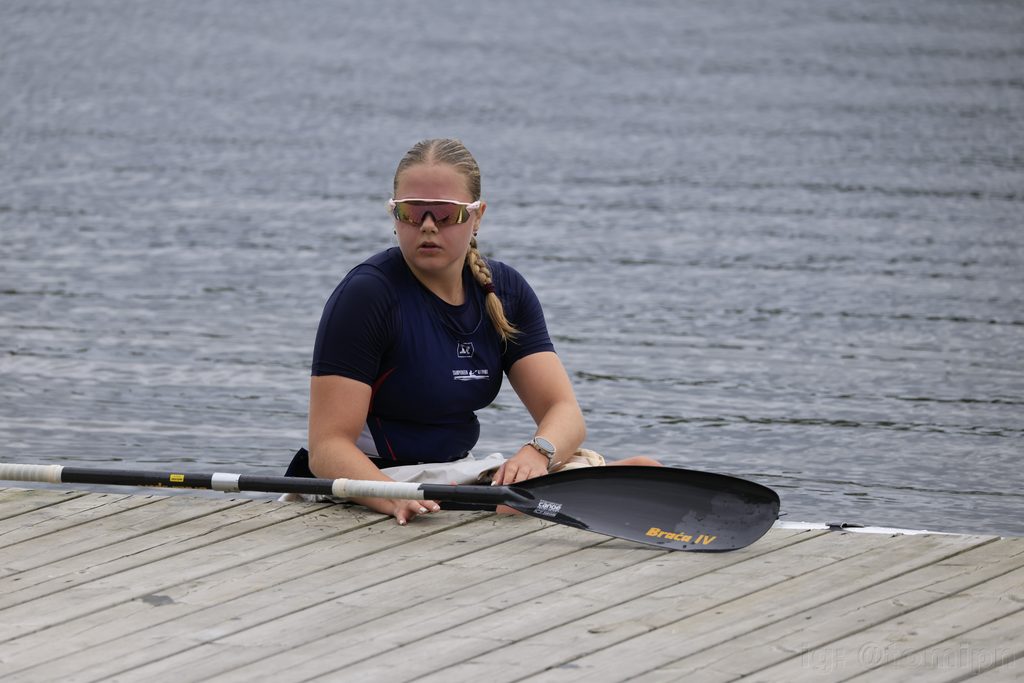
The fight for silver and bronze was a nail-biting affair, mirroring the intensity of the women’s 5000m. Lauri Kyhä, the 1000m champion from Porin Melamajavat, proved his versatility by challenging for another podium spot in the longer distance. Despite Nummela’s decisive move, Kyhä managed to hold off a late charge from Pirkkamelojien Tommi Ritala, securing the silver medal with a time of 23:11.6. Ritala, despite a valiant effort in the final sprint, ultimately took home the bronze medal, finishing in 23:15.1. The close finish highlighted the sheer determination of all athletes to fight for every position until the very last stroke, providing a thrilling conclusion to the individual races.
Supporting Data and Club Prowess
The detailed results paint a clear picture of the day’s successes and the overall strength of the participating clubs. Tampereen Vihuri emerged as a powerhouse, particularly in the women’s events, with Iida Lindeman’s double gold and Aada Lindeman’s two medals. Their performance underscores a strong development program and a formidable roster of athletes. Porin Melamajavat also demonstrated significant strength in the men’s sprint, with Lauri Kyhä’s gold and silver, and Davide Bottieri’s silver medal.
The presence of multiple athletes from the same club on the podium, such as Vihuri’s double in the women’s 5000m and Melamajavat’s 1-2 in the men’s 1000m, speaks to the competitive environment within these clubs and the benefits of training alongside high-caliber peers. These internal rivalries often push athletes to achieve even greater heights.
The demanding nature of both the 1000m and 5000m races means that athletes who excel in both distances, like Iida Lindeman and Lauri Kyhä, possess exceptional versatility. The 1000m is an all-out sprint requiring anaerobic power and pain tolerance, while the 5000m demands strategic pacing, aerobic endurance, and the ability to maintain focus over an extended period. To medal in both is a testament to an athlete’s comprehensive skill set and physical conditioning.
Official Responses and Athlete Insights
The athlete quotes offer a fascinating glimpse into the mindset of champions. Iida Lindeman’s surprise at her 1000m victory suggests a humble approach and perhaps a higher expectation for her preferred 5000m event. Her acknowledgment of arm fatigue in the 5000m highlights the brutal physical demands of the race, yet her ability to push through it underscores her mental resilience. This kind of raw honesty from athletes resonates with fans and aspiring paddlers, demystifying the path to victory by revealing the struggle behind the glory.
Lauri Kyhä’s confidence in his "perfect performance" and adherence to his strategy in the 1000m race speaks to a meticulous preparation and a strong self-belief. His ability to articulate his tactical approach provides valuable insight into the mental game of sprint kayaking, where split-second decisions and disciplined execution are paramount. His success is a testament to the importance of a well-thought-out race plan and the confidence to stick to it.
Miska Nummela’s strategic breakdown of his 5000m win, specifically mentioning his move on a turn and conserving energy, reveals a sophisticated understanding of endurance racing. His appreciation for Lauri Kyhä’s challenge further illustrates the respect among competitors and the high level of sportsmanship present at the championships. These insights from the athletes themselves are invaluable, offering a richer narrative than mere statistics could provide. They humanize the competition, allowing us to connect with the personal journeys and struggles behind each medal.
Implications for the Future of Finnish Sprint Kayaking
The results of these Finnish Sprint Kayaking Championships carry significant implications for the future of the sport in the nation. The emergence of strong contenders and the continued dominance of established athletes signal a healthy and competitive landscape. Iida Lindeman’s double gold positions her as a key figure to watch for future international competitions, potentially solidifying her place on national teams and representing Finland on a larger stage. Her versatility across distances makes her a valuable asset.
Similarly, the performances of Lauri Kyhä and Miska Nummela, with their respective golds and additional medals, demonstrate a robust talent pool in the men’s category. Their rivalry, evident in the 5000m race, is a positive sign for the sport, as strong competition often pushes athletes to reach new levels of performance. The success of clubs like Tampereen Vihuri and Porin Melamajavat highlights the importance of strong club structures and coaching in developing national talent. These clubs serve as crucial training grounds, fostering the next generation of Finnish paddlers.
The championship also showcased promising talent like Aada Lindeman, Cecilia Hirvelä, Davide Bottieri, Anna Haikara, and Tommi Ritala, who all demonstrated their potential by earning podium finishes. Their performances indicate a depth that bodes well for Finland’s prospects in various international age categories and senior competitions. The continued development of these athletes, nurtured within their clubs and potentially through national programs, will be vital for Finland’s sustained presence and success in the global sprint kayaking arena. The overall competitiveness and the athletes’ ability to perform under pressure suggest a bright future for Finnish sprint kayaking, with a strong foundation laid for upcoming seasons and major international events.
Summarized Results
K1 1000m Women
- Iida Lindeman (Tampereen Vihuri) – 4:53.36
- Cecilia Hirvelä (Kangasalan Melojat) – 9:01.38
- Aada Lindeman (Tampereen Vihuri) – 5:03.24
K1 1000m Men
- Lauri Kyhä (Porin Melamajavat) – 4:08.80
- Davide Bottieri (Porin Melamajavat) – 4:10.06
- Miska Nummela (Tampereen Vihuri) – 4:11.53
K1 5000m Women
- Iida Lindeman (Tampereen Vihuri) – 26:17.7
- Aada Lindeman (Tampereen Vihuri) – 26:57.1
- Anna Haikara (Kangasalan Melojat) – 27:05.8
K1 5000m Men
- Miska Nummela (Tampereen Vihuri) – 22:54.0
- Lauri Kyhä (Porin Melamajavat) – 23:11.6
- Tommi Ritala (Pirkkamelojat) – 23:15.1
For all detailed results, please visit https://kame.rantasauna.fi/cgi-bin/SM2026.pl.
Images by Tomi Nieminen and Marjo Puro.