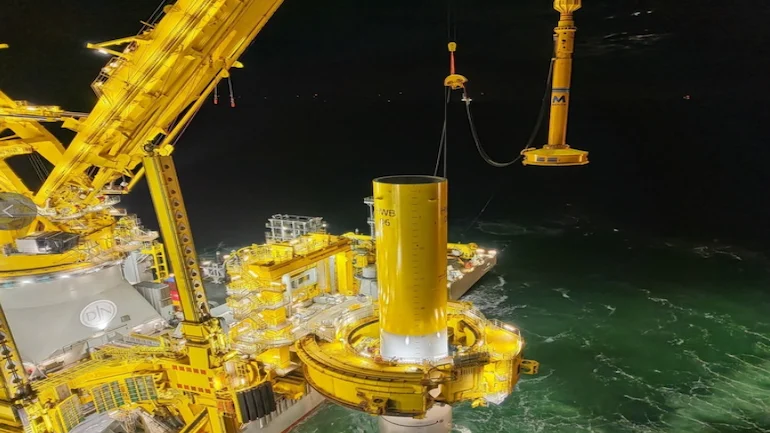
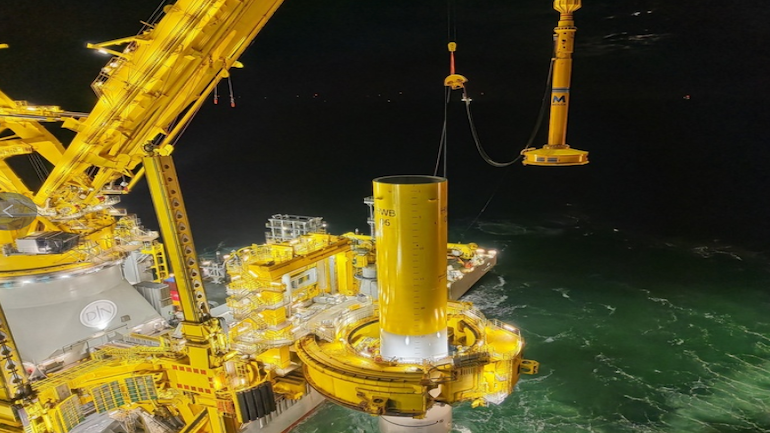
The offshore wind landscape in the North Sea is undergoing a monumental shift as RWE, in partnership with TotalEnergies, officially marks the commencement of construction for the 760MW OranjeWind offshore wind farm. The installation of the project’s first monopile off the coast of Ijmuiden, the Netherlands, serves as a tangible milestone in a multi-year effort to bolster Europe’s renewable energy capacity and decarbonize the Dutch industrial sector.
This landmark project is not merely an exercise in infrastructure expansion; it represents a technological evolution in how offshore wind farms are designed, constructed, and operated. By utilizing innovative "transition-piece-free" monopile technology, the project aims to set a new standard for material efficiency and environmental stewardship in the maritime energy sector.
Main Facts: Engineering a 760MW Powerhouse
The OranjeWind project is a cornerstone of the Dutch government’s offshore wind roadmap, designed to provide a massive injection of clean electricity into the national grid. With a total capacity of 760MW, the farm is positioned to play a critical role in meeting the Netherlands’ ambitious climate goals.
At the heart of the construction phase are 53 monopiles, each an engineering marvel in its own right. Measuring approximately 90 meters in length with a diameter of 8 meters, these steel foundations are designed to withstand the harsh conditions of the North Sea. The installation, which kicked off in late 2026, is currently proceeding on schedule, with the full completion of the foundation phase expected by early 2027.
The project is a 50/50 joint venture between RWE and TotalEnergies, reflecting the growing trend of energy majors pooling resources and expertise to de-risk large-scale offshore developments. The logistical backbone of this operation is Jan De Nul’s heavy-lift vessel, Les Alizés. This ultra-low-emission vessel is central to the project’s success, utilizing advanced dynamic positioning systems and a massive 5,000-tonne crane to drive the monopiles into the seabed with pinpoint accuracy.
Chronology of Development
The journey to the first monopile installation has been one of rigorous planning and strategic collaboration.
- Project Inception and Bidding: RWE and TotalEnergies secured the rights to the site after a competitive bidding process, emphasizing their commitment to the Dutch offshore wind energy area.
- Design and Procurement: Over the last several years, the engineering teams finalized the transition-piece-free design, a move aimed at reducing the structural weight and complexity of the foundations.
- Logistical Preparation: Throughout 2026, Sif’s terminal at Maasvlakte near Rotterdam became the nerve center for the project, serving as the staging ground for the monopiles before their transit to the installation site.
- September 2026 – Milestone Installation: The installation of the first monopile was successfully completed off the coast of Ijmuiden, signaling the transition from the planning phase to active construction.
- 2027 Outlook: The project remains on track for the final installation of all 53 monopiles by the first quarter of 2027, with subsequent electrical infrastructure and turbine installation to follow.
Supporting Data and Technical Innovation
The OranjeWind project distinguishes itself through its embrace of "transition-piece-free" technology. Traditionally, offshore monopiles require a transition piece—a structural component that connects the monopile to the turbine tower. By removing this requirement, RWE and TotalEnergies have enabled the turbine towers to be bolted directly onto the top flange of the monopile.
This design choice offers several distinct advantages:
- Material Reduction: By eliminating the transition section, the project significantly reduces the total steel weight per foundation, lowering the carbon footprint of the manufacturing process.
- Structural Simplification: Fewer connections mean fewer points of potential mechanical failure, potentially reducing long-term maintenance requirements.
- Strategic Deployment: Essential secondary components, such as Main Access Platforms, internal cassettes, and boat landings, are now installed in a separate, streamlined campaign, allowing for greater project agility.
Environmental Safeguards
Beyond the structural design, the project is notable for its stringent environmental protections. The use of the Les Alizés—a vessel designed specifically to minimize nitrogen oxide and fine particle emissions—aligns with the industry’s shift toward sustainable maritime operations. Furthermore, to mitigate the acoustic impact of hydraulic piling on marine life, the project is employing a "bubble curtain." This technology creates a dense wall of air bubbles around the piling site, effectively absorbing and reflecting sound waves to ensure the noise remains within ecologically safe thresholds.
Official Responses and Strategic Vision
The leadership at RWE has framed this milestone as the culmination of extensive supply chain collaboration and technical ingenuity. Sven Utermöhlen, CEO of RWE Offshore Wind, emphasized the gravity of the occasion:
"RWE and TotalEnergies are delivering one of the largest wind farms in the Dutch North Sea. After years of planning, the project has become a reality with the installation of the first monopile. This is a huge success for the team and its supply chain partners. It demonstrates that when we combine logistical expertise with innovative engineering, we can scale renewable energy solutions that are both efficient and environmentally conscious."
The collaboration between RWE and TotalEnergies is viewed as a blueprint for future North Sea projects. By leveraging the specific strengths of both companies—RWE’s deep experience in wind energy and TotalEnergies’ experience in complex offshore projects—the partnership ensures that OranjeWind can navigate the complexities of modern offshore wind development, including supply chain volatility and stringent regulatory requirements.
Implications for the Energy Transition
The implications of the OranjeWind project extend far beyond the 760MW of electricity it will generate.
Strengthening Energy Security
For the Netherlands, OranjeWind represents a significant step toward energy independence. By increasing domestic renewable generation, the country reduces its reliance on imported fossil fuels and stabilizes electricity pricing for industrial and residential consumers.
Industrial Decarbonization
OranjeWind is specifically designed to support the decarbonization of the Dutch industrial heartland. By providing large-scale, consistent green power, the wind farm enables local industries to transition away from carbon-intensive processes, directly supporting the European Union’s goal of reaching net-zero emissions by 2050.
Advancing Offshore Technology
The successful implementation of transition-piece-free monopiles at this scale provides valuable data for the entire offshore wind sector. If this design proves as efficient as anticipated, it is likely to become the new industry standard, driving down costs and improving the pace of installation for future wind farms across the North Sea and beyond.
Supply Chain Resilience
The partnership with Jan De Nul and the use of the Maasvlakte terminal highlight the importance of localized supply chains. By utilizing specialized vessels and local port facilities, RWE and TotalEnergies are demonstrating that the success of the green energy transition is inextricably linked to the strength and capacity of the maritime logistics sector.
Conclusion
As the Les Alizés continues its work off the coast of Ijmuiden, the progress of OranjeWind serves as a beacon of progress in the renewable energy sector. It is a project defined by its efficiency, its environmental mindfulness, and its commitment to the long-term energy needs of the Netherlands.
With 52 monopiles yet to be installed, the coming months will be a period of intense activity. However, the successful placement of the first foundation confirms that the project is well-positioned to meet its 2027 deadline. As the offshore wind industry continues to grow, OranjeWind will stand as a testament to the fact that, with the right combination of technology, partnership, and planning, the goal of a sustainable, carbon-free future is well within reach.