In the world of professional bodybuilding, certain names carry the weight of a thousand iron plates. Mention "Gold’s Gym," and the sun-drenched, palm-lined streets of Venice Beach immediately spring to mind. But mention "The East Coast Mecca," and you are talking about a singular, hallowed institution in Syosset, Long Island: the Bev Francis Powerhouse Gym.
For forty years, this sanctuary of sweat and steel has served as the crucible for the sport’s most elite physiques. Recently, the gym marked its 40th anniversary with a star-studded gala that served as more than just a celebration—it was a definitive reunion of the titans who have shaped the trajectory of modern bodybuilding. As the industry looks back on four decades of progress, the gym stands not just as a business, but as a monument to the relentless pursuit of human potential.
A Gathering of Titans: The 40th Anniversary Gala
The anniversary event was, by any industry metric, the most significant gathering of bodybuilding royalty in recent memory. To step into the venue was to walk through a living museum of the sport’s history. The roster of attendees read like a "Who’s Who" of the Olympia stage, bridging the gap between the golden era of the 1990s and the high-tech, precision-focused training of today.
Among the guests of honor were two-time Mr. Olympia and reigning champion Derek Lunsford, who represented the current generation of dominance. He was joined by a formidable assembly of past champions: the legendary six-time Mr. Olympia Dorian Yates, the "King" himself, eight-time champion Ronnie Coleman, 2008 Mr. Olympia Dexter Jackson, 2019 titleholder Brandon Curry, and the reigning 2024 Mr. Olympia, Samson Dauda.
The representation of women’s bodybuilding history was equally profound. The event welcomed six-time Ms. Olympia Cory Everson and the incomparable eight-time winner Lenda Murray. Their presence underscored the gym’s commitment to excellence across all divisions. The guest list was rounded out by high-profile competitors such as Nick Walker, Bikini Olympia champion Lauralie Chapados, the formidable Victor Martinez, Men’s Physique Olympia winner Ali Bilal, and even professional boxer Jarrell "Big Baby" Miller, proving that the gym’s influence extends far beyond the bodybuilding stage.
The gravity of the event was further amplified by the attendance of the sport’s executive architects, including Olympia owner Jake Wood, President Dan Solomon, and NPC/IFBB Pro League President Jim Manion. This gathering was a clear signal that the legacy of Bev Francis Powerhouse Gym is not merely preserved in books—it is an active, central pillar of the professional bodybuilding ecosystem.
Chronology: From Modest Origins to Global Mecca
The story of Bev Francis Powerhouse Gym is one of organic growth, fueled by the unwavering vision of its founders: Bev Francis and Steve Weinberger.
The Early Years (1984–1994)
In the mid-1980s, the fitness landscape was shifting. While the West Coast was dominated by the aesthetic movement, the East Coast lacked a centralized, high-intensity training facility that could cater to serious competitive bodybuilders. When Francis and Weinberger opened their doors, they were not initially concerned with building a global empire. Their primary goal was to create a "serious" training environment.
The Rise of the Professional Standard (1995–2010)
As word spread, the gym became a hub for local talent. However, its reputation shifted to the global stage as the quality of its training equipment and the expertise of its staff began to produce consistent winners. The gym became the place to be for athletes who were "prepping" for the Olympia. The culture of the gym—an atmosphere of mutual respect and brutal, honest training—began to draw international stars who sought a "no-nonsense" environment.
The Modern Era (2011–Present)
Today, the gym is a hybrid of tradition and modernity. It maintains the raw, utilitarian feel of a classic iron dungeon while incorporating the nutritional and recovery-focused knowledge required by the modern professional. The 40th anniversary marks the culmination of this transition, cementing its status as a permanent fixture in the history of physical culture.
Supporting Data: Why the "Mecca" Matters
The influence of Bev Francis Powerhouse Gym can be quantified through the sheer density of success stories that have emanated from its floor. Over the past four decades, the gym has facilitated:
- Olympia Success: Dozens of Olympia titles have been earned by athletes who identified the gym as their primary training home or essential stop-over during peak weeks.
- Athlete Retention: Unlike commercial gyms, the average tenure of a competitive athlete at Bev’s is remarkably high. The gym acts as a lifelong support system for bodybuilders, offering mentorship long after their competitive careers have ended.
- Community Integration: The facility serves as a recruitment and development hub for the NPC and IFBB Pro League, bridging the gap between amateur enthusiasts and professional stage icons.
The Architect of the Vision: Steve Weinberger
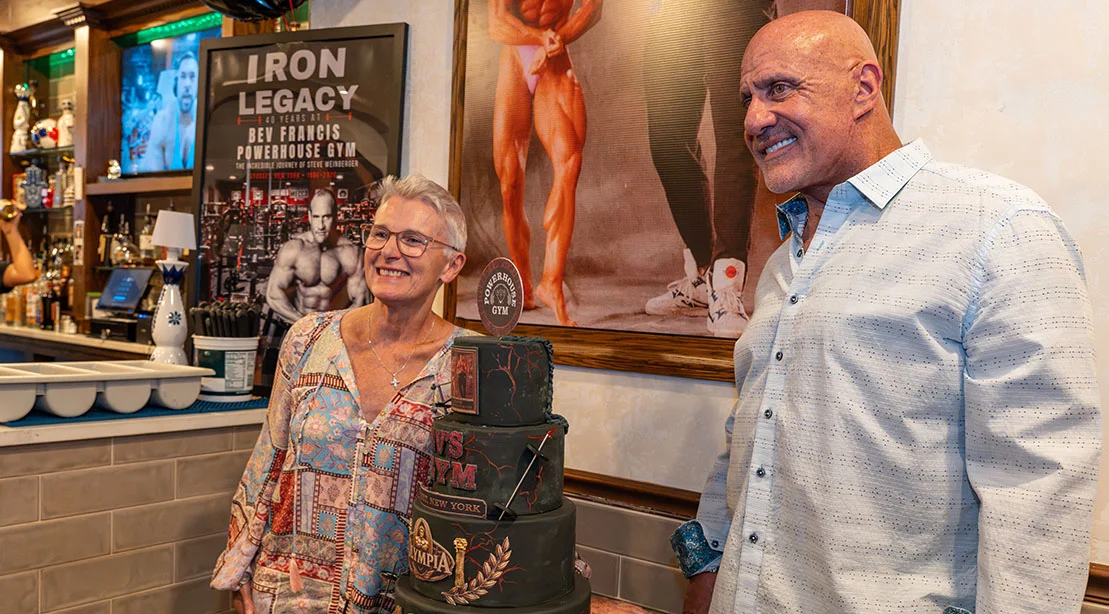
At the heart of the gym’s identity is the partnership between Bev Francis, a trailblazer in her own right, and Steve Weinberger. During the anniversary, Weinberger reflected on the humble beginnings of the venture.
"When Bev and I started this, we weren’t thinking about creating a legacy," Weinberger noted during his address. "We wanted to build a great gym and a place where people who were serious about training could come together. Forty years later, you look around the room and see champions from different generations, friends we’ve known for decades, and people who have been part of this place for years. That’s what makes me proud. The trophies and titles are incredible, but it’s the people who made this gym what it is."
This sentiment is the core of the upcoming literary project, IRON LEGACY: The Incredible Journey of Steve Weinberger. Set for release this September, the book—authored by Frank Sepe and Zack Zeigler—promises to peel back the curtain on the man who became one of the most recognizable and influential judges and promoters in the sport. The work explores the decisions, challenges, and interpersonal relationships that turned a local gym in Syosset into a global brand.
Implications: The Future of the Iron Legacy
What does the next decade hold for the East Coast Mecca? The anniversary event suggests that the gym is moving toward a strategy of cultural preservation. By documenting the history of the gym through the Iron Legacy project, the founders are ensuring that the philosophy of "hard work, no excuses" is passed down to the next generation.
The gym’s continued success serves as a retort to the trend of digitized, app-based fitness. While the industry moves toward high-tech, remote training, Bev Francis Powerhouse Gym continues to prove that there is no substitute for the physical, face-to-face camaraderie of a "hardcore" gym environment.
As the industry prepares for the upcoming competitive season, the lessons taught at the 40th-anniversary celebration remain clear: Success is not solely the result of perfect genetics or advanced nutrition. It is the result of the environment. By fostering a space where champions from different eras can coexist, train, and share wisdom, Bev Francis and Steve Weinberger have created a self-sustaining cycle of excellence.
Conclusion: A Living Institution
As the lights dimmed on the 40th-anniversary celebration, the atmosphere was one of profound gratitude. For the thousands of members who have walked through those doors, the gym is more than just a room full of machines; it is a second home. It is a place where a first-time competitor can look over their shoulder and see a Mr. Olympia champion grinding out a set, reminding them that greatness is attainable through consistent, disciplined effort.
The "East Coast Mecca" is not a static place. It is a living, breathing organism that continues to evolve with the sport. As the release of IRON LEGACY approaches, the bodybuilding community has the chance to look back at the foundation that has supported the sport for 40 years. For those who train there, and for those who dream of training there, the message remains the same: The legacy is not in the iron, but in the people who possess the courage to lift it.