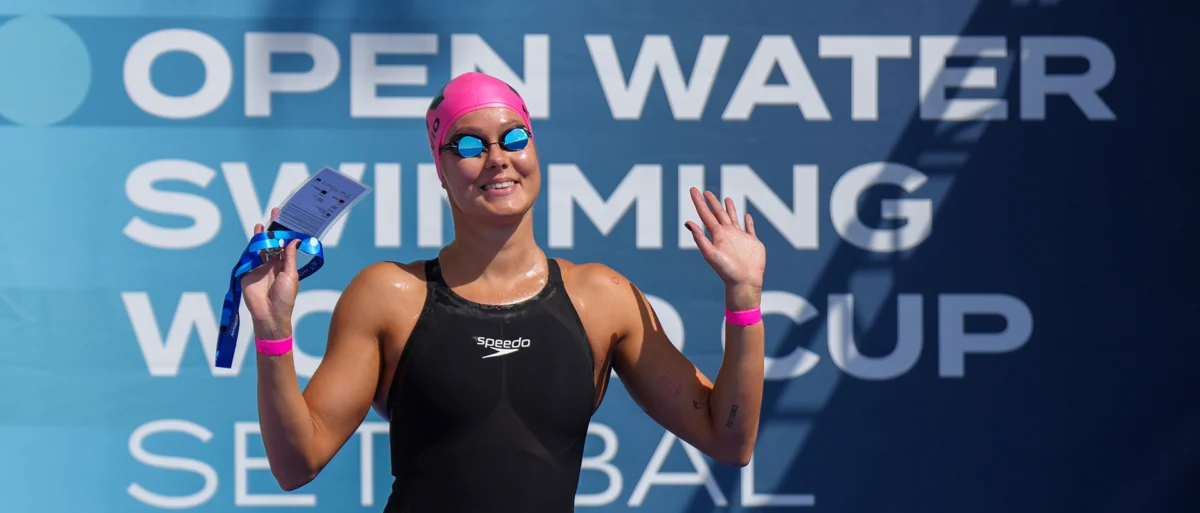
In the quiet, chlorinated stillness of the Leppävaara outdoor pool, a rhythmic splash breaks the silence. It is a steady, almost hypnotic sound—the sound of Louna Kasvio carving her path through the water. While the Finnish weather may be oppressive, gray, and damp, Kasvio remains unaffected. She is a singular force in the world of Finnish sports, a pioneer charting a course through the unpredictable currents of international open-water swimming.
As her hand strikes the poolside tile, she pauses, her face lighting up with a subtle, focused smile. "Excuse me," she laughs, squinting through the morning mist, "but could you move slightly? I need to keep an eye on that wall clock. I’m not finished yet."
She has, in fact, been swimming for nearly two hours—her standard morning quota. For the 20-year-old, this is not just training; it is a life defined by precision, endurance, and an unwavering commitment to a sport that demands everything from its participants.
The Professional Discipline of an Elite Athlete
When Kasvio finally climbs out of the pool, she radiates the kind of calm confidence that only comes from total immersion in one’s craft. "I am fully invested," she says, wiping water from her brow. "This is my life right now. Professional swimming is a full-time commitment."
The scale of her "total investment" is staggering. Her weekly routine involves 80 to 100 kilometers of swimming, complemented by three intense strength-training sessions and four "dry-land" aerobic workouts. In total, Kasvio dedicates 30 to 35 hours per week to structured training. The remaining hours of her day are accounted for with mathematical precision, reserved entirely for recovery, nutrition, and mental preparation for the next session.
"The best thing about sports is everything," she explains. "The training, the competitions, and the entire lifestyle of an athlete. For me, sports are a natural choice. I’ve never questioned it. It comes from within, from my own desire."
This intensity carries a weight that signals her intent: to be known not by her famous surname, but by her own merit.
A Legacy of Excellence: The Fourth Generation
To understand the magnitude of Louna Kasvio’s rise, one must look at the history that precedes her. She is the scion of Finland’s most illustrious swimming dynasty. Her father and coach, Antti Kasvio, is a legendary figure—a World Champion, European Champion, and Olympic bronze medalist. Her grandfather, Matti Kasvio, represented Finland in the 1964 Olympics, while her grandmother, Ulla Patrikka, competed in the 1968 Olympics. The lineage stretches back even further to Taisto and Mila Kasvio, who were pioneers in the early-to-mid 20th century.
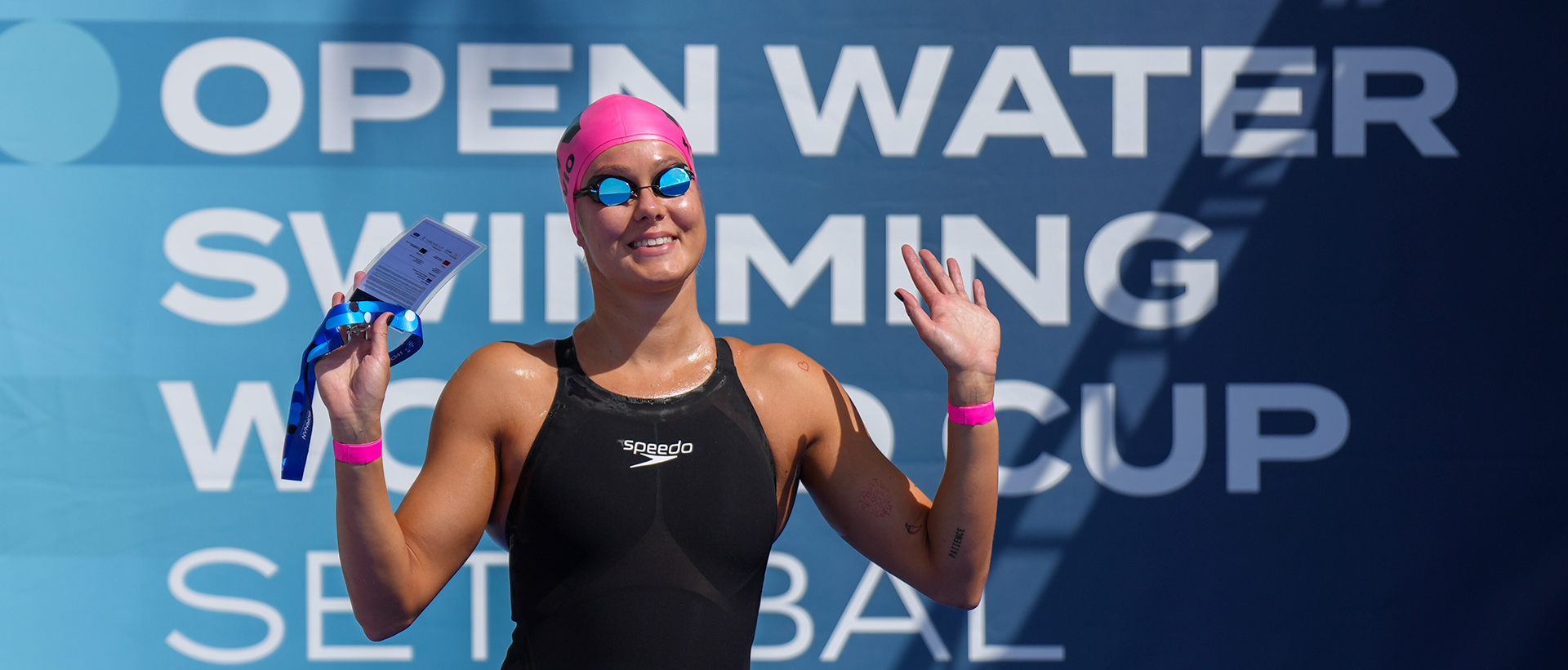
Despite this "star-studded" pedigree, Louna has already achieved something none of her predecessors could: she is the first Finnish swimmer to reach consistent international success in open-water marathons.
"When I was younger, it used to annoy me when people always compared me to my father, or my grandparents," she admits. "I decided early on that I wanted to carve out my own career and earn my own results."
Louna does not avoid discussing her family history, but she refuses to let it define her. "Swimming has always been at the center of our family life. It’s been a natural part of growing up. But I was never forced into the pool. I don’t dwell on the past or feel pressured by my background. I look forward."
The Science of Coaching: A New Era of Training
For Antti Kasvio, transitioning from athlete to coach has provided a unique perspective. He acknowledges that while his own experience is an asset, the sport has evolved significantly.
"Open-water swimming is, in essence, just swimming," Antti explains. "But it is a marathon conducted in ever-changing conditions, where your rivals are constantly physically present, right beside you. When I competed, I trained for events lasting two to four minutes. Louna’s performances last two hours. We cannot use the same training methods. While I trained hard, I would argue that Louna’s process is even more brutal."
Antti’s coaching philosophy centers on technical mastery. "We focus on ensuring that with perfect technique, she can maintain an anaerobic threshold throughout the entire race and still have the capacity to change pace at the end. Her hardest sessions are designed to be competition-specific: swimming extremely fast for long periods, then finishing with short, high-intensity bursts."
Chronology: From Leisurely Start to Global Stage
Louna’s journey was not a straight line. Though she learned to swim before the age of three, it took years for her competitive fire to ignite.
"I wasn’t a particularly athletic child," she recalls. "I loved reading and talking more than anything. But in the first grade, I won a 25-meter race in a school competition. That was a huge success, and it triggered something in me."
By age ten, she was competing in her first age-group championships. By 17, she was a Junior European Championship medalist and an adult-level European finalist in the pool. However, the following year brought illness and setbacks. It was then that her father suggested she try open-water swimming at the Finnish Championships in Raasepori.
"It was cold and raining, but I finished second overall against all the men and women," she remembers. "I loved the feeling. I went to the Junior European Championships and placed fifth. It opened a new dimension to my life. I was hooked."
The Unique Challenges of Open Water
Transitioning from the controlled environment of a 50-meter pool to the chaotic, unpredictable nature of open water presented a steep learning curve.
"In the pool, you control your own pace," Louna explains. "In open water, you have to follow the lead group from the start. Drafting is essential—if you lose the group, you’re never getting them back. But drafting is physically demanding because you’re constantly fighting the chop of the water and trying to navigate."
The physical nature of the sport is something that surprises many spectators. "You can have 80 swimmers in a pack, all within touching distance. You have to hold your ground, but you must remain calm. If you become aggressive, you spike your lactate levels and your technique falls apart."
The logistical hurdles are equally daunting. "During the race, coaches offer drinks on long poles while the swimmers are moving. You have about two to three seconds to grab your bottle, drink, and continue swimming without losing momentum."
She embraces the grit required to compete in conditions that include varying water temperatures, jellyfish, floating debris, and the raw power of the ocean. "I think I’m tough. I tolerate challenges well. You get hit by opponents, and you usually feel battered when you reach the finish line. That’s just part of the sport."
Supporting Data and Strategic Backing
The Kasvio family operates as a tight-knit team. While Louna swims and Antti coaches, her mother, Hanna, manages the logistics and administration—a necessity for an athlete who spends over a third of the year abroad.
"The requirements are incredibly high, and we are all prepared to invest everything into Louna’s career," says Hanna Kasvio. "In Finland, a major challenge is access to training facilities. To train for a marathon, you need a dedicated lane for two hours, twice a day. Public pools can’t always accommodate this, whereas our international rivals often train in private facilities reserved exclusively for them."
Despite this disadvantage, Louna has surged in the rankings. In the 2025 season, she won the overall Junior World Cup and placed 19th in the senior World Championships. This summer, she finished 8th in the 10km and 10th in the 5km at the European Championships.
Implications: The Road to the Top
Louna is acutely aware that in open-water swimming, athletes typically reach their peak between 24 and 25 years old. At 20, she has time, but she refuses to waste it.
"I know I have the fitness and the skill to be at the world-class level," she says. "I’ve trained with world championship medalists and I know I can keep their pace. Climbing higher on the podium now is about refining tactics, mastering different environments, and building the routine that only experience can provide."
Her inclusion in the Finnish Olympic Committee’s Next Generation Team Finland program is a testament to this potential. The program, which supports athletes aged 15–22, provides over 10,000 euros in funding, expert services, and resources to help bridge the gap to the absolute elite.
As she looks toward the future, Louna remains remarkably grounded. "I hope to have a long career and enjoy every moment of it. I want to succeed, of course, but more than anything, I want to fully exhaust my potential. I don’t want a break or a different life. That can wait until I’m old."
In the gray morning light of Leppävaara, Louna Kasvio turns back to the water. The clock is ticking, but for the fourth-generation swimmer, the time is finally, and firmly, her own.