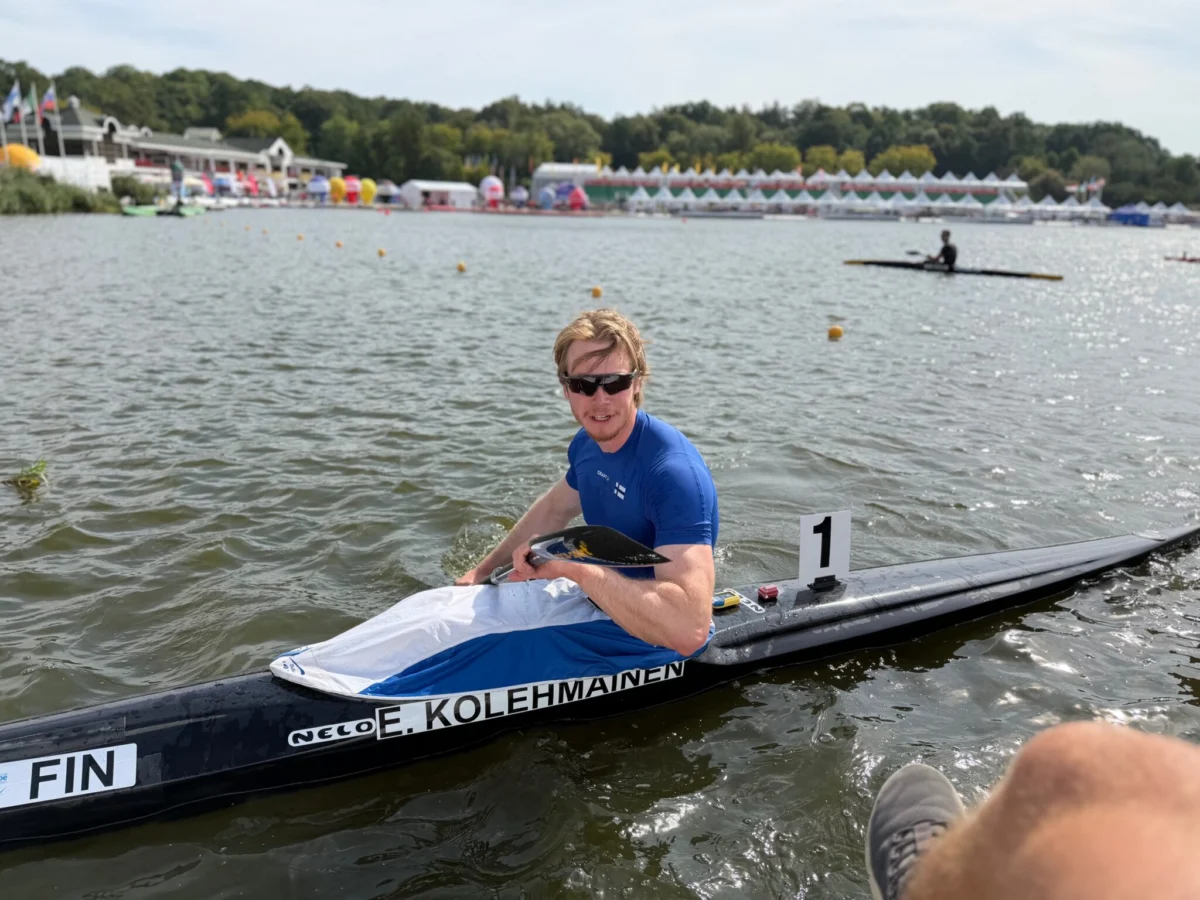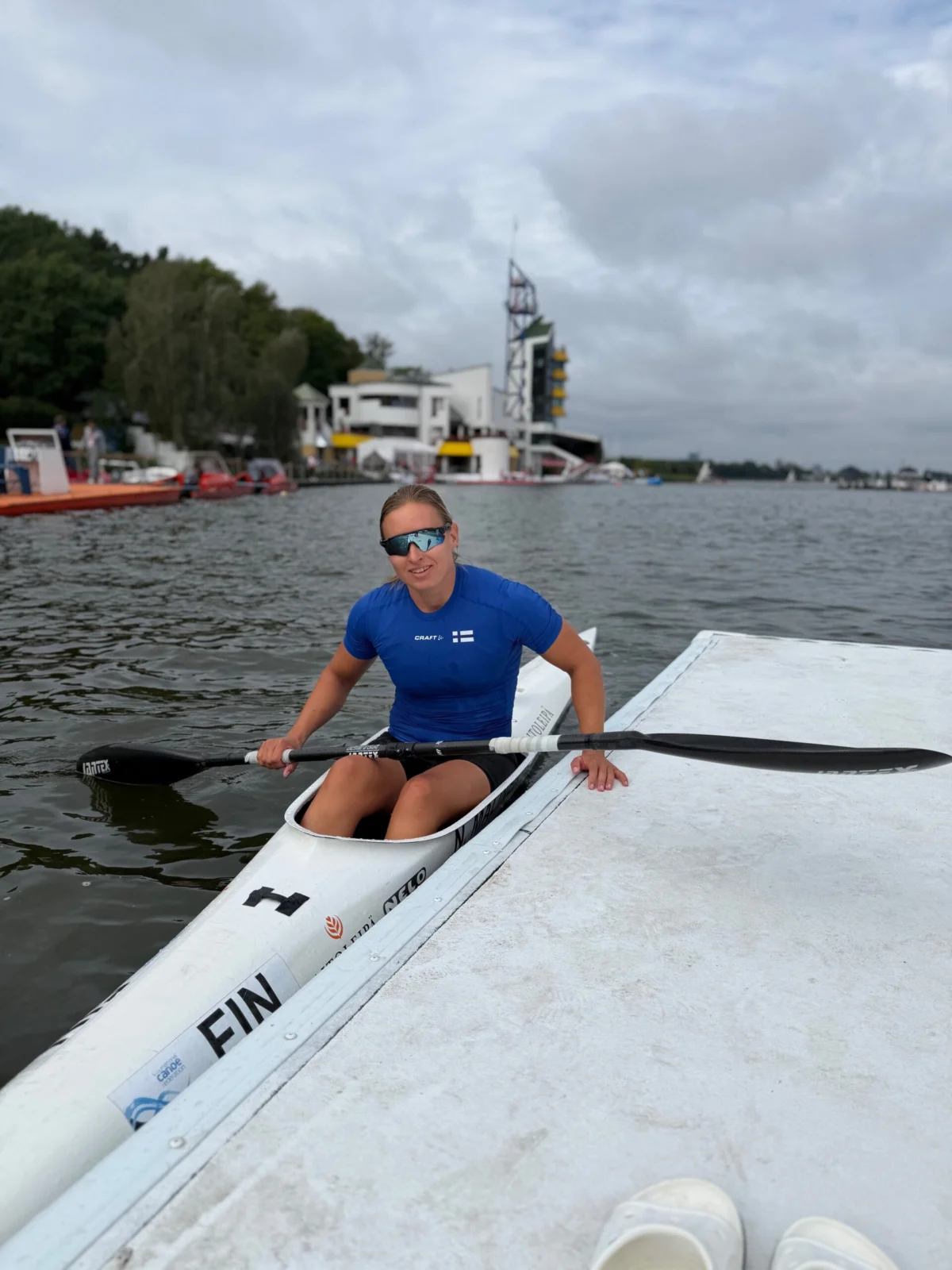
Szeged, Hungary – August 29, 2026 – The fourth day of the highly anticipated International Canoe Federation (ICF) Canoe Sprint World Championships in Szeged, Hungary, presented a crucible of speed, endurance, and strategic prowess for athletes from across the globe. For Finland, the day was marked by the determined efforts of Eetu Kolehmainen and Netta Malinen, who battled fiercely in their respective K1 categories, showcasing the spirit and evolving potential of Finnish canoe sprint on the world stage. While securing top-tier final placements proved challenging amidst an exceptionally competitive field, both athletes demonstrated grit and resilience, setting the stage for crucial final races on the concluding day of the championships.
Eetu Kolehmainen, a promising talent in men’s kayak singles, navigated through the demanding K1 500m repechage before tackling the K1 1000m B-final. His performances, though not leading to A-finals, underscored his consistent presence in the upper echelons of international racing. Netta Malinen, representing Finland in women’s kayak singles, faced equally tough competition in the K1 200m repechage and the K1 500m C-final. Her direct distance races concluded today, but her championship journey is far from over, with a significant challenge awaiting her in the K1 5000m loop race. The Finnish delegation, led by team manager Jeremy Hakala, remains focused on the valuable experience gained and the opportunities that still lie ahead for their dedicated paddlers.
Main Facts: A Day of Intense Competition and Strategic Outcomes
The fourth day of the ICF Canoe Sprint World Championships in Szeged was a testament to the unforgiving nature of elite-level competition, where fractions of a second can separate triumph from disappointment. Finnish hopes were pinned on two of their brightest talents, Eetu Kolehmainen and Netta Malinen, as they vied for stronger placements in their individual kayak events. The day’s racing unfolded under the watchful eyes of thousands of spectators and a global online audience, with every stroke carrying the weight of national pride and personal ambition.
Eetu Kolehmainen’s schedule was particularly demanding, featuring two high-stakes races. In the men’s K1 500m repechage, a critical pathway to the semi-finals or lower finals, Kolehmainen finished 9th. While this placement did not propel him into the A or B finals directly, it secured him a spot in tomorrow’s C-final, offering another chance to compete and improve his overall ranking. Later in the day, in the men’s K1 1000m B-final, a race for positions 10-18 globally, Kolehmainen once again placed 9th, ultimately securing an 18th place overall in the highly competitive 1000m event. This consistent performance in a B-final against some of the world’s best is a significant achievement, highlighting his ability to maintain pace and tactical awareness over longer distances.
Netta Malinen’s day began with the explosive K1 200m repechage, a discipline demanding explosive power and impeccable timing. Her 7th place finish, while a strong effort, was unfortunately not enough to advance her to the B-final, underscoring the razor-thin margins in sprint canoeing. Later, in the women’s K1 500m C-final, Malinen powered through to finish 8th, placing her 26th overall in the 500m category. With these races concluded, her focus now shifts entirely to the unique demands of the K1 5000m loop race, a test of both speed and endurance, scheduled for Sunday. The day’s results, while challenging, provide crucial data and experience for both athletes as they continue their development in the sport.
Chronology of the Fourth Day: Finnish Paddlers’ Journey Through Szeged’s Waters
The sun rose over the picturesque Maty-ér Regatta Course in Szeged on August 29th, marking the fourth day of fierce competition. For the Finnish contingent, the morning sessions were dominated by Eetu Kolehmainen, a 22-year-old rising star from Jyväskylä, known for his powerful stroke and tactical acumen.
Eetu Kolehmainen’s Morning Sprint: K1 500m Repechage
Kolehmainen’s first challenge came in the men’s K1 500m repechage. A repechage, often referred to as a second-chance race, is designed to give athletes who did not directly qualify from their heats another opportunity to advance. The pressure in these races is immense; every paddler is fighting for survival, knowing that a single mistake can end their championship aspirations in that particular event. Eetu, paddling in lane 5, started strong, maintaining a good pace through the first 250 meters. The 500m distance in K1 is a brutal blend of raw power and sustained speed, requiring athletes to maintain near-maximum effort for approximately 90 seconds. Despite a valiant effort, pushing hard through the final 100 meters, Kolehmainen crossed the finish line in 9th position. While this meant missing out on the A or B finals, his performance secured him a spot in the C-final scheduled for the following day. This outcome, while perhaps not ideal, ensures continued valuable race experience at the highest level and an opportunity to improve his overall ranking.
Mid-Day Marathon: K1 1000m B-Final
Later in the day, Kolehmainen returned to the water for the men’s K1 1000m B-final. This race is contested by those who ranked 10th to 18th after the semi-final stages, effectively competing for overall placements from 10th to 18th at the World Championships. The 1000m distance is a true test of aerobic capacity and mental fortitude, demanding a sustained high-intensity effort for over three and a half minutes. Eetu, starting in lane 7, demonstrated his renowned endurance, settling into a strong rhythm. He battled fiercely in the middle of the pack, trading strokes with experienced international competitors. As the race neared its climax, the field tightened, and Kolehmainen dug deep, pushing through the pain barrier. He ultimately finished 9th in the B-final, mirroring his earlier repechage result. This translated to an 18th overall placement in the K1 1000m event. For a young athlete, finishing in the top 18 globally in such a competitive discipline is a significant benchmark and a testament to his dedication and training.
Netta Malinen’s Afternoon Gauntlet: K1 200m Repechage & K1 500m C-Final
The afternoon session brought Netta Malinen, a 20-year-old sprint specialist from Helsinki, to the fore. Her day began with the electrifying K1 200m repechage. The 200m sprint is the ultimate test of explosive power, requiring athletes to reach top speed almost instantaneously and maintain it for the entire distance – typically around 40 seconds. There is no room for error, and a single missed stroke can be the difference between advancing and elimination. Malinen, known for her quick starts, exploded off the line in lane 3. The race was a blur of churning water and straining muscles, with paddlers jostling for every millisecond. Netta finished 7th in her repechage, a solid effort but unfortunately insufficient to qualify for the B-final. The margins in 200m racing are notoriously tight, and even a fraction of a second can change the outcome dramatically.
Shortly after, Malinen was back on the water for the women’s K1 500m C-final. This race determined overall rankings from 19th to 27th. Starting in lane 6, Netta approached the race with renewed determination, aiming to conclude her direct distance events on a strong note. The 500m is a more balanced race than the 200m, requiring both power and the ability to maintain a high stroke rate. Malinen executed a well-paced race, demonstrating her technical proficiency. She finished 8th in the C-final, which placed her 26th overall in the women’s K1 500m category. With her direct distance races now complete, Malinen’s focus shifts to the entirely different challenge of the 5000m event, a strategic and endurance-based race where a different skill set comes into play.
Supporting Data: Contextualizing Finnish Performance on the Global Stage
The ICF Canoe Sprint World Championships represent the pinnacle of the sport outside of the Olympic Games, drawing the elite of international paddling to compete for world titles. This year’s event in Szeged, a venue synonymous with canoe sprint excellence, has brought together hundreds of athletes from over 70 nations, all vying for glory across various disciplines. The level of competition is exceptionally high, with established powerhouses like Germany, Hungary, Spain, and New Zealand consistently dominating the medal tables. For smaller nations like Finland, securing spots in A or B finals is a significant accomplishment, signaling progress and potential within the global hierarchy.
Understanding the Disciplines:
- K1: Refers to a single person (K = Kayak) paddling alone. Other common classifications include K2 (two paddlers) and K4 (four paddlers).
- Repechage (Välierä): A second-chance race for those who didn’t directly qualify from heats, allowing them another opportunity to advance to subsequent rounds.
- B-Final / C-Final: These are classification races. The A-final determines positions 1-9 (medalists). The B-final determines positions 10-18, and the C-final determines positions 19-27, and so on. Competing in these finals means an athlete is among the top 18 or 27 in the world, a notable achievement.
- K1 5000m Loop Race: A marathon-style event, distinct from the sprint distances. Athletes complete multiple laps of a course, often involving portages (carrying the kayak around obstacles) or turns around buoys, testing endurance, strategic positioning, and technical skill over a much longer duration.
Finnish Canoe Sprint Landscape:
Canoe sprint in Finland has a rich history but has faced challenges in consistently producing world-beating talent in recent decades. The Finnish Canoe and Rowing Federation (Melonta- ja Soutuliitto) has been investing in grassroots development and elite athlete pathways, aiming to nurture the next generation of paddlers. Athletes like Eetu Kolehmainen and Netta Malinen are products of these efforts, representing a new wave of Finnish talent. Kolehmainen, with his powerful physique and disciplined approach, has been a consistent performer in national competitions and has steadily climbed the international ranks. Malinen, known for her explosive starts and competitive spirit, has demonstrated significant improvement in her sprint capabilities. Competing at World Championships like this provides invaluable experience, exposing them to the highest standards of training, technique, and race strategy. It’s a crucial stepping stone for their development towards future Olympic cycles.
The physical and mental demands of canoe sprint are immense. Athletes undergo rigorous year-round training, combining on-water sessions with strength and conditioning, endurance work, and mental preparation. The sport requires not only incredible upper body strength and core stability but also finely tuned coordination, balance, and the mental toughness to push through extreme discomfort during races. The strategic elements, particularly in longer races or multi-boat events, also play a significant role.
Official Responses: Federation’s Perspective and Athletes’ Resolve
In the wake of a demanding fourth day, the Finnish delegation remained steadfast in its support for Eetu Kolehmainen and Netta Malinen. Jeremy Hakala, the Team Manager for the Finnish Canoe and Rowing Federation, offered his assessment of the day’s performances and the outlook for the crucial final day.
"Today was another tough day at the office, as we expected at a World Championships of this caliber," Hakala stated, his voice reflecting a mix of realism and quiet optimism. "Eetu showed tremendous resilience and consistency. To be competing in a B-final in the 1000m and to secure a C-final spot in the 500m against such a strong field speaks volumes about his progress. He’s learning to manage multiple high-pressure races in a single day, which is crucial experience for future championships and Olympic campaigns."
Regarding Netta Malinen’s races, Hakala acknowledged the brutal nature of sprint events. "Netta gave her all in the 200m and 500m. The margins are so incredibly tight, especially in the 200m, where a fraction of a second can separate several places. While she didn’t make the B-finals this time, her efforts were commendable. What’s important now is her focus on the 5000m race tomorrow. It’s a completely different challenge, and we know she has the endurance and tactical intelligence to perform well in that format."
Hakala emphasized the broader objectives of the Finnish team at these championships. "Our primary goal here is to gain invaluable international experience, test our athletes against the world’s best, and continue our development pathway. Every race, every challenge, provides learning opportunities that are impossible to replicate in training. We are immensely proud of the effort and commitment shown by both Eetu and Netta. They are true professionals, dedicated to their sport and representing Finland with pride."
While direct quotes from the athletes were not immediately available post-race, the sentiment from the Finnish camp suggested a mixture of measured disappointment and fierce determination. Eetu Kolehmainen would likely be analyzing his race strategies, perhaps reflecting on small adjustments that could yield better results in the C-final. His focus would undoubtedly be on securing the best possible placement tomorrow. Netta Malinen, having concluded her sprint distances, would be shifting her mental and physical preparation entirely to the gruelling 5000m event, a race where mental toughness and strategic execution are paramount. The team’s collective spirit remains high, fueled by the anticipation of Sunday’s final races and the overarching goal of elevating Finnish canoe sprint on the international stage.
Implications: Building Towards Future Success and Inspiring the Next Generation
The performances of Eetu Kolehmainen and Netta Malinen at the ICF Canoe Sprint World Championships in Szeged carry significant implications for their individual careers and the future trajectory of Finnish canoe sprint. While medals may not have been secured on day four, the experience gained at this elite level is invaluable, shaping them into more seasoned and resilient competitors.
For the Athletes: For Kolehmainen, consistently reaching B and C finals at a World Championship demonstrates that he is firmly established among the top 18-27 paddlers globally in his disciplines. This provides a strong foundation for future training cycles, allowing him to identify specific areas for improvement to bridge the gap to the A-finalists. The psychological benefit of competing against the world’s best, even if not winning, builds confidence and race craft. For Malinen, the experience across sprint distances, culminating in the strategic 5000m race, offers a comprehensive understanding of her strengths and areas for development. The 5000m, in particular, could be a platform for her to shine in a less crowded field, potentially offering a different pathway to international recognition. Both athletes are still young in their international careers, and these championships are crucial stepping stones towards their long-term goal of qualifying for and performing well at the Olympic Games.
For Finnish Canoe Sprint: The consistent presence of Finnish athletes in the later stages of World Championship events, even if not on the podium, sends a positive signal about the national federation’s development programs. It demonstrates that the investment in coaching, athlete support, and training infrastructure is beginning to bear fruit. These performances serve as inspiration for younger paddlers in Finland, showing them that it is possible to compete at the highest international level. It fosters a culture of ambition and hard work within the sport. Furthermore, the data collected from these races — stroke rates, split times, tactical decisions — provides critical feedback for coaches and sports scientists to refine training methodologies and athlete selection processes for future events.
The Road Ahead: The final day of the championships on Sunday, August 30th, holds particular significance. Eetu Kolehmainen’s K1 500m C-final at 9:45 AM will be a chance to secure the best possible overall ranking for this event, paddling in lane 9 with a clear view of his competitors. Netta Malinen’s K1 5000m loop race at 4:15 PM, starting from lane 10, presents a unique challenge. This long-distance event often features tactical battles, breakaway attempts, and strategic pacing, offering her an opportunity to showcase a different facet of her paddling prowess. The outcome of these races will contribute to Finland’s overall standing at the championships and provide a concluding narrative to their campaign in Szeged.
The Finnish Canoe and Rowing Federation urges supporters and enthusiasts to follow the final day’s action closely. The championships can be watched live via the official Planet Canoe YouTube channel, providing unparalleled access to the thrill of international canoe sprint. Additionally, real-time start lists and results are available on the official event website, allowing fans to track every moment of Eetu and Netta’s final races. The journey in Szeged is more than just about immediate results; it’s about building experience, fostering resilience, and laying the groundwork for a brighter future for Finnish canoe sprint on the global stage.