In the modern digital landscape, the fitness industry has undergone a radical transformation. Open any social media application, and you are immediately bombarded by an endless stream of high-definition, fast-paced clips. These videos feature impeccably conditioned athletes performing bizarre, convoluted movements—balancing on BOSU balls while holding kettlebells, utilizing elaborate resistance-band configurations, or executing "micro-movements" designed to target a singular, microscopic muscle fiber.
For women, the algorithm is heavily skewed toward glute and leg isolation; for men, the culture has normalized a disregard for lower-body training, favoring a rotation of arbitrary upper-body exercises that serve little purpose beyond aesthetic posturing. To the uninitiated, this appears to be the cutting edge of exercise science. To the experienced lifter, it is a masterclass in obfuscation. The reality of muscle growth is remarkably simple, yet it has been buried under a mountain of performative complexity.
The Foundation of Resistance: A Return to First Principles
At its core, weightlifting is a straightforward endeavor: you apply external resistance to a muscle group, move that weight through a controlled range of motion, and repeat the process with increasing intensity over time. The inherent difficulty of bodybuilding does not lie in the complexity of the movements, but in the relentless, unglamorous commitment to the lifestyle.
True progress requires a total synchronization of training, nutrition, and recovery—a process that yields virtually no instant gratification. It is a slow, grueling marathon. Because there is no "hack" for hypertrophy, most individuals struggle to maintain the discipline required to build a genuinely conditioned physique. A cursory glance around any commercial gym reveals the truth: despite the availability of more "innovative" equipment than at any point in human history, truly muscular, lean, and powerful individuals remain a statistical minority.
The Influencer Paradox: Content vs. Physiology
The rise of the "fitness influencer" has fundamentally altered how the public perceives exercise. These individuals, often driven by the necessity of the algorithm, must differentiate themselves to maintain relevance. They create a psychological dependency, positioning themselves as the sole gatekeepers of "secret" techniques. They cultivate disciples who believe that without their specific, often nonsensical, exercise variations, achieving a physique goal is impossible.
However, there is a distinct disconnect between the influencer’s content and the influencer’s physique. Many of these figures possess impressive builds—physiques earned through years of consistent, heavy, foundational training—but they market their success by demonstrating flashy, ineffective movements that have nothing to do with how they actually built their muscle.
The mechanism is simple: basic, compound movements are effective, but they are not "clicky." You cannot post a video of a heavy barbell squat every single day for a year and expect to maintain the engagement metrics required by social media platforms. Eventually, the creator runs out of basic exercises and is forced to invent increasingly absurd variations. These variations, while aesthetically interesting, rarely provide the mechanical tension required for significant hypertrophy. They serve only one purpose: to keep the viewer scrolling.
The Physiological Reality: Tension Over Novelty
The human body does not understand the difference between a standard barbell curl and a complicated, resistance-band-assisted cable crossover performed on a vibrating platform. The body recognizes only one language: mechanical tension.
When you introduce resistance that forces a muscle to work toward failure, you trigger a biological response. The specific tool used to achieve that exhaustion is irrelevant. Once the muscle is sufficiently taxed and provided with the necessary nutrients and rest, Mother Nature handles the repair and growth process. By complicating the process, influencers do not increase growth; they increase the likelihood of injury, confusion, and burnout. The "tribalism" seen in gym culture—where followers of specific trainers argue over the superiority of their niche methodologies—is a distraction from the fundamental truth that muscle growth is a boring, repetitive, and time-intensive process.
The Blueprint: A Five-Day Foundational Split
For the beginner or the intermediate trainee looking to cut through the noise, the solution is to "clean the slate." Abandon the rubber-band schemes and the circus-act movements. Build your foundation on heavy, controlled, strict compound movements. By hitting each body part with intense volume once per week, you allow for sufficient recovery while maintaining high-intensity training stimulus.
The following split is designed for long-term, sustainable growth:
Monday: Chest Focus
- Barbell Bench Press: 5 sets of 6–10 reps.
- Incline Dumbbell Press: 5 sets of 8–12 reps.
- Weighted Dips: 5 sets to failure.
Tuesday: Back Focus
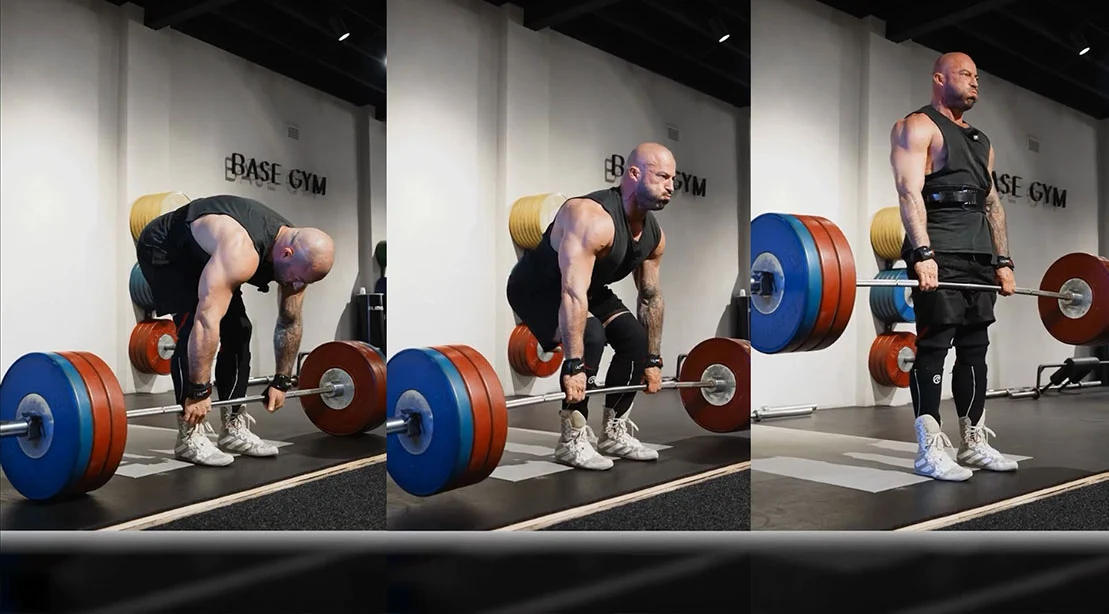
- Deadlifts: 5 sets of 5 reps.
- Bent-Over Barbell Rows: 5 sets of 8–10 reps.
- Weighted Pull-Ups: 5 sets of 8–10 reps.
Wednesday: Leg Focus
- Barbell Back Squats: 5 sets of 8–10 reps.
- Leg Press: 5 sets of 12–15 reps.
- Stiff-Legged Deadlifts: 5 sets of 10–12 reps.
Thursday: Shoulder Focus
- Overhead Barbell Press: 5 sets of 6–10 reps.
- Dumbbell Lateral Raises: 5 sets of 12–15 reps.
- Barbell Shrugs: 5 sets of 10–12 reps.
Friday: Arm Focus
- Barbell Curls: 5 sets of 8–12 reps.
- Skull Crushers: 5 sets of 8–12 reps.
- Hammer Curls: 5 sets of 10–12 reps.
Implications of the "Keep It Simple" Approach
The implication of this methodology is clear: true progress requires an unwavering, multi-year commitment to the basics. The reason so few people reach their genetic potential is not because they lack the "latest" exercise variation; it is because they lack the patience to perform the same fundamental movements for three, five, or ten years.
When you look at someone with a truly developed physique, you are not looking at the result of a 30-day "transformation challenge" or a trendy, viral workout routine. You are looking at the result of years of heavy, disciplined, and often monotonous work.
The industry will continue to push new, complex, and "optimized" methods because complexity sells. It promises a shortcut where none exists. However, for those who choose to ignore the noise and focus on the cold, hard reality of progressive overload, the results are inevitable. The gym is not a place for entertainment; it is a place for labor. If you want to build a body that stands out, you must be willing to do what others are not: keep it simple, keep it heavy, and keep it consistent. Do this every week, for three years, and the results will speak for themselves. The question is not whether the method works; the question is whether you have the discipline to execute it.