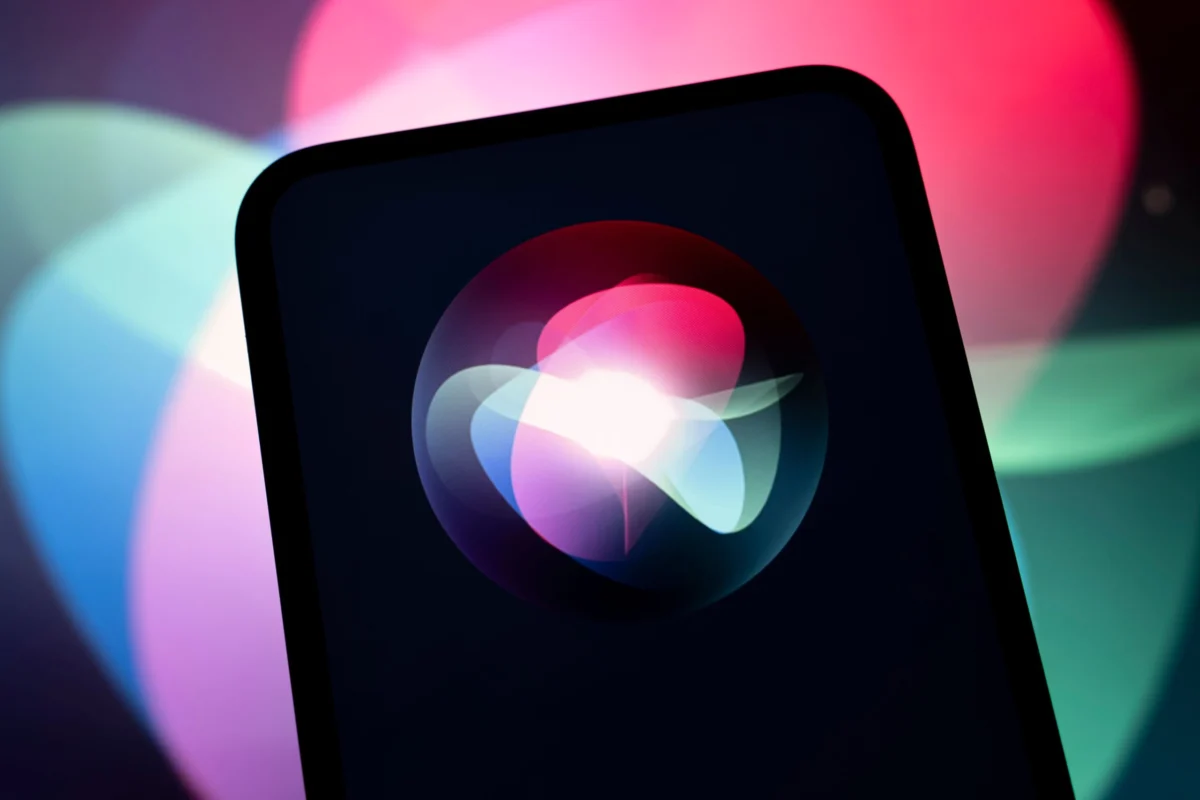
When the developer beta for Apple’s revamped "Siri AI" first hit the handsets of testers, the tech world held its collective breath. Initial impressions were, by all accounts, electric. Using the assistant as a digital tour guide through the winding, fog-drenched streets of San Francisco, the experience felt less like interacting with a legacy voice command tool and more like wielding an "everything tool" capable of navigating the complexities of modern digital life. It was sleek, it was intuitive, and it was undeniably Apple.
Yet, as the novelty of the initial rollout has given way to the mundane realities of daily usage, a complex narrative has emerged. The journey of Siri AI—from a highly anticipated revolution to a tool that often sits idle in the background—reveals a profound tension between technical capability, consumer habit, and the deeply ingrained culture of the smartphone era.
The Chronology of a Digital Romance
The trajectory of the Siri AI beta, integrated into the iOS 27 ecosystem, can be mapped across a summer of experimentation. In the early weeks, the integration was seamless. By indexing the contents of the device, Apple enabled a level of "personal context" that felt genuinely transformative. Users could query the assistant for an obscure photograph from three years ago or a specific text message buried in a labyrinthine chat history, and the system would retrieve it with surgical precision.
However, as the calendar moved from the excitement of the early beta toward the autumn release, a distinct pattern emerged: user engagement began to taper off. This was not a reflection of failure on Apple’s part—the tool is, by every objective measure, a massive step change from its predecessor. Rather, it highlights the "friction of habit." Despite the newfound intelligence of Siri, users found themselves drifting back to established, tactile workflows.
The phenomenon is reminiscent of the "AI honeymoon phase." When a new model is introduced, users spend weeks stress-testing its capabilities. Once the novelty wears off, the brain reverts to the paths of least resistance. For many, that means manual doomscrolling on Instagram, curated searches on Yelp, or relying on external chatbots like Anthropic’s Claude, which many power users had already integrated into their daily workflows long before Apple’s AI update arrived.
Supporting Data: The Case for Utility vs. Habit
While individual anecdotes of "ghosting" the assistant are common, industry analysts caution against reading too much into the decline of early-adopter enthusiasm. The success of an Apple product is rarely determined by the "power user" segment; it is determined by the vast, quiet majority of the installed base.
Dipanjan Chatterjee, vice president and principal analyst at Forrester, frames this as a matter of default expectations. "Will Siri bear the weight of criticism for not being as good as some of its peers? Sure," Chatterjee notes. "Will it make a difference to the vast installed base of iPhone users and cause them to look elsewhere? Not a chance."
For the average consumer, Apple’s software is the environment they live in. If Siri is the search bar for the operating system, it will be used not because it is the most cutting-edge AI on the planet, but because it is the most convenient one.
Furthermore, the data suggests that for those who do stick with it, the utility is undeniable. Avi Greengart, founder and lead analyst at Techsponential, reports a significant shift in his own workflow. "In the past, I was unwilling to trust that Siri could do anything useful," Greengart admits. "But with the latest beta software, I’m finding myself not only using it more, but for more things: Siri is now able to find information buried on my phone faster and more efficiently than any other method, its world knowledge is vastly better than before, and even dictation works better."
Official Responses and the Privacy Premium
Central to Apple’s strategy is the "Privacy Premium." While other tech giants have faced intense public scrutiny over how their large language models are trained and where user data is stored, Apple has leaned heavily into its brand identity as the guardian of user privacy.
Ramon Llamas, a research director at the International Data Corporation (IDC), views this as Apple’s ultimate ace in the hole. Users who have historically avoided AI tools due to legitimate concerns regarding data harvesting are finding a sense of security within the Apple ecosystem. "Users deep in the Apple ecosystem, who previously had qualms about the safety of other AI tools, may be open to trying the new Siri," Llamas explains.
This creates a unique market dynamic: Siri AI does not necessarily need to be the "smartest" AI in the room; it only needs to be the most trusted. In an era of increasing skepticism toward generative AI, that trust is a commodity that no amount of raw processing power can replicate.
Implications: The Cultural Backlash and the Future of Interaction
Despite the technical advancements, the broader landscape is shifting. A cultural "AI backlash" is currently in full swing. A significant segment of the consumer base is increasingly wary of generative AI, whether due to ethical concerns regarding the training data used to build these models or a broader, existential distrust of algorithmic mediation in daily life.
For these users, the label "Siri AI" is a deterrent rather than a selling point. These holdouts are unlikely to be swayed by feature improvements or better dictation accuracy. They are choosing to opt out of the "AI-first" paradigm entirely, opting for manual control as a form of digital resistance.
The implication for Apple is clear: the company is navigating a bifurcated market. On one side, there is a demographic eager for the intelligence and convenience of an AI-integrated assistant. On the other, there is a growing movement that views the integration of generative AI as a "feature" they would prefer to disable.
The Verdict: It’s Not You, It’s the Ecosystem
Ultimately, the story of Siri AI in its current iteration is a lesson in the limits of technology. Even the most capable AI cannot easily overcome the inertia of long-standing human habits. The fact that an assistant can perform a task faster does not always mean the user wants to delegate that task.
For the developer or the early adopter who "loves and leaves" the new Siri, it is not a condemnation of the engineering. It is an acknowledgment that the smartphone has become a deeply personal, habitual device. We are creatures of muscle memory—we swipe, we tap, and we scroll because that is how we have learned to exist in the digital world.
Apple’s challenge in the coming months will not be making Siri smarter—they have already achieved that. The challenge will be integrating that intelligence into the human experience so thoroughly that it stops feeling like a "chatbot" and starts feeling like an extension of the self.
Until that threshold is crossed, many users will continue their summer flings with Siri AI, only to return to their old, manual habits when the autumn leaves fall. It is a testament to the fact that while technology moves at the speed of silicon, human behavior moves at the speed of life. The Siri AI is a profound piece of engineering, but it is still waiting for the rest of us to decide how much of our digital autonomy we are willing to hand over to the machine.