In the world of modern backpacking, the mantra "light is right" has long dominated the conversation. Ultralight enthusiasts relentlessly trim ounces from their kits, often stripping away every feature deemed non-essential. However, as outdoor enthusiasts push further into rugged terrain and unpredictable shoulder seasons, a growing body of evidence suggests that the obsession with absolute minimum weight can come at a steep cost.
This article explores the critical trade-offs between ultralight rainwear and more robust, feature-rich shells. While shaving weight is a valid goal, we argue that for sustained exposure to the "cold-wet-wind trifecta," investing in a few extra ounces of gear provides a necessary buffer for thermoregulation, durability, and survival.
The Core Conflict: Weight vs. Versatility
The fundamental dilemma in outdoor gear design is the tension between weight, durability, and breathability. Ultralight raingear, often constructed from gossamer-thin membranes and minimalist fabrics, excels in mild conditions where packability is paramount. Yet, when the mercury drops and the skies open up, these systems often fail to keep pace with the wearer’s physiological needs.
"Ultralight" is frequently synonymous with "simplified." By removing features like pit zips, adjustable hoods, and reinforced cuffs, manufacturers can achieve impressive weight specs. However, these features are not mere luxuries; they are essential mechanical tools for moisture management. When a hiker is exerting themselves on a steep ascent, the body produces significant heat and moisture. If a shell lacks the ventilation to dump that heat, the interior becomes a sauna, leading to rapid saturation of base layers. Once the hiker stops moving, that moisture turns into a chilling, dangerous liability.
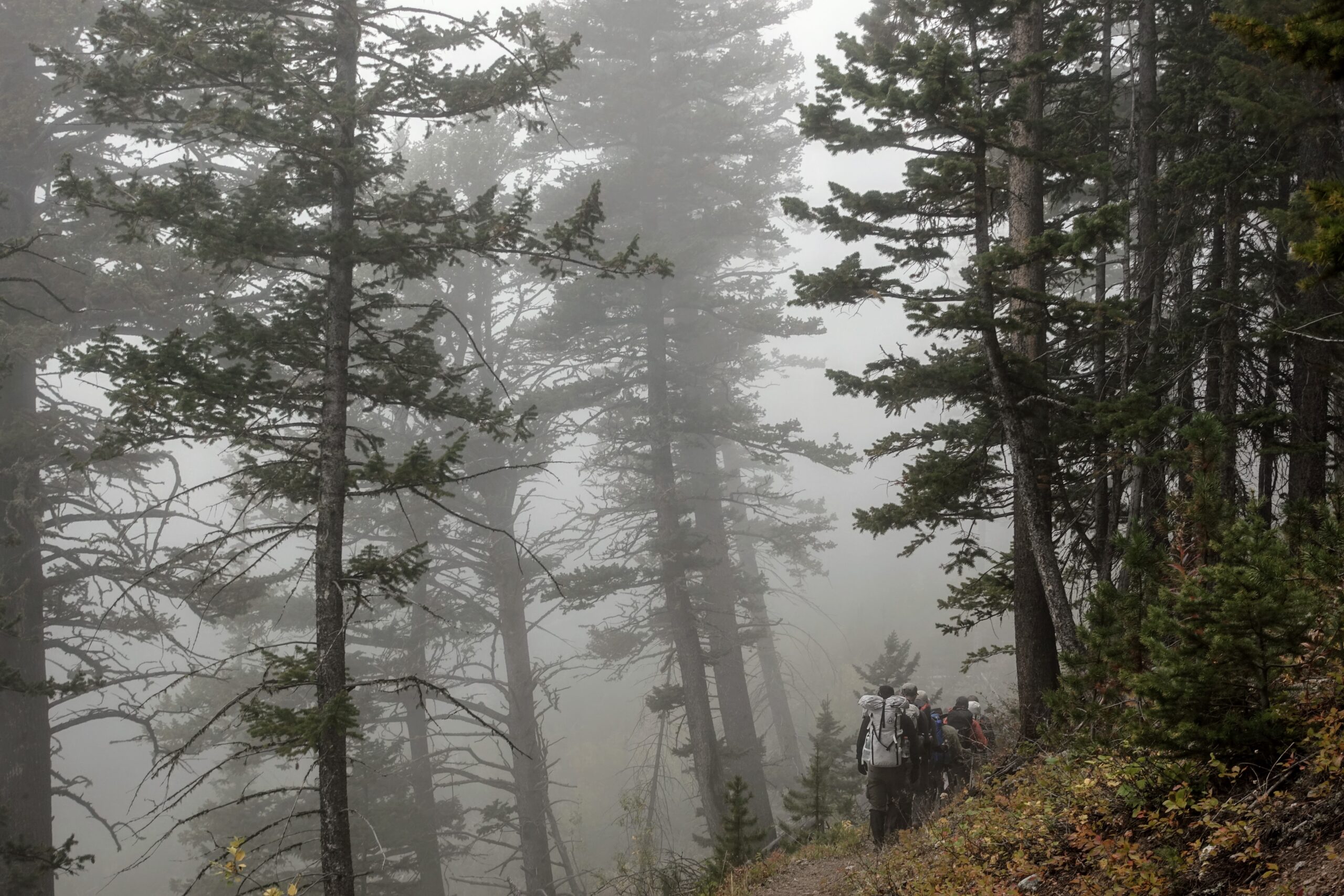
Chronology of Gear Evolution and Market Shifts
For decades, the standard for alpine travel was the three-layer system: a wicking base layer, an insulating mid-layer, and a protective waterproof-breathable shell.
- The Early Era: Traditional shells were heavy, often exceeding 20 ounces, constructed from thick, multi-denier fabrics. They were bulletproof but cumbersome.
- The Ultralight Revolution: Starting in the early 2000s, the focus shifted to "fast and light." Fabric technologies evolved, allowing for 7D and 10D nylons that were nearly weightless. This era brought us the "trail running smock"—a jacket that could fit in a shirt pocket but offered minimal protection against sustained abuse or driving rain.
- The Modern Synthesis (2026 and Beyond): As of May 2026, the industry is seeing a correction. With advancements in DWR (Durable Water Repellent) finishes and more durable ePE (expanded Polyethylene) membranes, we are seeing a return to "moderate-weight" gear. These modern shells, weighing in the 10–14 ounce range, represent a sweet spot: they are significantly lighter than the gear of the 90s, but far more functional than the minimalist gear of the 2010s.
Supporting Data: The Science of Moisture Management
To understand why a 12-ounce jacket may be superior to a 3-ounce one, we must look at the physics of moisture transfer. Clothing systems must address three primary functions: moisture wicking, thermal retention, and environmental protection.
The Problem with Evaporative Cooling
When clothing absorbs moisture, it loses its ability to insulate. Furthermore, if that moisture is trapped against the skin, the body loses heat through evaporation—a process that can lead to hypothermia in as little as 30 to 60 minutes in cold, wet conditions.
Research suggests that hydrophobic materials (such as high-quality polyester or treated nylon) are critical. However, no membrane can "breathe" fast enough to keep up with high-output activity in the rain. This is where the mechanical ventilation—pit zips, oversized pockets, and adjustable cuffs—becomes the primary mechanism for moisture regulation. A shell that allows a hiker to vent heat before they begin to sweat is infinitely more effective than a "breathable" membrane that is overwhelmed by high humidity levels.
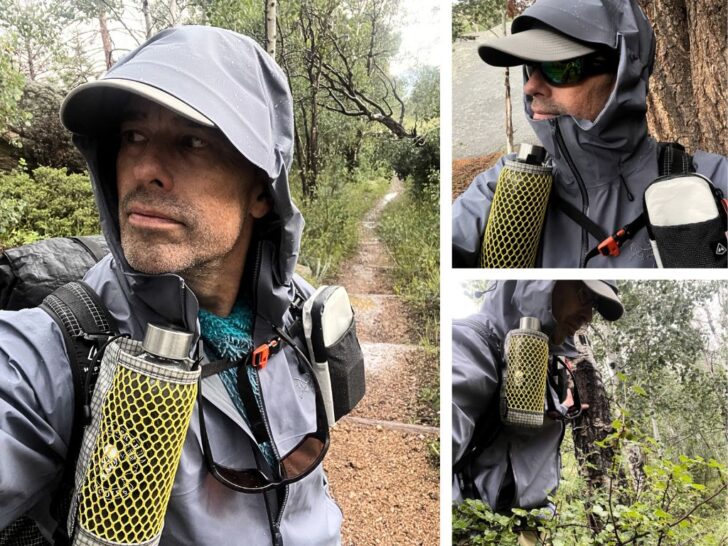
The Wind-Cold-Rain Trifecta
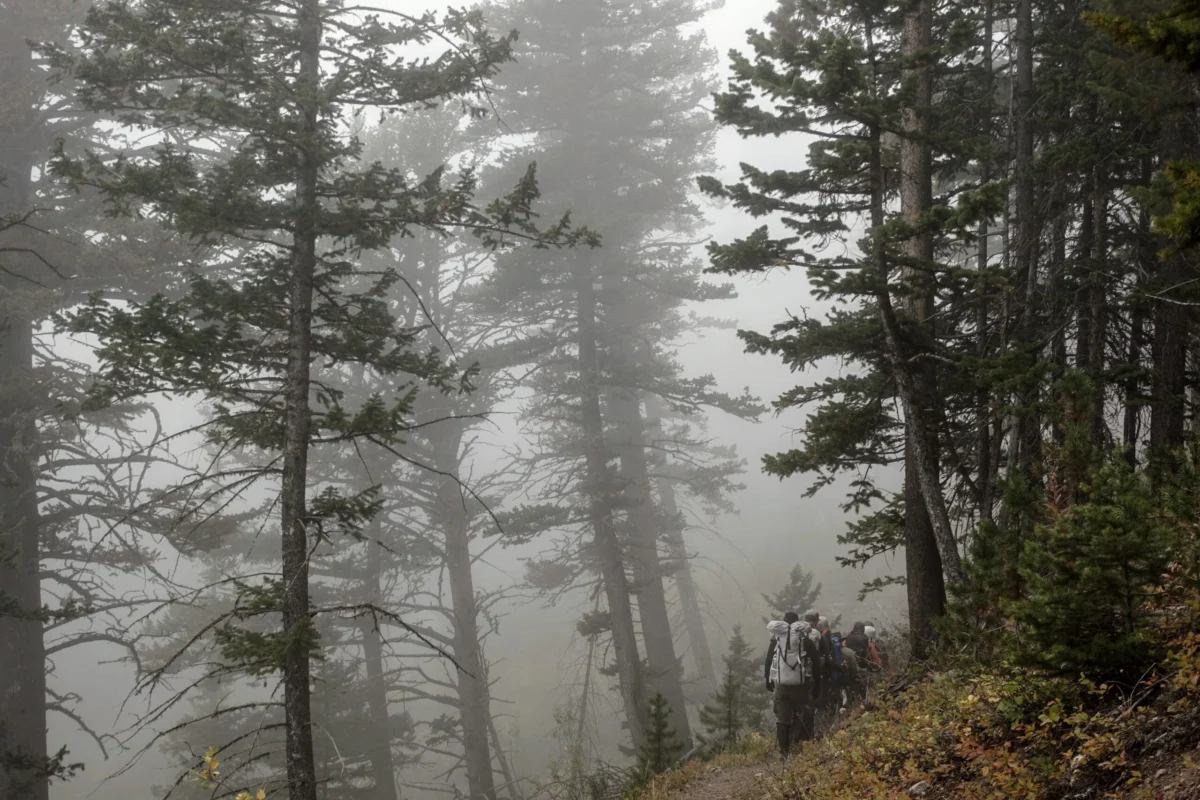
The "trifecta" represents the most dangerous environmental scenario for a hiker. When temperatures hover in the 30s–40s°F (1–5°C), paired with moderate wind and persistent rain, the risk of cold-weather injury spikes. In these conditions, a 7D fabric often "wets out" (the outer layer becomes saturated), which kills the breathability of the membrane and causes the jacket to cling to the body, accelerating conductive heat loss. A 40D fabric, by contrast, maintains its structure, keeps the wind at bay, and holds its DWR treatment significantly longer.
Implications for the Modern Hiker
The shift toward more robust gear is not a rejection of ultralight principles; it is an evolution toward "smart" backpacking.
Rethinking the "Pack Weight" Metric
Hikers often prioritize the weight of their pack at the trailhead. However, if a hiker carries a 3-ounce shell that fails, they may end up having to carry an extra 10 ounces of backup clothing to compensate for the lack of performance. By carrying a 12-ounce, high-performance jacket, the hiker actually reduces the total volume and complexity of their system.
Durability as a Safety Feature
Durability is often framed as a way to save money, but in the backcountry, it is a safety feature. A jacket that tears on a branch during a bushwhack through an alder thicket in the Montana Rockies is no longer a shell; it is a liability. Thicker, higher-denier fabrics are less prone to mechanical failure, ensuring that the hiker remains protected even when the trail disappears.

Professional Guidance on Equipment Selection
Industry experts and guides are increasingly recommending a "use-case" approach to gear.
- For Summer Desert/Dry Alpine: The minimalist, sub-5-ounce shell is perfectly acceptable.
- For Shoulder Season/High Alpine/Pacific Northwest: The "premium" shell—defined as one with a 40D face fabric, mechanical vents, and a technical hood—is the standard.
Official Industry Perspectives
Leading manufacturers have acknowledged this shift in consumer demand. Arc’teryx, for instance, has continued to iterate on the Beta series, specifically focusing on ePE membranes that remove the need for potentially toxic PFAS chemicals while maintaining high levels of durability.
Industry analysts note that while the "ultralight" market saw a period of extreme reductionism, the post-2025 consumer is more interested in longevity. "Sustainability is now tied to durability," notes one industry consultant. "A jacket that lasts for ten years of heavy abuse is a more sustainable choice than one that needs replacing every season due to fabric fatigue."
Conclusion: Investing in Reliability
When planning for your next expedition, consider the environment as the final arbiter of your gear list. If your itinerary involves exposed ridges, high-altitude passes, or extended periods in the shoulder season, the "lightest" option is rarely the "best" option.
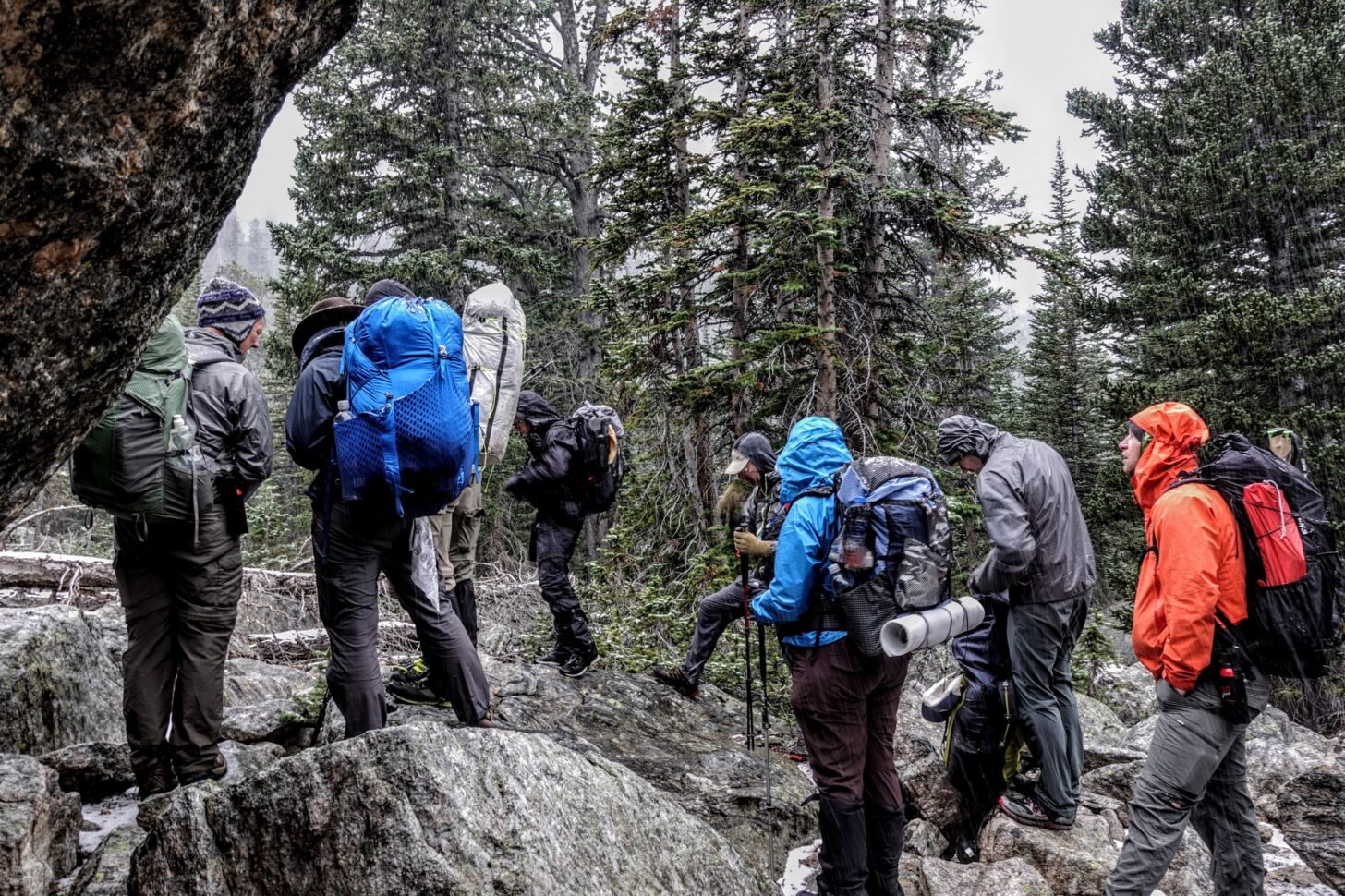
The few extra ounces found in a well-ventilated, 40D nylon shell are not a penalty—they are an investment in your ability to regulate your temperature and maintain your composure when the weather turns. By prioritizing functional design over raw weight statistics, you gain a system that is not only more durable but significantly more versatile. After all, the ultimate goal of backpacking is not to carry the lightest pack, but to remain safe, comfortable, and capable in the wild.
Choose your gear with an eye toward the worst-case scenario, and you will find that your adventures become far more enjoyable, regardless of what the sky decides to do.