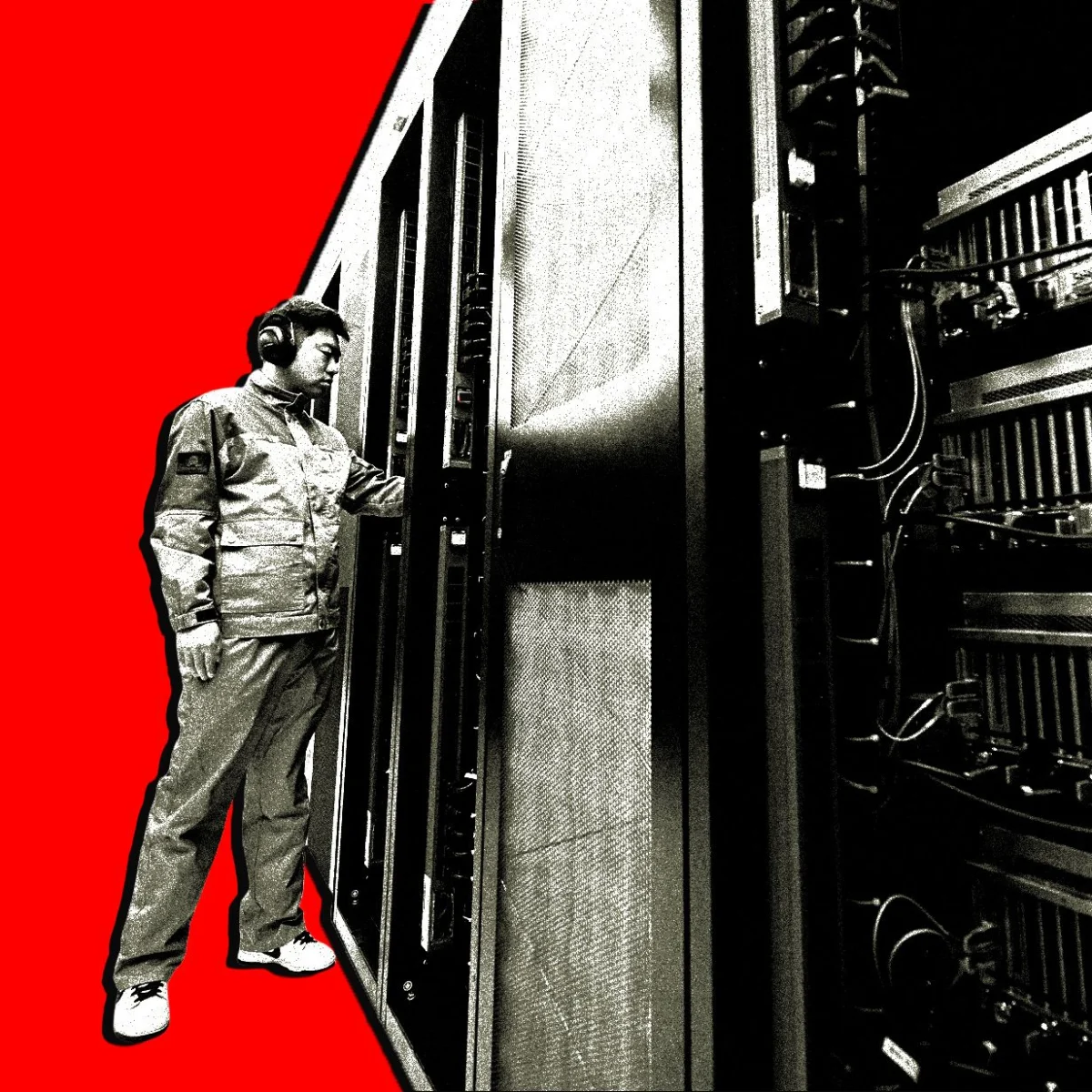
Just two hours west of Beijing by high-speed rail, the landscape shifts dramatically from the urban density of the capital to the sweeping, arid grasslands of Inner Mongolia. Traditionally known as China’s heartland for sheep farming and coal extraction, this high-altitude plateau is currently undergoing a radical transformation. It is emerging as the epicenter of Asia’s most aggressive artificial intelligence infrastructure build-out, turning the quiet city of Ulanqab into a critical node in the global compute race.
The Rapid Rise of a Compute Supercluster
In Ulanqab, a city of approximately 1.5 million residents, the transformation has been nothing short of dizzying. Since 2016, nearly 100 data centers have either commenced operations or broken ground. According to recent data from Goldman Sachs, the sheer scale of investment is staggering: companies have pledged projects with a combined capacity of 12.5 gigawatts. To put that figure in perspective, the much-touted “Stargate” project backed by OpenAI is projected to reach 10 gigawatts upon completion.
More than 70 percent of these commitments in Ulanqab were announced within the last year alone, signaling a frantic rush by Chinese tech giants to secure the physical backbone required for the next generation of Large Language Models (LLMs).
A Chronology of Infrastructure Expansion
The trajectory of Ulanqab’s development reflects the changing priorities of the Chinese tech sector:
- 2016–2019 (The Early Adopters): Huawei became the first major player to establish a footprint in Ulanqab in 2016, followed by Apple in 2019. During this phase, these facilities were largely used for cold storage and archival purposes, as their distance from the eastern coast made real-time processing difficult.
- 2021 (The Policy Pivot): The Chinese government officially designated the region as a key pillar of the “Eastern Data, Western Compute” initiative. This state-led project was designed to alleviate the pressure on overcrowded data centers in Beijing, Shanghai, and Shenzhen by migrating heavy processing power to the energy-rich western hinterlands.
- 2022–2024 (The AI Catalyst): The emergence of generative AI shifted the narrative. Developers realized that model training—which requires massive, sustained computational power but is less sensitive to millisecond-level latency—was the perfect application for these remote, low-cost facilities.
- 2025–Present (The Infrastructure Arms Race): We are currently witnessing a shift toward vertical integration. Unlike the previous decade, where Chinese AI firms rented space from cloud providers, companies like DeepSeek, ByteDance, Alibaba, and Xiaohongshu are now investing billions to build their own bespoke, massive-scale data centers.
Supporting Data: Why Ulanqab?
The geographic and economic advantages of Ulanqab are multifaceted, creating a "perfect storm" for data center developers:
1. Thermodynamic Efficiency
Ulanqab’s high elevation and harsh, long winters act as a natural cooling system. Data centers consume vast amounts of electricity simply to keep server racks from overheating; by locating in a naturally frigid environment, companies can drastically reduce their PUE (Power Usage Effectiveness) ratings, cutting operational costs significantly.
2. The Proximity Factor
While "Western Compute" hubs are often thousands of miles from the coast, Ulanqab is uniquely positioned. It is close enough to Beijing to minimize latency for real-time inference tasks. Since 2017, the installation of high-capacity, dedicated fiber-optic cables has reduced latency to under five milliseconds—a threshold that makes even high-speed, real-time AI exchanges viable.
3. Energy Economics
Electricity in Inner Mongolia is among the cheapest in China. This is fueled by a hybrid energy economy. The region is a powerhouse for wind and solar production, yet it maintains a massive, legacy coal-mining infrastructure. This dual-source power grid provides the stability required for 24/7 server uptime while keeping operational overheads lower than in the coastal tech hubs.
The Shift in Corporate Strategy
A defining feature of this current wave is the move toward proprietary infrastructure. For years, Chinese AI startups were criticized for lagging behind American peers in terms of physical capital investment. While their models were competitive in quality, they lacked the raw, in-house hardware control that companies like Microsoft or Google enjoy.
The entry of DeepSeek into the Ulanqab construction space, alongside massive projects by Alibaba and ByteDance, signals that the "rental" phase of Chinese AI development is ending. These companies are betting that control over the supply chain—from the power source to the silicon—is the only way to remain competitive in the face of international trade restrictions and hardware export controls.
The Water Crisis: An Environmental Reckoning
Despite the economic excitement, the rapid industrialization of this arid region has triggered significant alarm. Ulanqab receives only about 14 inches of rainfall annually—a climate profile comparable to Denver.
Water is essential for the cooling systems of high-density AI clusters. Even with the winter advantage, the local government is already failing to meet the water demands of its own residents. Last month, authorities were forced to shut down municipal waterworks for seven hours each night, a clear indicator that the region’s basic utilities are at a breaking point. While officials argue that data centers require less cooling during the colder months, the cumulative impact of dozens of gigawatt-scale facilities poses an existential threat to the region’s long-term sustainability.
Implications: A "Green" Mirage?
The Chinese government frames the Ulanqab boom as a "win-win": it bolsters the national AI strategy while absorbing the country’s excess renewable energy capacity. Companies like Envision, a leading wind turbine manufacturer, are doubling down on this narrative by building data centers connected directly to their own clean energy farms.
However, experts remain skeptical of the "green" label. Andrew Stokols of Singapore Management University notes that approximately 37 percent of Ulanqab’s electricity is still derived from coal. "Inner Mongolia has long been the West Virginia of China," says Damien Ma of Carnegie China. "It is coal country."
While there is a clear, positive correlation between regions with surplus renewable energy and new data center clusters, the reality remains that AI models cannot afford to go offline when the wind stops blowing or the sun sets. As long as batteries and grid-scale storage remain in their current state of development, coal remains the "reliable" backbone of these facilities.
Conclusion: The Road Ahead
The Ulanqab experiment is a microcosm of China’s broader economic strategy: ambitious, state-supported, and driven by a relentless desire for technological parity with the United States. While the region provides the space, power, and climate necessary for the next generation of AI, it also highlights the precariousness of rapid growth.
If the region can successfully transition its energy mix away from its coal-heavy past, Ulanqab may indeed become a global model for sustainable, remote-compute infrastructure. If it cannot solve its water scarcity issues or divest from fossil fuels, the Silicon Steppe may find itself as a cautionary tale of environmental overreach in the pursuit of the digital future. For now, the cranes remain active, and the servers continue to hum, as China’s tech giants race toward an uncertain but undoubtedly powerful horizon.