Introduction
During periods of intense physical exertion, the human body functions as a biological radiator, producing sweat at a rate that frequently outpaces the speed of evaporation. When this happens, liquid sweat accumulates on the skin, necessitating a sophisticated clothing system capable of transporting moisture away from the body through successive layers.
While the outdoor industry frequently markets base layers under the banner of "moisture management," the reality of their performance is often far more nuanced. A recent evaluation of three primary base-layer fabrics revealed distinct performance disparities, but it left a critical question unanswered: Which fabrics are truly effective at migrating liquid sweat away from the skin and into the subsequent layer?
To solve this, I developed a specialized liquid transfer test. By tracking water as it navigates a simplified clothing system, the study measures precisely how much moisture remains on the “skin,” how much is trapped within the base layer, and how much successfully crosses into the secondary layer. The findings suggest that when the skin is wet, the journey of that water is dictated by a complex interplay of physics that few hikers—and even fewer manufacturers—fully articulate.
Chronology: The Evolution of the Test
The study began with a narrow focus on three common base-layer textiles. However, as the testing progressed, the scope expanded to include eight distinct fabrics representing a broad spectrum of modern design, from synthetic hydrophobic meshes to traditional hydrophilic knits.
As the data accumulated, consistent patterns began to emerge, revealing that the "wicking" label is often a misnomer. Two garments might both claim superior moisture management, yet behave diametrically opposite once sweat transitions from vapor to liquid. Some garments act as conduits, effectively shunting water outward, while others act as sponges, becoming saturated and compromising the wearer’s thermal regulation. This investigation serves to codify these behaviors, providing a clearer, data-driven picture of how base-layer fabrics perform under the duress of high-exertion activities.
Supporting Data: The Physics of Fluid Transfer
The results of this study are rooted in the established physical principles of capillary flow, dating back to the work of Young and Laplace (1805) and the foundational dynamics formalized by Washburn (1921).
Hydrophobic Fabrics: The Myth of "Dry"
Hydrophobic base layers are frequently lauded for their ability to "stay dry." Technically, this is accurate: the fibers themselves do not possess the hydrogen bonding sites necessary to absorb water. However, the fabric structure is primarily empty space. During high-intensity activity, this interstitial space can become a reservoir for liquid sweat.
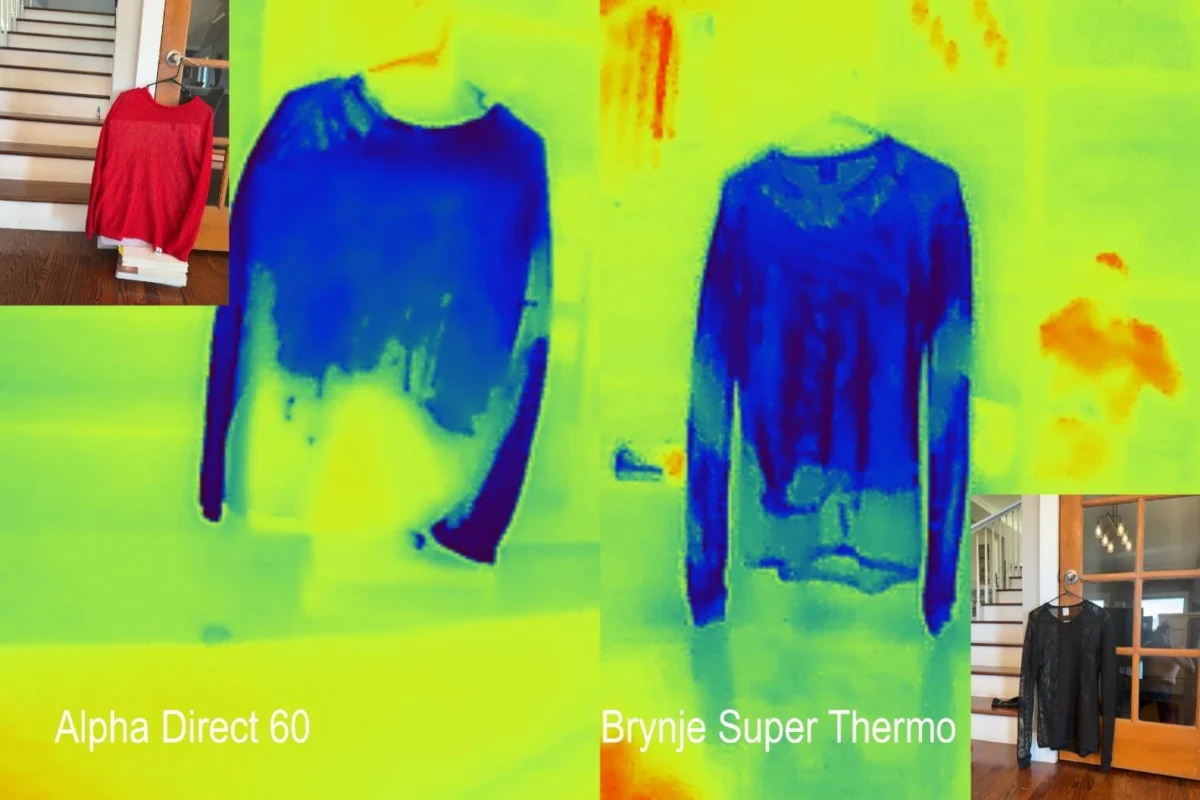
Figure 2 of the study illustrates this phenomenon through infrared thermal imaging. In cold-weather testing, garments like the Brynje mesh shirt retained 87 grams of liquid—approximately 65% of its dry weight—despite being constructed from hydrophobic materials.
The mechanism here is defined by breakthrough pressure. Because hydrophobic fibers do not wick moisture, they act as a barrier until an external force—such as compression from a backpack strap, the tension of a tight-fitting garment, or the simple weight of accumulated sweat—forces liquid into the pore structure. If the rate of incoming sweat exceeds the rate of transfer, the garment saturates. This leads to the all-too-familiar feeling of a heavy, clammy base layer, even when the synthetic fibers are theoretically water-repellent.
Hydrophilic Fabrics: The Trap of Wicking
Conversely, hydrophilic fabrics excel at the initial uptake of moisture. They pull sweat from the skin by capillary action, spreading it across the fiber surface. However, this strength is also a fundamental limitation. Because the same capillary forces that draw water in also act as a tether, hydrophilic fabrics are inherently inclined to hold onto that moisture.
Transferring liquid to an outer layer becomes a competition between the base layer’s internal retention and the outer layer’s ability to pull moisture away. As the receiving layer becomes saturated, its capacity to draw water decreases, causing the moisture transfer to stall. The study observed that as external conditions changed, hydrophilic fabrics often struggled to offload water compared to their hydrophobic counterparts, which, once the breakthrough pressure threshold was met, transferred moisture more consistently.
Official Principles and Methodology
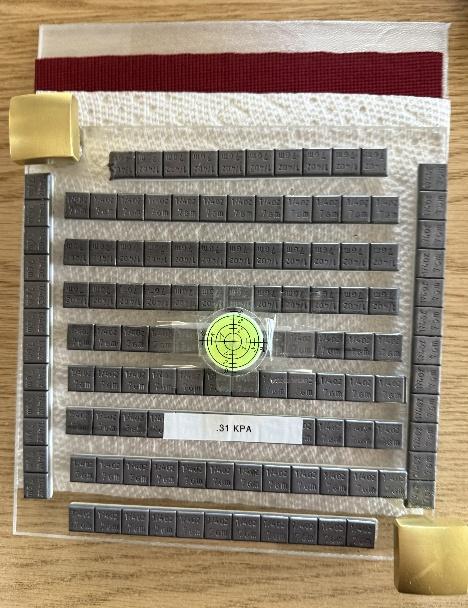
To ensure transparency, the study utilized a custom-built metal plate device designed to simulate the skin-to-layer interface. The variables measured include:
- Skin Retention: The volume of liquid remaining at the surface.
- Base Layer Uptake: The amount of moisture held within the fabric matrix.
- Transfer Efficiency: The volume of liquid successfully moved to the secondary layer.
By analyzing pore size and contact angle—the latter measuring the resistance of a fiber to water—the study provides a predictive model for performance. A contact angle below 90° signifies hydrophilic behavior, while angles above 90° indicate hydrophobic performance. The correlation between these measurements and actual liquid transfer rates was consistent across all eight samples, validating the use of these metrics as industry benchmarks.
Implications for the Modern Hiker
The implications of this research are significant for both gear manufacturers and outdoor enthusiasts.
For the Consumer
- Don’t rely solely on marketing claims: A "moisture-wicking" label does not guarantee comfort in all conditions.
- Layering matters: If your base layer is hydrophilic, your mid-layer must be aggressively absorbent to pull the moisture away, otherwise, the system will reach a "saturation stalemate."
- The "Clammy" Factor: If you frequently feel clammy in hydrophobic layers, it is likely due to the fabric’s inability to reach the necessary breakthrough pressure to move sweat outward, causing it to pool against your skin.
For Manufacturers
The industry must move beyond generic wicking terminology. Future garment design should focus on the pore geometry of the fabric. If a hydrophobic layer is designed with overly large pores, it may fail to move moisture unless high pressure is applied. Conversely, if a hydrophilic layer is too dense, it will hold onto moisture indefinitely.
The "tug-of-water" is a dynamic process. Designers should prioritize materials that facilitate a continuous pressure gradient from the skin to the outer environment. Fabrics that combine a hydrophobic skin-contact face with a hydrophilic outer structure (a "push-pull" system) are theoretically superior, yet they require precise engineering to ensure the transfer points between the two don’t become sites of accumulation.
Conclusion: Setting a New Standard
This research raises the bar on how we define and test base-layer functionality. By applying the principles of Laplace and Washburn to modern textile engineering, we gain a scientific framework that moves beyond anecdotal experience.
The takeaway for the serious user is clear: moisture management is not a static property of a fabric; it is a dynamic flow. Understanding that liquid water is moved by pressure, capillary forces, and surface chemistry allows for more informed layering choices. Whether you are climbing in the alpine or trekking in humid forests, the ability to manage liquid sweat is the difference between a comfortable outing and a dangerous, heat-sapping experience.
Future testing will continue to expand on these findings, further exploring how different fabric weaves—beyond basic chemistry—influence the rate of moisture migration. For now, the "tug-of-water" remains a vital, often invisible, battle occurring in the micro-environment between your skin and the world.