In the vast, wind-swept expanse of the Bolivian Altiplano, where the air is thin and the horizon stretches into infinity, lies a landscape defined by extreme geography and quiet majesty. While many trekkers flock to the region for the famous 600 km Altiplano Traverse—a grueling journey across salt flats and volcanic peaks—a hidden gem remains for those seeking a shorter, yet no less profound, experience: the Five Lakes Loop.

This border-straddling overnighter, which weaves through the high-altitude terrain near the Chilean frontier, offers a microcosm of the Andes’ raw beauty. It is a land of turquoise waters, dormant volcanoes, and the silent, resilient flora that survives where few other living things can.

Main Facts: The Geography of the Extreme
The Five Lakes Loop is a 47 km (29-mile) trek that demands respect. Starting and finishing in the remote village of Sajama, Bolivia—a settlement situated at a staggering 4,230 meters (13,879 ft) above sea level—the route is a testament to the endurance required to traverse the Andean plateau.

At a Glance
- Distance: 47 km (29 mi)
- Duration: 10 hours to two days
- Difficulty: Moderate (40% off-trail; simple navigation)
- Season: June to September
- Elevation Range: 4,230 m (13,879 ft) to 5,130 m (16,831 ft)
- Total Gain: 946 m (3,104 ft)
The "Five Lakes" refers to a series of alpine water bodies, two of which spill over the international boundary into Chile. The route is characterized by its treeless, wide-open vistas, which—while intimidating to the uninitiated—actually simplify navigation for those familiar with map-and-compass techniques.

A Chronological Descent into the High Desert
Day 1: Entering the Kingdom of Ice
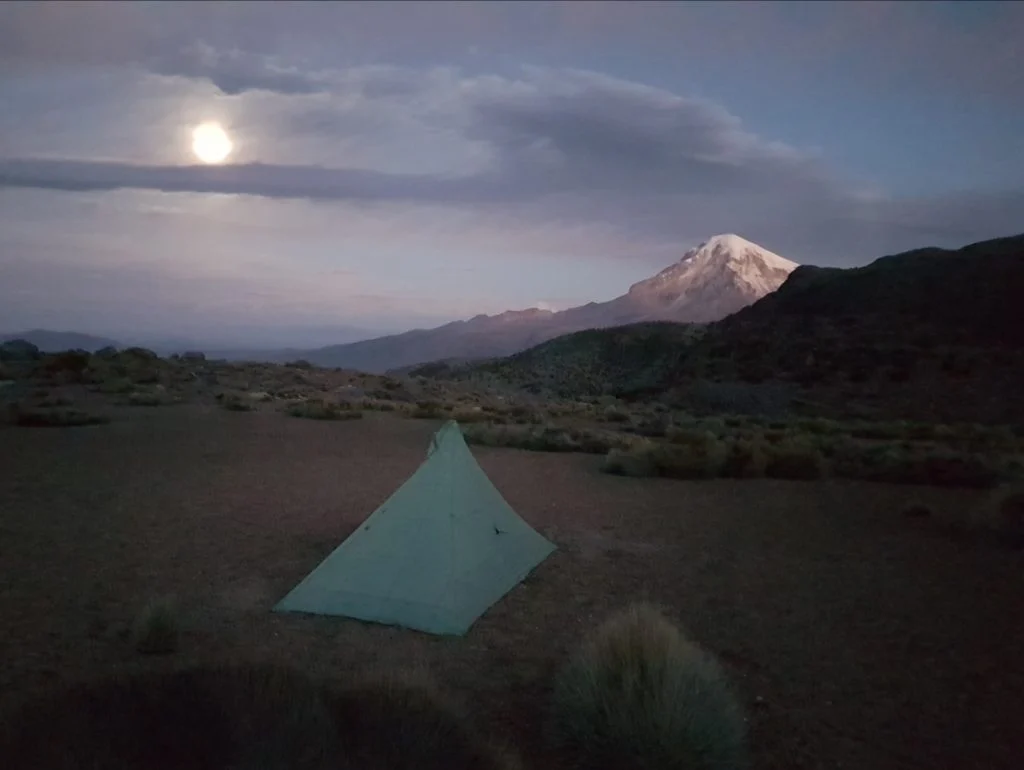
The journey begins in the village of Sajama, one of the highest permanently inhabited places on Earth. The air here is thin, and the sunlight is piercing. As you depart the village, the monolithic presence of Nevado Sajama, a snow-capped giant, dominates the skyline.

The initial leg of the trek is an ascent into the heart of the Andes. Moving through the quebradas (ravines), hikers are treated to the sight of llamas grazing on hardy ichu grass, their silhouettes set against the backdrop of the twin volcanoes: Pomerape (6,282 m) and Parinacota (6,348 m). By mid-day, the trail leads toward the first of the water features. The approach to Paso Casiri serves as a grueling but rewarding climb, offering panoramic views of the surrounding peaks.

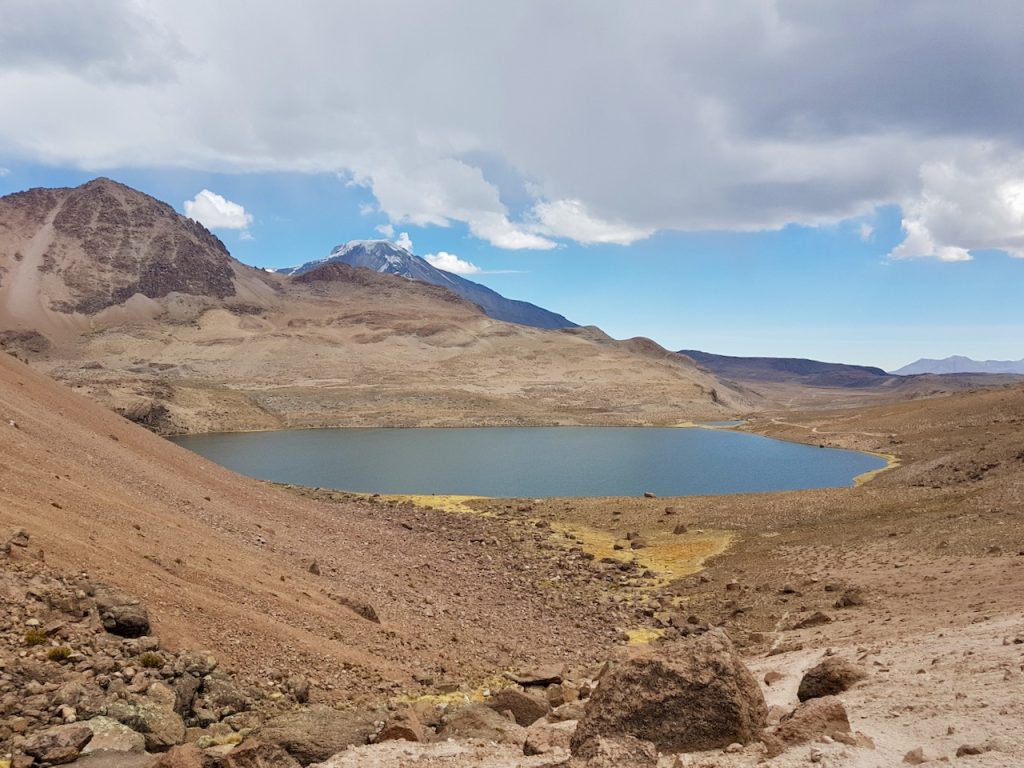
Reaching Laguna Casiri Macho, the true isolation of the region becomes apparent. Here, the silence is punctuated only by the wind. As the afternoon progresses, the route transitions toward Laguna Chiar Khota. It is here that the reality of the Altiplano’s volatile weather becomes a factor. During this particular expedition, a sudden, dark accumulation of clouds prompted the abandonment of a planned summit attempt on Jisk’a Kunturini (5,475 m/17,963 ft). The weather, however, was as fleeting as it was intense, passing as quickly as it had arrived.

The Night at 4,928 Meters
Campsites in the Altiplano are not for the faint of heart. Choosing a spot near a lagoon at an elevation of 4,928 meters (16,168 ft) brings the hiker face-to-face with the true nature of the desert. As night falls, temperatures can plummet to -12°C (10°F). However, the clear, thin atmosphere provides an unparalleled view of the night sky, and as the bone-chilling winds subside, the moonlight reflects off the glacial lakes, creating an ethereal, almost alien landscape.

Day 2: The Return Through History
The second day involves a descent through the Quebrada Condoriri. The trek back toward civilization is characterized by the discovery of unique flora, most notably the Azorella compacta, or "llareta." This ancient, moss-like plant is a master of survival, growing at an incredibly slow rate in the extreme conditions of the Andes, often reaching ages of several centuries.
The final stretch of the loop provides a return to the human element. Re-entering Sajama Village, one is struck by the contrast between the absolute isolation of the high mountain passes and the vibrant, if rugged, life of the locals. The trip concludes with the humble, grounding experience of watching a local soccer match, where the community gathers to enjoy the afternoon in the shadow of the mountains.

Supporting Data: Survival and Logistics
Navigating the Altiplano requires more than just physical fitness; it requires meticulous preparation.

Essential Gear
- Insulation: Given the sub-zero nighttime temperatures, a high-quality down sleeping bag (rated to at least -15°C) is non-negotiable.
- Footwear: Sturdy, waterproof trekking boots are essential for the rocky, off-trail sections.
- Hydration/Nutrition: While water sources are present, they must be filtered or treated. High-calorie, nutrient-dense food is necessary to fuel the body at such high altitudes.
- Altitude Management: Acclimatization is the single most important safety factor. Spending at least 48 to 72 hours at the altitude of Sajama Village before attempting the loop is highly recommended to mitigate the risk of Acute Mountain Sickness (AMS).
Logistics
GPS technology is a reliable companion in this region. Because the landscape is wide and largely featureless, pre-loaded topographical maps are invaluable. Travelers should ensure their electronics are protected from the cold, as battery life drains significantly faster in low-temperature, high-altitude environments.

The Implications of "Off-Trail" Travel
The Five Lakes Loop highlights a growing trend in adventure travel: the move toward self-guided, off-trail exploration in underdeveloped mountain regions. Unlike the highly regulated trails of the Alps or the American West, the Altiplano offers a "wilderness experience" in the truest sense.

However, this freedom comes with significant responsibilities. The ecosystem of the Altiplano is fragile. The slow-growing llareta and the delicate alpine wetlands are highly susceptible to human impact. Travelers are encouraged to practice "Leave No Trace" principles with extreme diligence. The scarcity of resources in these high-altitude deserts means that what you bring in must be brought out, and the sanctity of the landscape must be preserved for future generations.

Conclusion: Why the Altiplano Matters
The Five Lakes Loop is more than just a 47-kilometer hike; it is an exercise in perspective. In a world of constant connectivity, the absolute stillness of the Bolivian Andes provides a rare opportunity to observe the world in its most primal state.

From the shifting colors of the lagoons—which change from deep blues to turquoise depending on the mineral content and sunlight—to the imposing, snow-crowned summits of the volcanoes, the route offers a profound connection to the earth. For the experienced hiker, it serves as an ideal training ground for longer traverses or a perfect standalone adventure for those who find peace in the highest, loneliest corners of the globe. As the sun sets behind Nevado Sajama, painting the sky in hues of violet and gold, one understands that the true reward of the Five Lakes is not the destination, but the quiet, enduring strength required to reach it.