"A good lie can walk from Baghdad to Constantinople while the truth is still looking for its sandals." — Arab Proverb
In the world of outdoor recreation, misinformation travels with the speed of a forest fire. Myths, much like urban legends, possess a strange, durable staying power. They are passed down from seasoned backpackers to eager novices, ingrained in campfire lore, and cemented by decades of repetition. Some are merely harmless quirks, but others—such as the belief that climbing a tree will save you from a bear—are dangerously misguided.
As the outdoor community continues to grow, the need for evidence-based practice has never been more critical. This article dissects ten of the most prevalent wilderness myths, separating outdated folklore from the reality of modern backcountry safety.

1. The Naked Sleeping Fallacy
One of the most persistent urban legends in backpacking is the notion that sleeping naked in a sleeping bag is warmer than wearing layers. The physics of heat retention, however, tell a different story.
The Science: Insulation works by trapping body heat. Your sleeping bag is essentially a shell; when you wear thermal base layers, you are adding an additional barrier that prevents your body heat from dissipating into the dead air space of the bag. If you are cold, the solution is to add, not subtract. A beanie, an extra pair of dry socks, and a thermal top will significantly increase your core temperature.
The Exception: Sleeping naked is only warmer if your clothing is damp or soaked. In that specific scenario, the moisture in the fabric will conduct heat away from your body, causing rapid cooling. Otherwise, keep your layers on.

2. The Myth of the "Essential" Hiking Boot
For decades, the industry standard for hiking has been the heavy, high-cut leather boot, marketed under the guise of "ankle protection."
The Reality: There is remarkably little scientific evidence to support the idea that high-cut boots prevent ankle sprains. In fact, many experienced long-distance hikers have transitioned to trail runners and low-cut shoes.
- The Implications: Lighter footwear reduces leg fatigue, which is the primary cause of trips and falls. A hiker who is less exhausted is less likely to stumble.
- Contextual Use: While heavy, waterproof boots serve a purpose in deep winter or high-altitude mountaineering, they are often overkill for three-season hiking. Selecting footwear should be a matter of terrain, not a universal mandate for rigid leather.
3. The Illusion of Waterproof Breathability
The term "waterproof and breathable" is one of the most misunderstood concepts in outdoor gear.
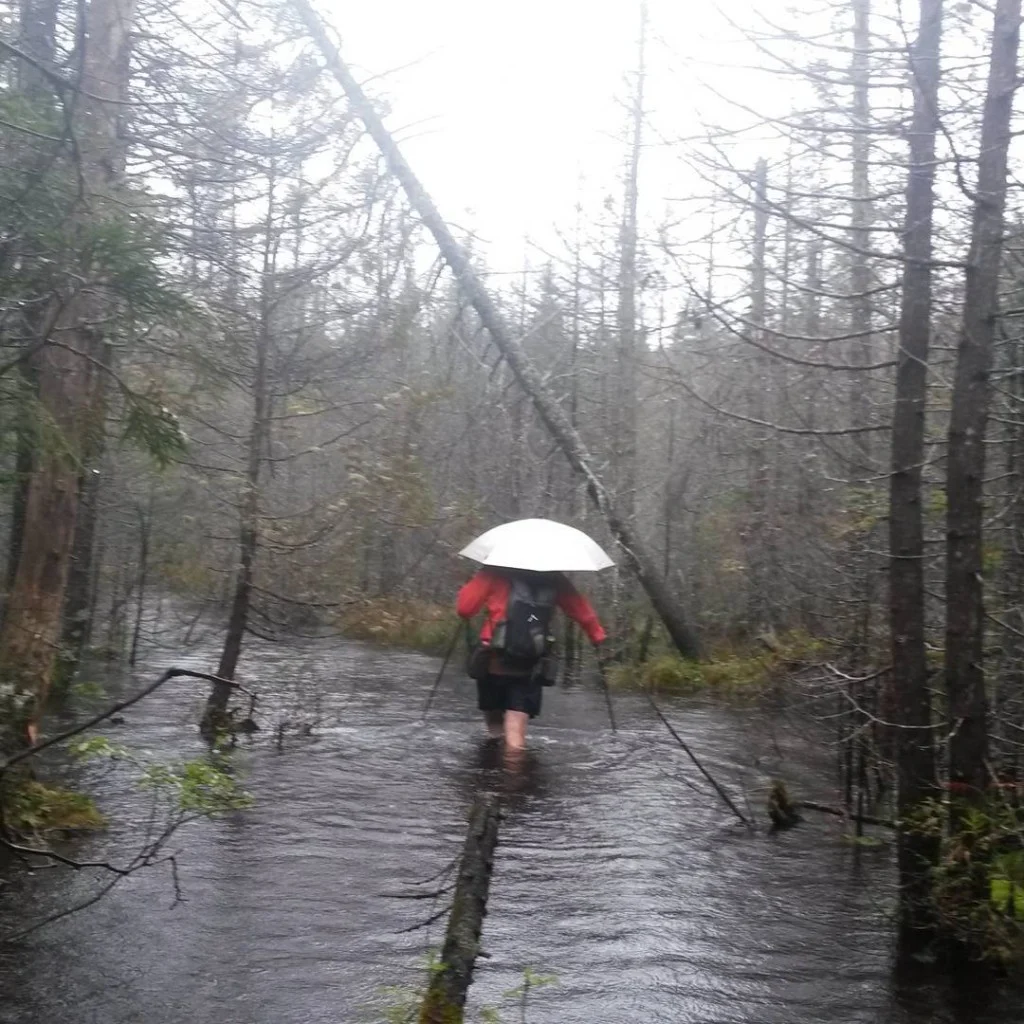
The Reality: There is no material currently in existence that can keep a human perfectly dry during hours of heavy, driving rain while also allowing sweat to escape. Eventually, the moisture will win—either by seeping in from the exterior or by condensing on the interior due to your own exertion.
- Expert Consensus: The goal of high-end rain gear is not to keep you "dry" in a vacuum; it is to keep you warm and functional. Once the temperature drops, moisture management becomes a matter of survival, and users should manage expectations accordingly.
4. The Biodegradable Soap Misconception
A common error among eco-conscious hikers is the belief that biodegradable soap can be used directly in streams or lakes.
The Facts: Biodegradable soap requires the presence of soil bacteria to break down the chemical compounds. When soap is introduced directly into a water source, it remains concentrated, potentially harming aquatic life and altering nitrogen levels.

- Proper Protocol: To practice "Leave No Trace" ethics, all dishwashing or bathing should occur at least 200 feet (61 meters) from any water source. Waste water should be dispersed over a wide area, allowing the earth to filter the soap before it reaches the water table.
5. The "Never Hike Alone" Directive
Park rangers and concerned family members often preach the mantra, "Never hike alone." While this is sound advice for beginners or those tackling high-risk, technical terrain, it is not a universal truth.
The Variables: Solo hiking is an exercise in personal responsibility. The danger is not the act of being alone; it is the act of being unprepared. If a hiker understands their limitations, carries the appropriate gear, and possesses the necessary navigation skills, solo hiking can be a safe and rewarding pursuit. The risk arises when an individual’s ambition outpaces their competence.
6. The Decomposition Timeline of "Natural" Waste
There is a widespread belief that toilet paper and fruit peels are "natural" and therefore decompose almost instantly.

Supporting Data:
- Toilet Paper: Can take one to three years to decompose, significantly longer in arid, low-moisture environments.
- Fruit Peels: Apple cores, banana peels, and orange rinds are not native to the wilderness. They can take up to two years to degrade. Furthermore, they attract wildlife, which can lead to animal habituation and aggressive behavior.
- The Golden Rule: Always pack out what you pack in.
7. Metal and Lightning Attraction
It is a persistent myth that wearing metal—such as trekking poles or watches—makes a hiker a human lightning rod.
The Physics: Lightning is attracted to the highest point in the vicinity, not to the material composition of the object. While metal is an excellent conductor, its presence is irrelevant if you are standing on an exposed, high-altitude ridge. If an electrical storm approaches, your priority should be to find a lower elevation or avoid being the tallest point in the area, regardless of whether you are carrying an aluminum-shafted umbrella or a trekking pole.

8. The Snakebite "Suction" Fallacy
Popularized by decades of Western films, the idea that one should cut and suck the venom out of a snakebite is not only ineffective but medically dangerous.
Official Response: Medical experts universally condemn this practice. Venom enters the lymphatic system almost instantly upon injection. Attempting to cut the wound or apply suction does nothing to extract the toxin, but it does significantly increase the risk of secondary infection and tissue damage. The standard protocol for snakebites is to stay calm, immobilize the limb, and seek professional medical attention immediately.
9. The "Just One Person" Shortcut
Hikers often rationalize stepping off-trail to avoid mud or to take a shortcut, telling themselves that "one person won’t cause damage."

The Cumulative Impact: In ecology, the "tragedy of the commons" applies. One set of footprints leads to another, eventually carving a permanent, eroded scar into the landscape. These unofficial trails destroy vegetation and alter natural drainage patterns, often creating quagmires that require expensive professional remediation. The "middle way"—staying on the established path regardless of the conditions—is the only way to preserve the wilderness.
10. The Bear-Tree Myth
Perhaps the most dangerous myth on this list is the belief that climbing a tree provides safety during a bear encounter.
The Reality: Humans are poor climbers compared to bears. Black bears are exceptionally adept at scaling trees, and even grizzly bears—while less agile—are capable of climbing when their chase instinct is triggered. Once you are in a tree, you have removed your ability to use bear spray or other defensive maneuvers, and you are effectively trapping yourself. Never climb a tree to escape a bear; instead, follow established safety protocols, such as carrying bear spray and maintaining a respectful distance.

Conclusion: Promoting Wilderness Literacy
The wilderness is a place of wonder, but it demands respect and, more importantly, accurate knowledge. Myths survive because they offer simple solutions to complex challenges. However, the outdoors is rarely simple. By shifting our perspective toward evidence-based safety and environmental stewardship, we ensure that the backcountry remains a wild and accessible space for generations to come.
Excerpted and edited with permission from "Hiking & Backpacking For Dummies" by Cam Honan. Copyright ©2026 by John Wiley & Sons, Inc.