In a pivotal moment for Germany’s energy transition, Skyborn Renewables has officially reached financial close on the Gennaker offshore wind farm, a massive 976.5MW project situated in the German Baltic Sea. By securing more than €3 billion in total funding, the project has successfully transitioned from the development phase into full-scale construction. This milestone represents one of the most significant investments in European renewable energy infrastructure, reinforcing Germany’s commitment to achieving its ambitious climate targets through large-scale offshore wind deployment.
The Financial Architecture of the Gennaker Project
The project’s capital structure is a testament to the robust confidence major financial institutions have in the viability of the Gennaker site. The funding package is headlined by €2.1 billion in non-recourse debt, a complex financing arrangement orchestrated by a consortium of 16 prominent commercial lenders, working in close collaboration with the European Investment Bank (EIB). This structure minimizes risk for the developer while ensuring a steady flow of capital necessary for the high-intensity construction phase.
Beyond debt financing, the project’s ownership structure has been solidified through strategic equity participation. Stadtwerke München (SWM) recently finalized its entry as a core partner, acquiring a 25% stake in the wind farm. This move not only provides the project with long-term financial stability but also aligns with the strategic interests of one of Germany’s largest municipal utilities, signaling a transition toward more localized and sustainable energy ownership.
Chronology of Development: From Concept to Construction
The road to the current financial close has been a multi-year effort characterized by meticulous planning and strategic regulatory navigation.
- Initial Development: Skyborn Renewables spearheaded the project from its inception, managing site assessments, environmental impact studies, and preliminary engineering designs.
- 2025: Supply Chain Consolidation: A critical turning point occurred in 2025 when Skyborn finalized the major supply and installation contracts. These agreements covered the manufacturing of foundations, the intricate inter-array cable network, and the supply of high-capacity wind turbine generators. The execution of these packages was delegated to a consortium of industry titans, including Boskalis, Dajin Heavy Industry, EEW Special Pipe Constructions, Fred. Olsen Windcarrier, Seaway 7, Siemens Gamesa Renewable Energy, and TKF.
- Regulatory Milestones: Also in 2025, the project secured its essential construction and operating permits from the State Office for Agriculture and Environment of Mecklenburg-Western Pomerania. This regulatory green light was the prerequisite for moving forward with offshore mobilization.
- 2026: Commercial Fortification: The project’s commercial viability was further cemented in 2026 with the finalization of long-term Power Purchase Agreements (PPAs). These included significant off-take contracts with global tech giant Amazon for 600MW and energy major Uniper for 100MW, ensuring a guaranteed revenue stream for the wind farm’s output.
- Late 2026: Financial Close: The culmination of these efforts resulted in the successful financial closing, allowing for the immediate commencement of construction works.
Technical Specifications and Operational Impact
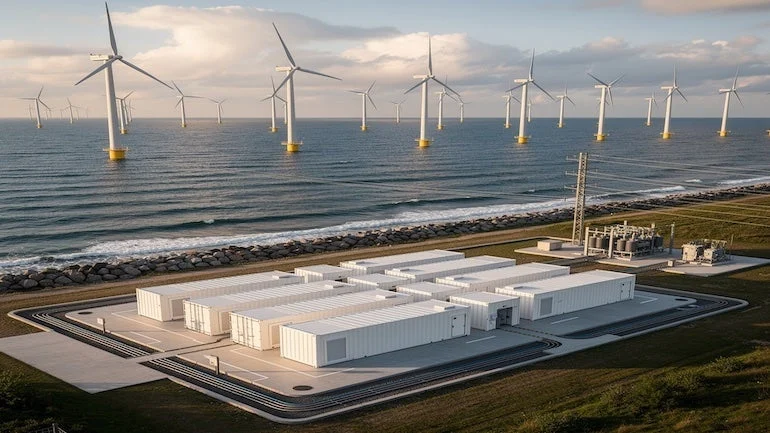
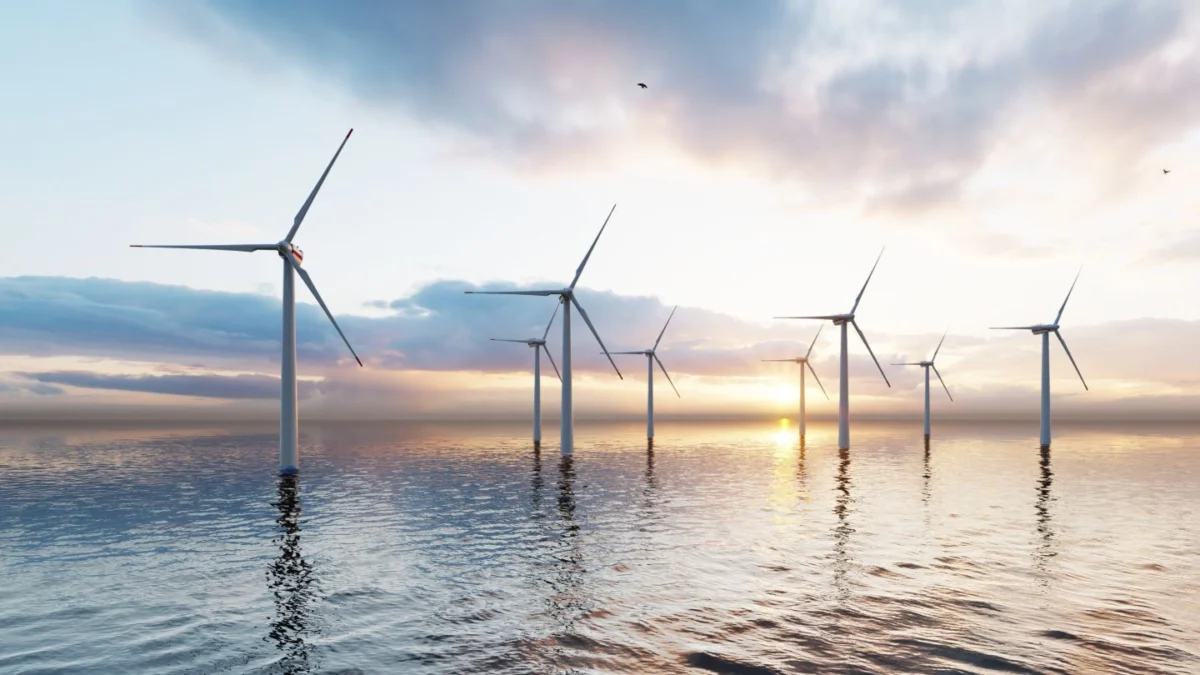
Located approximately 15 kilometers north of the Fischland-Darß-Zingst peninsula, the Gennaker wind farm is poised to become the largest offshore installation in the region. The sheer scale of the project is reflected in its technical specifications:
- Installed Capacity: 976.5MW.
- Turbine Count: 63 high-capacity wind turbines.
- Annual Energy Production: Approximately 3.8 terawatt-hours (TWh) per year.
- Consumer Reach: Capable of supplying electricity to approximately one million households annually.
- Timeline: Full commercial operations are projected to commence by the end of 2028.
By generating nearly 4TWh of clean energy, the Gennaker project will play a substantial role in reducing the carbon footprint of the German power grid, displacing the need for fossil-fuel-based generation and contributing significantly to the national objective of carbon neutrality.
Leadership Perspectives: A Vision for Germany’s Energy Future
The achievement of financial close was hailed by Skyborn CEO Patrick Lammers as a vindication of the company’s long-term strategy and a testament to the collaborative spirit of the renewable energy sector.
"Financial close marks the moment when years of development, partnership building, and preparation come together," Lammers stated. "We have built a strong foundation for the project, with committed lenders, customers, suppliers, and shareholders aligned behind a common vision. This achievement demonstrates what can be accomplished through strong partnerships, disciplined project development, and long-term investment in Germany’s energy future."
Lammers emphasized that the project is now entering a phase of "clear focus on successful execution," noting that with all debt, equity, PPA, and supply agreements now fully locked in, the project faces minimal external uncertainty as it moves toward the installation phase.
Strategic Implications for the Baltic Sea Region
The Gennaker project is more than just a power plant; it represents a major industrial catalyst for the Mecklenburg-Western Pomerania region. The involvement of local firms like EEW Special Pipe Constructions in Rostock highlights the regional economic benefits of large-scale offshore wind, which creates jobs, fosters local expertise, and stimulates the maritime supply chain.
Furthermore, the participation of both international commercial lenders and the EIB underscores the global trend of "green financing." The ability to secure such a massive capital injection in a fluctuating economic environment highlights the enduring appeal of offshore wind as a stable, long-term asset class. By integrating major industrial offtakers like Amazon and Uniper, the project also sets a blueprint for how large-scale renewable projects can be de-risked through corporate PPA structures, moving away from a reliance on government subsidies.
Challenges and Future Outlook
While the financial close is a cause for celebration, the project faces a rigorous construction timeline. The logistics of installing 63 massive turbines in the Baltic Sea, subject to unpredictable weather patterns and complex marine engineering requirements, will test the project management capabilities of the consortium.
However, with the supply chain already secured and the regulatory path cleared, Skyborn is well-positioned to meet its 2028 deadline. The Gennaker wind farm stands as a flagship project for the Baltic Sea, demonstrating that when public policy, private finance, and industrial innovation converge, the transition to a sustainable energy future becomes not only possible but inevitable.
As Germany continues to dismantle its coal and nuclear dependencies, the 3.8TWh of annual output from Gennaker will serve as a vital pillar of the nation’s energy security. The project confirms that the future of the Baltic region lies in its wind, and the successful financial mobilization for Gennaker ensures that this resource will be harnessed to its full potential for decades to come.