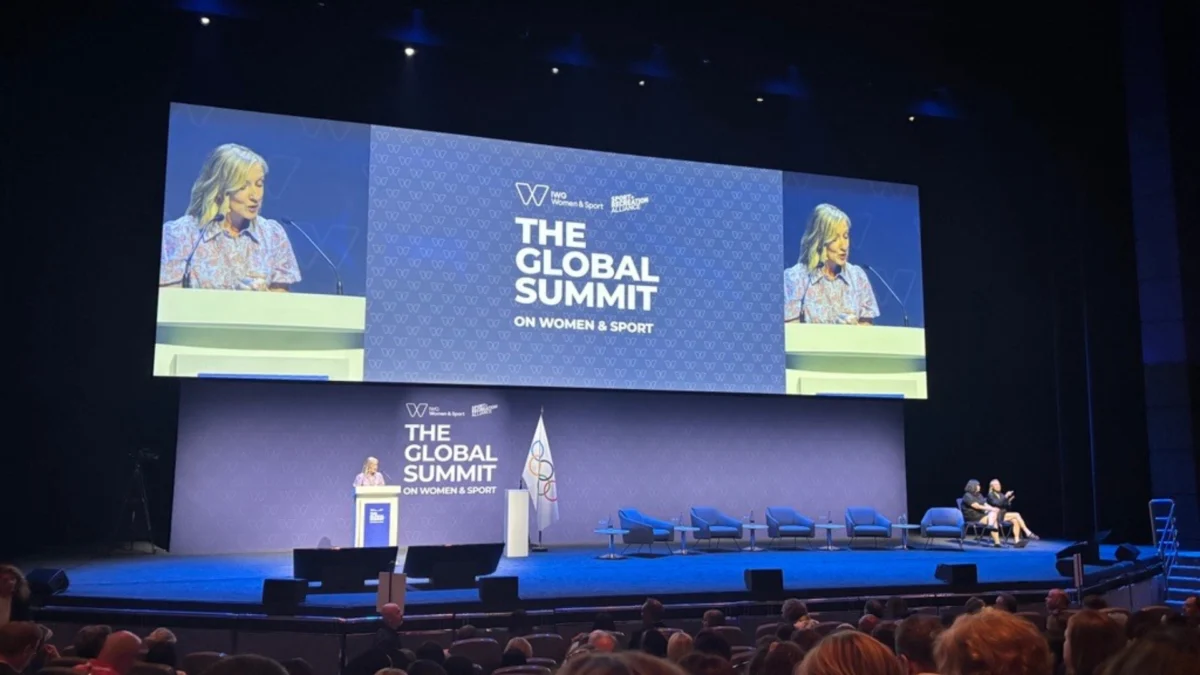
In July 2026, the international sports community converged on Birmingham for the International Working Group (IWG) on Women and Sport World Conference. Bringing together 900 delegates from 80 nations, the event marked a pivotal shift in the global conversation surrounding gender equality in athletics. The primary conclusion was clear: the era of simply identifying barriers and "breaking glass ceilings" has passed. The focus has now shifted toward the more arduous, yet essential, task of structural transformation.
As the sports world moves "Beyond the Breakthrough," stakeholders are acknowledging that meaningful progress requires moving past performative gestures and into the realm of systemic, legislative, and cultural overhaul.
Main Facts: The New Frontier of Equality
The 2026 IWG World Conference served as a reality check for the global sports industry. While participation rates for women and girls have surged, the governance and economic structures that support them remain largely tethered to outdated, male-centric models.
The conference emphasized that equality is not an "add-on" or a side project; it is a fundamental governance issue. The Finnish delegation, in attendance to integrate global findings into national policy, underscored a critical takeaway: the responsibility for equality is no longer the sole burden of "equality officers" or women’s advocacy groups. Instead, it must be embedded in the mandates of boards, financial institutions, coaching programs, and media outlets.
The event highlighted that the current growth of women’s sport—often celebrated as a singular success—is fragile if the underlying architecture remains unchanged. From junior pathways and specialized sports science to the commercialization of leagues, the entire ecosystem requires a top-down redesign to ensure that the current momentum does not plateau.
Chronology: From Brighton to Birmingham
To understand the urgency of the 2026 conference, one must look at the evolution of the movement:
- 1994: The Foundation. The Brighton Declaration on Women and Sport was established, creating the first international framework for women’s participation in sports.
- 2014: The Helsinki Expansion. The Brighton Declaration was updated as the "Brighton Plus Helsinki Declaration," broadening the scope to address the complexities of modern, globalized sports governance.
- 2020–2025: The Growth Phase. A period marked by record-breaking attendance, increased broadcast rights, and heightened commercial interest in women’s leagues, demonstrating that the market demand was being consistently underestimated.
- July 2026: The Birmingham Turning Point. The IWG World Conference shifts the narrative from "participation" to "structural power." The theme, Beyond the Breakthrough, signals that the battle for visibility has been largely won, and the battle for systemic influence has begun.
- September 2026 and Beyond: Post-conference implementation phases, including regional seminars (such as those hosted by the Finnish Olympic Committee) aimed at translating global policy into local, actionable change.
Supporting Data: Moving Beyond the "Male-Metric" Trap
One of the most compelling presentations in Birmingham came from Trinh Tu of Ipsos, who presented data confirming that the public appetite for women’s sport is at an all-time high. However, the data also revealed a persistent, systemic failure: the tendency to measure the success of women’s sport using male benchmarks.
The Economic Fallacy
Investor Michele Kang challenged the room to stop viewing women’s sport as a "smaller version" of men’s sport. Her argument is grounded in the reality of market diversification:
- Unique Audiences: Women’s sport attracts a different demographic profile, which requires its own unique marketing and sponsorship strategies.
- Strategic Autonomy: Attempting to mirror the history of men’s sport—which evolved under different economic and societal conditions—is a strategic error. Success, Kang argued, lies in creating new business models that capitalize on the unique social capital of women’s athletics.
The Research Gap
A significant portion of the conference was dedicated to the "data vacuum" in female sports science. Because many physiological studies have historically excluded women due to concerns over hormonal fluctuations, training programs for elite female athletes are often based on data derived from male bodies. This is not merely a gender-equality issue; it is a performance and safety crisis. Without research tailored to the female life cycle—including pregnancy, postpartum recovery, and menstrual health—the sports industry is effectively operating with incomplete information.
Official Responses: Leaders on Accountability
The conference featured high-profile leaders who provided a blueprint for institutional change.
The "Gentle Challenger" Approach
UEFA Vice President Laura McAllister advocated for the role of "gentle challengers." She noted that while dramatic, sudden upheavals are rare, persistent and consistent questioning of the status quo is what drives cultural evolution. McAllister warned against setting unrealistic, short-term timelines for complex societal changes, urging instead for a steady, uncompromising pressure that integrates change into the organizational DNA.
The Power of Mandates
Sebastian Coe, President of World Athletics, offered a more pragmatic, hard-power perspective. He argued that voluntary goals are rarely sufficient. In his experience, significant shifts in representation only occurred when World Athletics implemented:
- Binding Quotas: Ensuring representation at the board level.
- Regulatory Reform: Changing the bylaws to make equality a prerequisite for funding and event hosting.
- Systemic Measurement: Tracking progress with the same rigor used for performance metrics on the track.
For Coe, the goal was never just to put women in the boardroom for the sake of diversity, but to improve the quality of decision-making by diversifying the range of experiences and perspectives at the table.
Implications: The Future of Sport Ecosystems
The implications of the Birmingham conference are far-reaching. As nations look to the future, they are tasked with "design fiction"—a concept introduced by Professor Fiona Chambers. This involves the conscious design of future systems that prioritize the human experience.
Redesigning for Inclusion
The goal is no longer just to "help women adapt" to existing structures, but to dismantle structures that were designed to exclude them in the first place. This requires:
- Reassessing Power Dynamics: Who defines the objectives of a sports organization? Who decides where the money goes?
- The Intersectionality Lens: Recognizing that women and girls with additional support needs often face multiple layers of discrimination. True equality is measured by the inclusivity of the most marginalized participants.
- The Life-Cycle Approach: Moving toward a system that respects the natural life cycles of athletes, including motherhood. This involves rethinking everything from competition schedules to long-term financial support for athlete-parents.
The Finnish Context
For countries like Finland, the path forward is clear. With 34 organizations already signed on to the Brighton Plus Helsinki Declaration, the infrastructure for collaboration is in place. The focus now is on internal audits:
- Are we funding the right pathways?
- Are our coaching pipelines diverse and equitable?
- Is our data collection inclusive enough to drive science-backed training?
As the conference concluded, the message was clear: we are in a "window of opportunity." In a global climate where some conservative social forces are hardening, the momentum behind women’s sport is a beacon of progress. The next stage is not about celebration; it is about the cold, hard work of leadership. The "breakthrough" was the starting line; the race for a truly equitable sporting future is just beginning.
For those interested in following the implementation of these goals, the Finnish Olympic Committee continues to host monthly "Equality Coffee" (Tasa-arvotyön etäkahvit) sessions, providing a platform for continued dialogue and the practical application of the IWG conference findings.