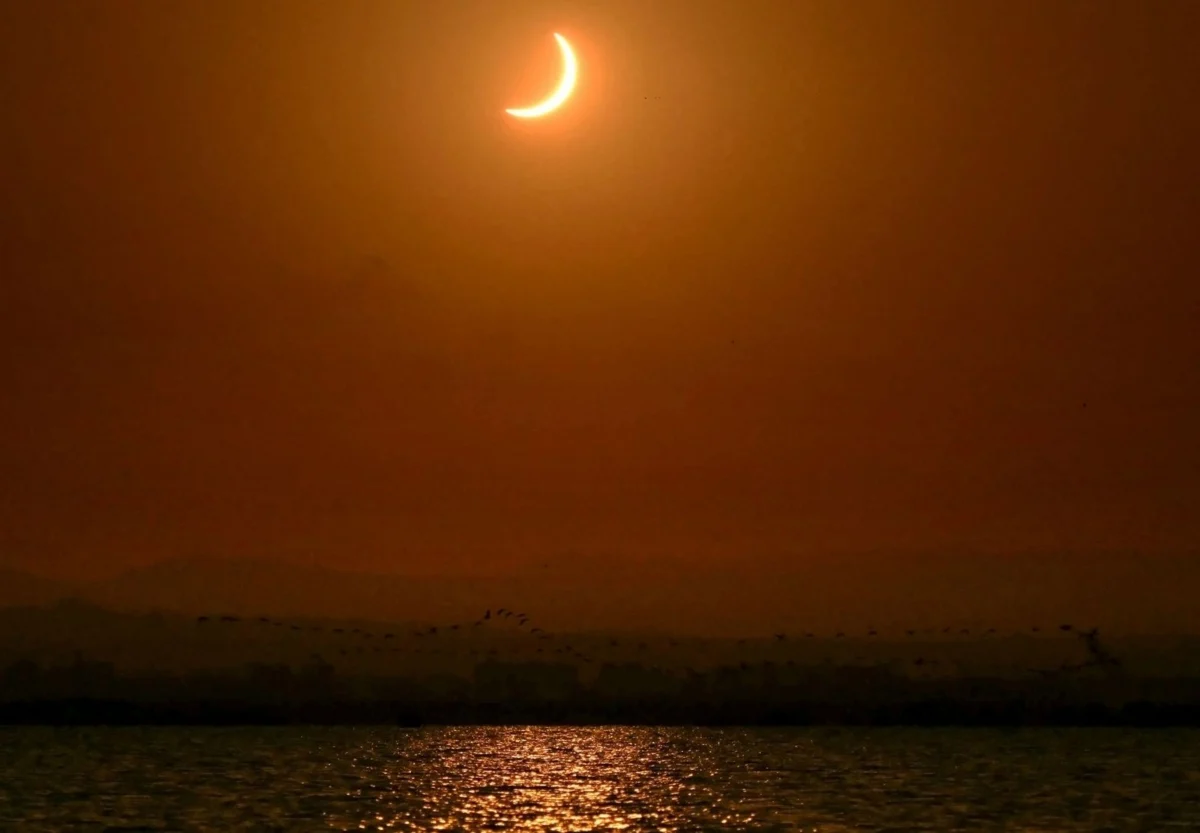
For the first time in over a century, the skies above Spain transformed into a theater of cosmic wonder. As the moon slipped precisely between the Earth and the sun, a blanket of darkness swept across the Iberian Peninsula, marking a historic astronomical milestone that captivated millions of observers, from casual beachgoers to seasoned astrophysicists. This rare total solar eclipse, which was also partially visible across swaths of northern North America, Europe, and western Africa, provided a unique visual spectacle, characterized by the sun’s low position near the horizon, which bathed the landscape in a haunting, ethereal twilight.
The Path of Totality: A Journey Across the North
The astronomical phenomenon followed a precise, predetermined trajectory across the Northern Hemisphere, moving from west to east with clinical efficiency. The path of totality—the narrow corridor where the moon completely occluded the solar disk—commenced in the remote reaches of the Arctic Ocean, north of Greenland. From there, it tracked westward, passing near Iceland before crossing the turbulent waters of the North Atlantic.

At exactly 8:30 pm Central European Summer Time (CEST), the lunar shadow made its grand entrance onto the Iberian Peninsula. For the inhabitants of Spain, this was a moment of profound anticipation, as the shadow carved a path through some of the country’s most diverse landscapes. From the rugged coastlines of Galicia and Asturias to the historic heartland of Castile and León, and onward to the bustling streets of Madrid, the vibrant regions of Aragon, Catalonia, the Valencian Community, and the sun-drenched Balearic Islands, the "path of totality" turned day into night. Outside of this narrow corridor, the rest of the nation was treated to a breathtaking partial eclipse, where the sun appeared as a luminous, shrinking crescent.
A Chronology of the Shadow
The event was a masterclass in celestial mechanics, lasting roughly four and a half hours from the first contact to the final retreat of the moon. However, the true climax—the moment of totality—was a fleeting, high-intensity affair. For just under two minutes, the sun was entirely obscured, plunging the affected regions into a sudden, deep silence.

This brief window of darkness was not merely a photogenic event; it was a high-stakes opportunity for the global scientific community. As the sky dimmed and the corona—the sun’s outermost atmosphere—revealed its jagged, pearly white brilliance, specialized instruments were already engaged in data collection. The speed at which the transition occurred served as a reminder of the dynamic nature of our solar system, with the shadow moving across the earth at supersonic speeds, leaving observers in a state of collective awe before returning to the familiar light of the afternoon.
Scientific Endeavors: Probing the Solar Corona
While the public looked upward with protective glasses and cameras, a fleet of researchers looked toward the sky with a different intent. The total solar eclipse provided a laboratory that cannot be replicated on Earth.

One of the most ambitious initiatives involved a NASA-led mission that deployed a WB-57 high-altitude research aircraft to intercept the moon’s shadow. Flying at an altitude of 50,000 feet, well above the interference of the lower atmosphere, the aircraft served as a mobile observation deck. The primary objective was to capture unprecedented, high-resolution data regarding the dynamics of the solar corona. The corona, which is usually drowned out by the sun’s overwhelming glare, is a region of intense scientific mystery, particularly regarding why it is significantly hotter than the solar surface.
Complementing this airborne research, the space agency orchestrated a collaborative effort with university students from across the United States. These teams were deployed to sites in both Iceland and Spain, where they launched a series of sophisticated scientific balloons. These balloons, released before, during, and after the event, were designed to measure changes in atmospheric conditions caused by the sudden cooling and subsequent reheating of the air as the eclipse passed. By analyzing how the temporary loss of solar radiation affects the troposphere, researchers hope to refine models of atmospheric behavior and climate sensitivity.

Cultural Impact and Public Engagement
The event was more than just a scientific inquiry; it was a nationwide cultural phenomenon. In cities like Madrid, thousands gathered in public spaces, such as El Cerro del Tío Pío Park, to witness the darkening sky. In coastal areas, beachgoers in Mallorca and San Sebastián watched the event from the sand, creating a surreal juxtaposition of summer leisure and cosmic drama.
The impact was even felt in the world of sports. At the Riazor Stadium in A Coruña, during the Teresa Herrera Trophy match between RC Deportivo A Coruña and Real Madrid, fans were seen pausing their engagement with the game to peer through protective eclipse glasses. This widespread public participation highlights the unique ability of astronomical events to transcend daily routines and unify populations in shared curiosity.

Implications for Future Space Exploration
The data harvested during this eclipse will be processed over the coming months, feeding into a broader understanding of helio-physics. The insights gained from the corona’s behavior are critical for improving our ability to predict space weather, which can have significant impacts on satellite infrastructure, global communication networks, and the safety of astronauts in orbit.
Furthermore, the successful coordination of international teams in Iceland and Spain serves as a blueprint for future multi-national scientific endeavors. The ease with which data was shared between agencies and universities underscores a global commitment to deciphering the mechanics of our star.

Looking Ahead: The Continuing Cosmic Calendar
As the dust—or rather, the shadow—settles, the scientific community is already turning its attention to the next major celestial markers. Later this month, a partial lunar eclipse will be visible across the Americas, offering a different set of challenges and opportunities for researchers.
For those in Spain, the memory of this eclipse will linger, serving as a reminder of the fragility and beauty of our planet’s position in the cosmos. While we wait for the next total solar eclipse to grace the skies of the Iberian Peninsula, the images captured on this Wednesday—from the glowing corona hanging over the coastal lagoons of Valencia to the silhouettes of onlookers in Tarragona—stand as a testament to humanity’s enduring fascination with the heavens.

The 2026 event was a triumph of planning, science, and human wonder. It bridged the gap between the mundane and the magnificent, proving that even in our modern, technology-driven world, the most ancient of phenomena still hold the power to bring a nation to a standstill. As we continue to analyze the atmospheric and solar data from this week, we are reminded that every such event provides a new piece of the puzzle in our ongoing quest to understand the universe we inhabit.
This story originally appeared on WIRED en Español and has been translated from Spanish, providing a comprehensive look at the historical and scientific weight of this monumental celestial event.