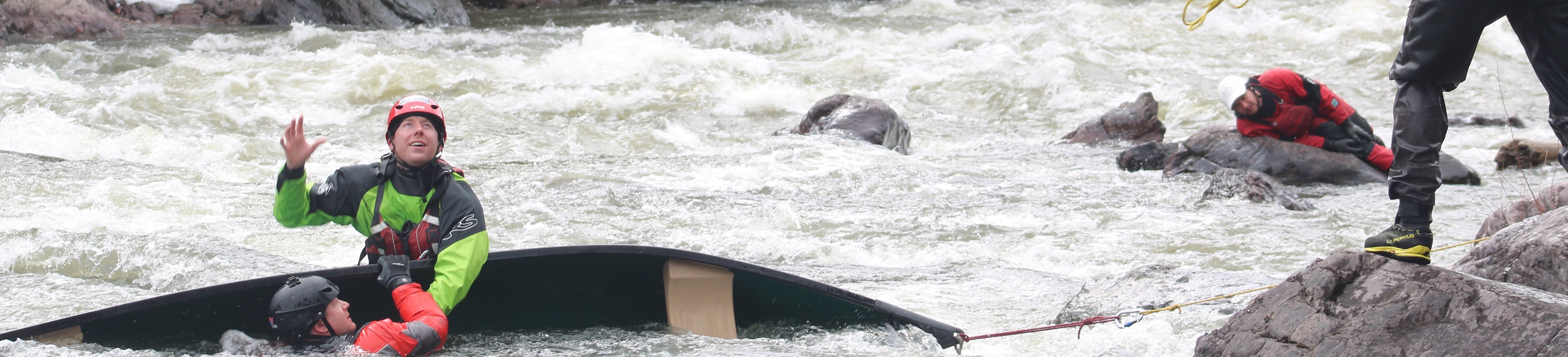
In the high-stakes world of river running, the "pin"—a situation where a raft or kayak becomes wedged against an obstacle by the force of moving water—is the nightmare scenario for every boater. While many outfitters and private boaters invest in commercially available pin kits as a matter of routine, industry experts are raising a critical alarm: standard, off-the-shelf kits are often woefully inadequate for the realities of modern river rescue. As the saying goes, "Accidents happen, but how we resolve them dictates the tale." When a boat is pinned, your gear is the only thing standing between a manageable recovery and a total loss of equipment—or worse, a life-threatening emergency.
The Illusion of Preparedness: Why Standard Kits Fall Short
For years, the standard approach to river safety has been to walk into a gear shop, purchase a pre-packaged pin kit, and stow it away, assuming that the presence of the bag equates to the presence of safety. However, this "set it and forget it" mentality is a dangerous fallacy.
Commercial kits are designed for a "standard" scenario, which rarely exists in the wild. They are built for a generic river environment, ignoring the specific complexities of the waterways you navigate. When you purchase a kit based solely on a label, you are essentially buying a "one-size-fits-all" solution for a problem that demands bespoke engineering.
The Anatomy of a Failed Rescue
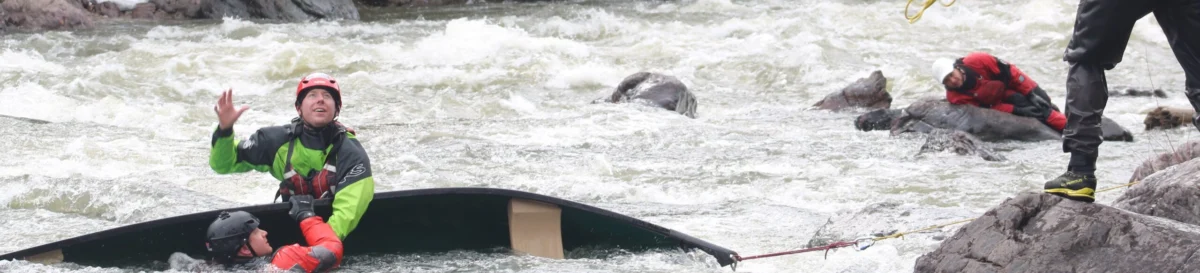
To understand the deficiency of standard kits, consider a common scenario on the Middle Fork of the Salmon River. A raft loses an oar in a technical rapid, misses its line, and slams into a mid-stream rock. The boat is pinned. It’s carrying the entire crew’s life support: the kitchen, the food, and essential camping gear. The river here is wide—over 250 feet—and the boat is stranded a hundred feet from the nearest bank.
The group retrieves their commercial pin kit from the sweep boat. They successfully deploy the gear, attach a line, and scramble to find an anchor point on the shore. They set up a Z-drag, the gold standard for mechanical advantage in river rescue. Suddenly, the progress stops. They have run out of rope.
Why? The standard commercial kit contains 150 feet of static line. In this scenario, 150 feet is mathematically insufficient. By the time you tie a Figure-8 on a bight (which consumes four feet of rope), account for the geometry of a Z-drag (which can consume up to one-third of your line length due to pulley spacing and anchor knots), and navigate the distance to an actual, solid anchor point, you are left with zero usable length. The kit failed not because it was broken, but because it was fundamentally mismatched to the scale of the river.
Chronology of an Effective Rescue: Preparation Meets Execution
The effectiveness of a rescue is determined long before the boat hits the rock. A successful recovery is a multi-stage process that relies on the operator’s ability to assess, adapt, and deploy.
- Assessment: The moment the pin occurs, the "Rescue Leader" must evaluate the river width, flow volume, and anchor availability. If the shore is too far or the anchor points are weak, the rescue strategy must shift from a simple Z-drag to a complex re-direct or a tandem haul.
- Deployment: Time is the enemy. The kit must be stored in an accessible, high-visibility location. If it takes five minutes to dig the kit out from under a pile of dry bags, the water pressure on the raft may have already caused structural failure to the frame.
- Rigging: The anchor is built. The haul system is constructed. The mechanical advantage is applied. If any component—a carabiner, a pulley, or a length of rope—fails here, the rescue effort may have to be abandoned, potentially forcing a multi-day wait for professional help.
- Recovery: The boat is pulled free. The final step is the immediate inspection of the gear. Did the rope sustain core damage? Are the carabiners cross-loaded? The recovery ends when the gear is dry, cleaned, and repacked.
Supporting Data: Rethinking the Hardware
The technical specifications of your gear should be dictated by physics, not marketing. When we look at the components of a robust, professional-grade pin kit, the contrast between "standard" and "optimal" becomes clear.
The Rope Debate: Strength vs. Length
Most commercial kits favor 1/2-inch (13mm) static line, which boasts a breaking strength of nearly 10,000 lbs (40 kN). While impressive, this is often overkill for manual river rescues. If you are pulling with enough force to snap a 5,000 lb (22 kN) rope, you are likely pulling from the wrong angle or failing to address the fundamental blockage. By switching to a 9mm static line with a 5,000 lb rating, you can carry 330 feet of rope in the same volume and weight as 150 feet of 1/2-inch line. In the Middle Fork scenario, that extra length is the difference between success and failure.
The Anchor Component: Webbing and Slings
Reliance on short lengths of webbing is a common oversight. Wrapping a large boulder or a cluster of trees often requires more material than a 10-foot strip can provide. Professionals carry a variety of options, including:
- Tubular Webbing: 25 feet of 1-inch webbing for flexible anchoring.
- Dynex Rabbit Runners: High-strength, low-bulk manufactured slings that are easier to manage and faster to deploy.
- Long Slings: A 240cm sling provides the versatility needed to create equalized anchors in difficult terrain.
Mechanical Advantage: The Pulleys
Pulleys are not merely convenient; they are essential for reducing friction. A kit should contain at least three Prusik Minding Pulleys (PMPs). Why three? A third pulley allows for a "re-direct," meaning you can change the angle of your pull without moving your entire anchor system. This is vital when the optimal pulling angle is blocked by brush or topography.
Official Responses and Safety Implications
Safety organizations, such as the American Whitewater association, emphasize that gear is only one pillar of river safety. The "Human Element"—the training and decision-making of the boaters—is the other. However, the official consensus remains: your gear must be proportional to the risk.
The implication of carrying an inadequate kit is not just the loss of a boat; it is the potential for a "rescue-induced tragedy." When a pinned boat becomes a dam, the water creates a downstream "boil" or "hole" that can easily flip rescuers, pull them into the water, or trap them against the very boat they are trying to save. A kit that allows for a long-distance, stable, and secure haul system keeps the rescuers on the bank, significantly reducing the risk of a secondary incident.
Strategic Recommendations for Your Kit
To modernize your safety posture, consider these actionable steps:
- Audit Your Rope: Does your current rope length account for the width of the rivers you frequent, plus the length lost to knotting and mechanical systems? If not, upgrade your length, even if it means downsizing the diameter to a high-strength 9mm or 10mm cord.
- Standardize Your Carabiners: Use only locking, rated carabiners for your pin kit. These should never be used for clipping water bottles or sandals. Color-coding your rescue carabiners helps ensure they are used exclusively for their intended purpose.
- Invest in a Dedicated Dry Bag: Using a high-quality dry bag (such as a Watershed bag) ensures your gear remains dry, clean, and free of river silt. A clean pulley is a functional pulley. Furthermore, a bag that floats can be thrown or tethered, adding another layer of utility to your kit.
- Prusik Management: Do not wait for an emergency to tie your Prusiks. Use pre-sewn loops made from cord 70–80% the diameter of your main haul line. They are stronger, more reliable, and ready for immediate deployment.
Conclusion
The "In Between a Rock and a Wet Place" scenario is not a matter of if, but when for the active river runner. A commercial kit is a good starting point, but it should be viewed as a foundation rather than a finished product. By tailoring your gear to the specific rivers you run, carrying extra rope length, and investing in high-quality mechanical advantage components, you move from the realm of "hope" to the realm of "readiness."
When the situation turns critical, your gear should not be the bottleneck. Evaluate your kit, consult with professional gear shops, and ensure that when the time comes to pull, you have the length, the strength, and the reliability to get your crew—and your kitchen—back to safety.