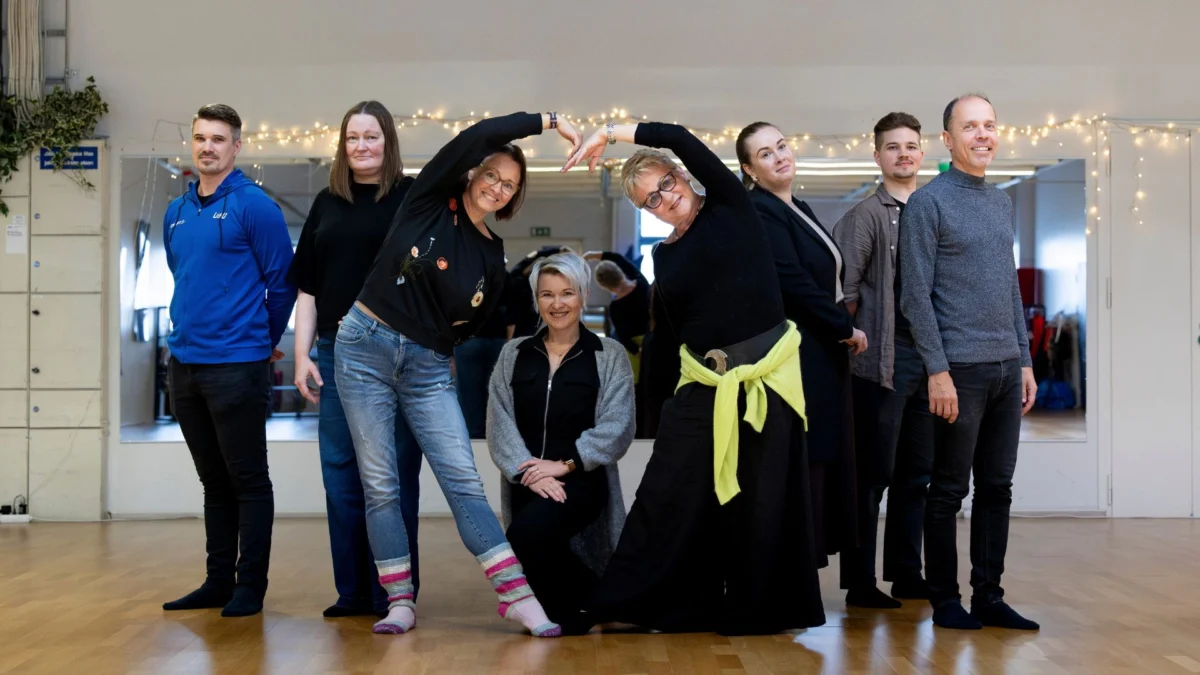
In the landscape of Finnish sports, the Tähtiseura (Star Club) program serves as a gold standard for operational excellence. While many see the program simply as a branding exercise, for Katriina Lahti, the long-serving Club Developer for the Finnish Dance Sport Federation, the badge is merely a byproduct of a much deeper, more fundamental evolution. For Lahti, the true value of the program lies not in the physical seal of approval, but in the structural and cultural transformation that occurs within clubs as they strive for quality.
Main Facts: The Essence of Club Development
The Tähtiseura program is a nationwide quality initiative spearheaded by the Finnish Olympic Committee, various sports federations, and regional sports organizations. It is designed to help clubs build goal-oriented, high-quality, and continuously evolving operations.
Katriina Lahti, a veteran of the dance sport community, has spent a decade as a dedicated club developer. Her role has evolved from simple compliance auditing to a comprehensive mentorship position. Today, her work encompasses:
- Strategic Sparring: Guiding clubs through organizational restructuring and long-term visioning.
- Operational Auditing: Ensuring clubs meet the rigorous national standards for safety, inclusivity, and professional management.
- Regional Networking: Facilitating cross-club communication to share best practices.
- Resource Creation: Developing manuals and guidelines that demystify administrative burdens for volunteers.
For Lahti, the core philosophy is simple: "Goals without action are merely wishes and dreams. You cannot expect change if you do not change your processes."
Chronology: A Decade of Dedication
Katriina Lahti’s journey into the heart of sports administration began long before her official tenure as a federation developer. Her foundation was built in the late 1990s as a competitive ballroom dancer, where she reached the elite A-class level.
The Early Days (1990s–2012)
Lahti’s career as a competitor gave her an insider’s view of the pressure and dedication required of athletes. However, it was her transition into leadership roles within her local club in Kuopio that defined her future path. During this time, she took on the role of a "quality architect," documenting processes, defining organizational vision, and implementing strategic management structures that were previously non-existent in the volunteer-heavy environment.
The Turning Point (2017)
By 2012, Lahti had retired from competitive dancing, but her passion for the sport’s infrastructure remained. Her meticulous work in Kuopio did not go unnoticed by the national federation. In 2017, she was offered the position of Club Developer. "I didn’t hesitate for a second," she recalls. "I answered immediately: ‘Of course, I’ll join!’"
The Modern Era (2017–Present)
What started as a focus on Tähtiseura audits has expanded into a full-time, though technically voluntary, commitment. Lahti manages thousands of contacts annually, acting as the bridge between national strategy and local implementation. She has become an integral part of the Finnish Dance Sport Federation’s operational core.
Supporting Data and The "Corporate" Mindset
One of the most compelling arguments Lahti makes is the application of corporate management logic to volunteer-driven sports clubs. "Clubs are like small businesses," she explains. "The planning principles found in the corporate world—setting targets, measuring performance, and constant evaluation—are highly effective in sports clubs."
Lahti draws on her extensive professional background in production, financial management, and HR to advocate for a more professionalized volunteer sector. She emphasizes that the Tähtiseura program provides a framework that covers:
- Governance: Ensuring clear roles and responsibilities within boards.
- Risk Management: Protecting the safety and well-being of members.
- Impact and Profitability: Measuring how effectively the club serves its community.
The success of this approach is backed by data: annual surveys conducted by the federation consistently show that Tähtiseura-certified clubs outperform non-certified clubs across all key performance indicators, including member retention and organizational health.
The Human Element: The "Three K’s" of Volunteering
Despite the emphasis on systems and data, Lahti remains staunchly focused on the human element. She identifies the "Three K’s" of successful volunteering in Finnish: Kysy (Ask), Kehu (Praise), and Kiitä (Thank).
Engaging the Next Generation
Lahti is a vocal advocate for youth involvement in governance. She notes that, too often, the "voice of the youth" is absent from board meetings and strategic planning. In her audits, she insists on interviewing young members, particularly in clubs focusing on children’s activities. She argues that for a club to remain relevant, it must evolve alongside the needs of the next generation.
The Role of the Mentor
Lahti views her role as that of a "sparring partner, tutor, and mentor." When a club begins its journey toward certification, she is there before the process begins, during the audit, and long after the badge has been awarded. This long-term relationship ensures that the Tähtiseura status is not a static achievement but a living, breathing commitment to improvement.
Implications for the Future of Finnish Sports
The implications of Lahti’s work are significant for the broader sports sector in Finland. The Tähtiseura program, through the efforts of developers like Lahti, provides a blueprint for how sports can remain vital in an increasingly competitive leisure market.

Professionalization vs. Volunteerism
A common concern in the sports world is whether professionalization kills the spirit of volunteering. Lahti disagrees. She argues that "a good employer—or in this case, a good club board—trusts people, encourages them, and gives them space to work." By reducing the administrative chaos that often leads to volunteer burnout, the Tähtiseura program actually makes volunteering more sustainable and rewarding.
The Standard of Quality
Lahti is firm on one point: she would never compromise on the criteria for Tähtiseura status. "Common and uniform requirements give the entire Tähtiseura movement its significance, reliability, and credibility," she states. As the program continues to grow, it faces the challenge of adapting to new societal trends while maintaining the rigorous standards that have earned it the trust of the sports community.
Conclusion: A Legacy of Impact
Katriina Lahti’s career serves as a powerful reminder that behind every successful athletic organization, there is a dedicated infrastructure of people and processes. For Lahti, the work is not about the accolades; it is about the quiet satisfaction of seeing a local dance club grow, organize, and thrive.
As she continues her work across Finland—from regional meetings in Turku to national strategy sessions—her message remains clear: the badge is for the wall, but the growth is for the people. By focusing on the "why" and the "how" of club management, she is ensuring that Finnish dance sport remains an inclusive, high-quality, and sustainable environment for dancers of all ages and abilities for decades to come.
About the Tähtiseura Program
The Tähtiseura program is the official quality program of the Finnish Olympic Committee and its member federations. It is a promise of quality to current and new club members, as well as their families and supporters. It represents a modern, agile, and responsible approach to sports management. Currently, a network of nearly 200 club developers across Finland—including those from the Finnish Dance Sport Federation, the Finnish Workers’ Sports Federation (TUL), and the Paralympic Committee—work tirelessly to ensure that club life remains a cornerstone of Finnish civil society.