
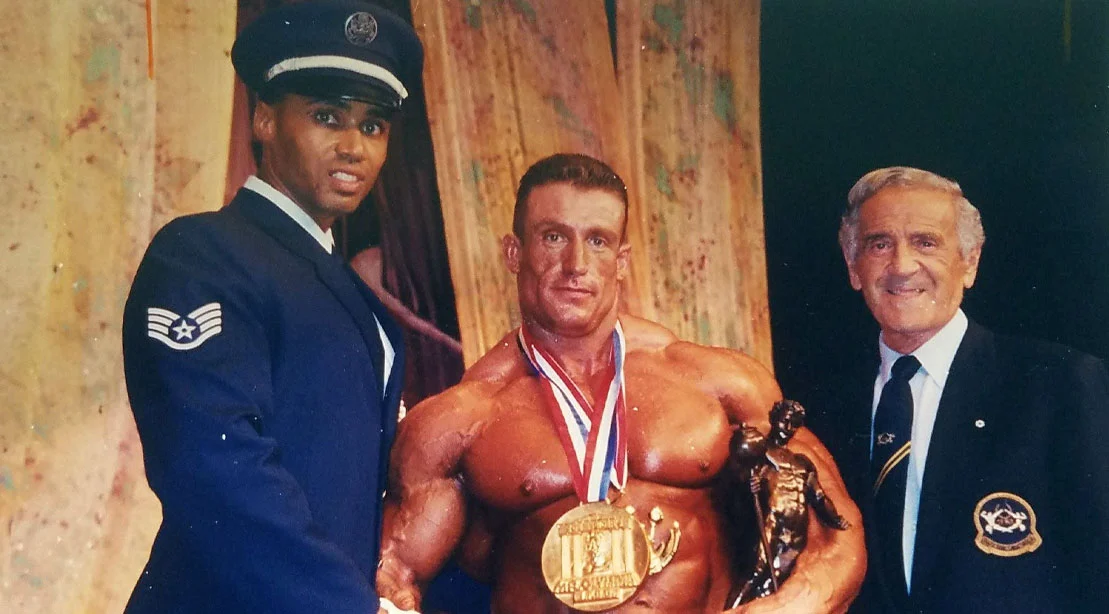
Every year, as the lights dim at the Mr. Olympia “finals,” a profound shift occurs in the atmosphere of the arena. The high-octane energy of the bodybuilding world—usually defined by mass, symmetry, and aesthetic perfection—gives way to a moment of solemn, patriotic resonance. Since 2001, the event has been inaugurated not by a pyrotechnic display or a booming bass line, but by the crisp, disciplined presentation of colors by a United States Honor Guard unit, followed by the stirring notes of the national anthem.
This tradition, established by the late IFBB Pro League President Ben Weider, serves as a poignant reminder that the world’s most prestigious bodybuilding stage is built upon a foundation of respect for those who serve in the nation’s uniform. It is a bridge between two worlds that, while seemingly distinct, share a common DNA: the pursuit of excellence through unwavering discipline.
The Roots of a Legacy: Ben Weider’s Military Path
To understand the symbiosis between the Olympia and the military, one must look at the life of Ben Weider. Often remembered as the architect of modern bodybuilding alongside his brother Joe, Ben’s life was defined by service long before he became a titan of industry.
A native of Montreal, Quebec, Weider enlisted in the Canadian Army in 1942 at the height of World War II. Serving in the 6th Duke of Connaught’s Royal Canadian Hussars, he utilized his sharp analytical mind for intelligence work within the Canadian Intelligence Corps. This experience was not merely a chapter in his life; it was a defining period that forged his character.
Throughout his later years as a global ambassador for fitness, Weider maintained a profound reverence for the military. This was not a performative stance but a deeply held conviction. His military background informed his leadership style—organized, precise, and mission-oriented. In 1998, he was named Honorary Lieutenant Colonel of the 62nd (Shawinigan) Field Artillery Regiment, RCA, and by 2005, he had been elevated to the rank of Honorary Colonel. His commitment to humanitarianism, youth fitness, and global diplomacy was so significant that he was even nominated for the Nobel Peace Prize in 1984.
2001: A Turning Point in Olympia History
The marriage of bodybuilding and military appreciation was formalized in the wake of the September 11, 2001, terrorist attacks. The United States was reeling, and in the months following the tragedy, Ben Weider sought a way for the bodybuilding community to show solidarity with the service members who were stepping up to defend the nation.
Weider consulted with Rob Wilkins, his longtime executive assistant and an Air Force veteran. The initial plan was modest: distribute 200 tickets to local military bases in Las Vegas. However, the response from the bodybuilding community and the military personnel was overwhelming. By the time the event arrived, over 1,200 tickets had been distributed to service members.
Wilkins, who witnessed the inaugural presentation of the colors, describes the experience as transformative. “To this day, there was never anything more electrifying for me than when they would chant ‘USA, USA’,” Wilkins recalls. That moment solidified the tradition, turning the Olympia into a platform for national unity.
Shared Virtues: The Psychology of Service and Performance
While the paths of a soldier and a bodybuilder are vastly different—one dedicated to the preservation of liberty and the other to the pursuit of physical mastery—they are unified by a specific set of psychological traits. Both demand extreme discipline, meticulous attention to detail, and a staggering capacity for consistency.
In the world of bodybuilding, an athlete may stand onstage for a few minutes, but that performance is the result of years of invisible, agonizing labor. Similarly, the readiness of a service member is built on thousands of hours of training that go unseen by the public eye. Both paths require the individual to push past the limits of comfort, to embrace pain for a higher purpose, and to operate with a level of focus that is inaccessible to the average person.
This shared ethos is why the “Fit to Serve” column, co-founded by Rob Wilkins and current Olympia President Dan Solomon, has become the leading military-fitness resource in the industry. Since its inception in 2021, the column has documented nearly 140 stories of service members and first responders, highlighting how the principles of bodybuilding training have helped veterans navigate their transition to civilian life and maintain their mental health.
Official Responses and Modern Stewardship
The stewardship of this legacy now rests in the hands of current industry leaders who recognize the weight of the tradition. Olympia President Dan Solomon has been a vocal proponent of continuing the work Ben Weider started.
“Ben laid the groundwork for a meaningful connection between bodybuilding and the military,” Solomon says. “Since his passing, we have welcomed thousands of active-duty men and women to Olympia Weekend, while continuing to tell their stories in our ‘Fit to Serve’ section. We’re always exploring new ways to show our gratitude.”
Solomon, alongside Olympia owner Jake Wood, has ensured that the tradition is not merely a rote exercise but a living, evolving commitment. For Wilkins, who has worked with multiple generations of leadership, this continuity is a testament to the culture Weider cultivated. “I’m honored that they still recognize the importance of continuing the tradition,” Wilkins says. “It serves as a positive anchor for the entire weekend’s festivities.”
Chronology of Recognition and Impact
- 1942: Ben Weider enlists in the Canadian Army, serving in the 6th Duke of Connaught’s Royal Canadian Hussars.
- 1975: Weider is named a Member of the Order of Canada for his contributions to sport and society.
- 1998: Appointed Honorary Lieutenant Colonel of the 62nd (Shawinigan) Field Artillery Regiment, RCA.
- 2001: Following the 9/11 attacks, the Olympia initiates the tradition of presenting the colors and gifting tickets to military personnel.
- 2006: Promoted to Officer of the Order of Canada.
- 2008: Ben Weider passes away at age 85, leaving behind a legacy of military appreciation that continues to influence the IFBB Pro League.
- 2021: Launch of the "Fit to Serve" column, cementing the partnership between Muscle & Fitness and the military community.
- 2026: The Olympia celebrates the 25th anniversary of the military ticket program and the tradition of the national anthem presentation.
Implications for the Future
As the Olympia approaches its 25th anniversary of this military tradition in 2026, the implications of this bond are clearer than ever. The bodybuilding community has moved beyond being a niche subculture to becoming a massive, global platform. By continuing to prioritize the military, the Olympia uses its influence to bridge the divide between the general public and those who serve in the shadows to protect the nation’s interests.
This relationship also serves as an inspiration for the next generation of athletes. When a young bodybuilder watches an active-duty soldier receive an ovation on the Olympia stage, they are reminded that their physical development is a tool—a vehicle for personal growth that, like military service, is inherently linked to discipline and character.
In an era where the divide between different sectors of society can feel increasingly wide, the silent, consistent, and passionate relationship between bodybuilding and the military serves as a model of mutual respect. It is an acknowledgment that whether one is holding a rifle or training for a title, the pursuit of human potential requires the same foundational virtues: uncompromising discipline, silent sacrifice, and the relentless pursuit of a higher standard.
No gesture, as the organizers admit, can truly equate to the devotion offered by those who serve. Yet, by bringing the military into the fold of the world’s biggest bodybuilding show, the Olympia ensures that those who protect our freedom are never forgotten. It is a promise that as long as the Olympia stands, the men and women of the Armed Forces will have a seat at the table, a voice in the arena, and a community that honors their sacrifice with every repetition and every step toward the stage.