In the world of high-performance fitness, the finish line is often seen as the ultimate objective—a singular moment of glory after months of grueling preparation. For Katie Thomas, however, the finish line is merely a waypoint. Whether she is navigating the high-intensity demands of a HYROX race, preparing for a U.S. Paralympic sitting volleyball training camp, or dismantling societal misconceptions about limb differences, Thomas is constantly moving the goalposts.
While the world may have first encountered her through a viral social media clip—a humorous traffic stop where she jokingly offered a police officer “the hand of God”—Thomas has spent her life ensuring that her identity is defined by her grit, not a punchline. Today, she stands as a beacon for adaptive athletes, proving that with the right mindset, limitations are not barriers, but rather puzzles waiting to be solved.
The Foundation of Independence
Katie Thomas’s journey did not begin in a gym; it began in a household where the word "can’t" was effectively banned. Born with a limb difference affecting her right arm, Thomas was never shielded from the realities of physical challenge. Instead, she was encouraged to engage with the world on her own terms.
Her childhood was a blur of activity: soccer, baseball, horseback riding, and competitive rodeo. These weren’t just extracurriculars; they were the training grounds for her autonomy. “My dad very much believed in me and never told me no,” Thomas recalls. “If I wanted to do gymnastics, I was in gymnastics. If I wanted to play baseball, I played baseball. He never let anyone tell me I couldn’t do something, and that changed the entire trajectory of my life.”
This upbringing instilled a sense of radical self-reliance. When she later pursued a degree in exercise science and became a certified personal trainer, she didn’t just study the mechanics of the human body; she applied them to her own unique physiology. This analytical approach has become her trademark: whenever she faces an exercise that seems inaccessible, she doesn’t retreat. She asks, "How can I make this work?"
Chronology: From Recreational Athlete to HYROX Contender
Thomas’s path to becoming a premier adaptive athlete was marked by a steady evolution of athletic pursuits. After years of playing recreational soccer and completing sprint triathlons, she began searching for a discipline that matched her intensity.
- The Early Years: A lifelong multi-sport athlete, Thomas used youth sports to test her physical boundaries, rarely requiring—or requesting—special accommodations.
- The CrossFit Transition: As she entered adulthood, Thomas experimented with CrossFit. While she valued the community, the sport’s heavy reliance on bilateral Olympic lifting often felt disconnected from her personal biomechanics.
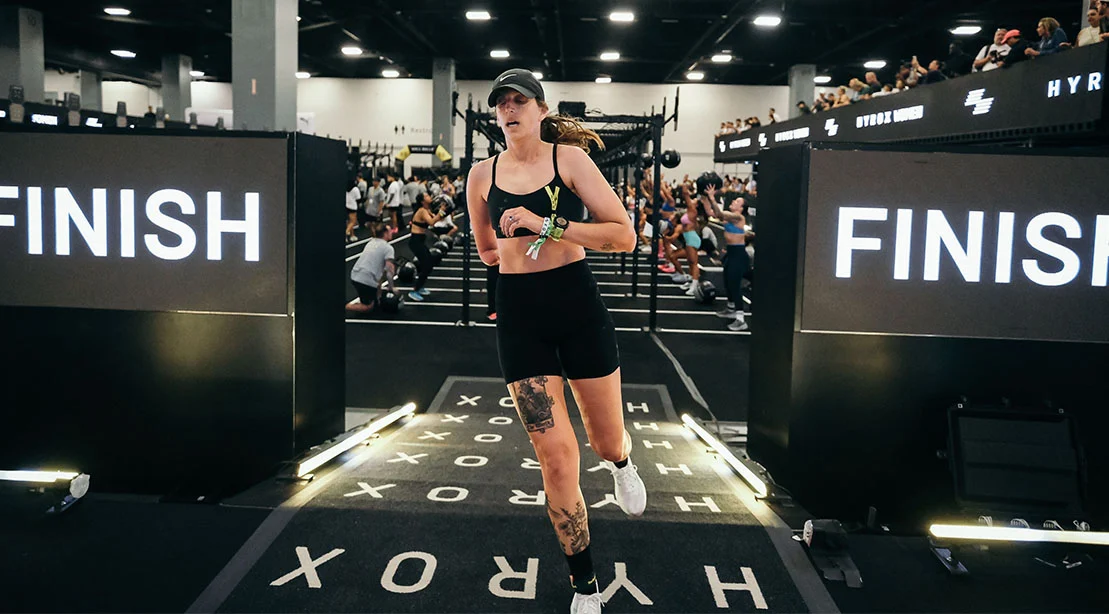
- The HYROX Discovery: The arrival of HYROX marked a turning point. Unlike sports defined by singular, highly technical movements, HYROX emphasizes functional fitness—sled pushes, pulls, lunges, and endurance running. It was a format that rewarded grit over specific limb-based techniques.
- The Miami Breakthrough: Entering her first HYROX race in Miami, Thomas captured first place in the adaptive upper-limb division. The victory was not just a medal; it was a realization of her standing in the global hierarchy. She soon learned she was ranked second in the U.S. and 16th in the world.
- The Viral Pivot: Following her viral traffic stop, her Instagram following exploded from a few dozen to over half a million. This shift forced her to reconcile her private athletic goals with a sudden, massive public platform.
Analytical Performance: The Science of Adaptation
For Thomas, training is an ongoing scientific experiment. Armed with a degree in exercise science, she views her body as an instrument that requires custom calibration. This is particularly evident in her approach to traditional movements.
“If something like a snatch or a clean and jerk comes up, I know that’s just not my movement,” she explains. “Instead of trying to force it, I’ll figure out another exercise that’s targeting those same muscle groups or developing that same explosive movement.”
This philosophy has turned her social media content into an educational repository for other adaptive athletes. By documenting her use of resistance bands, unilateral dumbbell work, and modified functional movements, she is creating a "shortcut" for those who previously felt excluded from mainstream gym culture. She is effectively building an open-source library of adaptive movement, ensuring that the next generation doesn’t have to spend years solving the same biomechanical puzzles she did.
Implications for the Fitness Industry
Thomas’s rising influence is prompting a long-overdue conversation within the fitness industry about accessibility. When asked how gym owners can better serve adaptive athletes, her answer is deceptively simple: prioritize visibility.
“Have an adaptive athlete working out in your gym,” she says. “You can add equipment or make other changes, but visibility is going to be the biggest thing.”
This is the core of her mission. Growing up, Thomas rarely saw individuals with limb differences in major athletic marketing campaigns. This lack of representation created a silent, lingering question in the minds of many: Do I belong here? By simply existing as a high-level competitor in a mainstream arena, Thomas is answering that question with a resounding "yes."
Her work with organizations that support children with limb differences has amplified this message. She frequently receives messages from parents whose children have faced similar physical challenges, telling her that her presence has fundamentally altered their outlook on their children’s potential.
Official Perspectives: The Pressure of the Podium
As Thomas sets her sights on the HYROX World Championships, she is navigating the complex emotions of being a public figure. For a long time, she wrestled with the nature of the support she received during races. Whenever spectators noticed her limb difference, the cheers would swell—a phenomenon that initially left her feeling conflicted.
“I used to struggle with that,” she admits. “You wonder, ‘Would they be cheering if I had two arms?’”
However, she has since reframed this experience. She now views the crowd’s enthusiasm not as an acknowledgment of her disability, but as a potential moment of inspiration for others. She recognizes that for every person watching, there might be someone in the crowd who feels alienated from sports, someone who needs to see that persistence is possible. By continuing to compete at the highest level, she is providing that necessary visibility.
The Road to the World Championships
The upcoming season is focused on one primary goal: qualifying for the HYROX World Championships. Thomas has identified running as the "biggest opportunity" for improvement. Her training now involves a rigorous focus on her aerobic engine, aiming to shave four to six minutes off her race times by increasing her pace during the eight one-kilometer runs that break up the workout stations.
Simultaneously, her involvement with the U.S. Paralympic sitting volleyball team has added a new layer of complexity to her training. The sport requires a level of floor-based mobility and flexibility that has pushed her to evolve her regimen once again.
“If you’ve never watched sitting volleyball, go sit on the floor and try to move the way they move,” she says. “It looks easy on TV, but it’s absolutely wild.”
Conclusion: A Legacy of Belonging
Katie Thomas is far more than a viral sensation or an adaptive athlete. She is an architect of change. While she is currently chasing faster times and a spot on the World Championship podium, her ultimate goal is to render her own role as a "trailblazer" unnecessary.
She envisions a future where athletes with limb differences don’t have to wonder if they belong, because their presence in gyms and on race courses is standard, not exceptional. She is not looking for fame; she is looking for impact. As she continues to push her own limits, she is creating a path where the next generation can focus on their performance, their speed, and their goals, without the added weight of proving they have a right to be there.
For Thomas, the work is never finished. Whether it’s a new training adaptation, a challenging race, or a conversation with a young athlete, she remains committed to her core philosophy: learn, adjust, and keep moving. Because, in the end, the only limits that truly matter are the ones we choose to accept—and Katie Thomas has never accepted any of them.