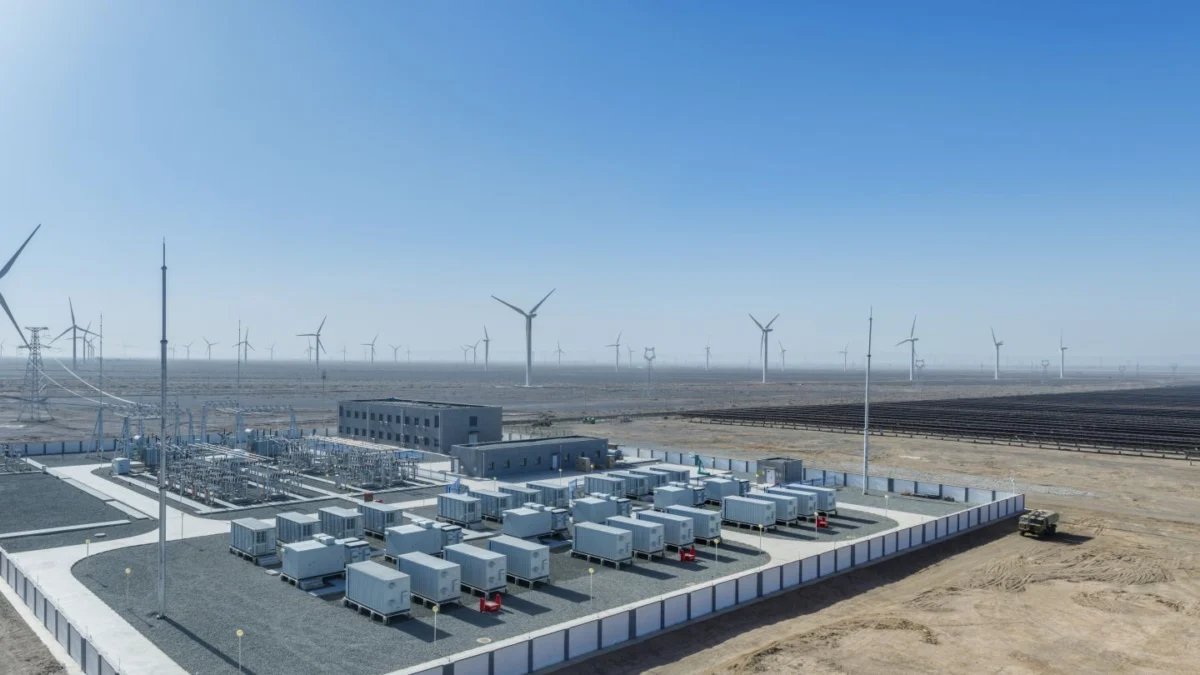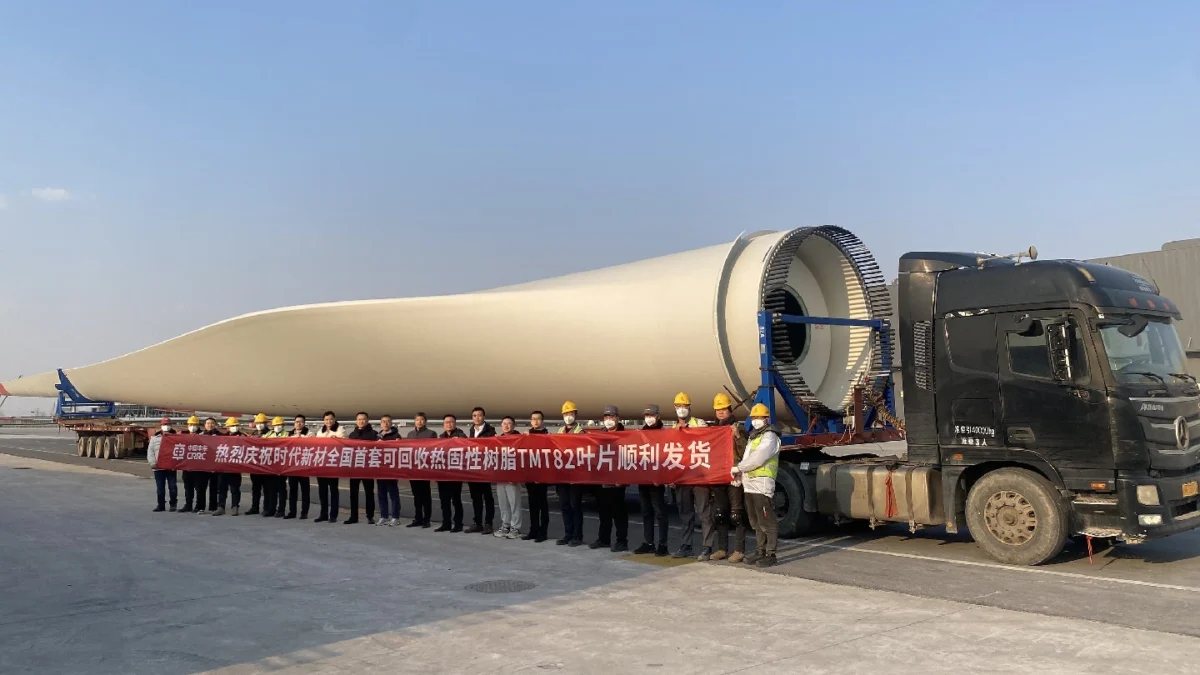
The global wind energy sector is reaching a critical inflection point. As the first generation of large-scale wind farms approaches the end of their operational lifespans, the industry faces an unprecedented logistical and environmental challenge: what to do with the massive, composite-material blades that have powered our transition to green energy? CRRC Corporation Limited has provided a definitive answer, announcing the successful production of a 110-meter, high-performance recyclable wind turbine blade at its advanced manufacturing facility in Sheyang, Jiangsu Province, China.
This development marks a significant shift from the "take-make-waste" model that has historically plagued wind turbine decommissioning. By integrating advanced chemical engineering with large-scale industrial manufacturing, CRRC is setting a new benchmark for circularity in the renewable energy sector.
The Core Innovation: Chemical Reversibility
At the heart of this 110-meter blade lies a proprietary, high-efficiency, debondable infusion resin system. Traditional wind turbine blades are constructed from composite materials—typically glass or carbon fiber reinforced with thermoset resins—that are notoriously difficult to separate. Once cured, these resins form permanent chemical bonds, effectively "locking" the fibers in place and making recycling nearly impossible.
CRRC’s new blade utilizes a sophisticated recyclable material system that features reversible chemical debonding technology. When the blade reaches the end of its life cycle, it can be subjected to a specific chemical process that breaks the bonds between the resin and the reinforcing fibers. This allows for a clean separation, enabling the recovery of over 95% of the key raw materials used in the blade’s construction.
The implications for material recovery are vast. The reclaimed fibers and resin are not merely "downcycled" into low-grade fillers; they retain significant structural integrity, allowing them to be repurposed in high-value applications. Potential secondary markets include the automotive industry, infrastructure construction, and the production of new wind energy components, thereby completing a closed-loop system that reduces reliance on virgin raw materials.
Chronology of Innovation: Building a Circular Roadmap
CRRC’s achievement in Sheyang is not an isolated breakthrough but the culmination of a multi-year strategic focus on circular technology. The company has methodically scaled its capabilities to address the lifecycle challenges of wind infrastructure.
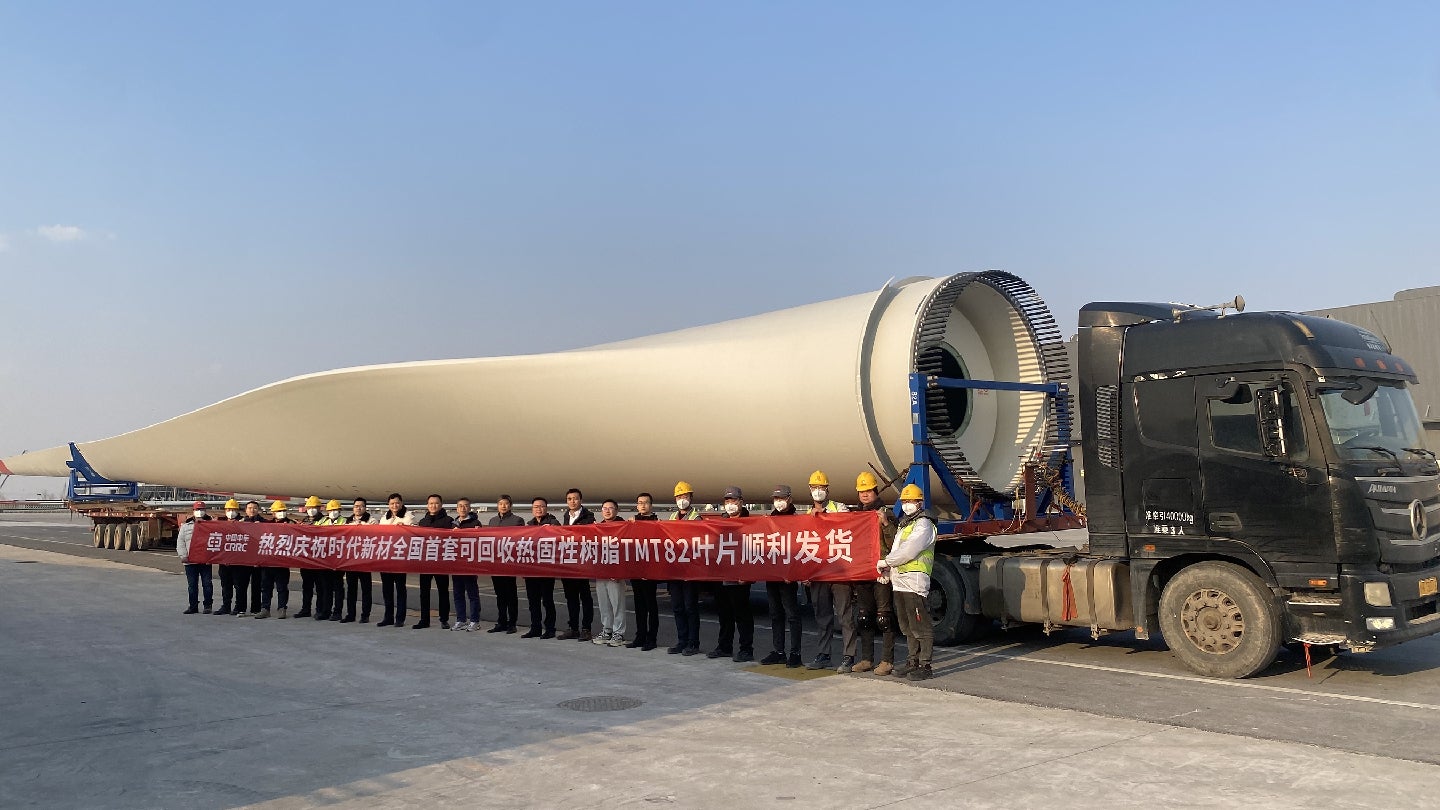
- March 2025: The TMT82 Milestone. CRRC launched the TMT82 recyclable thermoset-resin blade. This project served as the proof-of-concept for the reversible chemical bond technology, demonstrating that material separation could be achieved without compromising the blade’s mechanical properties or fatigue resistance.
- April 2025: Mobile Processing Advancements. Recognizing that decommissioning often takes place in remote locations, CRRC introduced a mobile, high-efficiency processing system. This allowed for the on-site dismantling and initial treatment of decommissioned blades, significantly reducing the carbon footprint associated with transporting massive, non-compactable waste.
- September 2026: The 110m Breakthrough. The successful production of the 110-meter blade represents a transition from R&D to commercial-scale deployment. By applying this technology to a 110-meter blade—a size typically reserved for high-capacity, heavy-duty offshore wind environments—CRRC has proven that sustainability does not have to come at the expense of power output or structural size.
Supporting Data: The Looming Waste Crisis
The urgency of CRRC’s innovation is underscored by sobering industry forecasts. As China pushes toward its ambitious carbon-neutrality goals, the sheer scale of the wind energy infrastructure is expanding at an exponential rate.
According to industry data, China is projected to see an additional 470GW of onshore and offshore wind capacity installed in the coming years. While this growth is essential for the energy transition, it carries a "hidden" legacy. Estimates suggest that by 2030, more than 30,000 wind turbines will reach their decommissioning age. This represents approximately 44.73GW of total capacity, which, if handled using traditional disposal methods, would result in nearly 950,000 tonnes of solid composite waste.
The "blade problem" is not just an environmental issue; it is a reputational and regulatory risk. As landfills reach capacity and public scrutiny of "green" waste increases, manufacturers and operators are under pressure to provide end-of-life solutions that meet global standards, such as the EU’s Corporate Sustainability Reporting Directive (CSRD). CRRC’s new blade system provides a turnkey solution for operators to align their environmental, social, and governance (ESG) reporting with these increasingly stringent international frameworks.
Implications for Offshore Wind Performance
While environmental stewardship is the primary driver of this technology, CRRC emphasizes that the 110m blade is designed for high-capacity offshore applications where performance is paramount. Offshore environments demand blades that can withstand extreme wind speeds, salt-spray corrosion, and massive fatigue loads.
By maintaining high structural standards while integrating recyclable resins, CRRC is addressing a common concern in the industry: the trade-off between sustainability and durability. The new blades are engineered to balance safety, environmental attributes, and cost performance, ensuring that offshore operators do not have to compromise on efficiency to meet their sustainability targets.
Furthermore, the integration of these materials into the supply chain offers long-term cost benefits. As the cost of virgin raw materials—such as high-grade resins and carbon fibers—fluctuates, the ability to recover and reuse these materials provides a hedge against market volatility, offering a more stable economic outlook for wind farm operators over the 20- to 25-year lifespan of their projects.
Global Perspectives and Industry Outlook
The transition to a circular wind energy economy is a global imperative. While CRRC’s latest developments are centered in China, the technology has universal applicability. International turbine manufacturers and project developers are watching these developments closely, as the move toward a circular economy becomes a standard requirement for accessing capital and navigating international markets.
The Role of Regulation
Legislative bodies, particularly in Europe and North America, are increasingly viewing wind turbine blades as a priority for waste management. With bans on landfilling composite waste already being discussed in several jurisdictions, companies that fail to adopt circular manufacturing processes may soon find themselves unable to operate in certain markets. CRRC’s proactive approach positions it as a potential leader in the global supply chain, offering a model that could be adopted by other OEMs worldwide.
Economic Viability
The economic viability of this circular model hinges on the efficiency of the "take-back" logistics. CRRC’s 2025 introduction of mobile processing units is a critical component of this strategy. By bringing the technology to the waste rather than moving the waste to a centralized recycling hub, the company reduces the cost and complexity of the recycling process. This logistical efficiency is what allows the "closed-loop" to become a reality rather than just a theoretical goal.
Conclusion: A Paradigm Shift for Renewable Energy
The production of the 110-meter recyclable blade by CRRC is more than a technical achievement; it is a signal that the wind energy industry is maturing. For years, the sector has focused on the efficiency of energy generation—making turbines larger, faster, and more productive. Now, the industry is shifting its focus toward the efficiency of the lifecycle itself.
By ensuring that the materials used to harvest the wind can be reclaimed and repurposed, CRRC is helping to ensure that the renewable energy revolution remains truly sustainable from start to finish. As the world approaches the 2030 milestone of widespread turbine retirement, these innovations will be the difference between a sustainable future and a mounting waste crisis.
For the energy sector, the message is clear: the future of wind power is not just in the electricity it generates, but in the circular economy it creates. CRRC’s latest success in Sheyang serves as a blueprint for that future, proving that with enough engineering ambition, the "single-use" model can be consigned to the past.