Krakow, Poland – September 27, 2026 – The second stop of the Canoe Freestyle World Cup circuit recently concluded in Krakow, Poland, from September 25th to 27th, bringing together the world’s elite whitewater athletes. A dedicated five-member Finnish national team faced the demanding artificial course, delivering performances marked by both promising improvements and the inherent challenges of international competition. While final placements fell short of podium aspirations, the event served as a crucial learning experience for the Nordic contingent, highlighting the strategic importance of adapting to diverse, technically advanced venues common in Central Europe.
Finland’s representation included Miika Sorjonen in the men’s category, Taru Terni and Outi Lahti in the women’s division, and the promising junior duo of Veikka Viinisalo and Aapo Pahkala in the Under 18 boys’ competition. The team’s participation underscored Finland’s commitment to developing its freestyle kayaking talent on the global stage, despite facing a competitive landscape dominated by nations with extensive infrastructure for the sport.
The competition saw the reigning World Champions, Tom Dolle of France in the men’s event and Ottilie Robinson-Shaw of Great Britain in the women’s, assert their dominance, claiming victories with spectacular displays of skill and power. Notably, Tomasz Czaplicki, the reigning European Champion from the Lieksa Neitikoski event in June, also demonstrated his prowess, matching Taru Terni’s sixth-place finish in the semi-finals, narrowly missing out on a final spot.
Main Facts: A Glimpse into the Finnish Campaign
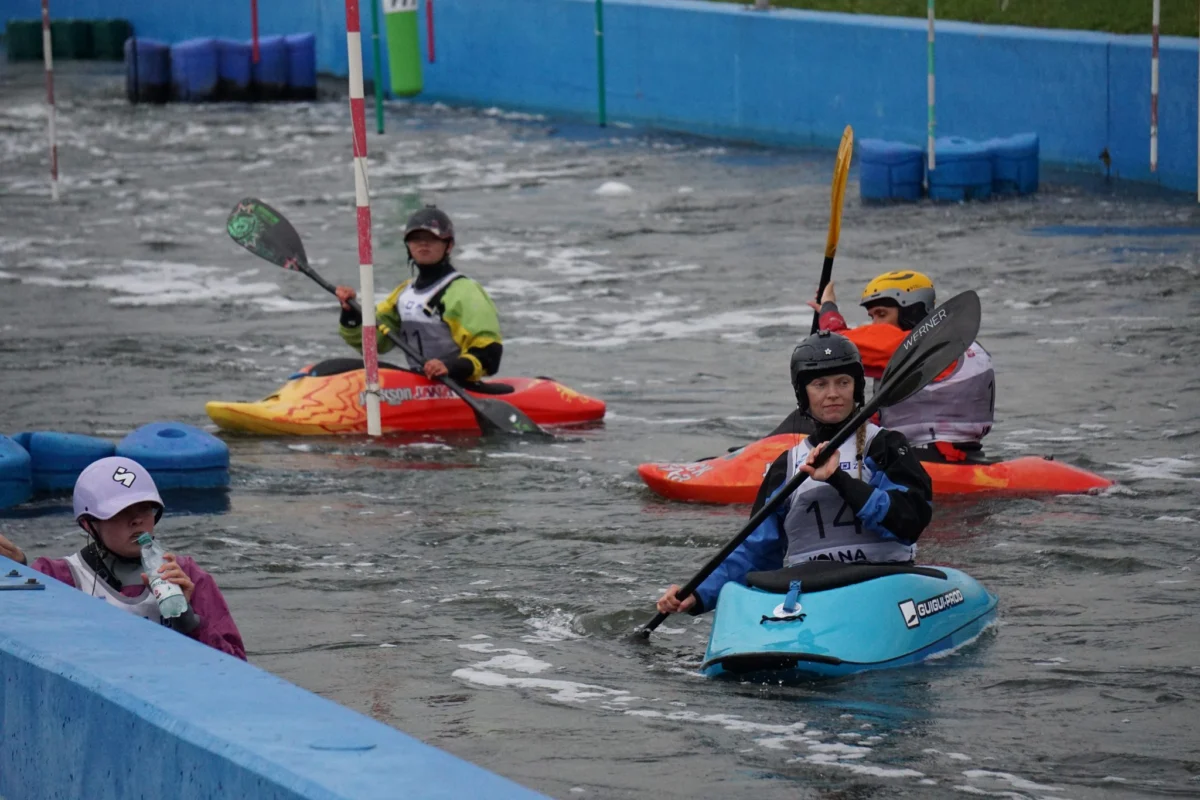
The Polish World Cup marked a significant challenge for the Finnish team, confronting them with an artificial whitewater park notably different from their typical training grounds. Despite a rigorous pre-competition training camp, the unique characteristics of the Krakow course presented a steep learning curve.
In the women’s category, European Champion Taru Terni was the standout performer for Finland. She paddled with commendable strength, securing a sixth-place finish in the semi-finals. This position, while respectable, placed her as the first athlete to be cut from the highly coveted final round, a mere fraction of a point away from advancing. Her teammate, Outi Lahti, also progressed to the semi-finals, ultimately finishing ninth, showcasing the depth of Finnish talent in the women’s division.
The men’s and junior categories proved particularly challenging. Miika Sorjonen, representing Finland in the senior men’s event, placed 29th, exiting the competition in the first qualification round. In the Under 18 boys’ category, Aapo Pahkala and Veikka Viinisalo, both demonstrating great potential for the future, finished 12th and 13th respectively, also concluding their campaigns after the initial rounds. These results, while not leading to advanced stages, provided invaluable exposure to the intensity and skill level required at the highest echelons of freestyle kayaking.
The overall victories in Krakow were testament to the consistent excellence of the sport’s global leaders. Tom Dolle of France, known for his powerful and innovative moves, secured the men’s title, reaffirming his status as the current world champion. Similarly, Great Britain’s Ottilie Robinson-Shaw, with her dynamic and precise routines, dominated the women’s field, adding another World Cup victory to her impressive resume as the reigning women’s world champion. The level of competition at this event was exceptionally high, pushing athletes to the very limits of their technical and physical capabilities.
Chronology of the Competition: Navigating the Krakow Rapids
The second Freestyle World Cup event unfolded over three intense days, beginning with preliminary qualification rounds, progressing to semi-finals, and culminating in the high-stakes final showdowns. Each stage presented its own set of challenges, demanding precision, power, and strategic execution from every competitor.
Friday, September 25th: Qualification Rounds
The competition kicked off with the qualification rounds, where a large field of international athletes vied for a spot in the semi-finals. Each competitor typically performs several rides, with their best score counting towards qualification. This initial phase is crucial for athletes to find their rhythm, adapt to the course conditions, and lay down a solid score that demonstrates their ability to execute a range of freestyle moves within the allotted time.
For the Finnish team, this stage was about overcoming the initial unfamiliarity with the Krakow course. Miika Sorjonen, Aapo Pahkala, and Veikka Viinisalo competed in their respective men’s and U18 categories. While they gave their best, the unforgiving nature of the course and the high level of competition meant they did not advance past this initial hurdle, finishing 29th, 12th, and 13th respectively. Their performances, however, provided critical data and experience for future development.
The women’s contingent, Taru Terni and Outi Lahti, demonstrated stronger performances in their qualification heats, successfully securing their places in the semi-final round. Terni, in particular, showcased glimpses of the form that earned her the European title earlier in the year, navigating the challenging features with a mix of power and finesse. Lahti also delivered a strong showing, reflecting her dedicated training and commitment.
Saturday, September 26th: Semi-Finals – The Gateway to Glory
The semi-finals are often considered the most nerve-wracking stage of the competition, as only the top five or six athletes from each category advance to the grand finals. For Taru Terni, this day brought a mix of elation and disappointment. "A good feeling remained, as I was able to improve my performance from the preliminary rounds," Terni commented, reflecting on her improved execution. However, the bitter taste of a near-miss lingered: "Nevertheless, the lack of a final spot remained a disappointment, as it was achievable." Her sixth-place finish placed her tantalizingly close, being the first competitor outside the final cut. This experience, while tough, underscores the incredibly fine margins that separate the top athletes in freestyle kayaking.
Outi Lahti, also competing in the women’s semi-finals, finished ninth. She echoed a similar sentiment regarding her performance: "I am satisfied with my preliminary round performance. It was disappointing, however, that the same energy and performance didn’t manifest in the semi-finals." Her honest reflection highlights the mental and physical demands of maintaining peak performance across multiple competitive rounds, especially on a novel and challenging course.
Sunday, September 27th: Finals – The Zenith of Competition
The final day belonged to the very best. The atmosphere was electric as the top qualifiers battled for the World Cup titles. The finals witnessed a masterclass in freestyle kayaking, with athletes pushing the boundaries of what’s possible on whitewater. Tom Dolle and Ottilie Robinson-Shaw, both reigning world champions, put on a clinic, executing complex routines with seemingly effortless grace and power to secure their respective victories. Their performances were a testament to years of dedicated training, access to world-class facilities, and an unwavering competitive spirit.
The day concluded with an awards ceremony, celebrating the achievements of all participants and acknowledging the fierce competition that unfolded on the Krakow rapids. For the Finnish team, while no one stood on the podium, the experience gained and the lessons learned were invaluable, setting the stage for future improvements and strategic adjustments.
Supporting Data and Athlete Perspectives: Unpacking the Performances
The Finnish team’s journey at the Krakow World Cup offers rich insights into the realities of international freestyle kayaking. The quotes from Taru Terni and Outi Lahti are particularly poignant, illustrating the dual emotions of progress and the sting of narrowly missing a major goal.
Terni’s comment, "A good feeling remained, as I was able to improve my performance from the preliminary rounds," speaks volumes about the athlete’s mindset. In a sport as dynamic and unforgiving as freestyle kayaking, continuous improvement, even within a single competition, is a victory in itself. Her ability to elevate her game under pressure demonstrates her competitive resilience. However, the subsequent "Nevertheless, the lack of a final spot remained a disappointment, as it was achievable," reveals the high standards she sets for herself and the deep desire to compete at the absolute highest level. For a reigning European Champion, making the World Cup finals is a fundamental objective, and to come so close is undeniably frustrating. This experience will undoubtedly fuel her motivation for future events.
Outi Lahti’s perspective mirrors Terni’s in its honest assessment. Her satisfaction with her preliminary round performance indicates a successful initial adaptation to the course and a strong start. However, the struggle to replicate that peak energy and execution in the semi-finals, as she noted, "It was disappointing, however, that the same energy and performance didn’t manifest in the semi-finals," is a common challenge for athletes. Maintaining focus, physical stamina, and mental clarity through multiple intense rounds, especially on an unfamiliar and technically demanding course, is a skill honed through repeated exposure to such environments. Both athletes’ insights provide valuable data for the national coaching staff in fine-tuning training regimes and competition strategies.
For the men’s and U18 teams, while the initial rounds proved to be the end of their competitive journey, the experience was no less significant. Miika Sorjonen’s 29th place in a highly competitive men’s field, and Aapo Pahkala’s 12th and Veikka Viinisalo’s 13th in the U18 category, represent solid efforts against a global contingent of highly skilled paddlers. These younger athletes, in particular, gain immense value from witnessing the elite level of the sport firsthand, understanding the technical complexity and athletic demands required to succeed. The proximity of their rankings suggests a tightly contested junior field and underscores the small margins separating competitors at this level.
The pre-competition strategy played a vital role in preparing the team. The Finnish national team had wisely chosen to arrive in Krakow a week prior to the competition, under the guidance of their national coach. This dedicated training camp was specifically designed to allow the athletes to acclimatize to the unique conditions of the artificial whitewater park. Such deliberate preparation is crucial in freestyle kayaking, where every eddy, wave, and hole on a course has its own distinct character, demanding precise knowledge and nuanced technique for optimal performance. The camp facilitated early exploration of the course features, allowing paddlers to experiment with different lines and maneuvers, and to refine their routines in situ.
Official Responses and Expert Analysis: The Challenge of Artificial Whitewater
The insights from the Finnish team regarding the Krakow course highlight a significant challenge for Nordic freestyle kayakers: the prevalence of artificial whitewater parks in Central Europe versus the natural river environments typically found in Scandinavia. Jyri Hämäläinen, the Freestyle Discipline Manager, offers his expert perspective on the team’s performance and the strategic implications of competing on such venues.
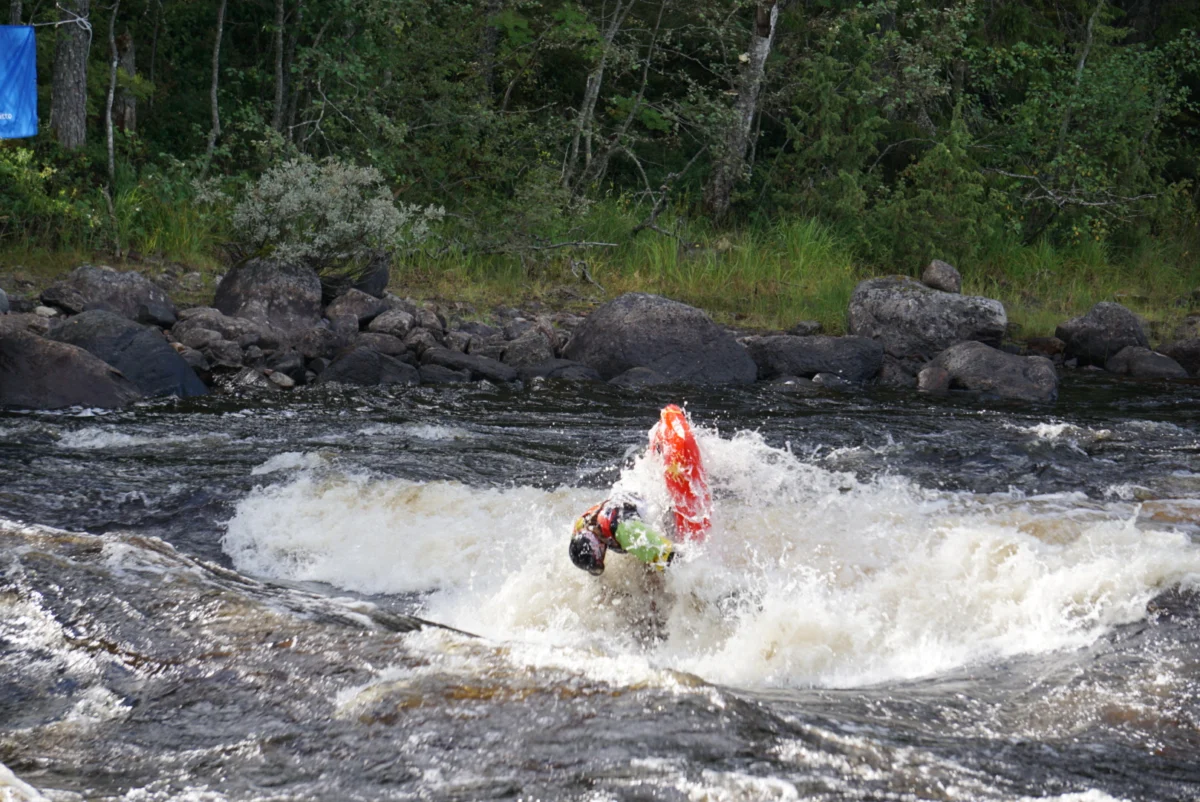
"The Krakow course, like many modern competition venues in Central Europe, is a highly engineered environment designed to create consistent, yet incredibly powerful and often ‘washing out’ features," explains Hämäläinen. "Our athletes noted its ‘huuhtova’ nature, meaning the features tend to flush you out of the prime scoring zones. This makes it exceptionally difficult to hold your position in a ‘hontto’ – a hole or wave feature – to execute the complex, high-scoring moves like loops, cartwheels, and spins that are essential for top placements."
Hämäläinen elaborates on the technical demands: "In a ‘washing out’ hole, the water flow is so strong that it constantly tries to push the boat downstream. To counteract this, a paddler needs immense core strength, precise edge control, and an intimate understanding of the hydrodynamics of that specific feature. If you lose that delicate balance for even a fraction of a second, you’re flushed out, and your ride is compromised. This is a stark contrast to many natural features we train on in Finland, which, while powerful, often offer more stable and predictable holding patterns."
The national coach’s role during the pre-competition camp was critical in attempting to bridge this experience gap. The focus would have been on intense repetition, experimenting with different boat angles, paddle strokes, and body positioning to find the optimal way to engage with the ‘hontto’ features without being flushed. This period of adaptation is not just physical but also highly mental, requiring athletes to quickly learn and trust new techniques.
"The team’s feedback clearly indicates the steep learning curve," Hämäläinen continues. "These types of artificial courses are becoming the norm for major international competitions. The advantage for nations with such facilities is immense; their athletes grow up training on these precise, powerful features year-round. For us in the Nordics, without comparable venues, every international competition becomes not just a test of skill, but also a rapid learning exercise in adapting to a fundamentally different kind of whitewater."
The strategic implication, as Hämäläinen points out, is clear: "To truly compete at the very top, our athletes require extended periods of training on these artificial courses. A single week-long camp, while beneficial, can only scratch the surface of the deep familiarity and muscle memory required. This necessitates greater investment in international training opportunities, potentially longer camps, or even exploring innovative ways to simulate such conditions domestically, though that presents its own set of challenges."
The official stance acknowledges the commendable effort of the Finnish team and views the World Cup not just as a competition, but as an essential part of the athletes’ development pathway, providing invaluable exposure and technical understanding vital for future success.
Broader Implications and Future Outlook: Forging a Path Forward
The Krakow World Cup, while delivering mixed results for the Finnish freestyle kayaking team, carries significant implications for the sport’s development in Finland. The experience underscores the ongoing evolution of freestyle kayaking, where purpose-built artificial courses are increasingly becoming the standard for international events, posing unique challenges and opportunities for nations like Finland.
One of the most immediate implications is the reinforced understanding of the necessity for strategic, long-term international exposure. While Finland boasts stunning natural whitewater environments, the technical demands of artificial courses require a specific skill set and adaptability that can only be honed through direct experience. This means that future national team strategies will likely place even greater emphasis on extended training camps at international venues, allowing athletes more time to master the nuances of these engineered rapids. Such camps are costly, however, demanding increased financial and logistical support from the Finnish Canoe and Rowing Federation and its partners.
Furthermore, the insights gained from Krakow highlight a potential need for domestic innovation. While building large-scale artificial whitewater parks in Finland may not be immediately feasible, exploring smaller, modular, or even temporary solutions that mimic the "washing out" and "hontto" characteristics of international courses could be a valuable long-term goal. Such initiatives could provide Finnish athletes with more consistent access to relevant training environments, reducing the learning curve when they compete abroad. This might involve collaborations with engineering firms or recreational water park developers to create specific features that simulate competition conditions.
The performance of the junior athletes, Aapo Pahkala and Veikka Viinisalo, is particularly encouraging. Their participation at a World Cup level, despite not advancing to later rounds, is critical for their development. Exposure to the world’s best at a young age instills ambition, provides clear benchmarks for improvement, and accelerates their learning curve. Investing in these rising talents through targeted coaching, specialized training programs, and continued international competition is paramount for the future of Finnish freestyle kayaking. Their presence suggests a healthy pipeline of talent emerging, which, with the right support, could lead to stronger international showings in the years to come.
From a mental and psychological perspective, the World Cup experience also builds resilience. Athletes like Taru Terni and Outi Lahti, who faced the disappointment of near-misses, will undoubtedly draw strength from these moments. Their candid reflections indicate a strong self-awareness and a professional approach to competition, recognizing both successes and areas for improvement. This mental toughness is as crucial as physical prowess in high-performance sports.
Ultimately, the Krakow World Cup was more than just a competition; it was a vital educational expedition for the Finnish freestyle kayaking team. It provided tangible data, reinforced strategic priorities, and underscored the dedication required to compete at the sport’s pinnacle. While the immediate goal of World Cup finals remained elusive for most, the experience has undoubtedly strengthened the team’s resolve and clarified the path forward. With continued support, dedicated training, and a strategic focus on adapting to the evolving landscape of international freestyle kayaking, the Finnish contingent is well-positioned to make significant strides on the global stage in the seasons to come. The journey for these athletes is one of continuous learning, adaptation, and unwavering passion for the exhilarating sport of whitewater freestyle.
Additional Information:
Competition Page: https://paddleworldwide.com/competitions/2026-icf-canoe-freestyle-world-cup-krakow-2826
Further Enquiries: Jyri Hämäläinen, Freestyle Discipline Manager, +358 40-5481663
Photography: Miika Sorjonen