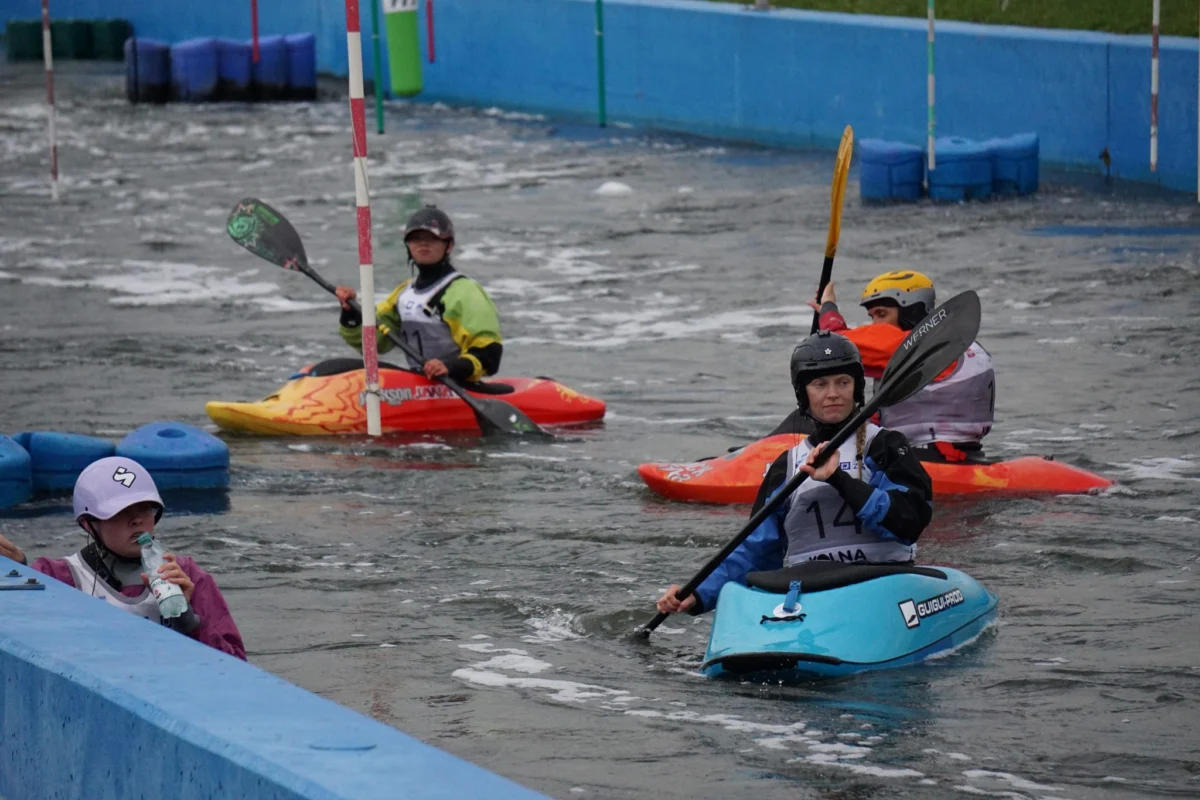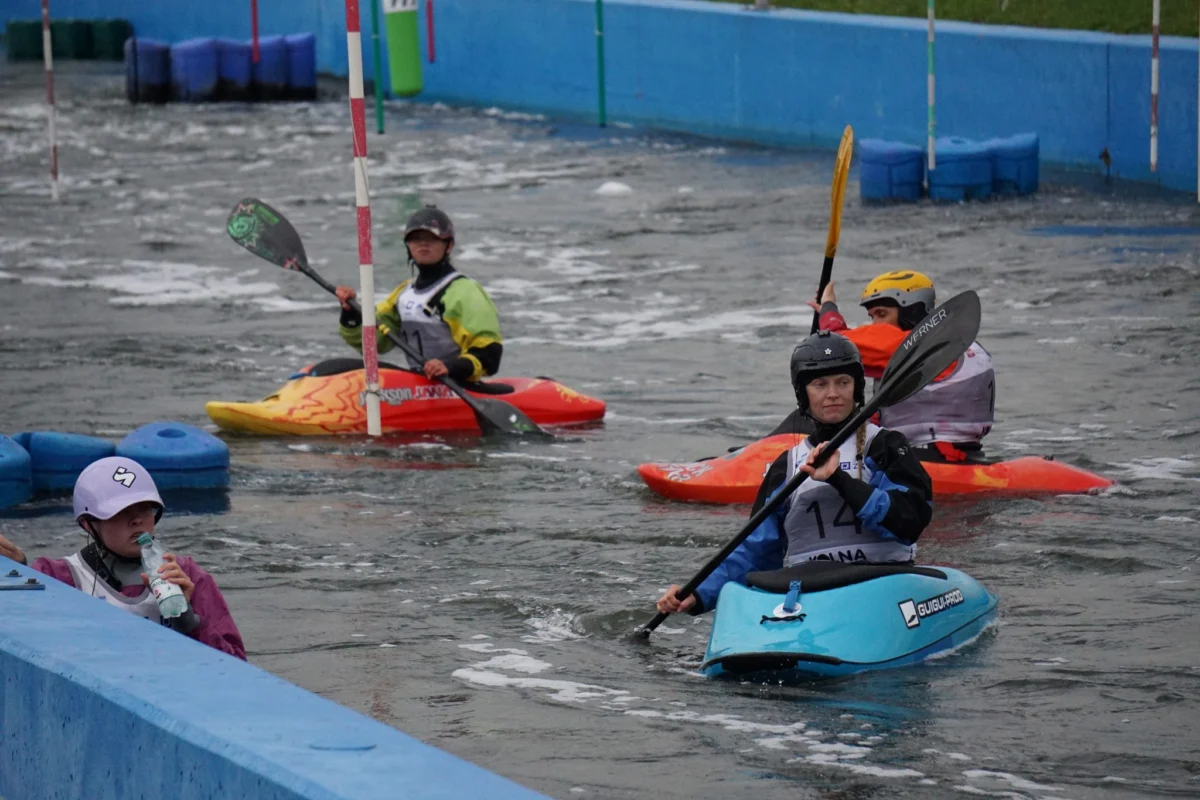
KRAKOW, POLAND – September 28, 2026 – The second leg of the 2026 Freestyle Kayaking World Cup series, held amidst the challenging artificial whitewater of Krakow, Poland, from September 25-27, saw a determined Finnish contingent battle against the world’s elite. While the coveted final spots proved elusive for the five-member Finnish team, the competition offered invaluable experience on a technically demanding European course, highlighting both moments of brilliance and areas for strategic development. Reigning European Champion Taru Terni came agonizingly close, securing sixth place in the women’s semifinals, just one spot shy of advancing, while the men and junior athletes grappled with the intense international field.
The event, a crucial benchmark on the global freestyle calendar, ultimately celebrated the dominance of the sport’s reigning World Champions, with France’s Tom Dolle clinching the men’s title and Great Britain’s Ottilie Robinson-Shaw asserting her supremacy in the women’s category. For the Finnish team, comprising Miika Sorjonen in the men’s division, Taru Terni and Outi Lahti in the women’s, and the promising juniors Veikka Viinisalo and Aapo Pahkala in the U18 boys’ category, Krakow represented a significant learning expedition into the heart of European whitewater freestyle.
Main Facts: A Glimpse into the Krakow Showdown
The 2026 ICF Canoe Freestyle World Cup in Krakow served as a high-stakes arena where the world’s best paddlers converged to showcase breathtaking skill and daring maneuvers. For the Finnish national team, it was a test of adaptability and resilience. The most notable performance came from Taru Terni, Finland’s reigning European Champion, who delivered a strong showing in the women’s semifinals. Her sixth-place finish, though commendable, underscored the razor-thin margins at this elite level, as she became the first athlete to be cut from the final round. Fellow female competitor Outi Lahti also navigated her way to the semifinals, finishing ninth, demonstrating the depth of talent within the Finnish women’s squad.
In the men’s and U18 categories, the initial rounds presented a formidable challenge. Miika Sorjonen concluded his campaign in 29th position in the men’s field, while junior athletes Aapo Pahkala and Veikka Viinisalo secured 12th and 13th places, respectively, in the highly competitive U18 boys’ division. All three faced early elimination, highlighting the immense competition and the unique demands of the Krakow course. The finals saw a predictable, yet thrilling, display of mastery from the reigning World Champions, Tom Dolle of France in the men’s event and Ottilie Robinson-Shaw of Great Britain in the women’s. Intriguingly, European Men’s Champion Tomasz Czaplicki, who triumphed earlier this year at Lieksa’s Neitikoski, also finished sixth, mirroring Terni’s near-miss and emphasizing the unpredictable nature of top-tier freestyle kayaking. The event underscored the critical importance of pre-competition acclimatization, with the Finnish team having spent a dedicated week prior to the World Cup training on the challenging Polish course under the guidance of their national team coach.
Chronology: The Finnish Journey Through Krakow’s Rapids
The Finnish team’s journey to the Krakow World Cup was meticulously planned, beginning with a week-long training camp immediately preceding the competition. This strategic decision, spearheaded by the national team coach, was crucial for acclimatizing the athletes to the unique characteristics of Krakow’s artificial whitewater park. Unlike the natural rivers often found in the Nordic region, artificial courses, common across Central Europe, present a different set of challenges, often featuring powerful, "flushing" holes and waves that demand precise technique and immense strength to maintain control and execute complex maneuvers. The team spent countless hours dissecting the features, understanding the water dynamics, and refining their lines, a testament to their commitment to competitive excellence.
Heats and Initial Rounds: The Opening Salvo
As the competition officially kicked off on Friday, September 25th, the Finnish paddlers plunged into the heats, each striving to lay down a strong marker. For Miika Sorjonen in the men’s division, the initial rounds proved to be a tough introduction to the international field. Despite his best efforts, Sorjonen, like many others, found it difficult to unlock the full potential of his runs on a course that punished even minor errors. He ultimately finished 29th, an experience that, while not leading to advancement, provided valuable insight into the pace and aggression required at this level.
The U18 boys, Aapo Pahkala and Veikka Viinisalo, similarly faced a steep learning curve. The junior categories in freestyle kayaking are fiercely contested, often featuring prodigies who have grown up training on similar artificial courses. Pahkala and Viinisalo showcased flashes of their burgeoning talent, but the consistency and power needed to dominate the "honto" (the specific hole or wave feature where tricks are performed) proved challenging. Their 12th and 13th place finishes, respectively, underscore their position among a talented international youth cohort and highlight the need for continued exposure to such high-pressure environments.
Semifinals: High Stakes and Heartbreak
Saturday, September 26th, brought the women’s semifinals, the stage for Finland’s strongest performances. Taru Terni, carrying the weight of her European Championship title, entered the semifinals with a clear goal: a spot in the final. Her runs were a masterclass in controlled aggression, blending power with intricate maneuvers. She delivered a performance that she felt was a significant improvement from her initial heats, a crucial psychological boost in a high-pressure environment. "A good feeling remained, as I managed to improve my performance from the heats," Terni reflected after her run. "However, it was disappointing to miss the final spot, as it was achievable." This sentiment perfectly encapsulates the fine line between triumph and disappointment in elite sports – the knowledge that success was within grasp, yet just out of reach. Her sixth-place finish meant she was the first athlete eliminated from the final, a position that is perhaps the most bittersweet in competitive sports.
Outi Lahti, also competing in the women’s semifinals, showcased her own prowess, securing a respectable ninth place. Lahti’s journey through the competition mirrored a common athlete’s dilemma. "I am satisfied with my heat performance," she stated, indicating a strong foundation. However, she acknowledged the difficulty of replicating that peak performance under increased pressure: "It was disappointing that the same energy and performance didn’t come through in the semifinal." This honest assessment points to the mental and physical demands of maintaining consistency throughout multiple rounds of a World Cup event. Both Terni and Lahti’s experiences in the semifinals serve as vital learning points, not just for them but for the entire Finnish freestyle program, on how to consistently deliver under the intense glare of international competition.
Finals: A Display of World-Class Dominance
The finals on Sunday, September 27th, were a spectacular exhibition of the sport’s highest level. The atmosphere was electric as the top five men and women battled for World Cup glory. France’s Tom Dolle, the reigning Men’s World Champion, lived up to his reputation, executing a series of jaw-dropping tricks with unparalleled fluidity and power to claim the men’s title. His victory was a testament to his consistent excellence and innovative approach to freestyle. Similarly, Great Britain’s Ottilie Robinson-Shaw, the reigning Women’s World Champion, delivered a performance that solidified her status as the sport’s leading female athlete, dominating the women’s final with precision and flair.
A notable parallel emerged in the men’s final: Tomasz Czaplicki, the local hero and reigning European Champion (whose victory came on Finnish waters in Lieksa just months prior), also finished in sixth place, just like Taru Terni. This illustrates the incredibly high bar at World Cup events; even continental champions can find themselves battling for the top spots rather than securing them outright, highlighting the global depth of talent in freestyle kayaking. The finals, while not featuring Finnish representation, provided an invaluable opportunity for the team to observe and learn from the very best, inspiring them for future competitions.
Supporting Data: Contextualizing the Performance
To fully appreciate the Finnish team’s efforts in Krakow, it’s essential to understand the sport of freestyle kayaking, the significance of the World Cup circuit, and the specific challenges posed by venues like Krakow.
Understanding Freestyle Kayaking:
Freestyle kayaking, often dubbed "whitewater gymnastics," is a dynamic and visually spectacular discipline where paddlers perform a series of acrobatic tricks and maneuvers in a stationary river feature, such as a wave or a hole. Athletes aim to execute as many different, complex, and high-scoring moves as possible within a set time limit, typically 45 seconds. Judges award points based on the difficulty, variety, amplitude, and cleanliness of the tricks. Moves include aerial spins, flips, loops, and cartwheels, requiring an extraordinary combination of strength, balance, spatial awareness, and intimate knowledge of water dynamics. The sport demands not just physical prowess but also a creative mind to link moves seamlessly and exploit every nuance of the water feature.
The ICF World Cup Circuit:
The International Canoe Federation (ICF) Canoe Freestyle World Cup series represents the pinnacle of annual international competition outside of the biennial World Championships. These events are crucial for athletes to gauge their performance against global competitors, earn valuable ranking points, and fine-tune their strategies. A typical World Cup season consists of several events held in different locations around the world, each with its unique river features and challenges. Success in the World Cup series is a strong indicator of an athlete’s readiness for World Championship contention and helps establish their reputation on the international stage. Participating in and performing well at these events is vital for national federations to develop their athletes and elevate their country’s standing in the sport.
The Krakow Venue: A Unique Challenge:
Krakow’s artificial whitewater course is a prime example of a modern, purpose-built venue designed for competitive paddling. These courses differ significantly from natural river features. They are engineered to create consistent, powerful waves and holes, offering predictable yet incredibly demanding conditions. The Finnish team specifically noted the Krakow course as "very flushing," meaning the water feature had a strong tendency to wash paddlers out of the sweet spot for performing tricks. This "flushing" characteristic makes it exceptionally difficult to "hold moves" within the "honto" (the core of the feature), requiring immense power, precise edge control, and a deep understanding of the feature’s specific hydraulics.
For Nordic paddlers, this presents a particular challenge. Scandinavia boasts numerous natural whitewater rivers, but very few, if any, artificial courses comparable to those found in Central Europe. This disparity means that Finnish athletes often train on different types of features, making pre-competition camps like the one in Krakow absolutely essential. These camps allow athletes to adapt their technique, build specific muscle memory for powerful, retentive features, and develop the nuanced understanding required to excel on these engineered courses. The need for extensive pre-camps underscores a broader implication: for Finnish freestyle kayaking to consistently challenge the best, access to or simulation of such challenging artificial environments is critical for training and development.
Official Responses: Perspectives from the Finnish Camp
The performances in Krakow, while not yielding final berths for most, elicited a mixture of satisfaction and resolve from the Finnish camp. The direct quotes from Taru Terni and Outi Lahti encapsulate the immediate athlete experience: the pride in improved performance juxtaposed with the disappointment of a near-miss.
Taru Terni, reflecting on her semifinal run, articulated a common sentiment among elite athletes. Her statement, "A good feeling remained, as I managed to improve my performance from the heats. However, it was disappointing to miss the final spot, as it was achievable," speaks volumes about the drive for perfection and the high standards she sets for herself. As the reigning European Champion, Terni carries expectations, both internal and external, and her ability to elevate her performance under pressure is a testament to her mental fortitude. The "achievable" aspect of the final spot will undoubtedly fuel her training in the coming months, turning disappointment into motivation.
Outi Lahti’s perspective, "I am satisfied with my heat performance. It was disappointing that the same energy and performance didn’t come through in the semifinal," offers a candid look into the challenge of maintaining peak condition and focus across multiple rounds. This is a crucial area for development for many athletes, learning how to consistently tap into their optimal performance state when the stakes are highest. Her honesty provides valuable feedback for the coaching staff on how to prepare athletes for the rigors of multi-day international competitions.
While direct quotes from the national team coach or discipline manager were not provided in detail for this report, the underlying strategy of the pre-World Cup camp speaks to the forward-thinking approach of the Finnish kayaking federation. Jyri Hämäläinen, the Freestyle Discipline Manager, would likely emphasize the invaluable nature of such experiences. The team’s presence in Krakow, under expert guidance, signifies a commitment to international exposure and learning. It’s reasonable to infer that officials would view these results as a vital step in the long-term development of Finnish freestyle kayaking. The challenges faced, particularly on the "flushing" course, are not seen as failures but as crucial data points for future training plans, focusing on specific techniques required for Central European venues. The sheer competitive density, especially in the junior categories, also highlights the global standard that Finnish athletes must aspire to, pushing them to innovate and train even harder.
Implications: Lessons Learned and Future Trajectories
The 2026 Krakow World Cup has provided the Finnish freestyle kayaking team with a rich tapestry of experiences, offering profound implications for individual athletes and the national program moving forward. The performance in Poland, while not adorned with podium finishes, served as an essential reality check and a catalyst for strategic recalibration.
Strategic Training and Venue Adaptability:
The most significant implication revolves around the stark contrast between Nordic training environments and the artificial courses prevalent in Central Europe. The "flushing" nature of the Krakow course and the difficulty in holding moves within the "honto" unequivocally demonstrate the need for targeted training. Future national team camps and individual training regimens must increasingly incorporate elements that simulate these powerful, retentive features. This might involve traveling to similar artificial courses more frequently, investing in specialized coaching to address these specific technical challenges, or even exploring possibilities for developing more advanced training facilities within Finland, though the latter is a substantial undertaking. The week-long pre-camp in Krakow proved its worth, but the experience suggests that even longer periods of acclimatization or more frequent exposure could be beneficial for closing the technical gap.
Nurturing Emerging Talent:
For junior athletes Aapo Pahkala and Veikka Viinisalo, their participation at the World Cup level is an investment in the future. Their placements, while not advancing them to later rounds, provided them with unparalleled exposure to the global standard. The implication here is the critical need to continue nurturing this talent through consistent international competition and focused development programs. Understanding the competitive landscape at a young age will help shape their training ambitions and prepare them for the mental and physical rigors of senior competition. Providing these young athletes with clear pathways and resources is paramount for ensuring a strong pipeline of talent for the Finnish national team.
Elevating Elite Performance: The Terni and Lahti Case:
Taru Terni’s near-miss in the semifinals underscores the razor-thin margins at the elite level. The implication for Terni, and for the women’s program, is to identify and refine those minute details that separate a sixth-place finish from a top-five berth. This could involve psychological training to manage competition pressure, fine-tuning specific high-scoring maneuvers, or optimizing competition strategy. For Outi Lahti, the challenge of replicating heat performance in the semifinals highlights the importance of consistency under pressure. This is a common hurdle, and addressing it through focused practice, mental resilience training, and potentially exploring different warm-up and preparation routines will be key. Their experiences offer valuable lessons on how to transform strong performances into podium-contending ones.
The Bigger Picture: Finnish Freestyle Kayaking on the Global Stage:
Overall, the Krakow World Cup paints a picture of a Finnish freestyle kayaking program that is actively engaged on the international stage, willing to take on significant challenges, and committed to athlete development. While immediate results may not always reflect the full extent of progress, the lessons learned from competing against the world’s best on demanding courses are invaluable. The implication is that continued participation in such events, coupled with strategic adjustments to training and development, will gradually elevate the overall standard of Finnish freestyle kayaking. The presence of a European Champion like Taru Terni demonstrates that Finland has the talent; the task now is to consistently provide the environment and resources for that talent to flourish and consistently challenge for top honors at World Cup and World Championship events.
The journey from the rivers of Finland to the artificial whitewater parks of Central Europe is a demanding one, but the Krakow World Cup has affirmed the Finnish team’s dedication to mastering this global challenge, setting the stage for even stronger performances in the seasons to come.
Kilpailusivu: https://paddleworldwide.com/competitions/2026-icf-canoe-freestyle-world-cup-krakow-2826
Additional Information: Jyri Hämäläinen, Freestyle Discipline Manager, +358 40-5481663
Photos: Miika Sorjonen